by Chiara Falduto | Mar 13, 2015 | The Urban Media Lab
In today’s society topics such as environmental and territorial issues are increasingly gaining importance. The impact that pollution has on the Planet we are living in is of central importance in many debates. Often, though, speeches are not enough to sensitize the population on such a delicate subject.
In this context, a new project has risen: ArtAbout. ArtAbout is an Open and Integrated Project Platform that aims at denouncing all the environmental issues surrounding us through the use of art. Indeed, since the very beginning of mankind, art has been a great tool for reaching towards men’s hearts by representing from a critical point of view uncomfortable matters.
The first theme that ArtAbout wants to deal with is the pollution caused by petrol, which represents a great problem especially in the Italian region Basilicata. Through the competition ArtAboutOIL, artists and publishers from all over the world are called to propose a project for a film work on site aimed at sensitizing the people about the oil issue.
Allelammie, Casa Netural, IAC – Centre of Integrated Art and SassieMurgia are the sponsors of ArtAbout: four Lucan agents that work in the field of social innovation and creativity. Launching the project ArtAboutOIL they want to restate their commitment to innovation and improvement of territorial and cultural issues by transmitting a message about the importance of safeguarding the wonderful Lucan territory before it gets seriously damaged by pollution.
As written in the grant, the sponsors have not received any kind of external founding for the project. This is why ArtAboutOIL not only calls artists to participate, but is also looking for investors that are willing to “donate” some money that will help to provide basic tools that will help to realize the project and will also help to found the winner’s prize: a 10 day stay in Basilicata, during which he or she will be able to realize the video-project proposed. Investing even a little amount of resources in ArtAboutOil will surely be a great symbolic act that will have an even greater impact especially in the local territory. In fact, it is important to understand that only through small actions we can hope to mobilize greater mechanisms of solidarity and union.
The kind of art that ArtAbout wants to enhance is a “partecipative art”, which means that people will not only be asked to observe the wonderful creations that the artists will produce but will also have to look at them critically, and will have to appeal their sense of civic duty to improve their community afterwards. We could also talk about a “360degrees-art” which wants to tell in an innovative way the reality of energetic production and its related issues. A reality which now more than ever is of great importance and of which we all need to become aware of.
_______________________________________________________________________
ArtAbout è una Piattaforma Progettuale Aperta e Integrata lanciata da quattro realtà Lucane che operano dell’ambito dell’innovazione sociale. In ArtAbout l’arte diventa il principale strumento per comunicare e diffondere messaggi relativi l’importanza della salvaguardia del territorio, dell’ambiente e delle culture locali.
Con il progetto ArtAboutOIL, ArtAbout vuole concentrarsi sul tema del petrolio in Basilicata; argomento molto importante che copre non solo tematiche relative all’inquinamento dell’ambiente ma anche alla questione delle politiche energetiche. In questo contesto artisti e produttori sono chiamati a partecipare ad ArtAboutOIL, creando un video focalizzato su questo problema.
ArtAbout non riceve nessun finanziamento esterno ed è per questo che fa appello anche a possibili investitori che desiderino contribuire economicamente alla realizzazione di questo progetto.
Con ArtAbout si parla di arte partecipata, dove ogni individuo è chiamato a rielaborare in maniera critica i messaggi trasmessi dagli artisti ed impegnarsi per migliorare la realtà che lo circonda.

by Marina Bassi | Mar 10, 2015 | EducationLabs, Luiss LabGov 2014-2015
 On March 17th, 2015, LabGov will host the Conference Land and new forms of legal order at LUISS University of Rome. The Conference – that will start at 4:30 PM in Aula Nocco, Via Parenzo 11, LUISS School of Law – will address the issue of collaborative governance for the commons as a tool to fight corruption and organized crime, safeguard the territory and promote legal economic growth and social progress.
Following the experiences developed in Mantova with the CO-Mantova, a collaborative governance territorial pact, and in Bologna with the Regulation on public collaboration, participants will focus on new forms of collaboration between public institutions, social innovators, businesses, civil society organizations and knowledge institutions.
The conference is part of the LabGov workshops series that this academic year has been focused on Land as a commons: environment, agriculture and food.
Giovanni Lo Storto, LUISS General Director, and Roberto Pessi, professor of Labor Law and LUISS Vice Provost for education, will open the Conference. Main session will see the keynote addresses of Paola Severino, professor of criminal law and LUISS Executive Vice Provost, and Giancarlo Caselli, president of the “Osservatorio Agromafie” scientific committee. Antonella Manzione, Head of the Council of Ministries Presidency Legislative and Regulatory Affairs Department, will act as discussant. Second session will be a roundtable with LUISS professors Melina Decaro (professor of public comparative law), Gian Candido De Martin (professor of public law), Antonio La Spina (professor of public policies) and Bruno Frattasi (Head of the Interior Ministry Legislative and Regulatory Affairs Department).
Raffaele Bifulco, professor of constitutional law at LUISS, will chair the two sessions of the conference. The conference will end with the closing remarks of Claudio Rossano, professor of public law.
Full program of the conference is available at the following link:
Territorio e nuove forme di legalità – programma
______________________________________________
Territorio e nuove forme di legalità: la governance collaborativa è la strada?
Il prossimo 17 marzo 2015 LabGov – LABoratorio per la GOVernance dei beni comuni organizza la conferenza “Territorio e nuove forme di legalità” presso la LUISS Guido Carli. L’incontro, che avrà luogo nell’Aula Nocco della Facoltà di Giurisprudenza, Via Parenzo, 11, Roma, indagherà il rapporto fra legalità e salvaguardia del territorio attraverso forme di sperimentazione ispirate alla governance collaborativa, come il Regolamento sulla collaborazione per la cura e rigenerazione dei beni comuni urbani di Bologna e CO-Mantova, il patto di collaborazione territoriale per uno sviluppo economico locale orientato ai beni comuni.
I lavori saranno aperti dai saluti istituzionali del dott. Giovanni Lo Storto, direttore generale della LUISS Guido Carli, e del Prof. Roberto Pessi, Prorettore LUISS per la didattica. Le relazioni principali sono affidate alla Prof.ssa Paola Severino, ordinario di Diritto Penale e Pro-Rettore Vicario LUISS, e al dott. Gian Carlo Caselli, Presidente del Comitato scientifico dell’Osservatorio Agromafie. La dott.ssa Antonella Manzione, Capo Dipartimento per gli affari giuridici e legislativi della Presidenza del Consiglio dei Ministri, agirà in veste di discussant. Seguirà una tavola rotonda con la Prof.ssa Melina Decaro, il Prof. Gian Candido De Martin, il Prof. Antonio La Spina e il prefetto Bruno Frattasi. ll Prof. Claudio Rossano concluderà i lavori della giornata.
Il Prof. Raffaele Bifulco coordinerà i lavori dell’incontro.
Per consultare il programma della giornata:
Territorio e nuove forme di legalità – programma
by Giulia Spinaci | Jan 13, 2015 | The Urban Media Lab

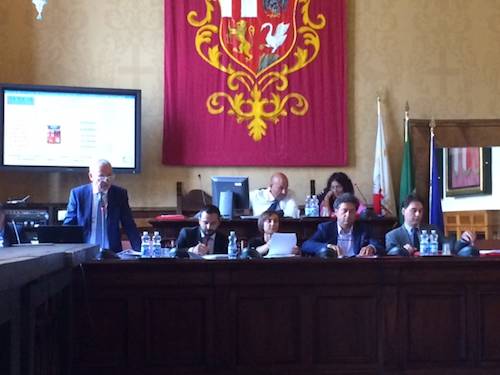
Ever since the City of Bologna approved in May ’14 the Regulation on Collaboration Between the Citizens and the City for the Care and Regeneration of the Urban Commons, twenty municipalities have approved the Regulation and fourth-three more are examining it. In this sense, the city of Orvieto has numerous predecessors, but this does not change the fact that it should be considered a success in itself.
Every little, medium and big city that voted in favor of a collaborative governance of the urban commons represents an important achievement along the way towards the end of the practice of devolving power. Active citizens have the chance to take care by themselves of the place they live and to do it hand in hand with the public administration, in a constructive cooperation that brings benefits to the whole community.
On December 29th, 2014, thus, Orvieto joined the list of the cities that decided to completely revolutionize the way of thinking about the commons, and in particular about the urban ones. The Municipal Council endorsed the Regulation by a unanimous decision. A fact, this, which highlights that behind themes like this, there is a common background able to eliminate the differences between the various political factions in favor of a shared agreement. Furthermore, the approval in itself helps avoiding all those cases in which the active citizenship is blocked and even punished (e.g. the emblematic case of Mrs. Ilaria Montis who was fined for having cleaned the seaside of Is Solinas (CI) and for throwing the garbages in dumpsters far away from her house). To regulate a phenomenon does not mean to block it or to establish boundaries and limits, but rather to let it flow according to its characteristics and according to the different realities it takes place in.
The Regulation found its origin in the work carried out also by LabGov experts in Bologna and is centered upon the principle of horizontal/circular subsidiarity enshrined in the Italian Constitution (Art. 118) in an innovative way. Article 118 should not be interpreted as a way of merely dividing the responsibilities between the private sector and the public one, but rather as a shared background on which a new model of society shall be built. A society where active citizens can practically contribute to the renewal of the reality they live in. Obviously, this implies that the Regulation cannot be applied everywhere in the same form. Changes are firmly supported in order to adapt the goals to the concrete situation and to the history and values of the city at issue.
The analogies and differences between the four different versions of the Regulation approved in the cities of Bologna, Ivrea, Siena and Chieri were already analyzed, through seven parameters. Now, with the same methodology, it has come the moment to present the vision that the city of Orvieto decided to offer with the approval of the Regulation, in comparison to the original version of Bologna.
- Principles. The Municipality of Orvieto maintained all the original principles that constitute the foundations of the original version of the regulation. However, an interesting voice was added by the City Council of Orvieto during the drafting phase: art. 10 makes an explicit reference to the Framework Convention on the Value of Cultural Heritage for Society, approved in Faro in 2005. In the words of Paolo Maurizio Talanti, the Democratic Party councilman of Orvieto “a city with such an artistic and cultural heritage like ours shall know that the knowledge and use of the cultural heritage is an individual right […]”.
- Subjects. For both Bologna and Orvieto, the subjects taken into consideration are the active citizens, namely “all subjects, single or associated, anyhow gathered in social formations, also of entrepreneurial type or with social vocation, which are active for the care and regeneration of urban commons”.
- Organizational aspects. Unlike the case of Bologna, Orvieto does not explicitly provide a unique office for the evaluation of the proposals of the active citizens, thus provoking an organizational gap that risks to provoke overlapping procedures and ambiguity during the implementation. In fact, according to the topic, each proposal will be submitted to the competent office.
- Type of administration. The kind of administration that takes shape in Orvieto is based on the authorization by the public offices, which are competent to technically evaluate the feasibility of the projects.
- Relevance of the private assets. The Regulation of Orvieto puts a particular emphasis on the public spaces as objects of the care of the active citizens, leaving however the possibility for a shared management of the private spaces for public use. Worth mentioning is the fact that the regulation merges the provision about the public spaces with the one about private ones in a unique norm.
- Forms of support. This is probably the most interesting aspect of the whole Regulation of Orvieto. In fact, the text completely eliminate all forms of exemption and relief from levies and local taxes and of administrative facilities, such as in obtaining permits. The Municipality may contribute to the reimbursement of costs only in those cases where an in-kind support is not possible.
- Disputes. Contrary to the Bologna Regulation, which provided for the creation of a Conciliation Board in order to solve future disputes, the City Council of Orvieto did not, thus leaving open the possibility to submit the arising cases to the ordinary jurisdiction instruments.
Strongly adapted to the local situation, the Regulation of Orvieto, with its strengths and weaknesses, constitutes a remarkable example of how much our society is changing and how well the Regulation fits in this challenging and stimulating environment.
_________________________________
Il Comune di Orvieto approva il Regolamento sulla collaborazione fra cittadini e amministrazione per la cura e la rigenerazione dei beni comuni urbani!
Il Comune di Orvieto ha due settimane fa approvato il Regolamento sulla Collaborazione tra Cittadini e Amministrazione per la Cura e la Rigenerazione dei Beni Comuni Urbani. Seppur con un testo adattato alla realtà della città, l’approvazione del Regolamento dimostra un rinnovato modo di pensare sui beni comuni urbani che si sta diffondendo velocemente in tutta Italia.

by Leonardo Rossi | Dec 20, 2014 | The Urban Media Lab
From prosthetic limbs to food, everything is printable/possible
The technologies behind the world of 3d printing made huge steps forwards from their first use in the ‘80s by Chuck Hull.
Recently there has been a considerable increase of the possible application for such technology, and the results are quite astonishing.
3d printers are used in medical research to create prosthetic limbs less “invasive” and “shocking” for the patient, since they can easily recreate the silhouette of the missing limb by scanning the remaining one, and to create also bracers and hearing devices. Recently this technology has been used also to create prototypes of working human organs such as livers or kidneys.
Others uses might be found in the spaceship program to create probes and in industrial environments as well as domestic one.
An element that surely aided the expansion of 3d printers was the one of the “user-friendly process”; in order to start a printing process, a person needs only to learn how to use a simple computer program. If it results to be too difficult, a person can use a tool that allows the conversion of a picture of the object you want to duplicate in string of data and then let the printer do the rest.
The latest “taboo” destroyed by this technology was the food market, since recently some new food companies, like “Foodini”, started to print, as they claim: “real food, 3d printed, made with fresh ingredients”. This groundbreaking effort might give birth to a complete new idea of “nutrition habits”, shaped on the request and the needs of an individual, and can create a big amount of job opportunities for youngster who try to find their way in the world.
As the modern flourishing of new 3d printing startups made clear, this technology is not anymore a thing for big elites companies, but something affordable to almost everyone. An example is the little space company “Planetary Resources” that made a complete functional probe that will soon be send to space and it is big just a fraction of the one of NASA and that cost only a fraction.
Many people think that 3D printing will be the end of manufacturing as we know it because, along with all of the unimagined, we will also have the unintended, like democratized counterfeiting and ubiquitous illegal possession.
But we should think about the role of 3d fabrication, from being a phenomenon of niche to an essential passage for enabling a novel development of the urban texture: the accessibility of the medium to the community and its incredible flexibility fits perfectly with the new trend of FabLabs. In this context, 3D printing should also be considered as a great instruments for empowering the culture of the Commons.
Nevertheless, it is very important to consider such steps forwards in the technological progress just how they are, a possibility to improve our lives and our future.
by Elena De Nictolis | Dec 18, 2014 | Commons Press, Governance labs

The City of Bologna has just adopted the translation prepared by 2013/2014 LabGov interns as the official English version of the Bologna Regulation on public collaboration between citizens and the city for the care and regeneration of urban commons. The official English version of the Regulation is available here.
LabGov interns participated actively to “La città come bene comune” (i.e. “The city as a commons“) project in Bologna, carrying out research activities, training programs and co-design sessions. One of LabGov strategists, Christian Iaione, was also a key member of the working group which drafted the “Regolamento sulla collaborazione per la cura e rigenerazione dei beni comuni urbani” of the Comune di Bologna.
According to the regulation active citizens (i.e. social innovators, entrepreneurs, civil society organizations and knowledge institutions willing to work in the general interest) can enter into a co-design process with the city leading to the signing of a “patto di collaborazione per la cura o rigenerazione dei beni comuni urbani“. Urban commons are mainly public spaces, urban green spaces and abandoned buildings or areas.
Using the institutional technology of public collaboration (i.e. “co-progettazione” or “amministrazione condivisa“) Italian cities and communities can transplant Elinor Ostrom‘s idea of “governance dei beni comuni” (i.e. “governance of the commons”) in urban contexts, as Sheila Foster has already theorized.
The regulation is at the same time a form of social innovation enabling tool and fosters the birth of collaborative economy or sharing economy ventures. Indeed the regulation has dedicated specific articles to “innovazione sociale e servizi collaborativi“, “creatività urbana” and “innovazione digitale“. As a matter of fact social innovation and collaborative services, urban creativity, digital innovation must be the centerpiece of a “sharing city” or “collaborative city“, which is by default a commons-oriented city and therefore a co-city.
Last, “public collaboration” is centered upon the use of bottom-up or collaborative “nudge” or “nudging” techniques and “service design” techniques. Indeed, the regulation strengthens the importance of information/communication tools, training and educational initiatives, facilitation activities, as much as the need for measuring and evaluating the impact of the regulation and collaboration pacts or initiatives activated under the umbrella of the regulation.


