
by Diletta Di Marco | Oct 14, 2015 | EducationLabs
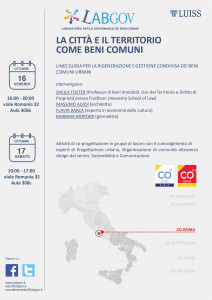
On 16 and 17 October, Labgov will present the first co-working session for Labgov 2016.
This two-day workshop is based on the proposal to imagine Rome in an innovative way.
The project CO-ROMA is focused on the idea that a city should learn to share, collaborate and cooperate with the institutions, the civil society, universities and all the possible stakeholders in order to create a collaborative community, that wants to improve the quality of life and save the Italian cognitive and cultural heritage.
The programme of this first co-working-day will be structured into four working groups, which will be: urban design; communication; community organization through service design, and sustainability.
The most competent experts in every field will hold the round tables; they will transfer their know-how to the neo-labgovers, and they will imagine all together this transformation for Rome.
Several forces are already present in this new collaborative city: active citizens, voluntary associations, schools, urban gardens, co-working spaces, fab-labs, business leaders, and professionals for the common good.
Moreover, on Saturday morning at 9.00 am, the 2016 Labgov students will work for the first time in the garden, with our technical partner for horticulture, Zappata Romana. It will be a fantastic weekend, full of experiences and adventures. The detailed programme will be published as soon as possible.
For further information, please write to our official address.
by Diletta Di Marco | Oct 10, 2015 | The Urban Media Lab
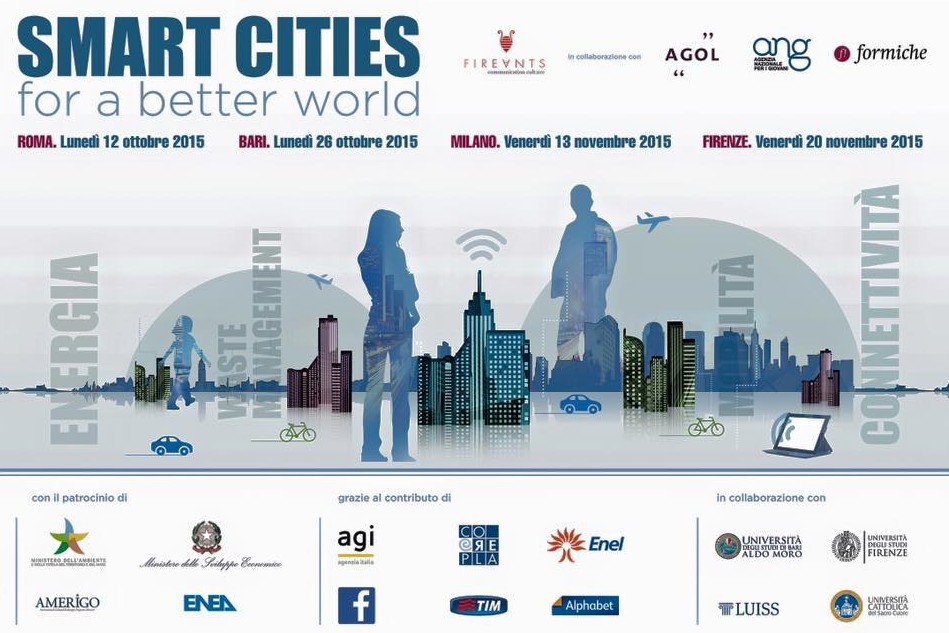
On October 12, LUISS University will host the first “Smart Cities Roadshow“,
organized by Formiche and Agol, in collaboration with the National Agency for
Youths, as well as several universities, institutions and firms.
These partners will work together to help young students to become the next
generation of leaders; they will teach students to be smarter and more
intelligent citizens of the community.

These are challenges that we can only overcome together through collective awareness
and strong participation. The day will begin at 9:30 am, and Professor Christian Iaione
will be one of the distinguished guests, along with Giampiero Gallo (Economic Advisor
to the Prime Minister Matteo Renzi and a professor at the University of Florence),
Simona Vicari (State Secretary at the Ministry of Economic Development with
responsibility for Smart City and President of the Task Force of the Ministry on
Smart Cities), Andrea Costa (project manager of EXPO 2015 Telecom Italia),
Laura Bononcini (Head of Public Policy at Facebook Italy) and many others.
In the afternoon the group will engage in stimulating co-design activities, where
students can consult with experts in the field. The round-tables will be organized
with policy makers, enterprises and experts to discuss a possible national policy
on the development of smart collaborative cities.
These activities will be featured by experts of the various branches: Ilaria Potito
(Head of Working Capital Operations at Telecom Italian), Mauro Annunziato
(Smart City and Coordinator of Eco enterprise ENEA) and Ugo Barbara (Head
New Media editors AGI).The event will end at 17:30.
We look forward to your participation!
If you want to participate register at this link.

by Benedetta Gillio | Sep 30, 2015 | EducationLabs, Luiss LabGov 2015-2016
The fourth edition of LUISS LabGov Educational Lab (workshops, co-design sessions and fieldwork) will re-start on October 2nd, 2015! The meeting will be held in Viale Romania, 32 – 00198 Rome at 4.00 PM.
After focusing on Bologna, Mantua and Battipaglia, the new Edu Lab will a ddress Rome, its potentials and weaknesses at a very difficult time for the city, its institutions, and its society. The Laboratory will aim to design a Commons-based collaborative governance tool tailored to the needs and characteristics of the Italian Capital City. As we have done until now, we will apply the CO-Cities approach, based on a strong partnership between institutions, the private sector and the community. The five souls of the collaborative governance (social innovation, public authorities, schools/universities, businesses, organized civil society) will work together to re-design their own city, making it more economically sustainable.
The CO-Cities approach requires opening experimentation grounds. LabGov 2015/2016, together with many partners representing CO-Rome, will open and manage several urban cooperation grounds in different areas of the City: The Lab will focus on Garbatella neighborhood, the Appia Antica Park, a high school in Ostia and the V Municipality (Prenestino-Centocelle). They represent four different types of urban commons to regenerate and invest in. The Lab will take this long, but very stimulating journey in the City with many allies, partners and friends who will provide insightful advice to prototype a Commons-based collaborative governance for Rome. The Laboratory stays open to contributions, help and advice. Collaboration will run Rome as a Commons, because Commons need appropriate governance tools.
_____________________
La quarta edizione di LUISS LabGov (workshops, sessioni di co-design e fieldwork) ripartirà il 2 ottobre 2015 alle ore 16.00 in Viale Romania, 32 – Roma!
Dopo i grandi risultati ottenuti a Bologna, mantova e Battipaglia, il nuovo LABoratorio per la GOVernance dei beni comuni riprenderà le sue attività concentrandosi sulla Città Eterna: Roma. Anche in questo caso, le 5 anime della governance collaborativa (social innovation, istituzioni, Università , imprese e società civile) collaboreranno per RIcostruire Roma, rendendola più vivibile e sostenibile.
Vi aspettiamo!

by Marco Quaglia | Sep 16, 2015 | The Urban Media Lab

Cities have played a leading role throughout history. After a relative short spell where states had the upper hand, they seems to be ready to gain their role back. A simple fact solidify clearly this assumption: twenty to thirty years from now, 70% of the world’s population will be crowding in urban areas. This figure appears as even more remarkable if compared to the already staggering percentage of today, when more than half of the world’s population lives in cities.
The phenomenon of urbanisation is a two-sides coin; on the bright side, living in the city can be as funny and exciting as it can get; on the dark side, most of us, in the daily routine, can grasp that life in a big city has become unbearable. The biggest challenge of our time is to defeat this common perception, since improving life in the cities is basically our main hope for a better future.
As pointed out by Micheal Bloomberg (former three-terms mayor of New York City) in this article, published by Foreign Affairs: “Influence will shift gradually away from national governments and toward cities, especially in countries that suffer from bureaucratic paralysis and political gridlock.” A fully fledged application of the principle of subsidiarity, in a word, will be the key for our future development. In fact, we are already inside this process of power-shifting.
How did we reach this point? According to Bloomberg, and more unassumingly by us at LabGov, the political and economic standstill of our time, worked as a sparkle for innovations – mostly in urban contexts. Cities are getting smarter and smarter. They are very often the main national hub of knowledge, creativity, new technologies, and so forth. Vertical farmers, smart lampposts, zero carbon buildings, and many many more. In the words of Bloomberg “cities eventually recognized that the best replacement for lost federal funding was local policy innovation.”
Majors and city’s administrations are transforming their cities in policy lab. This trend is always more evident on a daily basis all over the world, in a way that big metropolis are collaborating cross-nationally with small urban centers sharing ideas and best practices.
C40, for example, is the network of megacities aiming to spread climate friendly practices within its member cities. In 2011 only 6 cities of this network had bike sharing programs; by 2013, 36 had them. The same thing is happening for many other good practices, and it is very likely that this trend will gain even more momentum in the foreseeable future.
The upcoming IASC Conference organized in Bologna by LabGov in collaboration with Fordham University of New York and the ICEDD of the LUISS University of Rome will deal extensively on topic such as this, thanks to the contribution of some of the most innovative and relevant scholars in this field.
Il secolo in cui viviamo si sta connotando sempre di più come “il secolo delle città”; se da un certo punto di vista ciò non è una novità nella storia dell’uomo, il fenomeno rappresenta un’inversione di tendenza rispetto ad anni di centralismo statale, soprattutto nel vecchio continente. Le città di tutto il mondo saranno la casa di circa il 70% della popolazione mondiale da qui ai prossimi 20-30 anni. Non c’è dunque da stupirsi se sarà proprio nelle città che si giocherà il destino e il benessere di milioni di persone. Le pratiche di innovazione sociale nei più disparati ambiti stanno diventando sempre più frequenti; c’è dunque bisogno di non fermare questo fenomeno, ma di renderlo sempre più efficace ed efficiente. LabGov, in collaborazione con la Fordham University e lo ICEDD della Università LUISS di Roma affronterà questo tema, insieme a molti altri, il 6-7 novembre a Bologna nel corso della prima edizione della Conferenza tematica sui beni comuni urbani.
by Marina Bassi | Aug 9, 2015 | The Urban Media Lab
 The “Open Collaboration Pact between the Municipality of Bologna and Fondazione del Monte di Bologna e Ravenna” has been agreed! The pact aimes at re-conceiving urban spaces as a common resource for communities. . The Open collaboration pact is the first step in the process (towards) CO-Bologna, the public policy launched by the city during the Civic collaboration fest in may 2015, during the celebration for the first year since the approval of the“Regulation on the collaboration among citizens and administration for the care and regeneration of urban commons”. All those efforts aims at installing collaboration as a structural methodology to run the city as a collaborative commons.
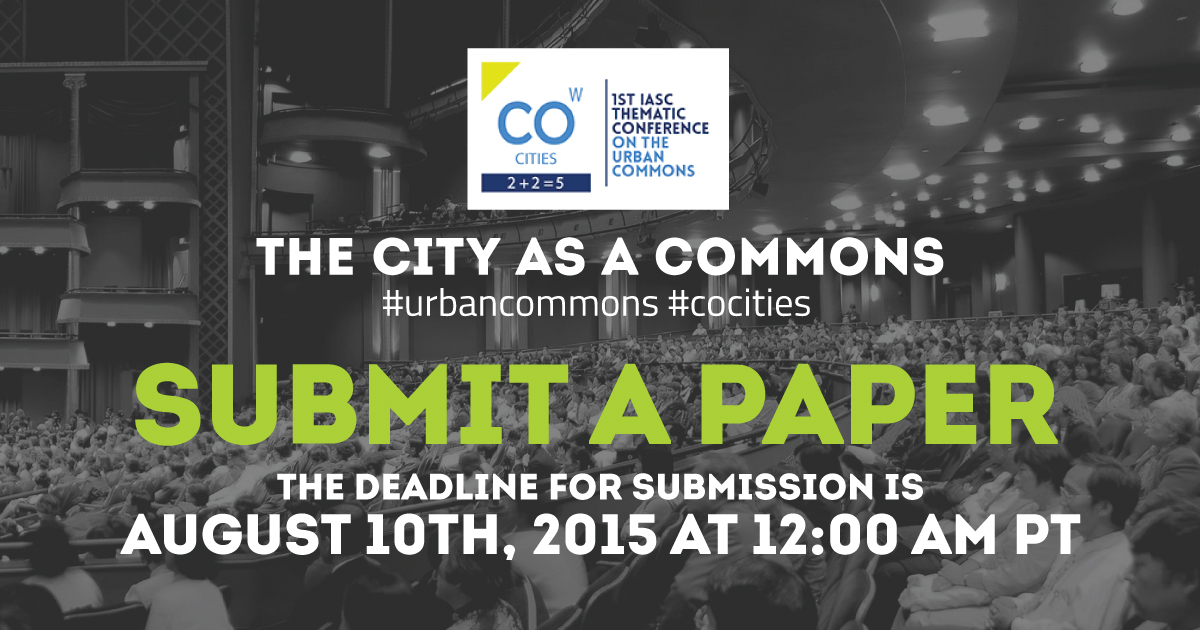
Bologna, the first city in Italy to conduct collaborative governance experimentation, will host the 1st IASC Conference, named “The City as a Commons: Reconceiving Urban Space, Common Goods And City Governance” is coming! The conference is organized by LabGov in collaboration with Fordham University of New York and ICEDD, the International center for democracy and democratization.The Conference will be held in Bologna, on November 6-7 2015. The conference will be co-chaired by Professor Christian Iaione (UniMarconi University and LUISS Guido Carli) and Professor Sheila Foster (Fordham University).
In the track “Designing and governing the city as a commons” all issues about institutional design for urban commons will be faced, and scholars and practicioners will discuss, asking questions and comparing possible solutions. Are there specific model to run the city as a commons? The decline of public financing and cyclical real estate and fiscal crises, result of the Leviathan-state governance model, have forced cities to struggle to prevent urban shrinking or gentrification processes, as well as to support and maintain shared resources and common goods or regulate urban development to keep cities as a fair, just, diverse, human flourishing and creative environment. Out of the public-private management dichotomy, are there other models to design or re-design urban settlements and other governance solutions to manage cities themselves as not just market-friendly, but also as human-friendly urban collaborative commons?
The deadline is approaching, still two days to register as an auditor or submit your paper on: http://www.labgov.it/wordpress/urbancommons/design-and-governing/


