by Maria Elena Santagati | May 28, 2018 | The Urban Media Lab
On April 18-20 Aarhus University, Denmark, hosted the international conference “Cultures of participation. Arts, digital media and politics”, organized by the Take Part research network on cultural participation. The conference aimed at presenting and discussing how participatory approaches are declined within both physical and virtual contexts, like cultural institutions and digital media platforms, urban spaces, artistic production, architectural design. It dealt with three main themes: 1) Participatory art & aesthetics, 2) Digital media & technology, 3) Cultural policy & participation.
In this context, LabGov participated, with its co-founder Christian Iaione together with Maria Elena Santagati, in the session that provided a reconstruction of the Italian context and initiatives, presenting the experience of the LabGov’s project Co-Rome promoting the participatory governance of cultural heritage in the framework of the Faro Convention, with a focus on the urban commons implemented in the Centocelle’s Archaeological Park in Rome
120 participants from all over the world had the opportunity to attend the three keynote speeches by Lisanne Gibson (School of Museum Studies-University of Leicester) “Museums and participation – Who goes… (and who doesn’t?)”, by Shannon Jackson (University of California, Berkeley) “Civic re-enactment and public re-assembly”, and by Zizi Papacharissi (University of Illinois-Chicago) “Affective publics: news storytelling, sentiment and Twitter”. The first one–starting from a recent study conducted in the UK showing that museum visitors are just a minority of the population (8.7%) who engage with State funded cultural activities–calls for a rethinking of museum practice and role to enhance the citizens’ interest and participation starting from the idea that “Museum can function as places where people can explore their own identities in relation to others, to reflect on how people are different and how they are the same” (Mark O’Neill, 2006: 109). The second one–based on the UC-Berkeley’s research platform on Public (Re) Assembly and the work of Aaron Landsman and Paul Ramirez Jonas–investigated the re-enactment in civic processes. The third one discussed about the concept of affective publics, the role and meaning of social media for the Arab Spring and occupy movements, together with data from recent studies by the University of Illinois at Chicago explaining the relevance of the platform for contemporary news storytelling, framing, and gate-keeping.
A range of sessions provided different perspectives on the topic of participation in culture through the lenses of different disciplines, reflecting the ongoing practices trends across Europe and beyond, including digitized cultural institutions and experiences, participatory art, policies of participation, measurement and valuation of cultural participation, cultural activism, methods for engaging communities in cultural production, arts&media platform, spaces for civic participation, urban and public space, participatory management of cultural institutions, technological transformations, and (non)participation. With respect to participation in policy and management, the session concerning the European Capitals of Culture provided useful considerations emerging from a study on ECOC projects revealing that most of them had an instrumental approach to the participation instead of providing a base for participatory governance (Szilvia Nagy). The session also stressed the need of rethinking the participation with regards to the experience of Aarhus 2017 based on the Rethinking participation Report (Leila Jankovich and Louise Ejgod Hansen), shared an analysis of arts carnivals programmes and participation within Capitals of culture in UK (Angela Chapell), and, finally, displayed a very interesting project “2025€ x 2025”, concerning participatory projects for Dresden ECOC candidate city for 2025, including one based on the “table-theatre” method (Valentina Mercenaro).
With regard to participation in culture policy-making, interesting inputs were raised from: a critical perspective on Iceland’s official cultural policy and its confusing aesthetic of involvement (Njourour Sigurjonsson); an interesting critical analysis of newly rooted participatory cultural institutions in Poland (Marcin Poprawski); a case study of Leeds cultural policy making as a democratic space (Malaika Cunningham and Elysia Lechelt); and a reflection about cultural participation as a narrative in the German cultural policy (Claudia Steigerwald). Finally, another case treated the challenge of participatory management at the School-Museum of Pusol within the SoMus-Society in the museum project (Lorena Sancho Querol, Rafael Martinez Garci and José Martinez Jurado).
Meanwhile, on April 18th, the European Union published the final report of the OMC working group on “Participatory governance of cultural heritage”, containing both operational and policy recommendations. Moreover, within the European Year of Cultural Heritage, the European Cultural Heritage Summit will take place in Berlin on June 198h-24nd, with the slogan “Sharing heritage-Sharing values”. Among the next interesting meetings and events, some concern participatory issues like: the conference “Cultural heritage communities and audiences in today’s digital environment” dedicated to digital technologies and cultural heritage; the conference “Sharing as a chance. Private initiatives and cultural heritage”: “People want to participate in heritage and be involved in decision processes. It should no longer be a specific task of experts to decide about the future of our heritage but of all those who are engaged in it”; and the students’ summit “Culture Up Your Future – Living out European Heritage in the Digital Age” concerning students’ engagement with European cultural heritage.
Finally, another relevant meeting on the topic of participation will be held on June, 11th-12th in Manchester for the conference “Understanding everyday participation: Re-locating culture, value and inequality”, as the final step of Understanding everyday participation – Articulating Cultural Values, a five-year research project funded by the Arts and Humanities Research Council advancing a re-evaluation of the link between participation and cultural value.
by Maria Elena Santagati | Dec 27, 2017 | The Urban Media Lab
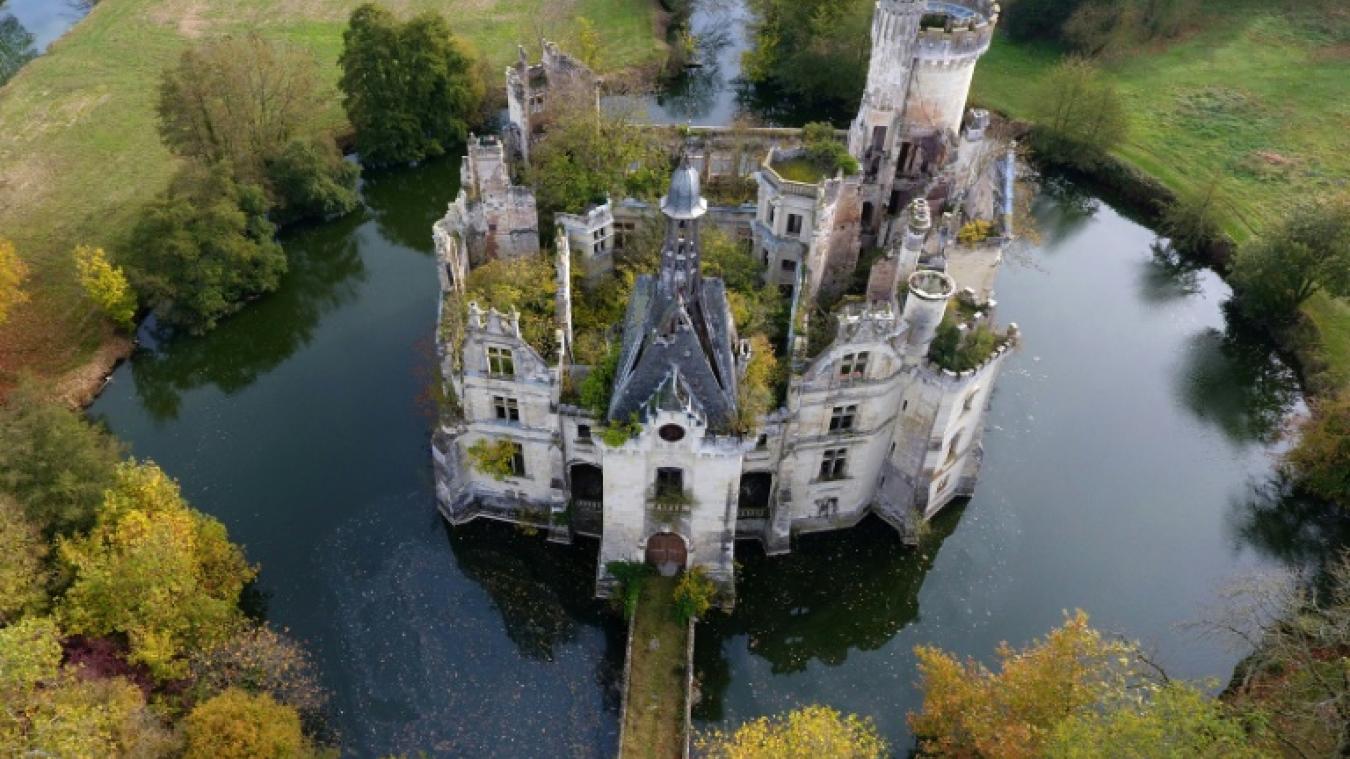
Chateau de la Mothe-Chandeniers, France. Image from La Voix du Nord
More than 17.000 contributors from 115 countries participated to the crowdfunding campaign promoted by Dartagnans, a French crowdfunding agency dedicated to the promotion of cultural heritage, to buy, save and enhance the Chateau de la Mothe-Chandeniers in France. More than 1,5 million € have been collected thanks to the contributors that will become co-owners of the medieval castle; 500.000 € will go for the purchase, while the remaining part for the securing and restoration activity.
Meanwhile in Italy Federculture, the National Federation of Regions, Municipalities, Local Utility Companies and all actors managing cultural, tourism, leisure and sports services, launched a petition to ask the Italian government the ratification of the Faro Convention.
Besides the ever growing bottom-up initiatives and activities promoting citizens involvement and engagement in culture, participation is finally gaining an increasing attention also in the research field, as demonstrated by the recent conference “Participatory governance in culture. Exploring practices, theories and policies”, held in November in Rijeka and promoted by Kultura Nova Foundation in collaboration with the European Cultural Foundation. 3 days of interesting discussions and paper presentations around the topic of participatory approaches in culture. Professors Leila Jankovich (University of Leeds, UK), Frank Fischer (Humboldt University, Berlin, Germany and Rutgers University, US) and Christian Iaione (Guglielmo Marconi University of Rome, LUISS University and LabGov’s co-founder, Italy) proposed three different keynote speeches exploring participatory approaches in the arts, in cultural governance and policy making and in the city as a commons perspective. The conference was also an opportunity to learn about many practices spreading throughout Europe, from cultural associations to independent spaces and platforms, from social centres to museums, all developing participatory projects and processes in their everyday activity. Insights into other continents approaches, with some representatives of Zambia, South Africa, US and India were provided as well. Also difficulties and potentials of participation in European Capitals of Culture were discussed, thanks to the experience of some candidate cities.
Next year, other conferences will explore the role of participation in culture, finally acknowledging its importance.
In April (18-20), Aarhus University will host the international conference “Cultures of Participation – Arts, Digital Media and Politics” in order to discuss about the main trends, potentials and problems of the different cultures of participation. The key question is: “On policy levels, citizen participation and engagement are emphasized as key components of democratic societies and these policies are currently being practiced and put to work at cultural institutions and cultural houses, in artistic production, in architectural and urban ‘smart city’ designs and various digital media spaces. But what are the characteristics of cultural participation and how do these manifest themselves in cultures of participation?” The conference invites paper proposals in these topics (deadline January 5): 1) Participatory art & aesthetics, 2) Digital media & technology, 3) Cultural policy & participation.

Image from https://www.gla.ac.uk/events/universeum2018 (the main building of the University of Glasgow)
In June (13-15th), the main annual conference of Universeum- The European Academic Heritage Network (XIX Universeum Network Meeting), held at The Hunterian, University of Glasgow, will be focused on “Working Together: Partnerships,Co-creation, Co-curation”. A call for papers (deadline January 31) is launched in the following topics: 1) Teaching and Student Engagement with Collections; 2) Co-curating Academic Collections Within and Beyond the Campus, while a poster session will deal with the topic of “Working Together in University Museums”. The purpose is clear, due to “the importance for university museums of working together, not only within the university campus but also beyond, collaborating with other cultural heritage organisations; with other communities; with society at large. (…) Working together includes also giving the initiative and the voice to our end users, and working closely together to co-curate and co-create exhibitions, resources, and events”.
European Cultural Heritage Summit, Berlin
Always in June (18-24th), Berlin will host the European Cultural Heritage Summit, one of the flag events of the European Year of Cultural Heritage. The Summit theme is “Sharing heritage – sharing values” and it will be co-hosted by Europa Nostra, the Prussian Cultural Heritage Foundation (SPK) and the German Cultural Heritage Committee (DNK). A large number of events will be proposed mobilising public and private stakeholders, among which the Heritage excellence fair, an High-level policy debate on Europe and cultural heritage, the Award-giving ceremony for the EU Prize for Cultural Heritage/Europa Nostra Awards 2018 and the Europa Nostra General Assembly and visits of the UNESCO World Heritage Sites in Potsdam.
An increasing attention for a relentless phenomenon. Stay tuned!
Il tema della partecipazione nel settore culturale sta finalmente ricevendo la dovuta attenzione. Accanto alla crescita di iniziative dal basso, anche il mondo della ricerca e della policy inizia ad interrogarsi su tendenze, problematiche e scenari del fenomeno. Un 2018 ricco di appuntamenti.

by Chiara De Angelis | Nov 22, 2017 | The Urban Media Lab

From November 22nd to 24th, Rijeka (Croatia) is going to host the Participatory Governance in Culture: Exploring Practices, Theories and Policies Conference.
The Conference is organized by Kultura Nova Foundation, in partnership with Rijeka 2020 LLC and collaboration with European Cultural Foundation (ECF) and International Federation of Arts Councils and Culture Agencies (IFACCA) as a part of the “Approaches to Participatory Governance of Cultural Institutions” project supported by UNESCO’s International Fund for Cultural Diversity. The conference is also supported by the regional intergovernmental forum Central European Initiative.
The Conference, through the presence of scholars, researchers, theoreticians, cultural operators, artists, practitioners, activists, policymakers and decision-makers from across the world, is going to cover a number of issues and concerns about the challenges, limitations, paradoxes and perspectives that cultural research, practices and policies are facing around the concept of participatory governance in culture. The different paper and panel sessions will explore changes in the socio-political context, cultural and social effects of new models of governance, modes and levels of involvement of all relevant stakeholders in decision-making processes and the (re)organization and relevance of their roles.
Prof Christian Iaione, LabGov’s co-founder, is going to attend the conference as a keynote speaker. He will give a speech on “The right to the Co-City” on Thursday, November 23rd, at 7 pm.
The full program is available on the official website of the Conference: http://conference.participatory-governance-in-culture.net/hr/programme

by Maria Elena Santagati | Jul 26, 2017 | The Urban Media Lab
“Approaches to Participatory Governance of Cultural Institutions” is a two year project (from March 2016 to March 2018) implemented by Kultura Nova Foundation (Croatia) with the support of the UNESCO International Fund for Cultural Diversity.
This multi-donor fund was created according to article 5 of the 2005 Convention on the Protection and Promotion of the Diversity of Cultural Expressions in order to “foster the emergence of a dynamic cultural sector” in developing countries. Since 2010, it supported 90 projects in 51 developing countries, for a total financing of US$ 6 million for these three major purposes: capacity development (48.7%), cultural and creative industries development (28.6%), governance and public policy (22.7%). The fund is now supporting the following projects, in addition to the already mentioned ones: Strengthening civil society participation in policy advocacy for Bolivia´s culture sector; Sustainable development of cultural industries with women and youth in Ilobasco (El Salvador); Mapping the Haitian music industry; Towards the revision of the National Cultural Policy in Jamaica; Strengthening local cultural policy in Zimbabwe.
Thanks to the funding allocated by the UNESCO IFCD (US $ 77.868,00), Kultura Nova intends to “develop strategic approaches to participatory governance of innovative cultural institutions by fostering their active involvement in planning, decision-making, implementation, monitoring and evaluation of policies”.
Kultura Nova Foundation was founded by the Republic of Croatia in 2011 in order to support the “promotion and development of civil society in the fields of contemporary arts and culture”, by providing both professional and financial support to specific programmes developed by Croatian organizations. Its main goals are to contribute to a capacity-building process in organizations related to contemporary art and culture, to enhance a stronger cooperation in the cultural sector, to raise awareness about its two fields of intervention as well as about their role in social development.
The project is mainly based on the analysis and mapping of the most innovative participatory governance practices and cultural institutions in Croatia and Europe, also through an online survey, and of the policy design as well, in order to identify possible participatory governance models in culture. Another fundamental aim is to strengthen the capacities of 150 relevant stakeholders on participatory governance mechanisms through a series of coaching sessions for policy and decision makers, capacity building workshops for local community and intensive knowledge sharing for civil and creative sectors. A Participatory Governance Guidebook for Innovative Models of Cultural Institutions will be also published.
The project is articulated as follows:
- Research of participatory governance models and institutional frameworks (20/03/2016 – 01/06/2017)
- Knowledge sharing and capacity building (15/06/2016 – 28/02/2018)
- Publication about Participatory Governance in Culture (15/06/2017 – 28/02/2018)
- Participatory Governance in Culture – Conference (November 2017)
The International and interdisciplinary conference Participatory Governance in Culture: Exploring Practices, Theories and Policies. DO IT TOGETHER will be held on 22nd – 24th November 2017 in Rijeka, Croatia, in partnership with Rijeka 2020 LLC and in collaboration with European Cultural Foundation.
La governance partecipativa della cultura sotto la lente, grazie ad un progetto della fondazione croata Kultura Nova finanziato dall’UNESCO International Fund for Cultural Diversity. Analisi di approcci, pratiche, policies e modelli di participatory governance nelle e per le istituzioni culturali, il tutto accompagnato da processi di capacity-building. Se ne discuterà a novembre in Croazia.

by Chiara De Angelis | Jun 15, 2017 | The Urban Media Lab
Rijeka is going to host, from November 22nd to 24th, the “Participatory Governance in Culture: exploring Practices, Theories and Policies. Do It Together” Conference, organized by Kultura Nova Foundation, in partnership with Rijeka 2020 LLC and collaboration with European Cultural Foundation as a part of the “Approaches to Participatory Governance of Cultural Institutions” project supported by UNESCO’s International Fund for Cultural Diversity. The Conference is part of the “Approaches to Participatory Governance of Cultural Institutions” project, which is supported by UNESCO’s International Fund for Cultural Diversity.
Scholars, researchers, practitioners, decision-makers, activists and artists are invited to submit papers, presentations or panel proposal for this international conference. The text of the call for papers is available at this link.
The aim of the conference is to explore the new perspectives that are being introduced by many cultural initiatives all around the globe in order to challenge the traditional governance models, and to experiment with innovative approaches to governance. Culture is being understood as a shared resource, and the practicing of culture is being placed in a commons-oriented perspective.
The deadline for submitting presentations and panel proposals is 15th July 2017.
More information on the Conference’s official website: http://www.participatory-governance-in-culture.net/


