by Maria Felicita Ferraro | Jun 30, 2014 | EducationLabs, The Urban Media Lab
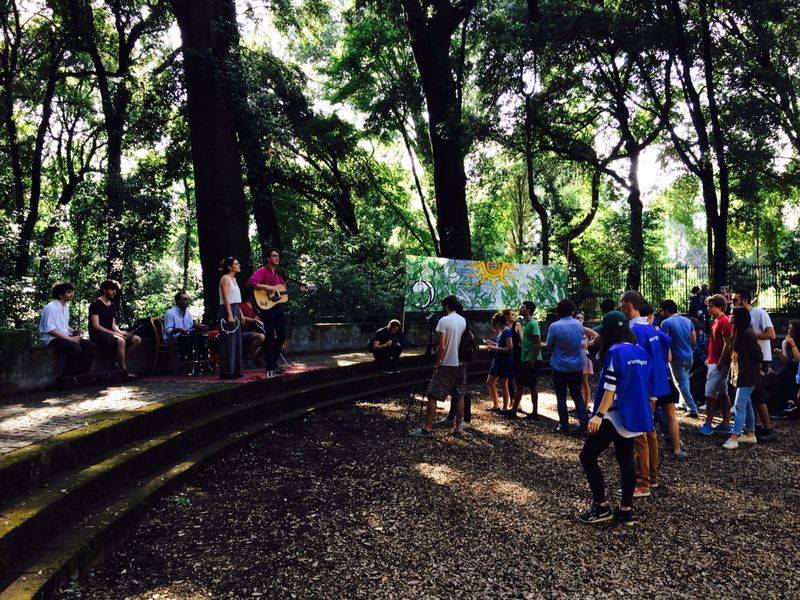
 On June 26th, 2014, LabGov has organized an event together with the social and cultural club La Calzoleria to regenerate the Temple of Flora in the roman park Villa Ada. The event has been organized with the cooperation of the Roman Superintendence for the Cultural Goods and the representatives of the public Administration have been willing to work together with the students, their professors and the General Manager of LUISS Guido Carli, Giovanni Lo Storto. Among the authorities who joined us, there were Alberta Campitelli, Manager of the Roman Historical parks, Agnese Micozzi, Cultural Assessor of the II Municipality and Giuseppe Gerace, President of the II Municipality of Rome. Following the words of the Head of the Political Science Department of LUISS professor Sebastiano Maffettone, who during his readings about Gandhi and Kant stressed “the importance of changing ourselves before pretending that others change”, the Labgovers decided to continue the work that had been started last October. The first ReinventAda event had been meant to restore the original beauty of the Temple. This time, the regeneration has been followed by “Intimismi”, an event of cultural entertainment provided by La Calzoleria with live music by the band Marcello e il mio amico Tommaso, and Luca Bertelli, who played a Swiss uncommon instrument called Hang. Moreover, thanks to the collaboration with Urban Decorations the guests have been able to assist to a live painting exhibition by the artist Lorenzo Properzi. The aim of the Laboratory was to set an example for the future, of active citizenship and a collaboration with the various associations, institutional entities, as well as civic and business subjects interested in achieving cultural and entertainment activities to re-appraise the Temple of Flora and restore its former function of meeting place and cultural exchange. We hence presented a Pact of Collaboration for the care and shared governance of urban commons, starting with the Temple. “Regeneration -as professor Christian Iaione declared- means a permanent and continuous care and shared responsibility.”
by Alessandra Feola | Jun 16, 2014 | The Urban Media Lab
By Paola Brizi
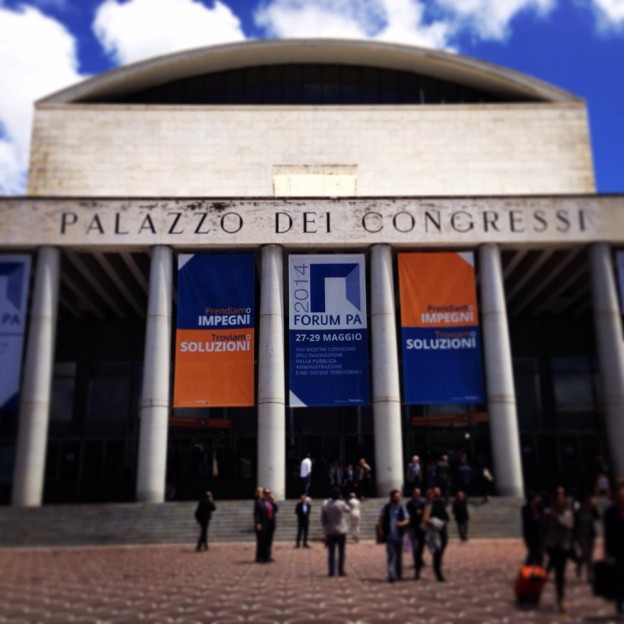
Gregorio Arena and Christian Iaione presentations about collaborative economy and shared administration at 2014 Forum PA
The XXV edition of the 2014 Forum PA took place from the 27th to the 29th of May. It is the main conference for the innovation and modernization of the Italian public sector, this year titled “Let’s take commitments, let’s find solutions” which was attended by Professors Gregorio Arena and Christian Iaione to present the Regulation on the collaboration among citizens and administration for the care and regeneration of urban commons and to discuss about collaborative economy.
Among the topics of discussion in the 2014 edition of the Public Administration Forum, which was held at the Palazzo dei Congressi in Rome, the principles of transparency, participation and collaboration have taken on great importance, aimed at building new relationships between government and society.
The Forum has involved politics, businesses, governments and all the innovator actors in public administration and, in two separate conference sessions, Professors Gregorio Arena and Christian Iaione illustrated the work carried out by Labsus to foster the collaboration between institutions and citizens, in particular through the drafting of the Regulation on the collaboration among citizens and administration for the care and regeneration of urban commons, recently approved by the two Municipalities of Bologna and Siena.
Arena: “From the open government to the partner state”
According to professor Gregorio Arena the administrations reflect the needs and the values of the society they serve, so that their reform will have to be in tune with the major underlying trends of the society, at that particular moment in history.
Today, the main theme around which we have to build a new model of society is that of “sharing”, – adds the professor – a concept that requires a shift from “I” to “Together”. In fact, if we accept the idea that we are living in what is defined a “sharing society”, i.e. a society in which the use is more important than the ownership, this theme could become one of the inspiring souls of the administration reform which is so much discussed in this period in Italy, putting it in line with the society itself.
“In Italy this is feasible thanks to three elements”: the constitutional provision of Article 118, according to which the public authorities shall promote the autonomous initiatives of citizens carrying out general interest activities, which necessarily leads to the sharing; the organizational model defined “shared administration” by Arena himself in an essay of 1997 and which goes beyond a mere participation in decision-making but which means instead the sharing of general interest functions with the administration; finally, the third element is the paradox of a society like ours where there are those who want to actively take care of the commons, but cannot do it because they are not allowed to.
“For this reason Labsus – Laboratory for Subsidiary worked for two years within the City of Bologna aimed at writing a Regulation, setting in three districts of Bologna but with a look over the horizon, thinking about a tool that would have served all eight thousand Italian municipalities”.
The heart of the Regulation is the Covenant of Cooperation between the Municipality and the citizens to share the responsibility for the caring of the urban commons. “This is a fundamental concept, because we have lived for generations on the idea of the delegation, the idea that someone else will take care of our problems. We must instead recover a sense of collective responsibility, not in the negative sense of the term, but in the Latin sense: respondere, referred to those who give answers”.
Iaione: “Twist and Share, Public administration at the turning point of collaborative economy”
Many public policy and administration scholars are questioning the new phenomenon of the Public Administration seen as enabler, and on how there can be innovation without excluding the institutions.
According to Christian Iaione the explosion of collaborative paradigm corresponds to a new role of the public administration: “We are in the third institutional revolution so, after the Leviathan state of the nineteenth century and the Welfare state of the twentieth century, now is the time for a state that no longer deals with every issue, but of a relational and enabler state”.
Within this social innovative phenomenon, not dictated by the economic crisis, the public administration should take on the necessary role of enabler by fostering strong partnerships with its citizens who hold competencies, resources and knowledge, thus discovering the value of collaboration and initiating new institutional paradigms to convey these energies toward civic objectives of general interest.
The Regulations for the care and regeneration of urban commons, drafted by Labsus in collaboration with the Municipality of Bologna, is just a tool to facilitate the deployment of these new techniques that allow the diffusion of positive impacts on the community.
The Article 2 contains a definition of the urban commons seen as “non-abstract but almost operational category, because they are both public and private goods of which the citizens together with the institutions decide to share the responsibility of care and renewal, through processes of participatory democracy, precisely because these are functional assets for the individual and collective welfare”.
“The Regulation is a manual for the collaboration between the outside and the inside of the government”, thanks to which the administration becomes an interlocutor between all the collaborative economy actors. It represents a platform used to enable the citizens motivation for the caring and regeneration of urban common tangible and intangible goods, together with the government and giving answers to the main community problems.
It is also a platform of economic policy: it implies in fact the idea of a collaborative business model that creates value through the collaboration of different actors, whether individuals, associations or companies.
“This regulatory infrastructure is lacking, however, of two fundamental elements: the communication and training”, i.e. the construction of platforms for communication but also appropriate digital media and educational workshops for young people to involve them in the maintenance of the civic commons.
Since 2010 Labsus has launched a project involving two high schools in Rome, and it is now promoting it to other schools thanks to “Rock Your School“, the School of civic maintenance of commons. The leading idea is to create a shared city hall, in which the students are educated and trained for this cultural change through active schools and co-design laboratories, to make businesses, schools, universities and institutions collaborate, and to allow this cultural paradigm shift becoming a living reality.
by Stefano Speranza | Jun 13, 2014 | The Urban Media Lab
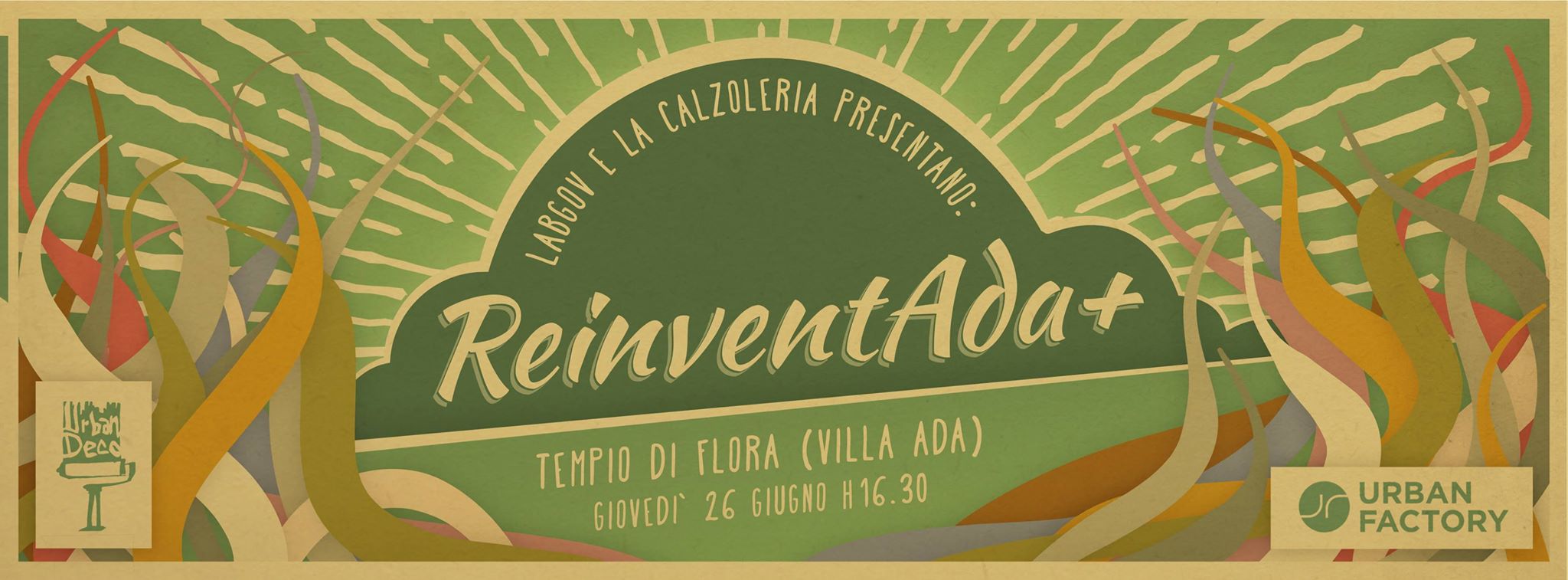
 The next June 26th, 2014 at the Temple of Flora in Rome will be held ReinventAda+, an opportunity of shared regeneration organized by LabGov in the wake of the highly successful ReinventAda, held in October 2013 together with La Calzoleria, club of social and cultural promotion.
LabGov considers as handbook and benchmark the Regulation adopted by the Municipality of Bologna on the “Cooperation among citizens and administration for the care and the regeneration of urban commons” and the urban commons at issue is the Temple of Flora which is in the wonderful park of Villa Ada, in Rome.
The Labgovers will symbolically repossess the Temple on June 26th, for a second edition of shared regeneration that, this time, will also see the presence of artists to animate the event.
In fact, during the first edition of ReinventAda, held on October the 25th, 2013, the Labgovers have cleaned up and restored the Temple and its surrounding area that, despite the restoration works made over the years, were in a state of degradation and abandonment.
During that memorable day it was shown that thanks to the cooperation of the local Administration (the Councillors of the City of Rome Flavia Barca and Estella Marino were actually attending the event) the people willing to roll up their sleeves can easily do it and take care of those urban commons which the Administration often loses sight of.
After eight months, however, the writers (the ones who only soil, not the artists), the waste and the dry leaves are back together with the abandonment, so the Temple of Flora is back to seem an old ruin left alone. But the Labgovers do not accept this situation and they have decided to persist and continue to work actively on the territory.
Thus, on June the 26th will be held ReinventAda+, the second edition of the first ReinventAda event that this time will not only consider the cleaning of the Temple but also moments of entertainment, called “Intimismi”, with music, reading and an exhibition of live painting made by Urban Decoarations. LabGov intends to contribute to the construction of a steering committee that aggregates the various associations, institutional entities, as well as civic and business subjects interested in achieving cultural and amusement activities to enhance the Temple of Flora and restore its former function of meeting place and cultural exchange. For this reason will be presented a Pact of Collaboration to ensure that the Temple of Flora will soon become a meeting and interest place for the local community.
Here the programme of ReinventAda+:
h 2:00 pm – Start of the activities
- Setting up and Regeneration of the Temple of Flora
h 4:30 pm – Arrivals of guests
h 5:00 pm – “A proposal for the shared Governance of Villa Ada”
- Opening greeting from LabGov
- Presentation of the Pact of Collaboration
- Presentation of the Handbook for the Placemaking
- Reading by Professor Sebastiano Maffettone
h 5.00 pm Live painting by Lorenzo Properzi of Urban Decorations
h 5:30 pm – Cultural entertainment “Intimismi”
- Music provided by La Calzoleria with:
- Marcello e il mio amico Tommaso
- Luca Bertelli
h 7: 30pm – End of the activities
For LabGov Group
Stefano Speranza
by Alessandra Feola | Jun 1, 2014 | The Urban Media Lab
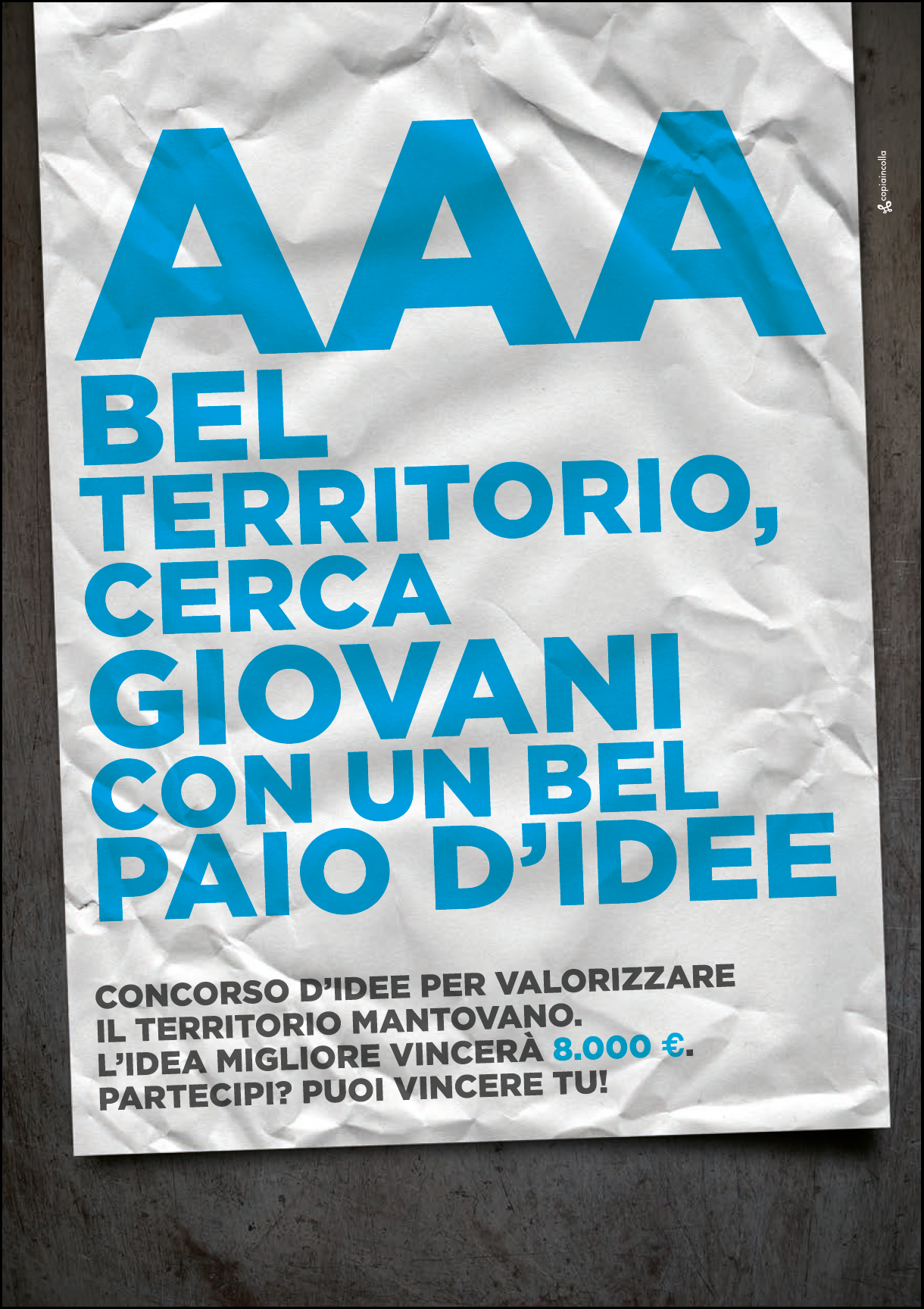
 In Mantova new ideas for the development of cultural heritage.
The examining committee of the Competition of ideas “Culture as a commons – Shared promotion of the development and cultural-touristic identity of the Mantua’s territory” announced the list of the winning ideas. This competition of ideas for the development of projects and the shared care of culture in the Mantova’s territory has been held by the Province of Mantova and For.Ma., an educational institution, with the support of the Chamber of Commerce of Mantova and Labsus – Laboratory of subsidiarity, that wanted to experiment a new model of care, regeneration and valorization of cultural heritage and activities, based on the model of the shared administration.
The first place was awarded to “Project of smart human street – Have you salt?” that obtained 92 points by the committee and will receive 8.000 euro for prize. The second place, with 90 points, is of the project “(O)URS 2.0 Our Urban Regeneration Square 2.0” that will obtain a prize of 6.000 euro. The third place “ArteAgricoltura”, will be awarded with a prize of 4.000 euro. Worth of mention other four ideas that won a little contribution of 500 euro. The public presentation of these ideas will be the next 6th June at 5 p.m. at Palazzo della Cervetta, in Piazza Mantegna, Mantova.
The competition is part of a more ambitious project that aims to involve citizens, also organized in groups and associations, in the care of the cultural commons of the Mantova’s territory since the ideation and design. In the last years has emerged the idea that the right of every single people to enjoy the cultural heritage must be completed through its involvement in the entire process of management, from the planning to the conservation. This idea is also endorsed by the Convention of Faro of the Council of Europe, that is the most recent legal instrument in the international scenario among the cultural Convention. The Convention calls the member states and their population to sustain and promote policy of governance for the management and conservation of cultural heritage, material and immaterial and promote the adoption of policy that take into account the participation of citizens and communities.

by Federica Maranesi | May 27, 2014 | The Urban Media Lab

On May 29th, at 9.30 the conference “Twist and Share” will take place in Rome within the 2014 ForumPA fair.
Christian Iaione, Director of Labsus, will be giving a speech about what kind of institutions need to be designed for a collaborative economy, and to present the Regulation on the collaboration among citizens and administration for the care and regeneration of urban commons drafted by Labsus with the Municipality of Bologna and recently approved by the City Council. The conference will focus on the concept of sharing, understood as a real and concrete institutional technology which can modify the productive chain of values through the empowerment of city users, going beyond the dichotomy among public and private sectors. During the conference close attention will be paid to the worldwide expansion of the collaborative governance models which characterize all the phases of the value creation process, from availability of resources, to design and consumption of products and services. In this context the Public Administration may play a key role as a mediator enabling the active actors of collaborative economy, and also as an accelerator for the spread of positive impacts on the community and as am hub of a governance network.

 On June 26th, 2014, LabGov has organized an event together with the social and cultural club La Calzoleria to regenerate the Temple of Flora in the roman park Villa Ada. The event has been organized with the cooperation of the Roman Superintendence for the Cultural Goods and the representatives of the public Administration have been willing to work together with the students, their professors and the General Manager of LUISS Guido Carli, Giovanni Lo Storto. Among the authorities who joined us, there were Alberta Campitelli, Manager of the Roman Historical parks, Agnese Micozzi, Cultural Assessor of the II Municipality and Giuseppe Gerace, President of the II Municipality of Rome. Following the words of the Head of the Political Science Department of LUISS professor Sebastiano Maffettone, who during his readings about Gandhi and Kant stressed “the importance of changing ourselves before pretending that others change”, the Labgovers decided to continue the work that had been started last October. The first ReinventAda event had been meant to restore the original beauty of the Temple. This time, the regeneration has been followed by “Intimismi”, an event of cultural entertainment provided by La Calzoleria with live music by the band Marcello e il mio amico Tommaso, and Luca Bertelli, who played a Swiss uncommon instrument called Hang. Moreover, thanks to the collaboration with Urban Decorations the guests have been able to assist to a live painting exhibition by the artist Lorenzo Properzi. The aim of the Laboratory was to set an example for the future, of active citizenship and a collaboration with the various associations, institutional entities, as well as civic and business subjects interested in achieving cultural and entertainment activities to re-appraise the Temple of Flora and restore its former function of meeting place and cultural exchange. We hence presented a Pact of Collaboration for the care and shared governance of urban commons, starting with the Temple. “Regeneration -as professor Christian Iaione declared- means a permanent and continuous care and shared responsibility.”
