
Abstract
Renewable development has evolved into a typical understanding of the idealistic approach for human long-term development due to the acceleration of the depletion of global energy supplies and the worsening of the climate crisis. The construction industry’s buzzword has been “green building.” Urban construction is moving quickly, and green building is urgently needed. In recent years, green buildings have emerged as a crucial element in the quest for improved durability through increased reliance on renewable energy sources. Several nations have established their own green building councils and guidelines as a general outcome of contributing to the development of green building fundamental concepts. The building industry is responsible for several harmful environmental issues worldwide, and South Africa is no different. To address these issues, which continuously endanger the wellbeing and existence of both people and the natural world, sustainability principles have been introduced. As a sustainable idea, “green building” seeks to address socio-economic challenges as well as environmental ones in the created environment. This short paper assesses the benefits and drivers of implementing green building projects in South Africa. The paper also seeks to highlight a structure that must undoubtedly meet several requirements to be labelled as green, but what are these requirements? What attributes distinguish a green building? It further demonstrates how we can better comprehend how the Green Building Index (G-B-I) rating tool works to lessen a building’s carbon footprint by outlining the six requirements that make a building green. The paper also explains some reasons why green buildings aren’t just good for the planet, as well as how green buildings can help fight climate change. Data were obtained and analysed from books, publications, articles, and reports.

Introduction
A “green” building is one that minimizes or eliminates harmful effects on our climate and natural environment during design, construction, or operation. It can also have positive effects. Green structures protect priceless natural resources and raise our standard of living. The green building strategy, also referred to as sustainable building encourages ecologically friendly and resource-conserving techniques that endure the entire life of a project.
A network of high-quality natural and semi-natural areas with other environmental features, built and managed to provide a variety of ecosystem services and safeguard biodiversity in both rural and urban settings, can be widely referred to as “green infrastructure.” In addition to improving community safety and quality of life, green infrastructure is efficient and cost-effective. The goal of green infrastructure, which is a physical structure that allows people to benefit from nature, is to improve nature’s capacity to provide a variety of essential ecosystem goods and services, such as clean water and air.
The nation’s economy is primarily supported by the construction industry, which plays a vital part in that. It is common knowledge that the building sector requires important inputs and outputs.
Providing pertinent structures like schools, hospitals, and other important facilities, which are employed to create commodities and services for the populace, helps to shape the socioeconomics of the residents.[1] But both the people inside and the building itself are affected by the building’s location, materials utilized, and construction methods[2]. The industry has a negative impact on the environment, the economy, and society despite the beneficial inputs and output activities. The building industry uses around 40% of the energy consumed worldwide and emits 30% of greenhouse gases annually, according to the United Nations Environment Programme[3]. Cement and steel are overused in the construction business.
The extensive resource use of developing nations like South Africa results in air and water pollution, land degradation, excessive energy consumption, and the extinction of the wildlife habitat[4]. The concept of green building was developed by professionals in the construction industry to address the need for environmental compliance and attempt to mitigate the consequences of global warming by creating environmentally-friendly infrastructure[5].
Environmental, economic, and social sustainability are the three pillars that make up sustainable development. A crucial tactic for reducing adverse effects and enhancing the sustainability of the construction sector is green building[6]. According to the US Environmental Protection Agency[7], green building is the practice of designing buildings and implementing procedures that are resource- and environmentally conscious throughout a facility’s life cycle. Green construction can lessen carbon dioxide emissions, energy use, water and air pollution, excessive raw material consumption, and other harmful effects on the environment. Implementing and constructing more green structures in developing nations like Ghana and South Africa saves money because they will eventually have a less carbon footprint. The recent construction of infrastructure has given special attention to the green building idea to promote healthy, energy-efficient, and environmentally friendly practices[8]. Due to urbanization and rising energy consumption, it has become essential for the construction sector to implement the green building idea. This study aims to evaluate the advantages and motivators of putting green building initiatives into practice in South Africa.
- What are Sustainability Construction and Green Building?
Sustainability is a term used to describe actions taken with the intention of achieving eco-friendliness[9]. The building sector can harm the environment by producing trash, using too many natural resources, polluting the air and water, and causing other environmental harm[10]. It involves the overuse of raw materials, which degrades the land and pollutes the atmosphere.
Green buildings are planned, constructed, and operated to increase productivity and the health and well-being of occupants[11].
2. Benefits of Green Buildings Projects
According to the United Nations Environment Programme[12], the world’s population is expected to expand from 7 billion to 9 billion people by the year 2050. The environment will be strained because of tremendous air and water pollution brought on by population growth. Additionally, it overtaxes the ecosystem by increasing the demand for water, energy, and natural resources. The advantages of green construction are numerous and include the sustainability facets of the economics, environment, and society[13],[14]. Researchers suggested that green construction outperforms conventional building from the building life cycle perspective, and they found several advantages associated with green architecture. Reduced water and energy use, lower maintenance and operating expenses enhanced health and increased production efficiency all have financial advantages that outweigh the additional construction costs needed to satisfy green design standards by a factor of ten.

Additionally, it is asserted that using green building practices results in energy savings of around 30%. Furthermore, Yudelson J, (2010)[15] claims that green buildings utilize between 30 and 50 percent less water and energy than traditional structures. According to a study by Madew R, (2006)[16], energy and water consumption in buildings is reduced by about 60% in green buildings, which greatly lowers operating expenses. He continued by mentioning that green buildings have higher market values of 10% and higher rental rates that vary from 5% to 10%. There are six green buildings using from 25 percent to 75 percent less energy and code-compliant buildings in the United States[17]. Adding to this, Ries R., and Ors., (2006)[18] found that green manufacturing facility by Leadership in Energy and Environmental Buildings (LEED) green rating system reduces energy by 30 percent and increases the productivity of the employees by 25 percent. Like in developed countries, developing countries can benefit greatly from green buildings.
3. Drivers of Green Building
Green building techniques have been steadily used in recent years to reduce the detrimental effects of the construction industry on the environment, the economy, and society. A better and more thorough comprehension of the factors influencing the implementation of green building technologies is required to promote their wide adoption. According to a study by Love[19], the need to improve occupant health and well-being, enhance multidisciplinary collaboration, raise awareness of non-renewable resources, lower total life cycle costs, market research and landmark development, and draw in high-end customers and rental returns are the driving forces behind a green building in Australia. Energy conservation, resource conservation, and waste reduction are the major forces of sustainable construction, according to Manoliadis and Ors., (2006)[20]. Additionally, Zhang X. and Ors., (2011)[21] revealed that the most significant driving factors of green building in the Chinese built environment sector are developing unique green products, reducing construction costs, gaining a competitive advantage, committing to corporate social responsibility, and lowering maintenance costs. According to Serpell[22], in Chile, corporate image, cost containment, and market differentiation are the main forces behind green building. According to Bond[23], the factors that influence sustainable development in New Zealand’s commercial real estate include ecological consequences, tenant demand, financial benefits, corporate social responsibility, and individual beliefs. Based on earlier studies into sustainability, Falkenbach[24] divided the forces behind green buildings into external, corporate, and property-level forces.
i. External Green Building Drivers
The drives that are established by organizations like the United Nations (UN), governments, trade unions, organizations, and businesses engaged in green construction are referred to as external drivers. In recent years, numerous governments have increased their involvement in the creation of green buildings. As a part of encouraging green building technology and energy efficiency, governments also created legislation and policies that provide incentives[25]. In many nations, the green construction phenomenon is spreading, and it is anticipated to expand and incorporate additional regulatory requirements[26]. The necessity to lower the energy consumption of the traditional structures led Europe to be the first region to develop legislation that mandates energy efficiency and comfort upgrades of the buildings[27]. The effectiveness of governmental laws and policies in fostering and advancing knowledge of green building has been demonstrated[28]. The United Nations (UN) has endorsed the Kyoto Protocol, an international policy that calls on all state parties to agree to reduce greenhouse gas emissions internationally[29], one of the laws influencing the development and use of green buildings.
ii. Corporate-Level Green Building Drivers
One corporate-level driver that was mentioned by Falkenbach H. and Ors. (2010),[30] is image benefit. One approach to give the property a competitive edge is through uniqueness. In order to succeed in their respective industries, corporations must build a solid reputation. According to Andelin[31], a firm’s corporate image represents its ideals and determines how marketable the company and its goods are. According to Zhang and Ors.,[32] a company’s dedication to green building can be a positive reflection on the organization and developing a positive reputation and being more competitive demands one to adopt a smart green business plan. The business image, culture, and vision are the three main motivators for adopting green construction methods. Investment in green building and achieving high standards for social and environmental performance that draw customers and enhance organizational culture are key drivers for organizations to adopt green building.[33],[34]. A positive public image was found to be the most important factor for construction enterprises to consider when thinking about green practices, according to a study conducted in South Africa[35] A business can improve its reputation by demonstrating its commitment to social responsibility.
iii. Property-Level Green Building Drivers
Due to the advantages green buildings provide, such as reduced environmental impact and higher occupancy costs, stakeholders including tenants are requesting them.
By lowering expenses, raising revenue, and lowering capitalization rates, according to Reed[36], stakeholders can maximize the capital value of the structures. The green building market is driven by the ability of green buildings to lower building operations and maintenance expenses.
4. Criteria that make a building green & reduce its carbon footprint
Reducing a building’s carbon footprint is the goal of the Green Building Index (G-B-I) assessment system. It lists the six criteria that a building must meet to be considered green in Malaysia. What are the criteria that a building must meet in order to be designated as green?
To begin with, a building must maximize its orientation to harvest as much natural light as possible, minimize solar heat gain, and employ renewable energy in building services. The air quality, acoustics, visual comforts, and thermal comforts must all be considered by architects to create a high-quality indoor environment. Also, having good parks and landscaping with greenery and plants fosters a healthy atmosphere. In addition, living close to public transportation encourages individuals to use this type of transportation rather than purchasing their own automobile. Furthermore, reusing and recycling existing materials can help you avoid making new ones, which lowers carbon emissions.
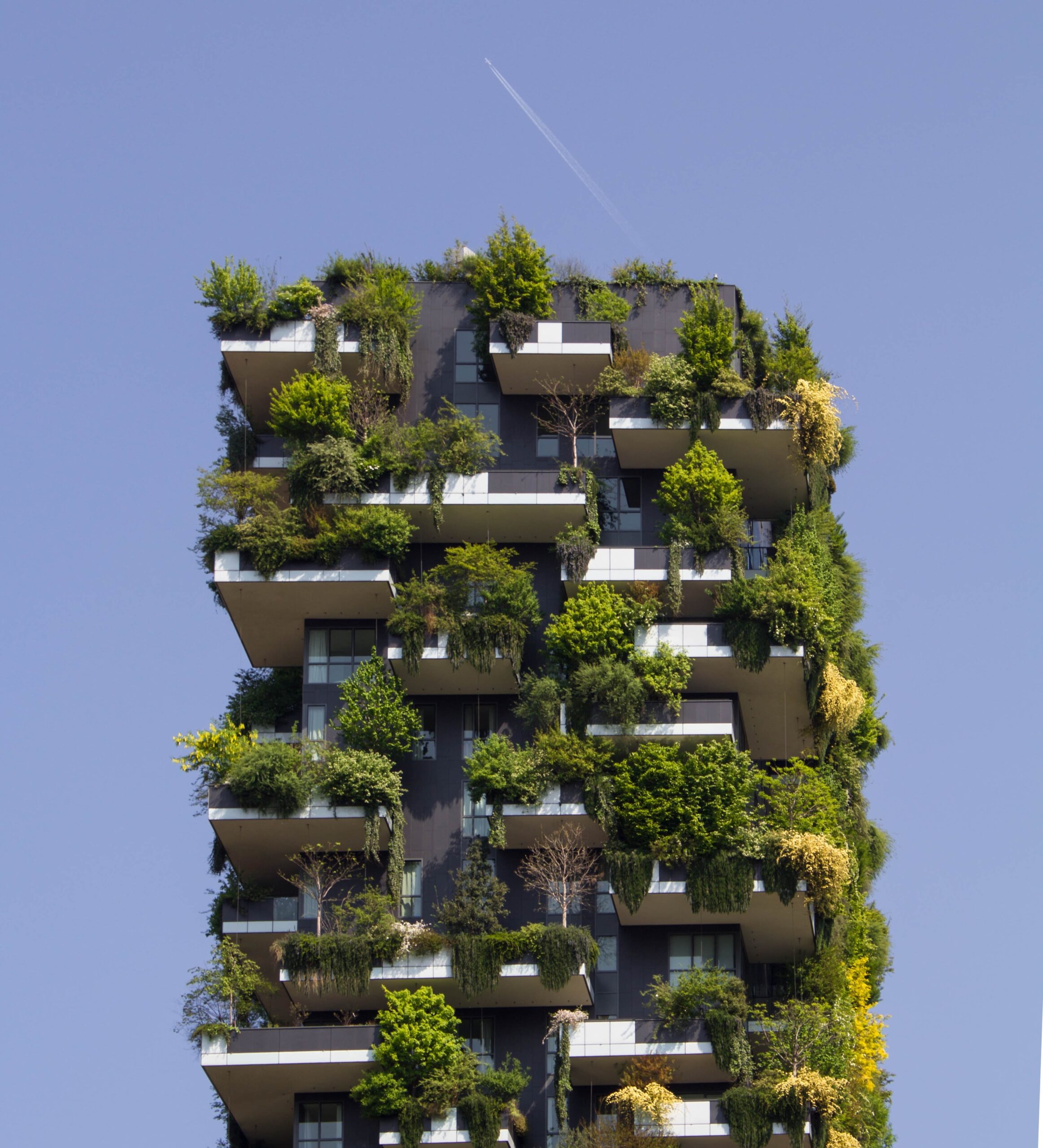
The building needs to be reviewed for a time of at least every three years to maintain its G-B-I certification reason being that a building is given a rating of Certified, Silver, Gold, or Platinum depending on its score (out of 100).
Future construction will be characterized by green architecture, as everyone aspires to do their part to protect the environment. An environment that is greener and healthier for everyone is a result of more green buildings, which also means a more sustainable lifestyle with lower carbon emissions. Having a green home is a great place to start if we want to make a difference without having to travel far.
5. Why green buildings are beneficial to society as a whole?
The advantages of green buildings for energy savings are now generally acknowledged. According to a study, green buildings can lower city temperatures by up to 2°C. People living in frigid climates may benefit from green buildings since they provide the same advantages as spending time in nature. With plants covering the roof, an uninsulated structure can save money by using up to 5% less energy for heating in the winter. Even in relatively chilly places like Toronto or New York, planting 50% of the roof would help to lower the area’s summertime temperature by around 1°C.
Also, for improved air quality, indoor air pollution is one of the top five environmental threats to human health, according to the U.S. Environmental Protection Agency. For instance, in downtown Toronto, a 20% increase in the surface area of green walls and rooftops could significantly reduce indoor air pollution.
Faster recoveries are another advantage of green building. It reveals that hospitals with green infrastructures, like an ornamental green wall, have shorter average hospital stays, quicker recovery times and lower rates of secondary infections. Plants also improve acoustics, aesthetics, and air quality, as well as energise the medical professionals who work there.
Another added advantage of green building is lower emissions. This reveals that a green-certified building emits 62% fewer greenhouse gas emissions than the typical Australian building due to the addition of green walls, roofs, and other low-energy interventions. Plants on building roofs and courtyards, as well as permeable outdoor surfaces like soil, rock wool, and vermiculite minimize echoes.
6. How green buildings can help fight climate change
2016 and 2020 were the warmest years since records began, according to NASA and National Oceanic and Atmospheric Administration (NOAA). Buildings produce close to 40% of all greenhouse gas emissions. By building sustainably, we can increase the resilience of our homes and communities while reducing the contribution that buildings make to climate change.
Green buildings generate less greenhouse gas:
A structure’s planning, design, construction, operations, and end-of-life recycling or renewal, while considering energy, water, indoor environmental quality, material choice, and location, are all included in a green building. Green communities and buildings encourage the establishment and preservation of vegetated land areas and roofs, as well as the reduction of trash sent to landfills. High-performing green structures, in particular LEED-certified structures, offer the means to lessen the effects of buildings and occupants on the climate.
Buildings constructed to LEED (Leadership in Energy and Environmental Design) standards produce fewer greenhouse gases (GHGs) than buildings constructed conventionally, according to a study. The credits that promote compact construction and connectivity to amenities and transit help reduce the GHGs related to transportation. The energy—and GHGs—needed to remove, treat, and pump the water from the source to the building are saved when a building uses less water. Additionally, the amount of fuel used to transport materials to and from the structure is reduced.
Beyond what energy efficiency alone does, each of these methods greatly lowers the carbon footprint of buildings and their occupants. Further reductions can be achieved by giving residents feedback through systems like Arc, which displays a building’s environmental efforts and performance. Green construction can contribute to the fight against global warming. Discover more about LEED and the green buildings in your area by looking through the LEED project database.
Conclusion
According to this paper’s findings, the top five advantages of implementing green building projects include better indoor air quality, ecosystem protection, increased energy efficiency, improved health and well-being of occupants, and reduced CO2 emissions. The most important factors influencing the adoption of green building projects are the expansion of financing options, the expansion of the market for green goods and materials, the provision of economic incentives, education and training about green building technologies, and the affordability of green building materials. The results of this study will aid in raising awareness and promoting the adoption and execution of green building initiatives, which could address the serious environmental problems brought on by the operations of the construction sector.
[1] Ofori, G., 2012. Developing the Construction Industry in Ghana: the case for a central agency. A concept paper prepared for improving the construction industry in Ghana. National University of Singapore, 3-18.
[2] Choi, C., 2009. Removing market barriers to green development: principles and action projects to promote widespread adoption of green development practices. Journal of Sustainable Real Estate, 1(1), 107-138.
[3] UNEP, 2011. Towards a green economy: Pathways to sustainable development and poverty eradication. Nairobi, Kenya: UNEP.
[4] See footnote 1 and 5 below.
[5] Gunnell, K., Du Plessis, C. and Gibberd, J., 2009. Green building in South Africa: emerging trends. Department of Environmental Affairs and Tourism (DEAT).
[6] Shen, L., Yan, H., Fan, H., Wu, Y. and Zhang, Y., 2017. An integrated system of text mining technique and case-based reasoning (TM-CBR) for supporting green building design. Building and Environment, 124, 388-401.
[7] USEPA, 2016. Definition of Green Building (Mar. 28, 2017). https://archive.epa.gov/greenbuilding/web/html/about.html.
[8] Darko, A. and Chan, A.P., 2016. Critical analysis of green building research trend in construction journals. Habitat International, 57, 53-63.
[9] De Schrijver, R.E.M. (2009). Green public procurement. The Netherlands: Amersfoort. Developer’s perspective in China. J. Manag. Eng. 31(3).
[10] Aigbavboa, C., Ohiomah, I. and Zwane, T., 2017. Sustainable Construction Practices: “A Lazy View” of Construction Professionals in the South Africa Construction Industry. Energy Procedia, 105, 3003-3010.
[11] MacNaughton, P., Spengler, J., Vallarino, J., Santanam, S., Satish, U. and Allen, J., 2016. Environmental perceptions and health before and after relocation to a green building. Building and environment, 104, 138-144.
[12] See footnote 3
[13] Ibid
[14] Ibrahim, M., El-Zaart, A. and Adams, C., 2018. Smart sustainable cities roadmap: Readiness for transformation towards urban sustainability. Sustainable cities and society, 37, 530-540.
[15] Yudelson, J., 2010. The business case for green buildings. In Sustainable investment and places–Best practices in Europe (88-91). Union Investment Real Estate AG Hamburg.
[16] Madew, R., 2006. The Dollars and Sense of Green Buildings, A report for the Green Building Council of Australia. Green Building Council of Australia.
[17] Torcellini, P., Pless, S., Deru, M., Griffith, B., Long, N. and Judkoff, R., 2006. Lessons learned from case studies of six high-performance buildings (No. NREL/TP-550-37542). National Renewable Energy Lab. (NREL), Golden, CO (United States).
[18] Ries, R., Bilec, M.M., Gokhan, N.M. and Needy, K.L., 2006. The economic benefits of green buildings: a comprehensive case study. The Engineering Economist, 51(3), 259- 295.
[19] Love, P.E., Niedzweicki, M., Bullen, P.A. and Edwards, D.J., 2011. Achieving the green building council of Australia’s world leadership rating in an office building in Perth. Journal of construction engineering and management, 138(5), 652-660.
[20] Manoliadis, O., Tsolas, I. and Nakou, A., 2006. Sustainable construction and drivers of change in Greece: a Delphi study. Construction Management and Economics, 24(2), 113- 120.
[21] Zhang, X., Platten, A. and Shen, L., 2011. Green property development practice in China: costs and barriers. Building and environment, 46(11), 2153-2160.
[22] Serpell, A., Kort, J. and Vera, S., 2013. Awareness, actions, drivers and barriers of sustainable construction in Chile. Technological and Economic Development of Economy, 19(2),.272-288.
[23] Bond, S. and Perrett, G., 2012. The key drivers and barriers to the sustainable development of commercial property in New Zealand. Journal of sustainable real estate, 4(1), 48-77.
[24] Falkenbach, H., Lindholm, A.L. and Schleich, H., 2010. Review articles: environmental sustainability: drivers for the real estate investor. Journal of Real Estate Literature, 18(2), 201-223.
[25] DuBose, J.R., Bosch, S.J. and Pearce, A.R., 2007. Analysis of state-wide green building policies. Journal of Green Building, 2(2), 161-177.
[26] Andelin, M., Sarasoja, A.L., Ventovuori, T. and Junnila, S., 2015. Breaking the circle of blame for sustainable buildings–evidence from Nordic countries. Journal of corporate real estate, 17(1), 26-45.
[27] Allouhi, A., El Fouih, Y., Kousksou, T., Jamil, A., Zeraouli, Y. and Mourad, Y., 2015. Energy consumption and efficiency in buildings: current status and future trends. Journal of Cleaner production, 109, 118-130.
[28] Arif, M., Bendi, D., Toma-Sabbagh, T. and Sutrisna, M., 2012. Construction waste management in India: an exploratory study. Construction Innovation, 12(2), 133-155.
[29] Parnell, P., 2005, April. Sustainability: what’s the fuss all about? In RICS annual conference.
[30] Falkenbach, H., Lindholm, A.L. and Schleich, H., 2010. Review articles: environmental sustainability: drivers for the real estate investor. Journal of Real Estate Literature, 18(2), 201-223.
[31] Andelin, M., Sarasoja, A.L., Ventovuori, T. and Junnila, S., 2015. Breaking the circle of the blame for sustainable buildings–evidence from Nordic countries. Journal of corporate real estate, 17(1), 26-45.
[32] See footnote 21 supra.
[33] Gou, Z., Lau, S.S.Y. and Prasad, D., 2013. Market readiness and policy implications for green buildings: case study from Hong Kong. Journal of Green Building, 8(2), 162-173.
[34] Hwang, B.G., Zhao, X. and Tan, L.L.G., 2015. Green building projects: Schedule performance, influential factors and solutions. Engineering, Construction and Architectural Management, 22(3), 327-346.
[35] Windapo, A.O. and Goulding, J.S., 2015. Understanding the gap between green building practice and legislation requirements in South Africa. Smart and Sustainable Built Environment, 4(1), 67-96.
[36] Reed, R.G. and Wilkinson, S.J., 2005. The increasing importance of sustainability for building ownership. Journal of Corporate Real Estate, 7(4), 339-350.