
by Benedetta Gillio | Apr 27, 2016 | The Urban Media Lab
 Habitat III is the United Nations Conference on Housing and Sustainable Urban Development, taking place in Quito, Ecuador, 17–20 October 2016.
In the Prague conference the discussions covered various topics, and in the Prague declaration they noted the importance of promoting:
- Innovative and productive cities.
- Green, compact, resource efficient and resilient cities.
- Inclusive and safe cities.
- Good urban governance.
They point out a need to plan and manage urban areas through the cooperation of national governments with regional and local authorities and communities with established coordination mechanism. Cities need to be enabled and empowered in order to be key actors in the implementation of sustainable urban development based on the principles of sustainable development. Citizens should be involved and consulted in a well-designed system of multi-level governance. There is also a need to assure compliance to legal requirements by independent institutions acting in land governance, land registration. International cooperation and exchanges between national, regional and local authorities can promote sustainable economic development, social and environment protection. Social cohesion, better access to services, urban safety. Long term and non-speculative, risk informed investments in housing and urban development can stimulate employment in cities. Resource efficiency and promoting sustainable consumption and production patterns are critical elements for cities to manage growth, increase resource productivity, and decouple economic growth from increased resource use and its environmental impact. Efforts to protect and safeguard the cultural and natural heritage. Promote economic development and job creation.
The following step was Barcelona where the main topic was public spaces. From the Barcelona Declaration came out that:
- Human rights are a key to advancing and developing an urbanization that is sustainable and socially inclusive, that promotes equality, combats discrimination in all its forms and empowers individuals and communities.
- The Right to the City is a new paradigm that provides an alternative framework to re-think cities and urbanization.
- There is a need to preserve the character and quality of existing historical public areas, in order to promote and to transmit heritage to the future generations; improve existing public areas in central and peripheral parts of the city, in order to upgrade their quality and foster the sense of belonging of the communities; design new public spaces in built areas and in new urban expansions, to increase the quality of life of the inhabitants and strengthen social stability.
They focus on public spaces because in an even more urbanized world, the right to the city must be guaranteed to the people who share the urban space today and to the coming generations who are going to inherit it tomorrow. In order for the public space to respond to its true purpose and be at the service of the people and achieve the democratization of our cities, it should be tackled from an integrated logic which goes beyond its own physical boundaries and address fundamental dimensions such as 1) “Agora” (its social and political dimension), 2) Mobility, 3) Economy, 4) Housing.
- AGORA (social and political dimension)
- Accessibility and inclusivity
- Versatility
- Quality design, environmental and human scale
- Distribution and integration
- Recreation and health
- Cultural and political expression
- Conflict resolution and cohabitation
- Governance
- ECONOMY
- Sustainability and democratic control of basic urban supplies and waste
- Balance production of wealth and responsible consumption
- MOBILITY
- Change of paradigm towards a Post-Car-City
- Fostering walkability and bike use on a more human public space
- Implementing democratic and sustainable of public transport networks
- HOUSING
- Right to adequate housing
- Social function of land, property and city
- Housing policies and tools
After Barcelona the meeting moved to Pretoria. There the main topic was “Informal Settlements”. Informal settlements are a global urban phenomenon. They exist in urban contexts all over the world, in various forms and typologies, dimensions, locations. While urban informality is more present in cities in developing countries, housing informality and substandard living conditions can also be found in developed countries. The continued existence of informal settlements is directly linked to the persistence of poverty and inequality, distorted land markets, excluding people from decent work and livelihood to attain individual and collective progress and prosperity. Informal settlements are caused by a range of interrelated factors: population growth and rural to urban and international migration, poverty, basic service deficits, poor governance and policy frameworks, limited access to financial markets, land and property. People living in informal settlements are particularly vulnerable to spatial, social, and economic inequalities, dependence on precarious income generation and livelihoods, poor health as well as lack of affordable housing, high vulnerability to the adverse impacts of poor and exposed environments, climate change, and natural disasters. Exclusion, discrimination and marginalisation characterize the life in informal settlements which is exacerbated by displacements, including the one caused by conflict, crisis, natural disasters and climate change.
The recently adopted Agenda 2030 for sustainable development and especially a new transformative urban agenda will have to address the above challenges taking stock of the shortcomings and achievements of the previous development frameworks and approaches.
This process is aimed at producing the New Urban Agenda composed of 22 issue papers about housing and sustainable urban development. Smart technologies and urban governance are new models of participation with social media.
————————————————————————–
Habitat III è la Conferenza delle Nazioni Unite sui temi di housing e sustainable urban development che si terrà a Quito in Ecuador in Ottobre 2016. Nella conferenza di Praga i temi evidenziati, che fanno da filo conduttore, sono: città innovative e produttive; il verde pubblico e le città resilienti; città inclusive e sicure; buona governance urbana. Fondamentale il tema della cooperazione tra i cittadini e i governi nazionali, regionali e locali. Praga è solo una delle numerose tappe di questo processo che porteranno alla conferenza di Quito.

by Benedetta Gillio | Apr 13, 2016 | The Urban Media Lab

On Friday 15th April LabGov will be in Trieste, on the occasion of ANCI Giovani’s annual Meeting.
Two workshops will take place during the Meeting:
- “Better together. Advantages, process and instruments of the forms of inter-communal aggregation”
- “Commons, administrative barter and civic monitoring: useful instruments for a new relationship between citizens and public administration”
Professor Christian Iaione will hold a panel in the workshop about Commons, administrative barter and civic monitoring. He will talk about sharing economy and about Commons as new challenges for the municipalities.
Alongside with the Professor will intervene Fulvio Mancuso (Siena’s deputy mayor), Professor Fabio Giglioni (Labsus – professor of Administrative Law in La Sapienza University of Rome) and Gianluca Sgueo (policy analyst at the European Parliament).
The 50 young public administrators who will take part in the workshop will have the possibility to interact with experts who will present them the topics and talk about concrete cases of application in the territories.
The workshops will begin at 10 a.m. and end at 1 p.m.
—————————————————————————————
Venerdì 15 aprile si svolgeranno a Trieste, in occasione della VII Assemblea annuale di ANCI Giovani, due laboratori di approfondimento dedicati agli amministratori sui temi della gestione associata dei servizi e dell’amministrazione condivisa, organizzati dalla Scuola ANCI per Giovani Amministratori. Il Professor Christian Iaione interverrà nel Laboratorio “Beni comuni, baratto amministrativo e monitoraggio civico: strumenti per una nuova relazione fra cittadini e amministrazioni”, per parlare di sharing economy e beni comuni come nuove sfide per i Comuni.

by Benedetta Gillio | Mar 11, 2016 | The Urban Media Lab
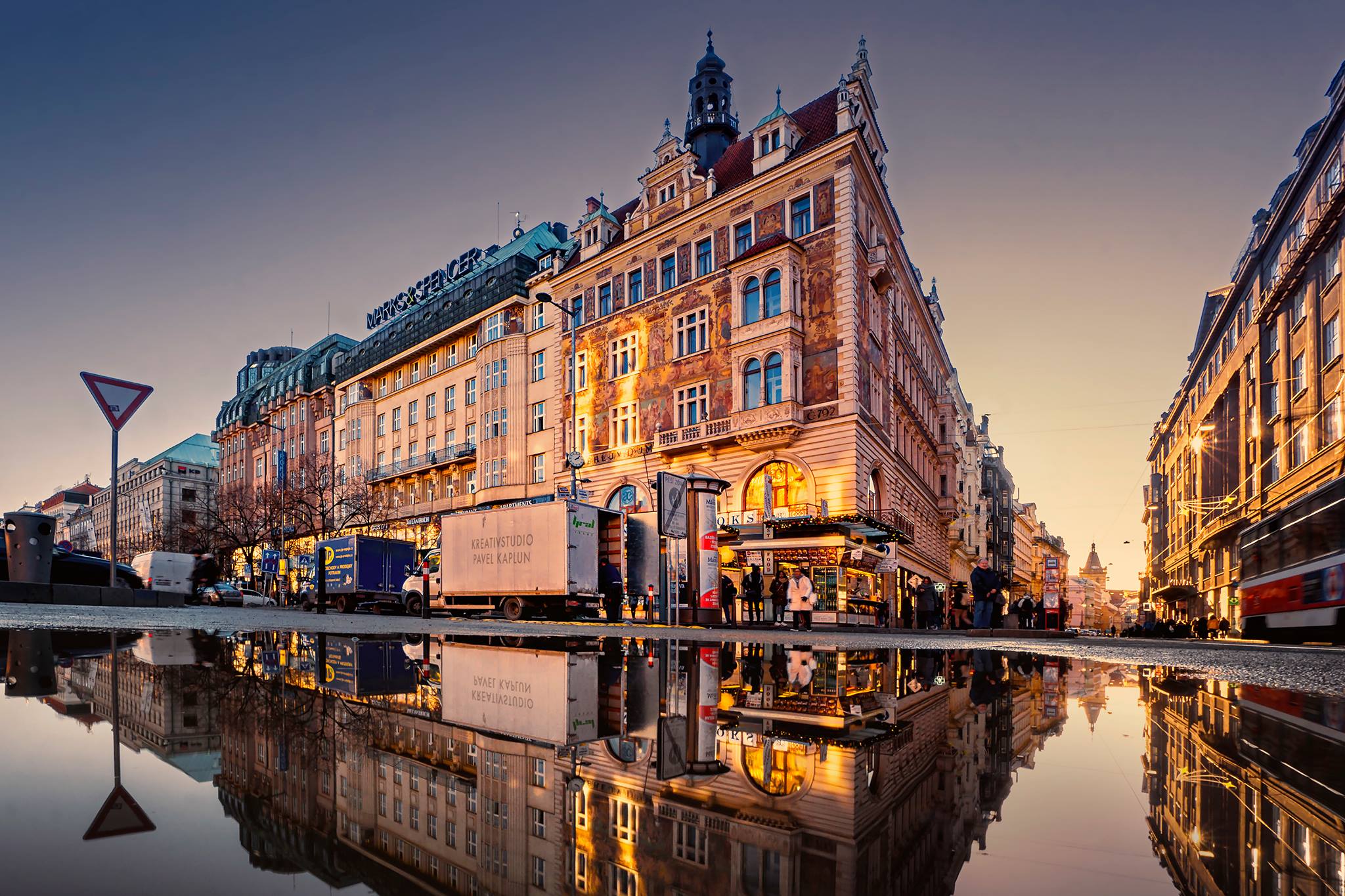
The author Will Self suggests this idea of “the threat to national psyche”, talking about what happened in the City Hall of London where campaigners gathered to protest against privatisation of public spaces not only in London but throughout UK.

Will Self focused his attention on this first public reaction and analyzes the consequences. The fact that public spaces in Britain’s cities fall into private hands was having a deleterious impact on the capital’s citizens. It is impossible to forget the psychological dimension : what can you do in that place or how much time you want spend in that place, everything seems to disappear – it needs to be stopped.Will Self is one of the first voice of this opposing campaign, he tries to preserve UK cities for their residents.Protesters on Saturday cited London’s Canary Wharf, Olympic Park and the Broadgate development in the City as public places now governed by the rules of the corporations that own them.
Currently there are a lot of private spaces in Britain for example Birmingham’s Brindleyplace, an important canalside development. In Exeter, there is Princesshay, described as a “shopping destination featuring over 60 shops set in a series of interconnecting open streets and squares”.
The property group Land Securities along with the monarch’s property portfolio, the Crown Estate owned this spaces. In particular, Land Securities owns a large waterside complex of restaurants, shops and bar in Portsmouth.
And what about Garden Bridge,a breathtaking new public garden that will stretch across the River Thames? The Garden Bridge will offer a new kind of green space in the heart of the city, cementing London’s status as the greenest capital in Europe. Self’s position is clear enough : “ it could be great – it will be shit.” Lots of daily actions will be not allowed by corporate restrictions, such as playing musical instruments, making a speech, releasing balloons and many other pursuits.
The choice of location is not accidental: on a patch of grass near City Hall on the banks of the Thames; it gives visitors the illusion of being a public space but is in fact controlled by private security, with its own set of regulations.The challenge of this opposing campaign is to resist cause day bay day, residents have been deprived of the capacity to make free choices of their own, looking at the architecture the change is evident.
Sian Berry, Green party candidate for mayor of London, wards citizens’s requests saying that her modification of the London Plan,would prevent controversial projects such as the Garden Bridge excluding the public at the request of its owners and also provides to introduce rules to ensure that new publicly accessible spaces in the capital were governed by the law of the land.
———————————————————————————————-
In Inghilterra ma a Londra in particolare si avverte il senso di smarrimento provato dai cittadini, i cui beni comuni progressivamente finiscono nelle mani delle società private.
“Quello che la gente non capisce è che influisce sulla stessa psichicamente. Ti costringe nel modo di pensare a cosa si può fare in uno spazio, e costringe la vostra immaginazione. E ‘come una condensazione di tempo e denaro e di spazio – ha bisogno di essere resistito”. Solo difendendo questi spazi difendiamo noi stessi.
by Benedetta Gillio | Mar 8, 2016 | The Urban Media Lab
UN-Habitat is the United Nations programme working towards a better urban future. Its mission is to promote socially and environmentally sustainable human settlements development and the achievement of adequate shelter for all. Cities are facing unprecedented demographic, environmental, economic, social and spatial challenges. There has been a phenomenal shift towards urbanization, with 6 out of every 10 people in the world expected to reside in urban areas by 2030. Over 90 per cent of this growth will take place in Africa, Asia, Latin America, and the Caribbean. In the absence of effective urban planning, the consequences of this rapid urbanization will be dramatic. In many places around the world, the effects can already be felt: lack of proper housing nd growth of slums, inadequate and out-dated infrastructure – be it roads, public transport, water, sanitation, or electricity – escalating poverty and unemployment, safety and crime problems, pollution and health issues, as well as poorly managed natural or man-made disasters and other catastrophes due to the effects of climate change. Mindsets, policies, and approaches towards urbanization need to change in order for the growth of cities and urban areas to be turned into opportunities that will leave nobody behind. Sustainable housing plays a key role in human quality of life in general in the European region. The positive impact of housing can be increased through application of the following principles: environmental protection, economic growth, social inclusion, citizen participation and cultural adequacy. Development of sustainable housing in the UNECE region afaces many challenges caused in particular by globalization, demographic changes and the recent economic crisis. In some cases urbanization has led to urban sprawl, which has had a negative impact on existing settlements and has reduced the land available for other uses.In other cases, urbanization has been uncontrolled, creating and expanding informal settlements, whose residents may lack security of housing and social and physical infrastructure. The Czech Republic has proposed the High Level Regional Meeting for Habitat III in Prague in March 2016 with a theme of “Sustainable Housing in Livable Cities: European Habitat”. During the meeting, it is expected that the Habitat III Regional Report and Prague Declaration will be available and adopted.
Habitat III Europe Regional Meeting “European Habitat” will involve a wide range of participants, that will debate regional priorities for the New Urban Agenda, and policy recommendations in the form of a final regional participants’ declaration. Habitat III – Regional Meeting, Europe will take place in Prague from 16/03/2016 to 18/03/2016. The “European Habitat” is focusing on the region of the United Nations Economic Commission for Europe consisting of 56 Member States, while participation is open for all. In this regard, “European Habitat” will gather recommendations reflecting the consensus reached at the regional level on sustainable housing and other topics from the spectrum of a proposed New Urban Agenda.In the process towards a New Urban Agenda, Habitat III Europe Regional Meeting “European Habitat” will discuss how to ensure access to decent, adequate, affordable and healthy housing for all, with due attention to reducing the impact of the housing sector on the environment. Final declaration from “European Habitat” will be considered official inputs to the Habitat III process. Join us at this exciting opportunity to discuss the challenges of Sustainable Housing in Liveable Cities. Final “Prague Declaration” from “European Habitat” will be considered official inputs to the Habitat III process.
Here the programme: https://www.habitat3.org/prague

by Benedetta Gillio | Mar 2, 2016 | EducationLabs, Luiss LabGov 2015-2016
Dino Amenduni, political communicator and Proforma partner who first formulated the idea and the logo of the co-cities, was the star of the workshop organized by LabGov last February 26.
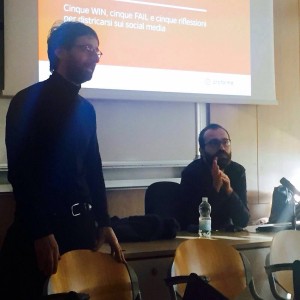
The topics covered in his lecture were Storytelling and digital reputation.
The practice of storytelling has gradually changed over the years, even with the changing of the objectives that communication has tried to achieve in meeting the needs of “commercial” society. Until 1990, the main goal of communication was the sale of a product, but in the subsequent years it was realized that the brand’s credibility depended on the success or failure of a product. So there has been a passage through a product communication to a brand communication. Since 2000 the most used technique in the world of communications is first to tell stories that can capture the attention of the advertising recipient to make such a product more “personalized” and not something completely objective and generalized. Look for and chasing original ideas that are affordable for everyone. How you answer a success story? With a story of the same calibre, the same characteristics, and never with different characteristics. Doing a good storytelling implies the awareness of having daily a good story to tell, even more if there is a witness aware of that story it would be better to make him tell the story so as to achieve better result. Needed is the consistency between the message and biography; even more important is the credibility of the narrator and the message itself. The most effective stories are those that promote the knowledge sharing , that incite to act, which impart values, the ones that talk about the future inspired by the past. An example of a successful storytelling was the ValigiaBlu Case, about the independent journalism, in which Amenduni himself was involved: built a crowdfunding campaign based on a series of compensations, on a written appeal explaining the project, the kind of journalism (of quality) promoted by Valigia Blu and the economic aim. Crowdfunding is not easy to realize, but if done right leads to excellent results. The campaign worked thanks to the reputation of Valigia Blu, compensations, transparency, a follow-up guarantee, preparatory work, solidity and homogeneity of the working group.
The digital reputation is instead what others think about a particular brand or product or records that can characterize the person of whom you are dealing. Very important is the self-irony and reveal first a point of weakness so as to make it become a strength point. What matters in the communication field is the speed of the proceedings, “staying on track” as journalists would say; It matters most a mediocre element but of immediate impact and dissemination, rather than a well done content but which has yet to be disclosed. The importance of the involvement of all members of the organization and the homogeneity in the actions of the same since the digital reputation is built in the same way by everyone. An example of what is called real time marketing occurred during the blackout that happened during the Super Bowl in the United States: the team of the famous brand OREO within only six minutes was able to make a compelling advertising of them cookies realizing ironic image that took over what was happening at that time ( OREO cookies can be soaked in the dark) capturing the attention of millions of viewers making sure a more than effective advertising. This all because in recent years there are creating random public that can only be intercepted through social and which are unrepeatable. Therefore the communication chain will need to be reviewed in the future.
How can this all be useful for us? In the process that is taking shape in Co-Roma, communication will play a major role in involving even more actors in the collaborative process also for establishing a relationship of trust. As Professor Iaione has repeatedly pointed out, the course that is being established in this “city of a hundred cities”, that is Rome, must be persuasive and for this in turn the communication must be captivating, since you can not always enter a city by the same door.
——————————————————————————
Dino Amenduni, comunicatore politico e partner di Proforma che per primo ha formulato l’ idea ed il logo delle co-città, è stato protagonista del workshop organizzato da LabGov lo scorso 26 Febbraio.
I temi trattati nella sua lezione sono stati Storytelling e reputazione digitale.
La pratica dello storytelling è progressivamente cambiata nel corso degli anni, anche con il mutare degli obiettivi c he la comunicazione ha cercato di raggiungere nel soddisfare le esigenze della società “commerciale”. Fino al 1990 l’obiettivo della comunicazione è stato la vendita di un prodotto, tuttavia negli anni successivi ci si è accorti che dal successo o dal fallimento di un prodotto dipendeva la credibilità del brand. Così si è passati da una comunicazione di prodotto ad una comunicazione di brand. A partire dal 2000 la tecnica maggiormente utilizzata nel mondo della comunicazione è quella di raccontare prima di tutto storie che possano catturare l’attenzione del destinatario della pubblicità per rendere così un prodotto maggiormente “personalizzato” e non una cosa del tutto oggettiva e generalizzata. Cercare e rincorrere idee originali che siano alla portata di tutti. Come si risponde ad una storia vincente? Con una storia dello stesso calibro, dalle stesse caratteristiche e mai con caratteristiche differenti. Fare un buon storytelling implica la consapevolezza di avere quotidianamente una buona storia da raccontare, in più se c’è un testimone a conoscenza di quella stessa storia è bene farla raccontare a lui così da ottenere risultato migliore. Necessaria è la coerenza tra messaggio e biografia; importantissima la credibilità del narratore e del messaggio stesso. Le storie più efficaci sono quelle che favoriscono la condivisone di conoscenze, che incitano all’azione, che trasmettono valori, che parlano di futuro prendendo spunto dal passato. Un esempio di storytelling di successo è stato il Caso ValigiaBlu, sul giornalismo indipendente, di cui lo stesso Amenduni ne è stato protagonista: costruita una campagna di crowdfunding basata su una serie di ricompense, su un appello scritto che spiegava il progetto, il tipo di giornalismo ( di qualità ) promosso da Valigia Blu e l’obiettivo economico. Il crowdfunding non è semplice da realizzare, ma se fatto bene conduce ad ottimi risultati. La campagna ha funzionato grazie alla reputazione di Valigia Blu, ricompense, trasparenza, garanzia di un follow up, lavoro preparatorio, solidità e omogeneità del gruppo di lavoro.
Le reputazione digitale è invece ciò che gli altri pensano di un determinato brand o prodotto o dei trascorsi che possono caratterizzare il personaggio di cui si sta trattando. Molto importante è l’autoironia e svelare per primi un punto di debolezza così da farlo divenire un punto di forza. Ciò che conta nell’ambito della comunicazione è la celerità della stessa, “stare sul pezzo” come direbbero i giornalisti; conta maggiormente un elemento mediocre ma di immediato impatto e divulgazione, piuttosto che un contenuto benfatto ma che tarda ad essere divulgato. Importanza del coinvolgimento di tutti i membri dell’organizzazione e un’omogeneità nelle azioni degli stessi dal momento che la reputazione digitale è costruita in ugual modo da tutti. Un esempio di quello che viene definito real time marketing si ebbe durante il black-out avutosi durante il super bowl negli Stati Uniti: il team del famoso brand OREO nel giro di soli sei minuti fu in grado di realizzare un avvincente spot pubblicitario dei suoi biscotti realizzando un’immagine ironica che riprendeva quanto in quel momento stava accadendo ( I biscotti OREO li puoi inzuppare anche al buio) riuscendo a catturare così l’attenzione di milioni di telespettatori assicurandosi una più che efficace pubblicità. Tutto questo perché negli ultimi anni si stanno creando dei pubblici casuali che possono essere intercettati solo tramite i social e che sono irripetibili. Bisognerà quindi rivedere in futuro la catena di produzione della comunicazione.
Quanto a noi può essere utile tutto ciò? Nel processo che si sta delineando in Co-Roma la comunicazione giocherà un ruolo importante nel coinvolgere sempre più attori nel processo di collaborazione anche per istaurare un rapporto di fiducia. Come il Professor Iaione ha più volte ricordato, il percorso che si sta instaurando in questa “città dalle cento città” che è Roma deve essere convincente e per questo a sua volta la comunicazione deve essere coinvolgente, dato che non si può entrare in una città sempre dalla stessa porta.

 Habitat III is the United Nations Conference on Housing and Sustainable Urban Development, taking place in Quito, Ecuador, 17–20 October 2016.


