by Chiara Fratalia | May 12, 2016 | Commons Press
“Governance models for sharing cities: Seoul and Milan” is a paper written by Monica Bernardi and Davide Diamantini, urban sociologists and social researchers at the Milano-Bicocca University. This article was first discussed at the 1st IASC Thematic Conference: The city as a commons, which was held in Bologna on 6-7 November 2015 and had the aim to summarize and advance the theoretical and experimental knowledge on collaborative city governance.
The authors, after a brief introduction of the concept of sharing economy, proceed to analyze the role of the Public Administration in this emerging kind of public governance. This subject is develop by a comparison between the two case studies of Milan and Seoul, whose developments, despite following two different approaches to collaborative governance (bottom-up in Milan and top-down in Seoul), have many shared characteristics. This comparison, which rests on the analysis of the Public Administration’s policy strategy by the recall of specific policies, programs and initiatives, has its ultimate purpose on highlighting some peculiarities that have constituted the background and the basis to the development of a collaborative governance in these two cities. At a later time, these peculiarities could be gathered together in order to elaborate a collaborative governance development model that could be implemented by other cities worldwide, thus spreading collaborative practices in different urban contexts.
If you are interested in this subject, please explore the full paper here.
by Chiara Fratalia | May 11, 2016 | Commons Press
“The CO-City: Sharing, Collaborating, Cooperating, and Commoning in the City” is a paper written by professor Christian Iaione of LabGov, published on the American Journal of Economics and Sociology in March 2016 and discussed in the framework of the 4th European Regional Meeting of IASC, which took place from the 10th to the 13th May 2016.
This article introduces an innovative, experimental, adaptive, and iterative approach to creating legal and institutional frameworks based on urban polycentric governance to foster commons-based urban policies. First, the theory of urban/local governance is introduced, based on an urban co-governance matrix. A new type of regulatory system is then described that aims at transforming people in distributed nodes of collective action. Citizens and institutions can be myriad nodes of designing and problem solving in the public interest. Urban cogovernance aims at taking advantage of this galaxy of networks. The author then examines design principles and a methodology to implement the urban co-governance matrix. The concluding question concerns the need for a new research methodology to investigate the ongoing process of state transformation and institutional genesis at the urban level.
If you are interested in this subject, please explore the full paper here.

by Chiara Fratalia | May 3, 2016 | The Urban Media Lab
 Saturday, May 7th, 2016 from 10:00 to 16:00 the one-day event “Insieme per il bene comune – dalla terra al cielo” will be held in Rome at the “Isola Felice”, garden, next to the Church of St. Felice da Cantalice in the Centocelle district. It is a civic maintenance and urban mending initiative that closes the non-formal education program of LUISS LabGov 2015/2016.
It will be a feast day in the name of civic collaboration, organized by LUISS LabGov together with Associazione 100 e a capo, with the support of Municipio V as part of the Co-Rome process.
During the event, a community garden will be built in the San Felice garden, using materials found and prepared by the students of LUISS LabGov education program.It will be managed by Associazione 100 e a capo, an association of parents and grandparents of the primary school Cecconi in Centocelle that will take care of it within a green space adopted a few months ago and thus subtracted to abandonment and degradation.
There will be creative activities and workshops such as filling the bins to embellish the green area, followed by a walk and/or bike ride within the Centocelle Park.
The goal is to disseminate good practices in order to protect the environment and the beauty of Rome, through the promotion of civic use and care of urban commons. LUISS students, assisted by an interdisciplinary pool of landscapers and street architects, social media managers, lawyers of the community, services designers and triple sustainability experts have also worked on a medium/long-term strategy to generate jobs and solidarity starting from Centocelle commons.
Going outside the university buildings in order to create the first “urban collaborative garden” is just the first step to test new solutions and grow the collaboration between the five top actors at the city level: citizens, institutions, companies, schools and associations.
The new community garden, the first powerful initiative in a suburb in Rome, is just the beginning of a journey that has as an additional objective in leading to the creation of a new institutional form of community for the governance of the commons, which are essential to the well-being of neighborhoods, such as the Centocelle Park.
The new LUISS community garden that symbolizes the “seed” that, beginning from the existing collaborative resources, wants to give birth to a new institutional form of active community that has a chance to give its contribute in re-writing and drawing on a daily basis the rules of social coexistence and urban economic development in the management of services, activities, neighborhoods and city commons, along with public institutions.
The ultimate purpose of the Co-Roma_Roma collabora! – this is the name that LUISS students gave to the whole project – it is to develop, design and test a strategy for the governance of the commons suitable to shape “the city and the territory of Rome as commons.”
Representatives from the University LUISS Guido Carli, local institutions, associations and neighborhood committees will intervene.
For more information write to:
edu@labgov.it
—————————————————————————————————
Sabato 7 Maggio 2016 dalle ore 10:00 alle ore 16:00 si terrà a Roma presso “l’Isola Felice”, giardino attiguo alla Chiesa di San Felice da Cantalice nel quartiere Centocelle, una giornata – evento ‘‘Insieme per il bene comune – dalla terra al cielo”, operazione di manutenzione civica e rammendo urbano conclusiva del programma di educazione non formale LUISS LabGov 2015/2016.
Sarà una giornata di festa all’insegna della collaborazione civica organizzata da Luiss LabGov e Associazione 100 e a capo con il supporto del Municipio V nell’ambito del processo Co-Roma.
Nel corso della giornata verrà costruito nel Giardino San Felice un orto condiviso, con materiali reperiti e preparati dagli studenti del laboratorio educativo Luiss LabGov. L’orto condiviso verrà gestito dall’Associazione 100 e a capo, un’associazione di genitori e nonni della scuola primaria Cecconi di Centocelle, che se ne prenderà cura all’interno di uno spazio verde adottato da qualche mese e sottratto quindi all’abbandono e al degrado.
Si svolgeranno laboratori ludico-creativi come il riempimento dei cassoni per abbellire l’area verde; seguirà una passeggiata a piedi e/o in bicicletta all’interno del Parco di Centocelle.
L’obiettivo è quello di diffondere una buona prassi a tutela dell’ambiente e della bellezza di Roma attraverso la promozione di forme di uso civico e cura dei beni comuni urbani. Gli studenti Luiss assistiti da un pool interdisciplinare di paesaggisti e architetti di strada, social media managers, giuristi di comunità, designers dei servizi ed esperti di tripla sostenibilità hanno lavorato anche ad una strategia di medio-lungo termine per generare lavoro e solidarietà a partire dai beni comuni del quartiere Centocelle. Uscire dall’università per creare il primo “giardino di collaborazione urbana” è solo il primo passo per sperimentare nuove soluzioni e ‘‘coltivare’’ la collaborazione tra cinque fondamentali attori della città: i cittadini, le istituzioni, le imprese, le scuole e l’associazionismo.
L’installazione dell’orto condiviso, prima importante operazione in una periferia romana, è solo l’inizio di un percorso che ha come ulteriore obiettivo quello di portare alla costituzione di una nuova istituzione di comunità per la gestione di beni comuni fondamentale per il benessere del quartiere come il Parco di Centocelle. Dall’orto Luiss, nasce un nuovo orto che simbolicamente rappresenta il ‘‘seme’’ che, partendo dalle risorse collaborative esistenti, vuole dare vita ad una nuova istituzione di comunità, una comunità attiva che abbia la possibilità di contribuire a riscrivere e disegnare quotidianamente le regole della convivenza sociale e lo sviluppo economico urbano nella gestione di servizi, attività, quartieri e beni della città insieme con le istituzioni pubbliche.
Lo scopo ultimo del processo Co-Roma_Roma collabora!, questo il nome che gli studenti Luiss hanno dato all’intero progetto, è quello di elaborare, disegnare e sperimentare una strategia di governance dei beni comuni idonea a configurare “la città e il territorio di Roma come beni comuni”.
Interverranno rappresentanti dell’Università LUISS Guido Carli le Istituzioni locali, le associazioni e i comitati di quartiere.
Per ulteriori informazioni scrivere a :
edu@labgov.it

by Chiara Fratalia | Apr 27, 2016 | The Urban Media Lab

LabGov with professor Christian Iaione will take part in the next IASC conference!
The 4th European Regional Meeting of IASC will have place in Bern from the 10th to the 13th May with the following subject: “Commons in a ‘glocal’ world: global connections and local responses”. IASC (International Association for the Study of the Commons) was founded in 1989 to bring together multi-disciplinary researchers and policymakers, with the purpose of advancing the understanding and improving governance of common-pool resources.
This conference main goal is to provide a space to debate on the ongoing “glocal” processes, which are often not yet addressed in a systematic way. The conference aims at debating the impacts of external changes on the perception and evaluation of resources by actors related to the commons, and thus affecting the access to common-pool resources.
Since the importance of the conference subject, LabGov has decided to participate by submitting a paper in the B20 panel, which would like to examine the concept of Smart Cities in India, and contrast it with the advances that other countries made in redefining their concepts of urban commons.
The paper submitted by prof. Iaione, with the title “The Sharing, Collaborative, Cooperative City”, will be discussed within its panel on Wednesday 11th May. This paper aims at examining the concept of design elements of a smart city from people’s perspective, while generating a significant body of comparative empirical knowledge about sharing economies and their governance within global cities.
The conference will entirely take place in the Social Anthropology Institute of the University of Bern.
_________________________________
LabGov a Berna per discutere di beni comuni. Il coordinatore del gruppo, il prof. Christian Iaione, è autore di un paper che sarà discusso all’interno della Conferenza Regionale Europea di IASC, che si terrà a Berna tra il 10 e il 13 maggio. La conferenza ha lo scopo di analizzare come i processi “glocal” del nostro tempo influenzino la percezione e dunque la gestione dei beni comuni.
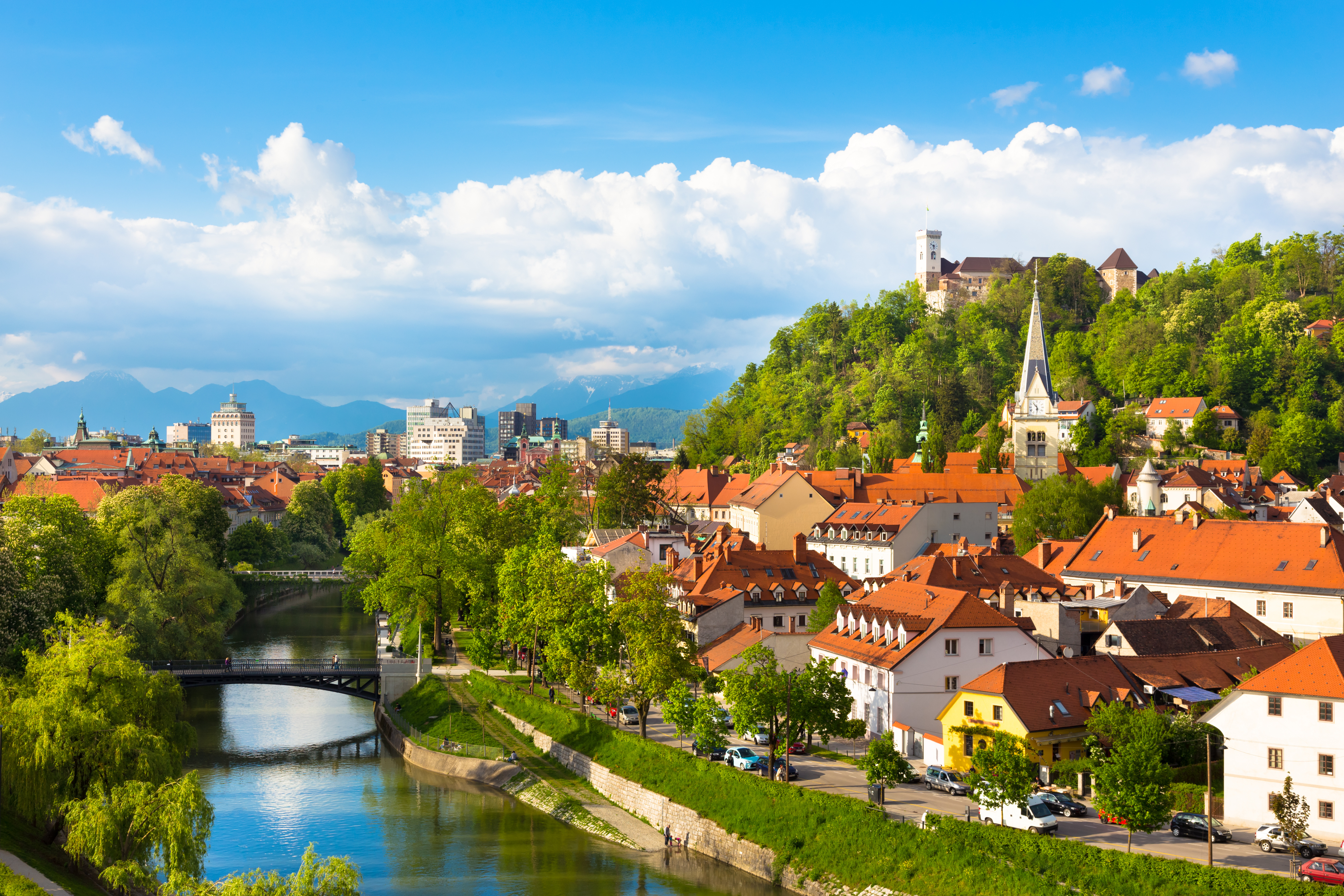
by Chiara Fratalia | Mar 14, 2016 | The Urban Media Lab
 Ten years ago, the streets in Ljubljana compact core were clogged with traffic, with little room for pedestrians and a negative effect on the quality of air. In 2016, the European Commission has named Ljubljana European Green Capital. How is this even possible?
The answer lies in Vision 2025, a long-range plan to improve the quality of life developed by Zoran Janković, Ljubljana’s mayor since 2006. The plan sets plenty of ambitious goals on sustainability and environment protection, that influenced every decision made by Ljubljana policymakers.
The most impactful (and effective) decision was by far the one made in 2006 to ban cars from the city centre: only pedestrians, bikes and buses are allowed, and there’s an electric taxi service that offers free rides to elderly and disabled. This led to quieter and safer spaces for pedestrians, a much better air quality, and an increase in business and tourism in the historic centre.
Since its small dimensions, Ljubljana is a contained laboratory to fine tune this kind of policies. The successful experiment conducted in Ljubljana has given good ideas to other European cities: Oslo, Madrid and Brussels have recently announced plans to partly close their city centres to traffic.
Ljubljana’s efforts also aim towards other goals: the city recycles almost two-thirds of its waste, and is the first EU capital to implement a “zero waste” strategy, promoting innovation to increase sustainability of the waste collection system and encouraging people to produce less waste.
The city’s green spaces are also getting a fresh look, thanks to the bottom-up efforts of civic groups and associations. For example, the associations Bunker Institute and Prostorož began regenerating Tabor Park by hosting cultural festivals, flea markets and concerts, and thus drawing many people to use this green space near Ljubljana centre.
Alenka Korenjak, one of the founders of Prostorož, says: “The success of these initiatives demonstrates that investments of millions of euros are not the only way to promote urban regeneration”.
—–
In che modo la città di Lubiana è passata in soli dieci anni da maglia nera per inquinamento e traffico a capitale verde europea? Un sindaco volenteroso ed una serie di ambiziosi progetti su sostenibilità e protezione ambientale.


