by Davide Testa | Sep 30, 2025 | Projects
In Reggio Emilia, LabGov ETS and the Municipality of Reggio Emilia, Communication, Participation and Social Innovation Service, are launching a programme as part of the NOI – Nuovi Orientamenti d’Impresa (New Business Approaches) start-up incubation programme. Between September and December 2025, four meetings will be held with the aim of co-designing and incubating Partnerships for Sustainable Development and Innovation, in accordance with the Regulation on Urban and Climate Democracy and Justice in Reggio Emilia, lastly updated in 2024.
 The four stages of the XYZ programme and the methodology adopted
The programme will consist of four meetings, led by experts from academia and public administration, following an iterative method that combines theoretical training and group work in each meeting.
The first module – R&I LAB, scheduled for 29 September – will focus on building a collaborative city, with the aim of immersing participants in the strategic vision of the Municipality of Reggio Emilia. Startups will be able to begin imagining opportunities for interaction, reflecting on their role in the urban collaboration system and the potential for generating shared value. The meeting will be led by Nicoletta Levi, Director of Communication, Participation and Social Innovation Service at the Municipality of Reggio Emilia, and Christian Iaione, Full Professor and Director of MSc Strategic Management, Innovation & Sustainability at LUISS Guido Carli.
The second module – X-Lab, scheduled for 13 October – delves into the regulatory and contractual aspects that enable collaboration. In particular, it will explore the tools that enable the transition from the bipartite logic of public-private partnerships to community integration, leading to the creation of multi-stakeholder partnerships with impact: Sustainable Development and Innovation Partnerships. The meeting will be led by Antonio Persico and Davide Testa, Research Fellows at LUISS Guido Carli.
The third module – Z-Lab, scheduled for 27 October – will focus on measuring the multiple dimensions of impact that each partnership should be able to produce. Innovators will therefore learn how to define effective indicators and establish participatory reporting models, starting with the Community Budget provided for by the Reggio Emilia Regulation. The meeting will be led by Costanza Consolandi, Full Professor at the University of Siena and LUISS Guido Carli, and Rubina Michela Galeotti, Research Fellow at LUISS Guido Carli.
The fourth and final meeting – GRINN-Lab – will consist of an in-person mentoring session led by Azzurra Spirito, Advisor and Transformative Innovation Designer, which will allow innovators to refine their respective projects, integrate the elements learned in previous training sessions and ensure the consistency and governability of the partnership.
This will be followed by a final event organised by the Municipality: the bootcamp, dedicated to the presentation of the projects developed, which will give start-ups the opportunity to discuss and receive feedback from representatives of the Municipality and mentors, offering them the chance to give voice to their projects and fine-tune the partnership proposals developed.
The start-ups involved
Five start-ups have joined the incubation programme: Djinne, Girotondo, Loop, Supervisor, and Welfin. All the start-ups involved have joined XYZ Camp because they are convinced not only that they want to be on the market, but also that they want to seek collaboration with the public administration, citizens and other local stakeholders, as they are convinced that they can produce a significant impact on their community.
The programme promises to be interesting thanks to the variety of proposals and areas of interest covered by the start-ups. These range from developing an app to promote sustainable and widespread tourism in the city, to creating a hub that brings together regeneration and innovation; from recycling stage materials for artistic and social purposes, to setting up AI for mental health services or employee loans that enable the creation of alternative welfare in the neighborhoods.
All these organisations have joined the XYZ Camp with the aim of challenging themselves to build a strategy for fruitful interaction with the public administration, in the belief that their business objectives can coincide with public policies that directly impact citizens.
The ambitions
The ambition of this mentoring programme, which is part of a broader start-up incubation programme with a strong social focus, organised by a number of public, academic and professional entities mostly based in Reggio Emilia or in the Emilia-Romagna Region, is therefore to explore the vision and tools needed to develop a Business-to-City or, even better, Business-to-Neighbourhood entrepreneurial strategy.
Below, the poster with the complete programme can be viewed.
XYZ Camp Reggio Emilia – Poster

by Davide Testa | Apr 29, 2025 | The Urban Media Lab

The ongoing digitalization of economic and social relations – most visibly manifested in the rise of digital platforms – has deeply affected urban centers, despite lacking a territorial anchor. These new dynamics pose significant challenges for cities, as they often evade traditional taxation systems and the ability of local governments to monitor territory and manage tourist flows.
Attractive urban areas are particularly affected by the phenomenon known as “airification”[1], that is, the transformation of a significant number of residential properties from long-term housing to short-term tourist rentals[2]. This process, which exacerbates overtourism, has far-reaching impacts on the livability of historic city centers: from the scarcity of essential services to the replacement of local businesses, rising rents and property prices, and the displacement of vulnerable groups – such as renters, students, migrants, or people with disabilities – and ultimately of long-term residents, due to declining quality of life.
This scenario stands in stark contrast to Henri Lefebvre’s 1978 reflections on the “right to the city”[3]. Instead of fostering collective, collaborative urban life, the city is increasingly treated as an asset – either through concentrated ownership of housing stock for tourism purposes or via its transient use by short-term visitors.
This fragmented and conflict-laden context involves overlapping competences at the national, regional, and local levels. Most regulatory attempts concerning short-term rentals have, in fact, been subject to litigation before both the Constitutional Court and administrative judges.
In Italy, the national legislator first intervened through the so-called “Airbnb Law” (Art. 4 of Decree-Law no. 50/2017), which primarily addressed tax compliance. The law required intermediaries, including digital platforms, to report rental data, withhold a 21% tax on payments, and – if not based in Italy – appoint a tax representative in the Country.
Airbnb challenged these provisions, claiming its classification as an “information society service” under Directive 2000/31/EC, a status previously affirmed by the CJEU in response to a preliminary reference from a French administrative court, using the so-called Uber Test[4]. The platform brought a case before the Regional Administrative Tribunal (TAR) of Lazio; after the TAR upheld the law, the Council of State made a new preliminary reference to the CJEU[5], questioning whether the law violated the EU principle of free movement of services (Art. 56 TFEU)[6]. The CJEU ultimately confirmed the law’s validity, finding that most of the contested provisions were proportionate to the legitimate aim of combating tax evasion.
While awaiting the CJEU ruling, several municipalities – despite their weak bargaining position – entered into agreements with Airbnb, mostly concerning the collection of tourist taxes and the promotion of fair rental practices, criticized by some for being overly dependent on the platform’s negotiating power and lacking effective enforcement tools; in 2022, though, Airbnb began directly collecting tourist taxes in Italy and signed a cooperation agreement with the National Association of Italian Municipalities (ANCI) to support local authorities.
Following that ruling, the national legislator introduced other provisions, beyond taxation, such as the requirement for a National Identification Code (CIN) under Decree-Law no. 145/2023. As legal scholarship has pointed out, however, in addressing the urban and housing impacts of short-term rentals, regional authorities, despite their significant regulatory powers, have largely been absent from the debate[7], even though some Regions have recently taken action[8]. Notably, over the next few months, the Emilia-Romagna Region is launching a participatory process aimed at drafting a regional law on short-term rentals, involving local governments as well as stakeholders representing the various and often conflicting interests at stake[9].
Today, the first examples of local regulation – often built upon regional legislation – show diverging approaches. The City of Bologna, for instance, pending the regional law on short-term rentals, amended the General Urban Plan (PUG) and the Building Regulation, including a minimum size of 50 square meters for tourist rental units, the creation of a dedicated urban zoning category for B&B properties, and other provisions. This strategy relies primarily on the municipal authority over urban planning: this field is indeed recognized by courts as a constitutionally protected value and thus inherently multi-level, going beyond a simple allocation of administrative tasks, and the amendments were upheld by the administrative judge[10].
Other attempts to regulate short-term rentals with a more tourism-focused approach – such as in Sirmione, where the local rules were based on the region’s tourism legislation – have fared less well in court. The Council of State overturned a ruling by the TAR of Brescia[11], which had allowed the municipality to ban tourist rentals in certain cases (e.g., properties without adequate parking): the Council held that non-commercial tourist rentals fall outside the scope of public authorities’ prescriptive or prohibitory powers. The ruling, nevertheless, was based on Lombardy’s regional law and therefore the outcome cannot be generalised.
The City of Florence, on its side, adopted a further approach, in some ways similar to that of Venice, by linking the issue of short-term rentals to the protection of its historic center as a UNESCO World Heritage Site: this strategy was first implemented with an amendment to the General Urban Plan, which was the matter of a ruling by TAR Toscana[12] decided on procedural grounds, while a Regulation more focused on the tourist aspects of short-term rentals is currently being approved. This solution overlays cultural heritage and landscape protection with tourism policy and urban planning.
These emerging regulatory perspectives need close attention. Beyond informing possible solutions to the challenges posed by short-term rentals, they offer valuable insight into the evolving balance of powers within Italy’s multi-level governance system: an issue that may reemerge in other policy areas affected by global phenomena.
[1] S. Picascia, A. Romano, M. Teobaldi, The airification of cities: making sense of the impact of peer to peer short term letting on urban functions and economy, Proceedings of the Annual Congress of the Association of European Schools of Planning, Lisbon 11-14 July 2017.
[2] M.E. Bucalo, I servizi delle piattaforme online fra giurisprudenza sovranazionale e interna e necessità di regolazione dell’economia collaborativa. Riflessioni a partire dal caso Airbnb, Federalismi.it, 22, 2020.
[3] H. Lefebvre, Le Droit à la ville, Paris, Anthropos, 1968.
[4] C-390/18
[5] C-83/21. Cons. di Stato no. 9188/2023.
[6] F. Pizzolato, D. Testa, Libertà economiche ed autonomia locale: strumenti e lacune della tutela giurisdizionale, in M. Bertolissi, C. Pagliarin (a cura di), Il destino delle risorse pubbliche. Reperimento gestione giurisdizione, Napoli, Jovene, 2023.
[7] D. Tumminelli, Le “locazioni brevi” e il (mancato) ruolo svolto da Regioni ed enti locali nella materia del “governo del territorio”, Istituzioni del Federalismo, 1, 2023.
[8] F. Fracchia, P. Pantalone, Salvaguardia delle identità locali, corretto uso del territorio ed esigenze del mercato: il caso delle locazioni brevi ai tempi della sharing economy, Consulta Online, 1, 2022.
[9] For further information, please refer to the following link: < https://www.regione.emilia-romagna.it/notizie/2025/aprile/casa-via-al-percorso-verso-una-legge-regionale-per-disciplinare-gli-affitti-brevi-a-uso-turistico-il-primo-tavolo-entro-maggio>.
[10] TAR Emilia-Romagna no. 308/2025.
[11] Cons. Stato no. 2928/2025.
[12] TAR Toscana n. 858/2024.

by Davide Testa | Jul 5, 2023 | The Urban Media Lab
Abstract
Citizen science is an innovative approach to scientific research, including ordinary people without special qualifications in order to help the work of scientists for the common good. Considering the potential of citizen science projects not only for the overall community, but also for policy making purposes, the Digital Agenda of Emilia-Romagna launched the Citizer Science initiative in collaboration with ART-ER Scpa, within the 2020-2025 Digital Agenda. One specific example of good practice that participated in this project is the City Science Office in Reggio Emilia, which is also part of the European network of CSOs.
1. Citizer science: a project for citizen science in Emilia-Romagna
The Emilia-Romagna Region, located in northern Italy, has a long-standing commitment to participatory and collaborative policies. In 2017, driven by the urgent need to redesign public action toward sustainability goals, which require high scientific expertise to be adequately addressed, it launched the “Citizer Science” program[1], with the aim of promoting citizen participation in applied research with a specific concern for environmental or climate sustainability and biodiversity conservation.
The Citizer Science program – constituting, as the name implies, the regional citizen science best practice – is undertaken under the challenge “Data for widespread intelligence available to the territory” of the 2020-2025 Digital Agenda, whose main strategy is to transform the Region in a “Data Valley Common Good”[2].
One of the key objectives of the program is therefore to improve the quality and quantity of environmental data available to researchers: while traditional methods of data collection can be more expensive, time-consuming, and limited in scope, by involving citizens in data collection, researchers can access a much larger pool of data at a lower cost, for example using smartphone apps to measure air quality or to take pictures of plants and animals to contribute to biodiversity studies.
A collaborative approach to scientific research, involving active participation from citizens especially in the collection and analysis of data, enables researchers to access a larger pool of data and to establish connections with other individuals, who could provide particularly relevant contributions.
2. Some of the outputs and good practices
The program has already produced some interesting results. The mapping results, originally published on the project website, are currently unavailable because, following a more complete mapping, the Emilia-Romagna Region is preparing a new “Repository” section, where they will be published[3].
Not only public administrations, but several public and private entities have already undertaken citizen science experiences in the regional and national territory, many of which have already been collected in the previous mapping, completed during 2022. On July 21, 2022 at an event organized by the Region, a number of them were presented, which are given here as examples, of which one can note the strong environmental and ecological characterization[4].
Amongst them, there is, for example, the “I-Rosalia” project, aimed at protecting and conserving the species of beetle lucanus cervus, known as “alpine rosalia,” a symbol of biodiversity and forest ecosystem, currently at risk of extinction. Citizens, in that case, were actively involved in collecting data on the distribution and habitat of the beetle, with the use of a dedicated mobile application.
The “Idice” project, conducted by the Citizen Science Observatory, on the other hand, aims to involve citizens in collecting data on the flora, fauna and environmental status of the Idice Valley. In this case, citizen training and the creation of a stable participatory monitoring network are also planned.
The “Sea Sentinels” project, on the other hand, focuses on the surveillance and protection of the sea and its resources: through citizen science, inhabitants are involved in the collection of data on water quality, marine biodiversity and the presence of chemical pollutants, using special monitoring kits and digital tools, designed to collect valuable data for the conservation of marine ecosystems and the promotion of sustainable coastal development policies.
Finally, the Life4Pollinator project is aimed at the conservation and promotion of pollinator animals, such as bees and butterflies, which are essential for the conservation of ecosystem biodiversity. Through citizen participation, the project creates a network of “pollinator gardens” and promotes sustainable agricultural practices that benefit pollinator habitat, as well as organizes educational events and awareness-raising activities.
3. A singular experience: the City Science Office of Reggio Emilia
The city of Reggio Emilia participated to Citizer Science with a project that has a basic difference from the others, namely the qualification of the citizens involved: unlike the other entities, which focused on the participation of ordinary citizens, based on the principle that they are able to collect data even in the absence of any specific expertise, Reggio Emilia formed an administrative articulation composed of particularly qualified researchers to work together with the administration and support it in the processes of administrative innovation[5].
This is in fact the adoption, as an approach to public administration, of that subcategory of citizen science that is called city science, which is achieved through the insertion of academic expertise into the political government of the city and the governance of the urban territory.
The City Science Office, moreover, has its roots in the City Science Initiative, which is conducted under the Joint Research Centre of the Eurpean Commission and supported by a Horizon call, whose very purpose is to fund research on innovative topics. Amongst the cities that, together with Reggio Emilia, form the essential core of the European network of City Science Offices, there are Amsterdam – which is the lead city – Cluj-Napoca, Thessaloniki, Hamburg and Paris, while there are a total of thirty-one participating cities[6].
The five main lines of action of these cities are Circular Economy, Smart Mobility, Air quality, Mental health and, finally, the one chosen by Reggio Emilia, “Tech and the city”, which allows to focus on the necessary coupling between the ecological and digital transition, which is also found today in the European strategy[7].
4. Overall evaluation and conclusions
The Citizer Science program brings together citizens, researchers and local organizations to work together on research projects: this collaboration helps to build trust and understanding between different stakeholders and ensures that the research is relevant to the needs of the community.
The program has also been successful in engaging a diverse range of participants: although people of all backgrounds and abilities have been included in most projects, the case of Reggio Emilia demonstrates how, depending on the case, equipping specific high-level skills to support the administration is equally useful. Overall, the Emilia-Romagna Citizen Science, by involving citizens in the collection and analysis of environmental data, on the one hand helps to create a more engaged and informed community, and on the other supports research that can lead to more effective policies and practices[8].
____________________________________________________________________________
References
[1] Digital Agenda of Emilia-Romagna, Citizer Science, available at https://digitale.regione.emilia-romagna.it/citizer-science.
[2] Digital Agenda of Emilia-Romagna, Data Valley Bene Comune, available at https://digitale.regione.emilia-romagna.it/dvbc.
[3] Digital Agenda of Emilia-Romagna, Citizer Science – Repository, available at https://digitale.regione.emilia-romagna.it/citizer-science/repository.
[4] Digital Agenda of Emilia-Romagna, Citizer Science – I risultati della mappatura, available at https://digitale.regione.emilia-romagna.it/citizer-science/seminari/i-risultati-della-mappatura.
[5] C. Iaione, Urban Sustainable Development and Innovation Partnerships, Italian Journal of Public Law, n. 2/2022, pp. 521-605; F. . Berni, L. De Franco, N. Levi, Il City Science Office di Reggio Emilia: percorsi di ricerca e innovazione in campo energetico e sociale, Diritto e Società, n. 4/2023, to be published.
[6] C. Nevejan, City Science for Urban Challenges, pilot assessment and future potential of the City Science Initiative 2019–2020, report for the European Commission, 2020.
[7] COM(2022) 289 final, Twinning the green and digital transitions in the new geopolitical context.
[8] C. Prandi, Citizen Science: stato dell’arte e opportunità nel contesto regionale, Report 1.0 for Citizer Science, 2022.
by Davide Testa | Mar 4, 2023 | Commons Press, Euarenas-Reggio Emilia, Projects
Abstract
The Municipality of Reggio Emilia is one of the cities that have raised the level of civic collaboration the most in the past decade. It has embraced the principles of the city as a commons and the quintuple helix approach applied to public administration, producing as an outcome the new Regulation on Democracy and Urban and Climate Justice in Reggio Emilia. It is now about to be completed with a new Title, concerning the implementation of collaborative strategies through multi-actor partnerships, called Partnership for sustainable development and innovation, the text of which was discussed at a conference held at Luiss – Guido Carli on February 22.
Keywords
co-city, urban justice, climate justice, Reggio Emilia, multi-actor partnership
Introduction
The Municipality of Reggio Emilia is one of those cities which have given rise to a regulatory practice oriented toward collaborative management of urban development, which has developed locally in Italy as well as in other European and non-European cities[1]. In Italy, in particular, starting with the Bologna experience, and shortly thereafter also Turin, Naples and other cities, this has been done first of all through the regulations on the collaborative management of common goods, which Reggio Emilia already developed in a singular way back in 2015: the idea, in fact, was to replace the administrative districts, eliminated by the law[2], with new infrastructures that would give voice to the neighborhoods.
At the time, this was achieved through “citizenship agreements,” but in 2022, the new Urban and Climate Democracy and Justice Regulation was passed, establishing Neighborhood Councils as a new structure for listening to the local communities. The main outcome is the provision of a co-planning phase, where neighborhood and municipality develop the policies, and a subsequent co-design phase, aimed at implementing the planned policies through Partnerships for Sustainable Development and Innovation.
The European Framework
At the European level, Reggio Emilia – in partnership with Luiss – Guido Carli, and the LabGov research group – is involved in the Horizon 2020 “EUARENAS – Cities as arenas of deliberative democracy”. In particular, it is a pilot city of the European project through the strategy on Neighborhood Councils, applying also the “Tech and the City” approach to urban and climate justice goals.
In developing this strategy, Reggio Emilia made use of the City Science Office, an organizational unit consisting of one employee and industrial PhD students from Luiss Guido Carli University, which serves as a center for research, development and support for the experimentation of innovative public policies; this tool is also part of a European framework, that of the City Science Initiative[3], to which the European network of City Science Offices belongs.
The Regulation on Democracy and Urban and Climate Justice in Reggio Emilia
Also thanks to the aforementioned project path in EUARENAS.EU[4], as mentioned above, and the cooperation among the Municipality of Reggio Emilia, the City Science Office, the Law Department of Luiss Guido Carli and LabGov ETS, the Regulation on Urban and Climate Democracy and Justice in Reggio Emilia[5] was finally approved in September 2022.
Its most relevant and innovative provision is the creation of deliberative citizen assemblies called Neighborhood Councils, which – through a process of co-planning municipal public policies – draw up a document called the Neighborhood Pact, which becomes part of the whole municipality’s urban planning.
It is inspired by the principles of deliberative and collaborative democracy, which also find recognition in the Italian Constitution, and pursues a strategy of participatory administrative planning in order to achieve a sustainable, equitable and inclusive model of urban development, according also to the goals set by the Next Generation EU, the 2021-2027 EU Cohesion Policy, as well as the new Horizon Europe research and innovation program.
The new Title: Partnerships for sustainable development and innovation
In supplementing the aforementioned Regulation, it emerged that the regulatory framework should be completed through the provision of a new Title, concerning a co-design process involving all urban actors – according to the quintuple helix paradigm[6] – and concluding with a mutual assumption of binding rights and obligations[7].
This instrument, which aims to put into practice what was previously designed at the policy level, has been called Partnership for Sustainable Development and Innovation (or Neighborhood Climate Contract if it is entirely focused on climate and environmental issues), which is a multi-actor partnership that is negotiated and, as a result, broad and non-standardized, in order to offer solutions consistent with the policies, the outcomes of which are evaluated in terms of impact.
The drafting and subsequent application of such an innovative document, however, raised questions of the most importance, with regard to the form and the conditions that would justify the adoption of a multi-actor partnership instead of more traditional procedures, the possible implementation tools (of which a toolbox was drawn up) and, above all, the impact dimensions through which the effectiveness of each partner’s action should be assessed.
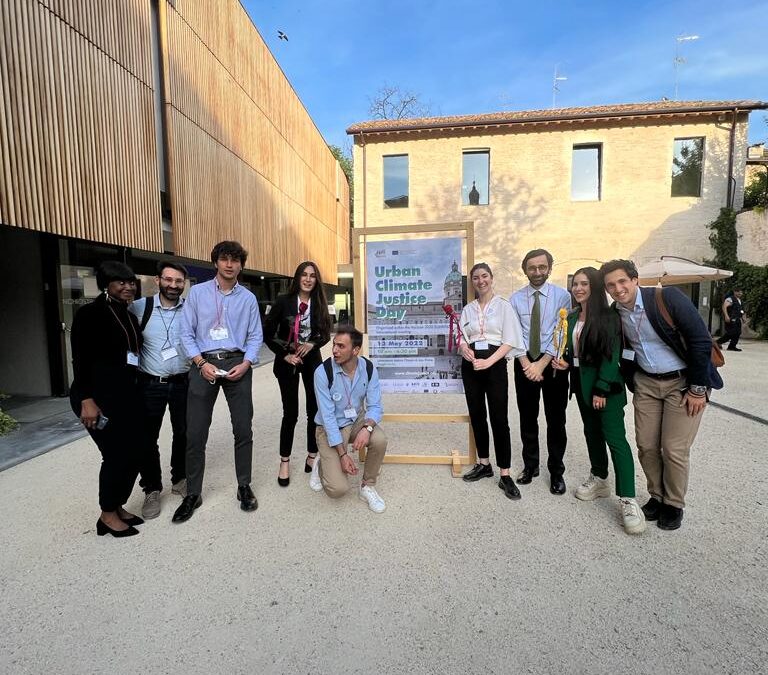
This led, on February 22, to a seminar at Luiss Guido Carli, entitled “Neighborhood, Common Good: Democracy and Urban and Climate Justice in Reggio Emilia. An integrated public policy to achieve urban co-governance as a function of sustainable urban development,” where some extremely competent authorities on the subject gave their views on the progress of the new part of the Regulation.
Davide Testa
[1] P. Chirulli, C. Iaione (eds.), La Co-città, Napoli, Jovene, 2018; S. R. Foster, C. Iaione (eds.), Co-Cities, Cambridge, MIT Press, 2022.
[2] L. 23rd December 2009, n. 191.
[3] A. Jeanneau, The City Science Initiative: strengthening science and research for urban policies Tech and the City – Reggio Emilia, Labgov.city, 2020, <https://labgov.city/theurbanmedialab/the-city-science-initiative-strengthening-science-and-research-for-urban-policies-tech-and-the-city-reggio-emilia/>.
[4] EUArenas, https://www.euarenas.eu/.
[5] Regulation on Democracy and Urban and Climate Justice in Reggio Emilia, https://www.comune.re.it/documenti-e-dati/atti-normativi/regolamenti/regolamento-sulla-democrazia-e-la-giustizia-urbana-e-climatica-a-reggio-emilia.
[6] E. G. Carayannis, T. D. Barth, D. F. J. Campbell, The Quintuple Helix innovation model: global warming as a challenge and driver for innovation, Journal of Innovation and Entrepreneurship, n. 1/2012; C. Iaione, E. De Nictolis, La quintupla elica come approccio alla governance dell’innovazione sociale, in F. Montanari, L. Mizzau (eds.), I luoghi dell’innovazione aperta. Modelli di sviluppo territoriale e inclusione sociale, Torino, Fondazione G. Brodolini, 2016.
[7] C. Iaione, Urban Sustainable Development and Innovation Partnerships, Italian Journal of Public Law, 2/2022.