by Ginevra Rosati | Nov 21, 2016 | The Urban Media Lab
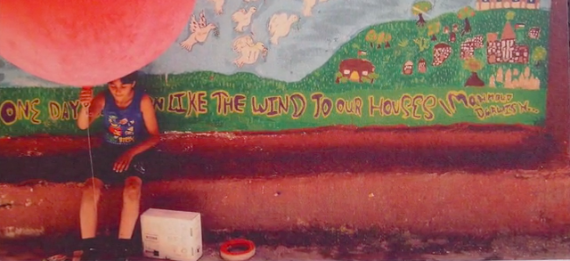
Bourj Al Shamali is a Palestinian refugee camp in Lebanon, under the jurisdiction of the UN, that was established as a temporary camp in 1948. Nowadays it is overcrowded, informally build and void of greenery. It has more than 23’000 registered refugees, and fifty percent of them are younger than 18.
This refugee community is using citizen science to map, analyze, improve, green and take charge of their environment. The project “Citizens science in a refuge camp” concentrates on the inhabitants’ community that has the objective of using the information received to plan and support future improvement initiatives.The main aim of this project has been to produce in a collaborative way what surprisingly will be the first detailed map of the city that its inhabitants have ever had. They used “balloon mapping”, a do-it-yourself aerial photography tool developed by Public Lab, the citizen science organization.
Working with a group of youths of the camp and with the support of Beit Atfal Assumoud, a humanitarian organization, they took thousands aerial pictures of this populated settlement thanks to the navigation of the balloon through the streets. The three camp resident who did the most of work on the balloon mapping are Amal Al Saeid (21), Mustapha Dakhloul (18), and Firas Ismail (19). They received a pair of invitations to present their work in the United States.
This way of mapping builds better relationships with the inhabitants of the place that has to be mapped. In fact, the low-tech balloon mapping permits a wider participation of the community members. Inhabitants as partners and co-creators of the solutions to their problems.
Started as a campaign to produce maps of the Bourj Al Shamali refugee camp giving the citizen scientists a chance to share their experiences with those abroad, after an initial support the project reached its goal and then expanded to include signposts and the camp’s first community garden.With Al Houla Association they launched a balloon mapping initiative that would help the local committee to launch an agriculture pilot project and to create a green space in the camp.
The mapping process is part of a wider initiative which goes under the name of “Greening Bourj Al Shamali” aims at improving the living conditions and the living space in Bourj Al Shamali refugee camp in south Lebanon. Bourj Al Shamali is passing through a new political phase, with a new local committee that is independent and is currently working to involve numerous people around the camp in collective activities to improve daily aspects of the life in camp. To begin with, the project envisages the creation of the first public green space in the Bourj Al Shamali refugee camp in South Lebanon, in conjunction with the launch of a pilot urban agriculture initiative for the camp’s residents.
The number of refugee and refugee camps around the world is growing rapidly. This project has an an enormous potential to create solutions through new models for how people living in such situations might establish a measure of control over their own environments and futures, and improve their living conditions.
——————————————–
Bourj Al Shamali è un campo di rifugiati Palestinesi in Libano. La comunità di rifugiati utilizza la scienza dei cittadini per mappare, analizzare, migliorare, rendere verde e prendersi il carico del loro sviluppo. L’obiettivo principale di questo progetto è quello di creare in maniera collaborativa una mappa dettagliata della citta. Questo è stato possibile grazie al “balloon mapping”, uno strumento “fai da te” che cattura fotografie aeree, creato da Public Lab che è l’organizzazione dei cittadini. Nata come campagna per mappare la citta, il campo rifugiati ha raggiunto il suo obiettivo e ora si sta espandendo per creare il primo orto condiviso del campo che attualmente è privo di verde. Questo progetto ha un grandissimo potenziale in quanto, con l’aumento di campi di rifugiati, crea soluzioni attraverso nuovi modelli per le persone che vivono in queste condizioni, stabilendo una misura di controllo per il loro sviluppo e miglioramento delle loro condizioni di vita.
by Ginevra Rosati | Oct 24, 2016 | The Urban Media Lab
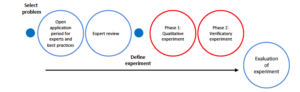
The report Design for Government project, June 2015, proposed to implement a new model based on experiments, including behavioral approaches modelling the Finnish policy design. This approach results in a more user-oriented and efficient policy. Here you can read the third chapter of the report for the Design for Government project; it explains the experiments and the program implemented to support the experiments. http://www.demoshelsinki.fi/en/julkaisut/design-for-government-humancentric-governance-through-experiments/
The issue of the experiment we are now taking in consideration consists of selecting a random group of 2000-3000 unemployed citizens and give them a basic income of 560 euros (about 600$). This base income will substitute their pre existent benefits. The observing period will run for two years, in 2017 and 2018, and will evaluate if this base income will reduce poverty, bureaucracy and social exclusion, improving employment.
There exists no other reform comprehensive like the base income reform that will impact the majority of the population in any nation and being of this importance. The Finnish experiments attract much attention because it is an issue that is faced by al societies. Nowadays, the basic income is being discussing also in Switzerland, in the US and in the Netherlands.
In Finland, the basic income experiment is a part of a bigger trial, the change in policy making. This change has been named “co-design” or “co-creation” of policy, meaning the engaging of relevant stakeholders and citizens in the policy-making process. Basic income is only the top of the iceberg, in fact it will give the start of about 20 other experiments that will take place in the following months.
Behind the basic income experiment there is a Finnish evolving to turn national governance agile and human-centric. In 2015 a Nordic think tank, Demos Helsinki, together with Aalto university was leading a research and design project proposing a quick to implement model for including experiments and behavioral approaches into Finnish policy design.
This experiments will lead to create a solid basis to built a pioneer governance system in the country.
In Finlandia è stato creato un progetto chiamato “Design for Governance” per implementare un nuovo modello basato sugli esperimenti per modellare il disegno della politica Finlandese. L’esperimento che aprirà la strada a circa un’altra ventina di esperimenti è quello riguardante il reddito di base per i disoccupati. Questo reddito di base ha lo scopo di ridurre la povertà e l’esclusione sociale e la burocrazia, facendo aumentare il tasso d’occupazione. Questi esperimenti sono parte dell’intento finlandese di rendere la governance nazionale agibile e mirata all’uomo.

by Ginevra Rosati | Sep 26, 2016 | The Urban Media Lab

Lyft car in San Francisco ( Source: wikimedia)
Europe opens the door to the sharing economy. Uber and Airbnb are looking for a global expansion, and now more than ever there is the common need to write rules that have to be clearer and equal for all. For this reason majors from numerous cities are coming together to provide a collective answer rather than continuing to act on city-by-city basis. Regulation is a big hurdle for companies like this, specially when they are expanding. They need to convince lawmakers to side with them; they have strong arguments in their favor, as both companies have a positive impact on cities and creates jobs.
Why the need for regulations emerged?
To avoid some negative circumstances. In New York Uber has been accused of running an antitrust scheme or Airbnb to become a platform for unregulated hotels. In France Uber faced riots amid taxi strikes to its executives being fined by a judge. Uber is the start-app most financed in the world. It’s not quite easy to face this kind of situation because competition in markets is very strong.
Regulations are needed and the challenge has began. In Paris, Airbnb’s most popular destination, they started collecting a tourist tax on behalf of the cities.
The new guidelines of the EU Commission aim at distinguishing between those who provide personal car or house occasionally, to “round up”, and those who do it full time and professionally. These “sharing” services may be prohibited by national governments only as an extreme measure. However the decision is up to individual Member States, which must adapt national legislation, but may do it on their behalf because the indications of Brussels are general and not legally binging.
This is what has been said:” “Establish minimum thresholds under which economic activity can be considered a non-professional one between peer without having to meet the same requirements that apply to a service provider that operates on a professional basis.”
In this way it will be possible to divide who can provide a sharing economy service and who can no longer do so. It can depend by the income that is derived from these activities or the number of days. If there is an employment relationship for which the service provider is dependent it shall apply in full legislations on licenses, taxation, liabilities and social rights.
“You cannot impose a total ban on these activities” of sharing economy “if the reason is to protect existing business models”, these are the words of the Commissioner for the internal market Elzbieta Bienkowska.
It is not an easy and fast process but governments hope for a full collaboration from this platform. The main scope is to maintain the idea of participative economy, creating a cooperation with the istitutions.
Airbnb e Uber si stanno espandendo a livello globale. La sharing economy si affaccia in Europa. È arrivato il momento di applicare delle regole che siano generali, uguali e valide per tutti. Bisogna fare una distinzione tra chi offre questi servizi occasionalmente e chi lo fa a livello professionale, in questo è necessario un contratto da dipendente e agire secondo licenze, tasse e responsabilità.
by Ginevra Rosati | Sep 5, 2016 | The Urban Media Lab
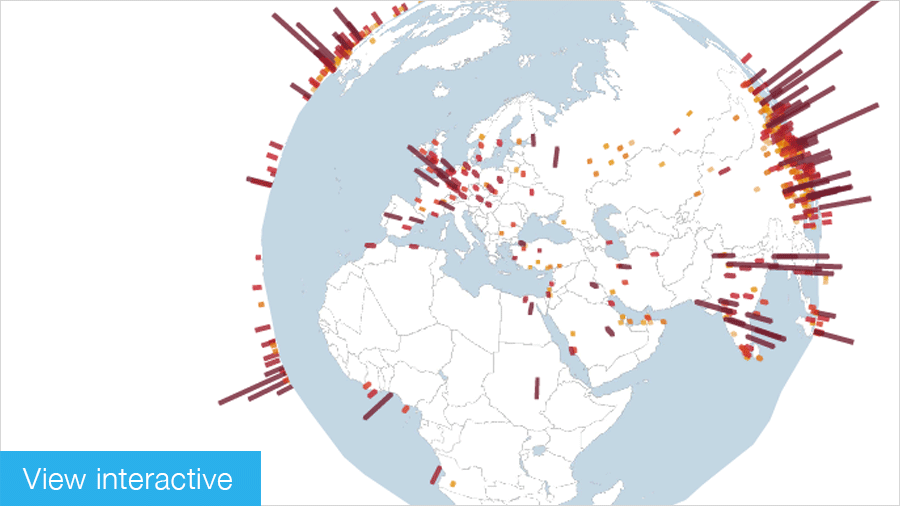
Global cities of the future, interactive map from McKinsey Global Institute’s database.
Over the following years, six hundred cities – the City 600 – will generate more than 60 percent of global GDP growth, as reported in this article. The urban world is undergoing a broad transformation and its center of gravity is moving south and, maybe even more, east.
Half of global GDP in 2007 came from 380 cities in developed regions, with more than 20 percent of global GDP coming from 190 North American cities alone. The 220 largest cities in developing regions contributed another 10 percent. But by 2025, one-third of these developed market cities will no longer make the top 600 and one out of every 20 cities in emerging markets is likely to see its rank drop out of the top 600.
By 2025, 136 new cities are expected to enter the top 600, all of them from the developing world and overwhelmingly 100 new cities from china. To help companies find growth opportunities and policymakers to manage the increasing complexity of larger cities more effectively, MGI has built on its extensive research on the urbanization of China, India and Latin America to develop a database on more than 2,000 metropolitan areas around the world. The top 100 cities ranked by their contribution to global GDP growth in the next 15 years will contribute just over 35 percent of GDP growth to 2025 and the top 600 will generate 60 percent of global GDP growth during this period.
MGI finds that population in the City 600 will grow an estimated 1.6 times faster than the population of the world as a whole. By 2025, the City 600 will be home to an estimated 310 million more people of working age—and account for almost 35 percent of the expansion of the potential global workforce. Almost all of this increase is likely to be in the cities of emerging-markets—and two-thirds in the leading cities of China and India. (More data available here).
These data are very important, as we understand that such a radical change on the economic and demographic will bring about new challenges for governance. Cities are going to change and we have to think not only in terms of economic growth, but also of sustainable development in order to be sure that these cities will also be places in which people will be able to lead a good life.
In order to work towards these results it will be important to build civic collaboration and collaborative governance, strengthening networks between citizens, administration and businesses.
Dal 2025, ci si aspetta che 136 nuove città entreranno a far parte delle top 600, tutte quante provenienti da parti del mondo in via di sviluppo. Queste 600 città produrranno il 60 percento del PIL mondiale. I dati raccolti da MGI Cityscope, un database che analizza più di 2,000 aree urbane, rivelano l’aspettativa di una grande crescita demografica, da cui conseguirà un aumento della forza lavoro. La maggior parte di questa crescita sarà concentrata nelle città dei mercati emergenti. Questi dati sono il punto di partenza per una nuova sfida di governance.


