Sharing in the East Bay Area
The Bay Area, fondly known to many as the Silicon Valley, has birthed companies that are known to be crucial cogs in spreading the concept of the so-called “sharing economy.” Uber and AirBnB , for example, were launched and are headquartered in San Francisco. The startup platform AngelList shows 495 “sharing economy” startups with 1,087 investors, with a $ 3.9 million average valuation. [1] Many of these startups are located in the Bay Area.
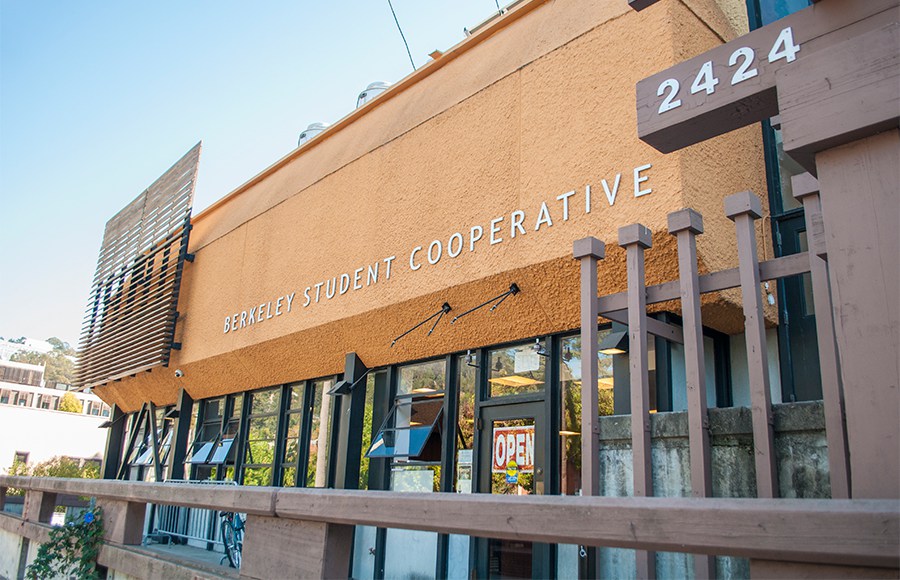
The East Bay Area, home to cities like Berkeley and Oakland, has a unique sharing culture whose history extends beyond the advent of these companies. For example, the University of California, Berkeley, is home to various housing cooperatives for students (including themed cooperatives like a vegetarian house and an African American house) under the umbrella of The Berkeley Student Cooperative.  The Berkeley Student Cooperative was founded in 1933 and is run as a nonprofit. The idea is to “democratically run” the houses, with each resident [contributing their] labor to help keep […] housing costs affordable. ” [2] Similarly, The Cheeseboard Collective is one of the most popular pizzerias in Berkeley. Cheeseboard has been a worker-owned collective since 1971 in that it is entirely owned by its workers and aims to embody the idea of a “democratic workplace.” [3]
Janelle Orsi, a self-proclaimed “sharing lawyer” in Oakland co-founded the Sustainable Economies Law Center (SELC) built to aid the development of the commons. [4] Orsi argues that companies like Uber AirBnB and do not draw direct links to the concept of the commons because, for example with Uber, “the property of a car and the labor of a driver are rented temporarily for a fee.” Orsi seeks to work with companies that create more “equitable arrangements.” Orsi has “supported projects in co-housing, community agriculture, car-sharing, and other shared resource management” and SELC often works with cooperatives just like the Berkeley Student Cooperative and Cheeseboard.
Cooperatives are unique in supporting the concept that “wealth should be gained by the people who created that wealth.” Other cooperatives in the East Bay Area includes, among many others: Missing Link Bicycle Cooperative, a forty-year-old worker-owned cooperatives bicycle store; DIG Cooperative, Inc., a general contracting firm for water catchment and reuse systems; and Mandela Foods Cooperative, a worker owned grocery store.
[1] https://angel.co/sharing-economy-4
[2] https://www.bsc.coop/who-we-are/general-info-who-we-are
[3] http://cheeseboardcollective.coop/about
[4] http://www.eastbayexpress.com/oakland/the-true-sharing-economy/Content?oid=4563249&showFullText=true
Photo Source: http://i2.wp.com/www.dailycal.org/assets/uploads/2014/10/BerkeleyStudentCooperative_MDrummond1.jpg