
by Maria Elena Santagati | Jun 27, 2017 | The Urban Media Lab
A new call for projects connecting cultural heritage and society has been launched by MIUR, the Italian Ministry for Education, University and Research, within the European Structural Funds framework, more precisely within the National Operational Programme “Education” 2014-2020: “Avviso pubblico per il potenziamento dell’educazione al patrimonio culturale, artistico e paesaggistico”.
80 millions € are being made available by the Ministry in order to enhance and foster the education in cultural heritage among students of both primary and secondary schools, in order to raise awareness about its value as a common good and its potential in developing democracy. Education and dissemination activities turn out to be crucial to promote a better understanding of the relationship between cultural heritage and local communities.
To highlight the importance of this purpose, also in the view of the European Year of Cultural Heritage of 2018, the Ministry refers to the UN Human Rights Declaration of 1948, and namely to its article 27: “Everyone has the right freely to participate in the cultural life of the community, to enjoy the arts and to share in scientific advancement and its benefits”. And, of course, to the Faro Convention of 2005, Council of Europe Framework Convention on the Value of Cultural Heritage for Society., that defined cultural heritage as “a group of resources inherited from the past which people identify, independently of ownership, as a reflection and expression of their constantly evolving values, beliefs, knowledge and traditions. It includes all aspects of the environment resulting from the interaction between people and places through time”. Italy has signed up the Faro Convention in 2013, and a draft law has been approved few days ago (June 16) by the Council of Ministries to continue its ratification procedure.
The call, whose deadline is July 10, is divided into two strands:
- projects proposed by single schools;
- projects proposed by a network made up of different members: at least 3 schools, at least 1 local authority, at least 1 among public bodies/ institutions/no profit associations that are experienced on the topic.
The involvement of the local ecosystem turns out to be an important feature of the call, that encourages the development of partnerships and collaborations with many different institutions: central and local public administrations, associations, foundations, third sector actors, universities, research centres, superintendences, museums, cultural professionals as well as already existing networks.
Each project, that can be financed up to the amount € 30.000,00 if submitted by single schools and of € 120.000,00 if submitted by a network, should be developed through interdisciplinary and innovative approaches, focusing on the experiential dimension and ensuring a dissemination activity and an impact in the local community. The projects should include the following actions:
- knowledge and access to cultural heritage, also by digital means;
- adoption of cultural heritage (sites, buildings, monuments, etc.);
- supply of a cultural, social, sustainable and environment tourism service;
- knowledge and communication of the local cultural heritage, also in foreign languages;
- production of curricular digital contents related to cultural heritage (Open Educational Resources);
- artistic and cultural production;
- urban regeneration and rehabilitation interventions, especially in deprived areas.
The evaluation criteria are mainly the social context in which the project will be carried out, its quality and, of course, its value for the local community.
80 milioni di € per il potenziamento dell’educazione al patrimonio culturale, artistico e paesaggistico nelle scuole di primo e secondo grado. Il nuovo bando del MIUR nell’ambito del PON 2014-2020, rivolto a singole scuole o a reti composte da scuole e istituzioni del territorio, sostiene progetti che promuovano la conoscenza del patrimonio culturale, del suo valore per la società e della sua dimensione di bene comune.
by Maria Elena Santagati | May 26, 2017 | The Urban Media Lab
Interview with Rosaria Mencarelli, Italian representative of the Ministry of Cultural Heritage and Tourism, in the OMC working group “Participatory governance of cultural heritage”, created within the Work Plan for Culture 2015-2018. Preliminary considerations with a view to the forthcoming final report publication.
In which context and with which objectives the European working group on participatory governance of culture has been created?
It was created in the context of the Work Plan for Culture 2015-2018. After activating a number of reflections and with the publishing of various documents at European level – among which the Convention on the Value of Cultural Heritage for Society (FARO Convention), the Conclusions of the Council of the European Union on Cultural Heritage as a Strategic Resource for a Sustainable Europe (here), the report Towards an integrated approach to cultural heritage (here), and the Conclusions on Participatory Governance of Cultural Heritage (here) – a OMC working group constituted by 26 Member States and Norway was created, with the objective of identifying norms and actions that allow for citizens’ participation in the governance of cultural heritage, in order to provide possible interpretations, approaches, and innovative models.
How was the process structured?
The process was developed through four main stages, that took place between April 2015 and October 2016. A first stage was dedicated to the understanding of the phenomenon through a survey addressed to the individual Member States of the working group, while a second stage allowed for an exchange with experts on the various possible forms of participatory governance – and this was a particularly interesting stage in which numerous interpretations of the phenomenon emerged. This was followed by a third phase, which was coordinated by the Goethe Institute and took place in Florence, where we met potential stakeholders (Universities, firms, experts etc.), with the aim of giving voice to their position too. Finally, there has been a fourth stage that consisted in the discussion and elaboration of the final document, containing a number of recommendations for both the policy-makers and the various stakeholders.
Which are the main points addressed?
The survey addressed to the Member States of the working group aimed at investigating the provisions and practices related to the intervention of private actors, both in managerial and financial terms, in the management of cultural goods. Its goal was to understand how the individual states had acknowledged the issue of participatory governance and at what level was its implementation. As far as norms are concerned, it is necessary to point out that some of them are full of potential, while others are ineffective because devoid of content.
The final document, based on concrete case studies, proposes a synthesis of the evolution of the phenomenon and an analysis of the main obstacles, mostly in terms of social change. It gives a series of recommendations, and finally it presents a collection of participatory practices developed at European level or within the individual member states of the working group. In the meantime, we wanted to offer a range of heterogeneous interpretations of participatory governance, because each social reality, each community has its own interpretation of the phenomenon, from identity to memory. For what concerns the Italian case, we included four meaningful examples: the national strategy “Aree interne” (Internal areas), the initiative “Monumenti Aperti” (Open monuments), the Sicilian case of “Officine culturali” (Cultural workshops), and the Co-Roma process promoted by LabGov.
What is the role of the public administration towards the participatory governance of culture?
As a public administration, we should favour participatory governance rather than practicing it, by motivating the actors involved and stimulating them to be as participative as possible. But it should be an authentic form of participation, and at the political level we should look for channels of active communications with the citizens, so that they get more and more used to dialogue.
For instance, in Italy we could say that the main resistance consists in a lack of trust among the different actors, not only between public and private actors, but sometimes also among public actors themselves. There is no confidence, in the Latin sense of the term, towards certain practices. Undoubtedly, the ratification of the Faro Convention would accelerate change, also for what concerns the Ministry, and would in turn increase the possibility to win some resistances.
More in general, there is a large gap between reality and models/politics/policies, so that the processes of participatory governance are still in the hands of the good will of individuals, and in many cases the territory with its practices seems to be ahead of policy-makers.
For instance, in Italy there are many good practices scattered across the country, but we cannot say we have been able to become really inclusive yet. I don’t believe that much in a general coordination, but more in a State creating a framework to stimulate the activation of participatory processes for the governance of cultural heritage. This could be done especially by providing the necessary know-how and the tools needed for its implementation. This is true also at the normative level, where there seems to be a void, faced to a cultural heritage that should be considered more and more as a common good rather than as a public good.
How can we make the participatory governance of cultural heritage sustainable?
By working on education and training, in order to provide the tools to understand. Participatory governance must be inclusive, and multiculturalism becomes a crucial point of participatory processes, in particular for the new generations. Schools and the young are two fundamental elements, and in fact some interesting practices have been developed in this context. Unfortunately, there is not yet the participation needed to develop these processes. The problem is not that much financial, as culture is becoming a more and more transversal issue, but it is more an issue of lack of competences. The political sphere should get closer to the needs of the community and should provide the tools to the actors of the various organizations, so that they can become real catalysts, able to take care of the territory.
Interview by Maria Elena Santagati
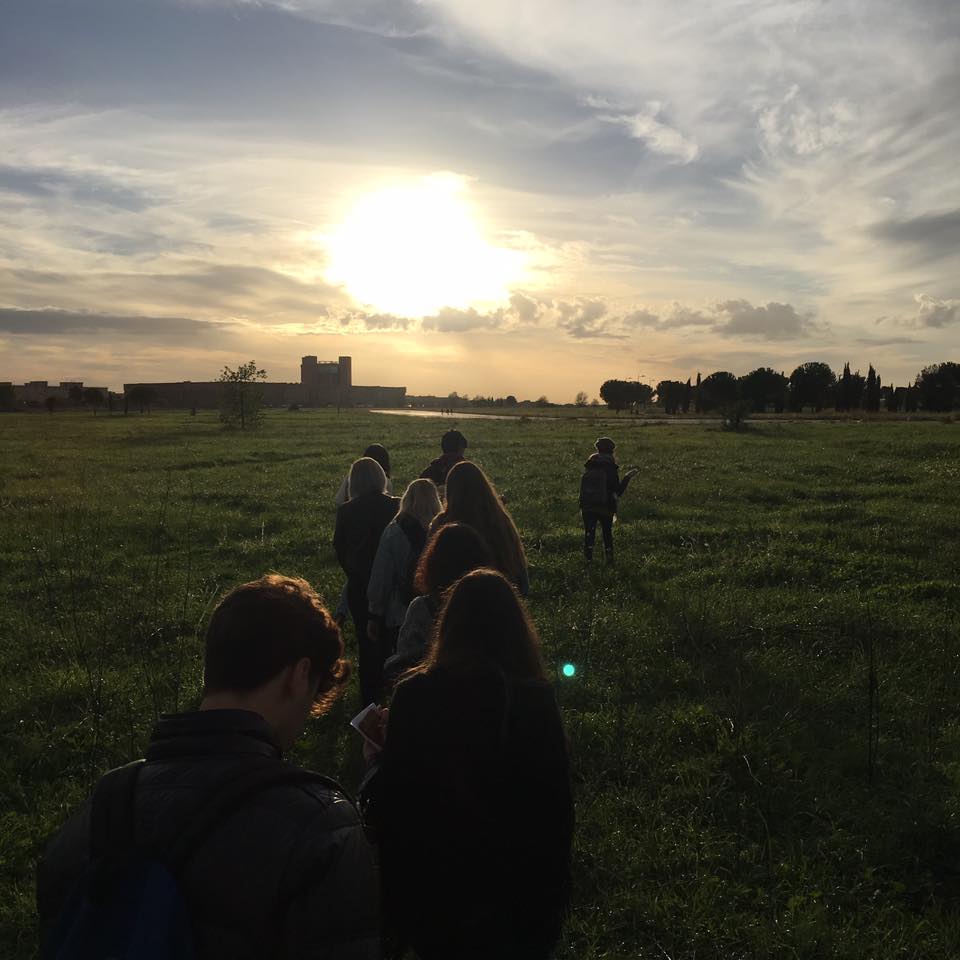
A fieldwork within the framework of the CO-Roma project
…………………………………………………………………..
Intervista con la dott.ssa Rosaria Mencarelli, rappresentante del Ministero dei Beni e delle attività culturali e del Turismo all’interno del gruppo di lavoro europeo OMC “Participatory governance of cultural heritage”. Anticipazioni del report finale contenente raccomandazioni sul tema.
Intervista a cura di Maria Elena Santagati
by Maria Elena Santagati | Apr 27, 2017 | The Urban Media Lab
‘Culture and Sharing Communities’. This is the topic of the next Conference of Trans Europe Halles TEH, a Europe-based network of cultural centres initiated by citizens and artists, that will be held in Pula, Croatia from 25th to 28th May 2017.
4 days to discuss and exchange on the role and practices of independent cultural centres in sharing culture and contributing to community development. Socio-cultural centres are in fact increasingly becoming social innovators, enabling inclusion and co-creation, democratization, re-evaluation of social values and changing social paradigms.
In order to “examine the relationship between culture and sharing communities with the aim to create responsible communities that stand in solidarity with one another while supporting a better quality of life for the community“, the conference will cover four main topics: Culture of Involvement; Sharing in Art & Education; Open Spaces for Sharing and Imagination; Communities of Practice. Additional specific workshops will deal with interesting challenges such as sharing in cultural productions towards sustainable art platforms, developing digital inclusion in a creative and innovative way, promoting time banking as a tool to engage and build with a creative community, enhancing civic design and collective intelligence, crowdfunding and community empowerment, developing long term forms of collective ownership in sharing the city.
Besides the meeting, in the past few months Trans Europe Halles has been conducting a mapping project of non-governmental cultural centres around Europe, that counted 770 centres so far. It is still possible to expand the map by submitting other centres.
The network also supports independent cultural organisations, as well as local and regional bodies, through consultancy activities and dedicated project. For instance, TEH is also partner of Creative lenses, a four-year (2015-2019) project funded by the Creative Europe Programme and developed by a partnership of 13 organisations from 9 European countries, including cultural centres and agencies, international networks, universities and creative business incubators. The project aims to improve the business capacity and financial sustainability of cultural organisations, a vital issue in such a critical time, by testing and providing innovative business models.
TEH is also key partner of Europe Grand Central, “a unique digital and conceptual platform to connect audience-created narratives about the human act of crossing borders” launched in 2015. It gathers and connects many grass-roots projects developed by independent cultural centres in Europe and beyond, it promotes mutual learning as well as audience inclusion, through different tools from artistic residencies to interactive theatre, design etc.
Last January, Trans Europe Halles also signed, together with other 32 institutions, the political statement of the European Alliance for Culture and the Arts calling European institutions and Member States to include culture and the arts in the strategic goals of the Union. On the occasion of the 60th anniversary of the Rome Treaties, the signatories stated that “Culture and the arts are the basis of the European project and moreover the essence of every civilizational development. They are substantially important to our identity, give meaning to human existence and reflect our shared history. European culture and the arts refer to 3000 years of shared cultural heritage while bringing contemporary relevance to people’s lives today. Flourishing in dialogue with other cultures, they reflect our “living together”, interconnect people in society, and transmit knowledge and values. (…) Culture and the arts constitute a vital lever for developing the Union’s future project”.
“Culture & sharing communities”, questo il tema della prossima conferenza di Trans Europe Halles, la rete europea dei centri culturali indipendenti, che si terrà in Croazia dal 25 al 28 maggio. Varie le attività e i progetti europei che il network porta avanti a sostegno di questi centri, attori sempre più importanti dell’innovazione sociale.
by Maria Elena Santagati | Mar 29, 2017 | The Urban Media Lab
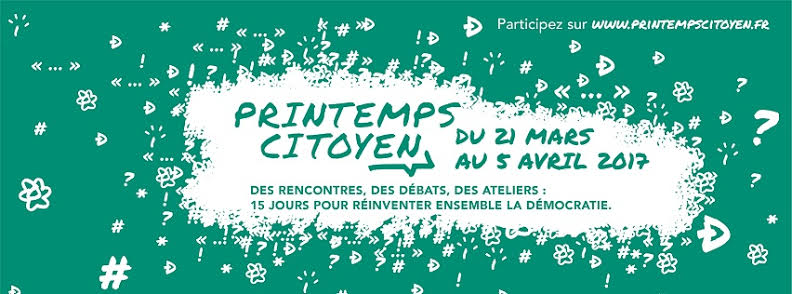
From March 21 to April 5 France hosts the first edition of Printemps citoyen, a collaborative initiative gathering 1000 events like meetings, debates and workshops organized on the initiative of citizens and associations. Hosted in 500 informal locations like cafeterias, schools, co-working and association spaces, the events will be an opportunity to debate on different topics proposed by citizens, from culture to economics, from health to history, thus strengthening citizens participation.
The aim is in fact giving a voice and making space to citizens, “populariser la démocratie participative au-delà de celles et ceux qui prennent déjà la parole ou exercent déjà des responsabilités et de dresser une cartographie des préoccupations et des propositions des citoyens”.
Initiated by the cooperative start-up Kawaa and the collective “Le labo du faire ensemble”, a think-tank promoted by different institutions operating for young target, Unis-Cité AFEV, Coexister, Passeport Avenir, Singa and the International Collaborative Foundation, with the financial support of the corporate foundation of Macif group, the initiative represents a unique opportunity for citizens to raise problems and debate proposals, that will be collected and presented in a final dissemination meeting on April 20.
Many partners joined the project, some of them belonging to Démocratie ouverte, an independent citizens collective whose aim is to accelerate democratic transition by promoting transparency and citizens participation with dedicated programs.
Partners provide also digital tools, like the collaborative platform proposed and offered by Kawaa, and some animation formats containing instructions and details to organize and conduct effective meetings/workshops, also according to different contexts and targets. Open Forum, World Café, SenseDrink, Le Café envie d’agir are just few examples of the available formats. A documentary film showing best practices of democratic innovation from around the world is also available on the website. Citizens could choose a topic and a format, search for the available locations, register their event or simply attend the various meetings organized throughout the national territory. Secularity, creativity, political elections, ecological issues, tax avoidance, migration, citizens engagement are some of the topics under debate.
The complete program is available here.
—————————————————————–
Si tiene in Francia, dal 21 marzo al 5 aprile, la prima edizione di “Printemps citoyen”, iniziativa collaborativa che promuove in tutto il territorio nazionale 1000 incontri, atelier e dibattiti organizzati dai cittadini per i cittadini, con l’obiettivo di stimolarne una partecipazione attiva nella società.

by Maria Elena Santagati | Feb 27, 2017 | The Urban Media Lab
On 7th and 8th February 2017 Marseille hosted the seminar “Patrimoines et biens communs au regard des droits culturels”, organized within the framework of the “Chaniter Patrimoine(s) et bien(s) commun(s)”, a research-action site devoted to analyse, debate and exchange knowledge about the phenomenon of heritage communities, defined by the Faro Convention on the value of cultural heritage for society (2005) as:
art.2.b.“Heritage community consists of people who value specific aspects of cultural heritage which they wish, within the framework of public action, to sustain and transmit to future generations.”
Building on this definition, many community-based initiatives have been developed so far, serving as the Faro good practices[1]: Heritage committee, Heritage walk, Residents’ co-operative, Urban revelation workshop, Metropolitan trail.
Among the case studies presented during the seminar was the experience of Hotel du Nord, a residents’ co-operative which offers hosting and touristic opportunities by enhancing local cultural heritage in the northern neighborhood of the city of Marseille. It began as an experimentation in 2009 and was officially founded in 2011, as a result of the mission expérimentale européenne de patrimoine intégré, an interesting project launched in 1995 by the city of Marseille, the Council of Europe, the University and the CNFPT (the National center for the territorial public service, in the framework of the national program of rehabilitation of the inner harbour of the city). This process was carried out as an intense research and action activity, which led to the foundation of 8 heritage communities. In 2009, the mayor of the northern district of Marseilles also signed the Faro Convention and a first experimentation of residents’ co-operation was carried out during the preparatory process of Marseille European Capital of Culture 2013.
Picture from Stories.com, available here: http://stories.coop/stories/hotel-du-nord-the-cooperative-hospitality/
Hotel du Nord now proposes a network of 70 hosts, mainly residents, 60 bedrooms and 50 heritage walks to discover the natural and cultural heritage of the area. It clearly pursues the main aim of the Faro Convention, that is recognizing and promoting the social value of cultural heritage. As a matter of fact, it aims to obtain economic benefits from local heritage, to be reinvested for its preservation and enhancement, while at the same time improving residents’ quality of life and visitors’ touristic experience, through their active participation. All that adopting an experimental approach which tries to mobilize the social and cooperative capital of the local community. A further step is the experimentation of Hotel du Nord practice at the national level, in partnership with different actors from the social tourism and cultural sectors, through the co-operative Les oiseaux du passage.
As Prosper Wanner, director of Hotel du Nord, affirms: “What we need is a new paradigm triggering changes at least on three levels: cultural, economic and institutional. We try to move from a public policy approach to a public service approach. In cultural heritage policies, many efforts are devoted to promote access to culture, while we are interested in promoting citizens’ participation in the policy process. To this end, a new relationship between civil servants and citizens should be developed. The roles of each actor should change in order to lay the foundations for a better cooperation, in which citizens become co-producers, also by having access to civil servants’ competences. With Hotel du Nord, we also experiment and produce new legal provisions and new knowledge which help the Council of Europe to make progress in the Faro Convention implementation”.
The creation of heritage communities and co-operatives deeply relies on the specific territorial context, thus requiring ad hoc supporting processes. According to Prosper Wanner, “There is not a one-size-fits-all solution. There are some principles and methodologies related to the Faro Convention, which mainly rise from ongoing processes. For instance, what we experimented with Hotel du Nord and later on in Pilsen, within the European Capital of Culture experience, and in Forlì, within the ATRIUM-Architecture of Totalitarian Regimes in Urban Managements project, is a process made up of different steps: a training phase, through “The school of hosts”, opened to residents and professionals, a programming phase to identify enhancement activities, for instance heritage walks, and a promotional activity. In this respect, a networking activity is useful to exchange experiences”.
The Council of Europe works at different levels in order to promote, facilitate and strengthen the implementation of the Faro Convention, with many initiatives included in the Faro Action Plan, like Faro Community, Faro in Action, Faro Spotlight and Faro research. As Wanner affirms: “With the Council of Europe, we are working at least in three directions: developing new narratives as regards cultural heritage, beyond the national one, promoting the approach of cultural heritage as a commons and enhancing citizens participation in public policies for an increased cooperation”.
“I am particularly interested in the perspective of commons as democracy spaces” says Wanner. In this direction, he identified a range of suggestions which could be useful for the elaboration of a cultural heritage as a commons policy[2]:
- create a heritage public service in which citizens co-manage culture heritage
- create a cultural heritage open data system
- elaborate a public regulation on cultural heritage commons
- make the European Heritage Days an opportunity to promote the Faro Convention implementation
- experiment participatory governance of culture according to the heritage committees model promoted by the Council of Europe
- develop an observatory of the Faro Convention implementation within the Council of Europe.
The Hotel du Nord experience and the inspiring ideas laying behind it definitely give us some food for thought!
[1] They are identified by the Faro Community and included in Faro in Action, an active learning platform gathering good practices and promoting exchange and dialogue among practitioners, facilitators and heritage actors.
[2] Published here: https://farovenezia.org/2016/02/17/proposte-per-una-politica-pubblica-patrimoniale-in-favore-del-diritto-al-patrimonio-culturale/
—————————————–
Le comunità patrimoniali, nate nell’ambito della Convenzione di Faro sul valore del patrimonio culturale per la società, costituiscono un’opportunità importante per favorire un approccio al patrimonio culturale come bene comune. Tra queste, esemplare è l’esperienza di Hotel du Nord, cooperativa di abitanti della città di Marsiglia che propone ospitalità e interessanti modalità di fruizione turistica, in un’ottica di valorizzazione del patrimonio locale e di massima cooperazione tra cittadini e istituzioni.


