
by Valeria Lembo | May 23, 2024 | City Science Initiative, Commons Press, Euarenas-Reggio Emilia
The Regulation on Democracy and Urban and Climate Justice in Reggio Emilia unifies in a single text the values and methods to ensure participation and collaboration among urban innovators from different categories, according to the quintuple helix paradigm in the definition and management of public policies. This new regulation collects and updates all previous regulations on civic participation.
In September 2022, the City Council approved the establishment of the Consultas, bodies formed by elected citizens to represent their territories and collaborate with the Municipality in policy planning. Through the Area Agreements, citizens can define their needs and propose them to the Municipality for integration into public policies.
Additionally, the regulation introduces the new Title V, which concerns the collaboration of communities and territories in the co-design phase of interventions, updating the previous regulations in line with the new Public Contracts Code and other national and European laws.
The “Partnerships for Sustainable Development and Innovation,” an evolution of the “Citizenship Agreements,” are defined as multi-actor collaborations for various fields such as climate, cultural heritage, urban regeneration, and energy communities. These Partnerships for Sustainable Development and Innovation involve distributed responsibility and collaboration based on trust.
An important innovation is the Community Budget, a tool to measure the impacts produced by the Partnerships for Sustainable Development and Innovation in terms of costs, actions, resources, and especially generated changes.
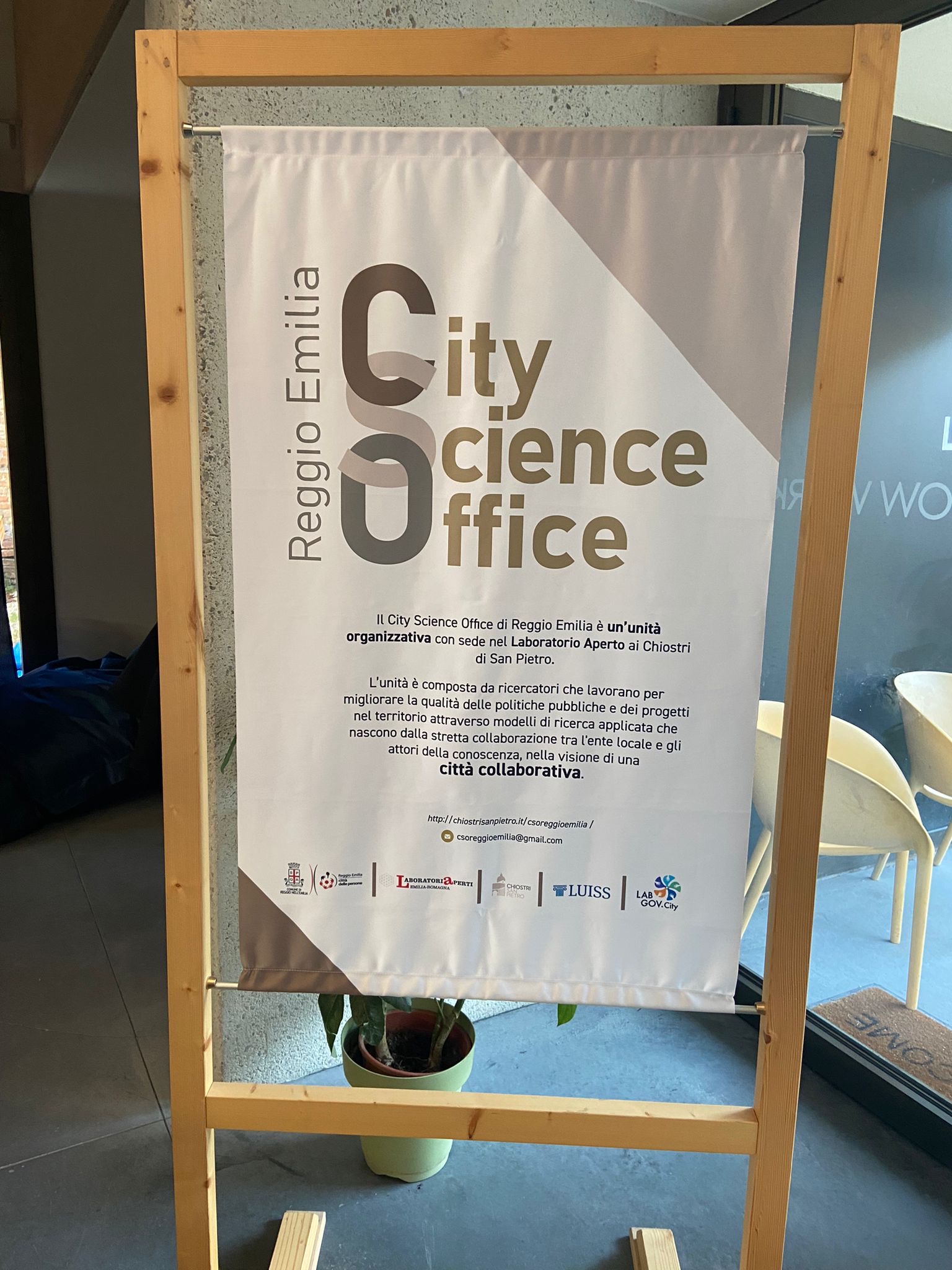
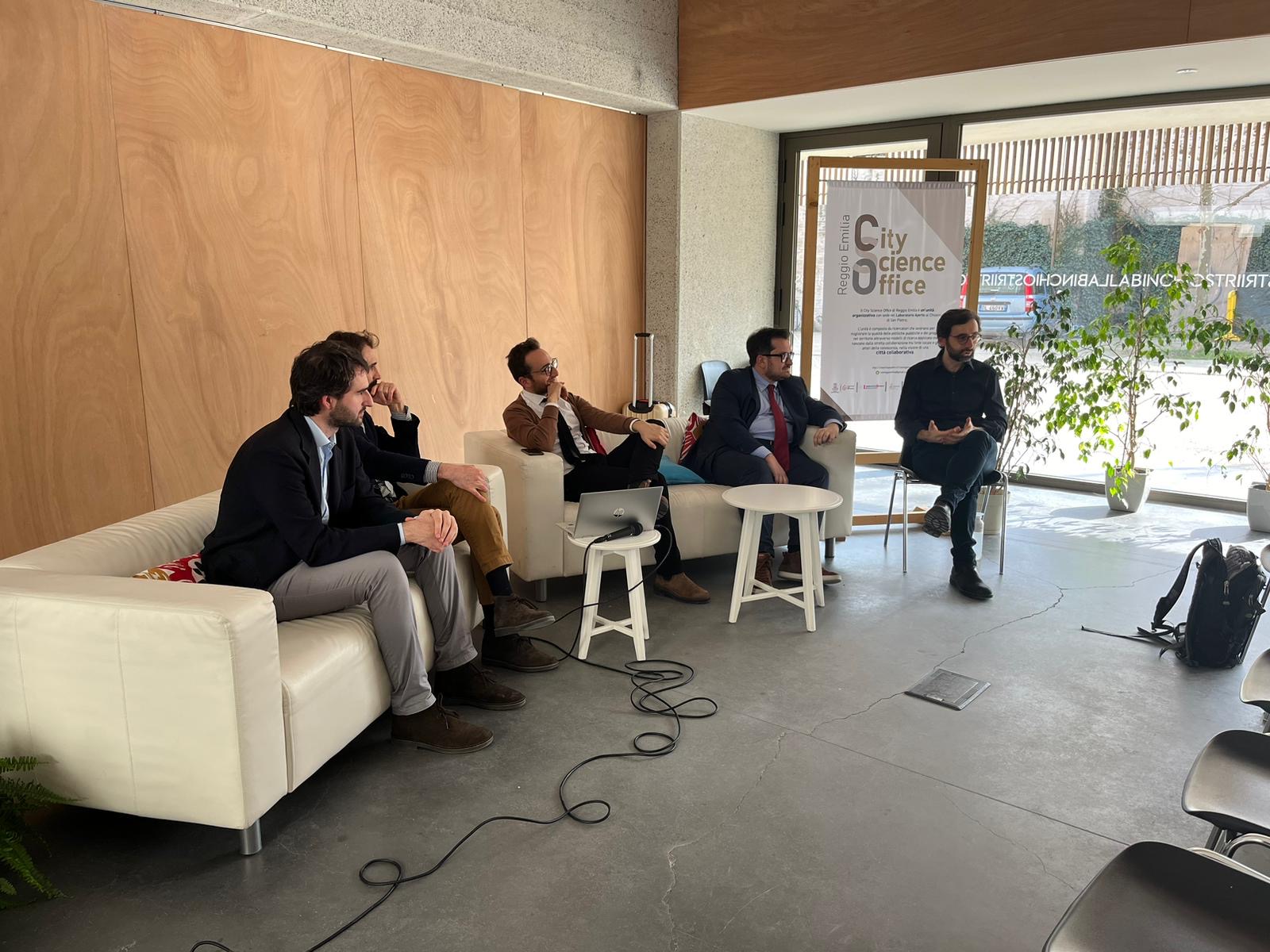
The Regulation also enhances the relationship between public administration and knowledge institutions, which has been strengthening on other fronts as well, and has consolidated since 2022 with the establishment of the City Science Office (CSO), an office for applied research to public administration where researchers work side by side with councilors, managers, and officials to design innovative policies and facilitate collaboration with social, economic, civic, and scientific actors from Reggio Emilia, Italy.
The Regulation was developed in collaboration between the Municipality of Reggio Emilia, the Department of Law of Luiss Guido Carli University, LabGov ETS – Laboratory for the governance of commons, the City Science Office of Reggio Emilia, also within the framework of the European Horizon 2020 project EUARENAS.EU-Cities as Arenas of Political Innovation in the Strengthening of Deliberative and Participatory Democracy.
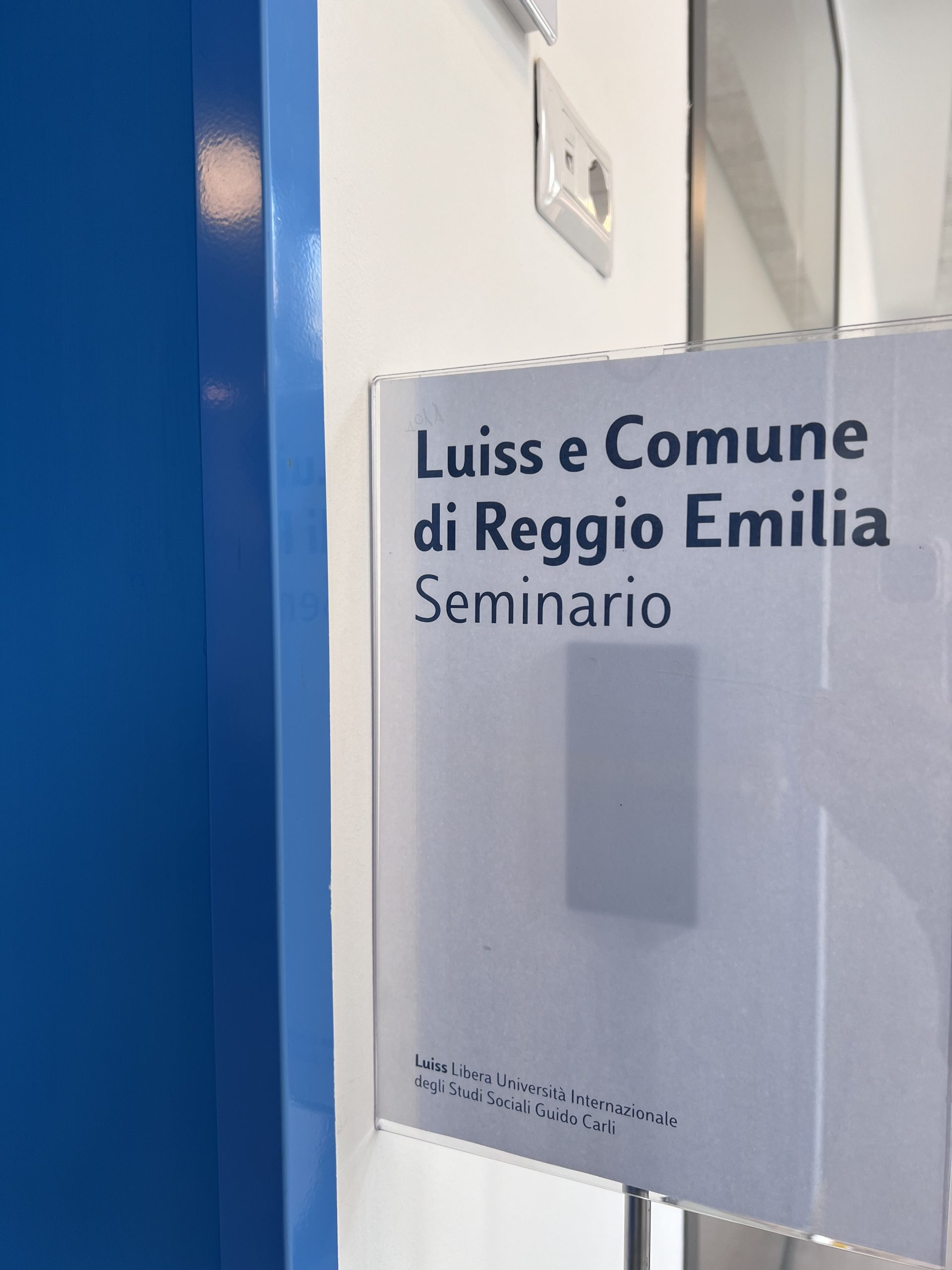
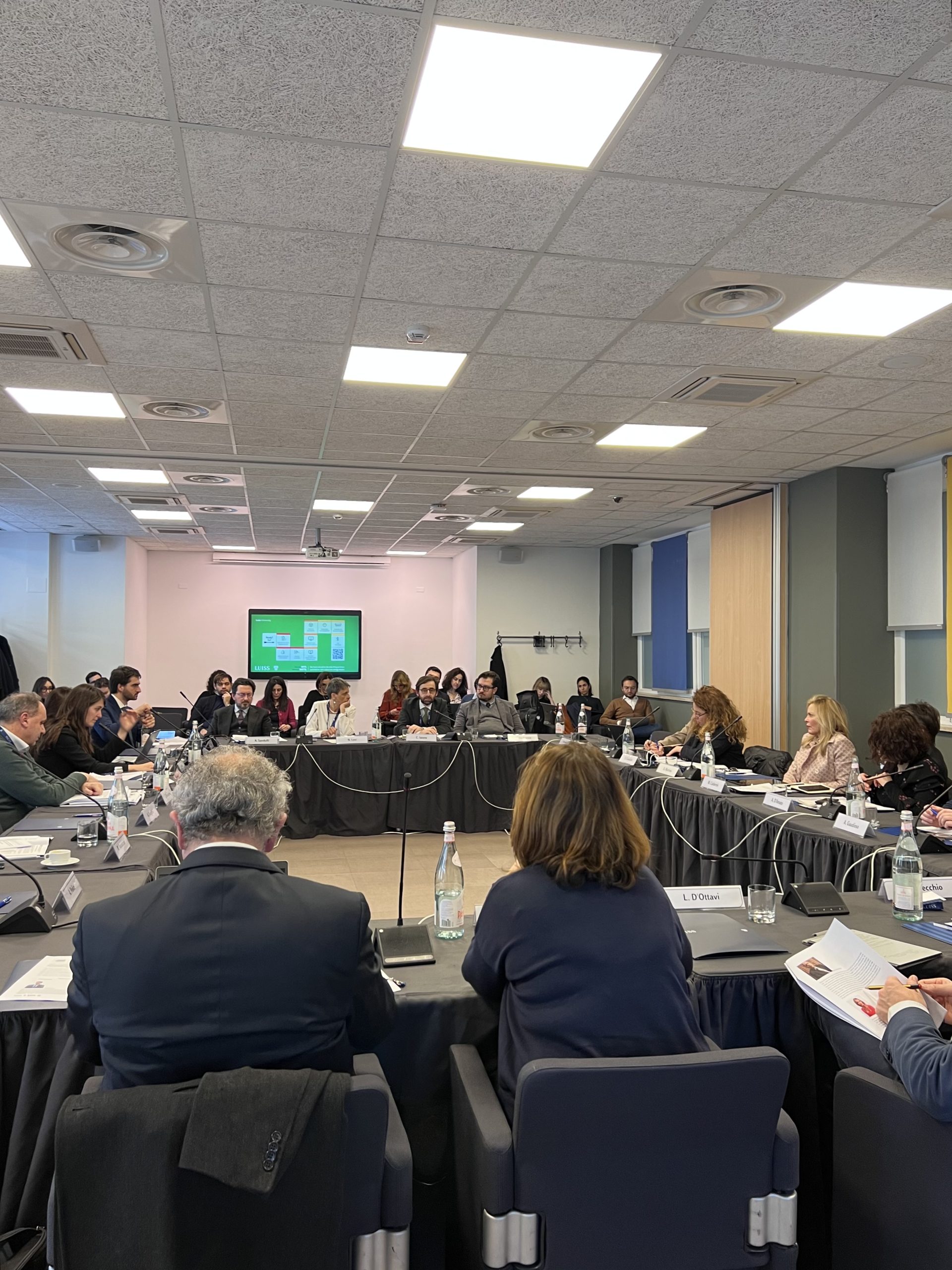
The text was also developed with the scientific contribution of professors and experts in administrative law and public policies on social and public innovation, particularly through two study and in-depth seminars held:
– on February 22, 2023, at LUISS Guido Carli, Rome: “Neighborhood, Common Good: democracy and urban and climate justice in Reggio Emilia. An integrated public policy to achieve urban co-governance for sustainable urban development” with the intervention of Giancarlo Montedoro, President of the Section of the Council of State.
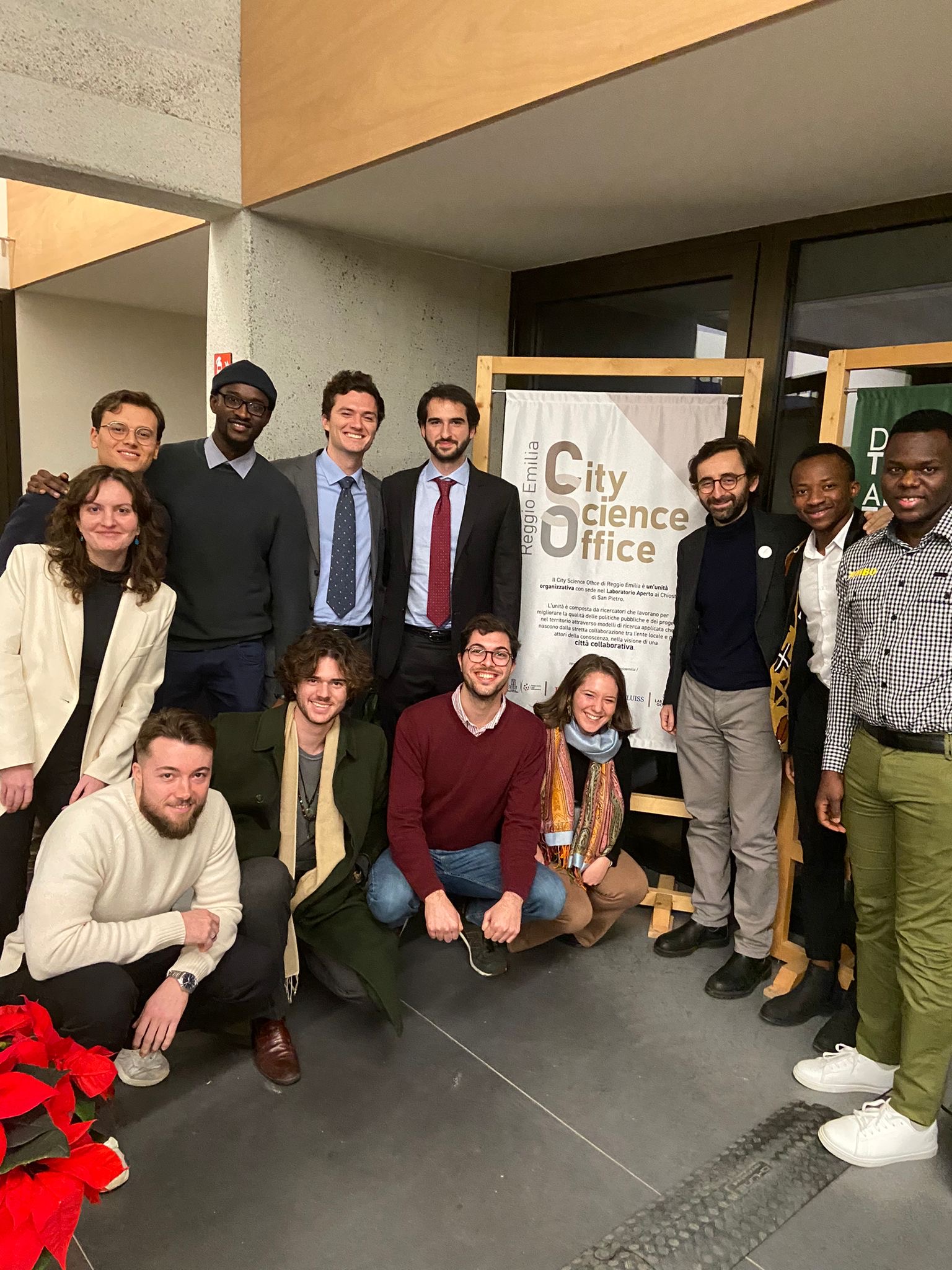
– on December 15, 2023, at Chiostri di San Pietro, Reggio Emilia: “The tools of Urban and Climate Justice in Reggio Emilia: the City Science Office, the community budget as an ESG measurement tool, Community and Area Agreements, the Climate Contract, and the Partnerships for Sustainable Development and Innovation.
https://www.comune.re.it/amministrazione/documenti-e-dati/atti-normativi/regolamenti/regolamento-sulla-democrazia-e-la-giustizia-urbana-e-climatica-reggio-emilia
https://www.comune.re.it/novita/notizie/approvati-in-consiglio-comunale-gli-aggiornamenti-e-le-modifiche-al-regolamento-sulla-democrazia-e-la-giustizia-urbana-e-climatica-a-reggio-emilia
https://www.youtube.com/watch?v=fsP3rNLn6yg
https://www.digital4democracy.com/seduteonline/reggioemilia/play.php?flv=RE_106489_126634_001_20240318
by Valeria Lembo | Apr 25, 2024 | City Science Initiative, Event, News

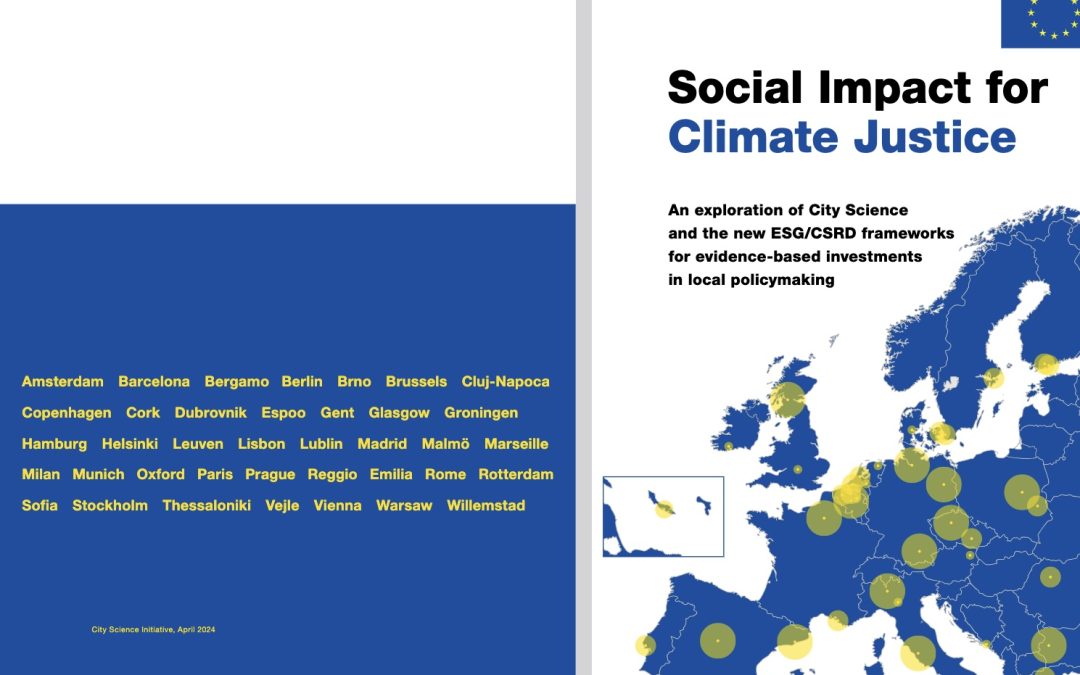
After the “CSI-ESG/CSRD for Cities Launch 2024”, held on March 19th and 20th in Brussels, the final report ‘Social Impact for Climate Justice’ has been published.
Building upon the new EU legislation for the Corporate Sustainability Reporting Directive (CSRD) that is effective as of 1 January 2024, and building upon the new Environmental Social Governance framework (ESG) introduced by the World Economic Forum of Davos for the financial sector in 2019, this report offers cities and regions new avenues for collaboration between the public, private and civic sectors. Given the many intertwined crises humanity and the planet are facing, vulnerable communities require support and these new frameworks may contribute to such an effort.
CSRD/ESG frameworks demand that companies not only offer transparency of financial information in their annual report but also show the ecological footprint and social impact they have. Eventually, CSRD/ESG will create a new sustainable dynamic among companies, which can help to achieve more social and sustainable impact in cities and regions.
This report investigates how local democratic bodies of governance, like a municipality, a regional office or a waterboard, can facilitate these new opportunities for social impact collaboration.
Here the report ‘Social Impact for Climate Justice’:
https://openresearch.amsterdam/nl/page/107704/social-impact-for-climate-justice-an-exploration-of-esg-csrd-for
by Valeria Lembo | Mar 20, 2024 | City Science Initiative, Event, News


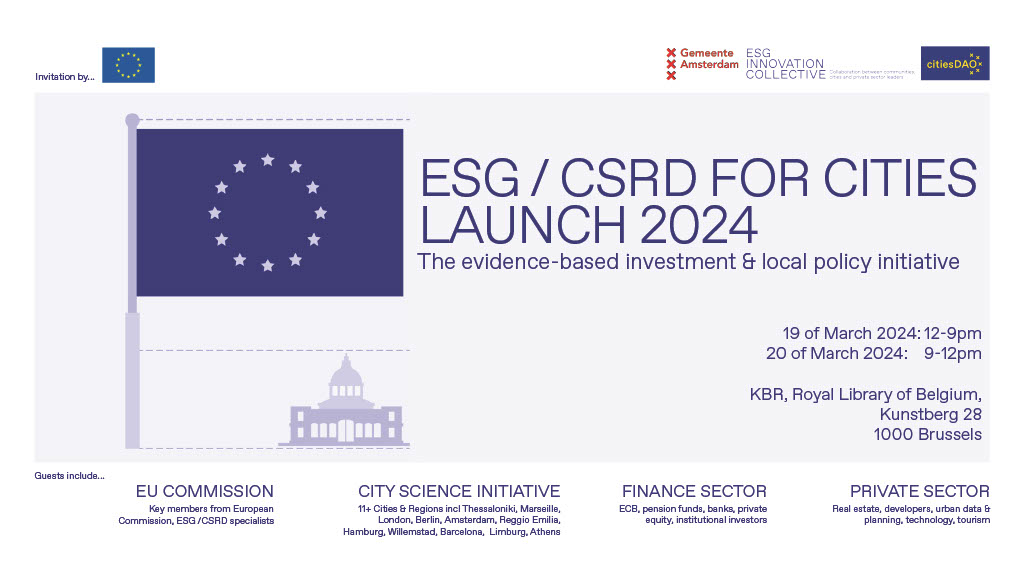
“CSI-ESG/CSRD for Cities Launch 2024”– The evidence-based investment & local policy initiative will be held on March 19th and 20th in Brussels.
The workshop will delve into ‘Social Impact for Climate Justice’, an exploration of City Science and the new ESG/CSRD frameworks for evidence-based investments in local policymaking.
Specifically, following a welcome address by chair Caroline Nevejan (Chief Science Officer (CSO) Amsterdam), featuring an introduction by special guest Maria Lina Yeroyanni (European Commission, DG Research and Innovation, RTD Senior Expert on Innovating Cities), Professor Christian Iaione (CSO Reggio Emilia) will discuss Climate Justice & EU regulations.
Stay Tuned! -> https://acrobat.adobe.com/id/urn:aaid:sc:eu:d7e834b9-bcf6-44ce-bd34-a663ee539459

by edoardocarminucci | Mar 29, 2023 | City Science Initiative, Commons Press
In order to grasp an initial idea of what City Science Initiative is, it can be asserted that it is a program activated within the Joint Research Center of the European Commission which connects cities and urban contexts with science (therefore mainly universities) through a network of so-called City Science Offices (CSOs) that will be discussed in the following paragraph and that can have different configurations according to the city where they are located.
Professor Iaione explains that “a handful of European municipalities are experimenting with an organizational innovation: City Science Offices (CSOs). While CSOs are not a public-private-people partnership themselves, they are an organizational innovation that can create multi-actor partnerships, or they can be part of one. The phenomenon is still in its infancy, so it is too soon to tell, but it definitely is an innovation to keep under close observation”. (1)
In particular, it can be useful to know which cities are trying to connect innovation, technology and knowledge with urban policies to be implemented wisely, with the purpose of shortening the gap between the civil society, academia and decision-makers and to share best practices.
“Five cities lead each of the five working topics of the City Science Initiative:
– Air Quality (Paris)
– Circular Economy (Hamburg)
– Mental Health (Thessaloníki)
– Sustainable Mobility (Cluj-Napoca)
– Tech and the City (Reggio Emilia)” (2)
and major attention could be paid to the Italian case. This last example of the city in the Emilia-Romagna region can be helpful in understanding which role these offices can play: the CSO of Reggio Emilia is “a research unit in the field of urban and social innovation [also involving] three young researchers from Luiss Guido Carli University of Rome”. (3) The city is part of the broader network of municipalities “recognizing the importance of science, research and technology for the development of territories and thus implementing a structured approach to evidence-based decision-making”. (4)
Undoubtedly, such an approach to policy-making cannot avoid to consider the principle of environmental and climate sustainability: nowadays, these issues find juridical references, from the supranational level to local contexts and administrations, as well as a perceived social urgency increased by the energy crisis that has been going on for a very relevant time. In this regard, Berni, De Franco and Levi write that “the energy issue represents a fundamental challenge for the Italian public administrations as decisive players in promoting the creation of energy communities based on close collaboration with private sectors, associations and citizens. Based on previous experience focus on co-design and co-management of urban commons, Reggio Emilia has activated a pilot experimentation of renewable energy communities at neighbourhood level through the scientific support of the City Science Office, a research unit coordinated by the municipality with the collaboration of the Luiss University of Rome and the manager of the Open Laboratory at the Cloisters of San Pietro”. (5)
Furthermore, it is more and more incontrovertible that cities represent fundamental places of experimentation for the fight against climate change and to foster measures for the transition towards low-carbon economies that can achieve the fundamental objectives of the 2030 Agenda for sustainable development. Therefore, the assessment of the carbon impact of public policies represents a decisive challenge for local authorities which implies the search for tools of analysis useful for directing strategies and actions in territories. Certainly, science can play a role and in particular the City Science Office of Reggio Emilia can be better understood under these lenses:
“The unit is made up of three researchers mainly in the legal field with the task of developing applied research in the Reggio area with respect to three main themes:
a) administrative and social innovation, investigating the methods and tools useful for promoting collaboration between the private world and local communities in the context of activities of general interest promoted by the public body;
b) digital innovation aimed at achieving carbon neutrality through evaluation and strategic guidance tools for public policies;
c) eco-environmental transition to support the experimentation of collaborative governance models and related tools to be applied in the creation of renewable energy communities.” (6)
The ability to implement public policies oriented towards carbon neutrality will witness an essential role in the replicability of the best practices conducted in the territory, in order not to join forces for single initiatives, but to share those with the administrations that may be most in need. The purpose of cooperation and common efforts in these fields may regard many more projects:
“Other activities carried out by the City Science Office concern scientific and strategic support in the promotion of internationalization paths, in the search for funding and in scientific dissemination. The aim is to improve the effectiveness of the public administration through open innovation paths and the transversality between territorial policies and projects. The root of the experimentation lies in the experiences conducted in other European cities within the Joint Research Center (JRC).” (7)
In fact, “Reggio Emilia is part of the ‘City Science Initiative’ program promoted by the European Commission as a ‘lead city’ together with Amsterdam, Cluj-Napoca, Hamburg, Paris and Thessaloniki within an international network made up of around 35 European cities. These are initiatives capable of affecting the processes of ‘research policy gap’ in public policies or supporting the municipalities in decision-making and planning through applied research models” (8) that should regard a vast portion of the public heritage which the Municipality of Reggio Emilia has. Buildings of public offices, schools, civic centres, working-class districts and many more represent places that, for instance, could both be made energy efficient and transformed into physical incubators of innovation.
_________________________________________________________________________________
References:
- Iaione, C. F., (2022) Urban sustainable development and innovation partnerships.Italian Journal of Public Law, vol. 14 (2), 521.
- OpenResearch.Amsterdam (2022) City Science: https://openresearch.amsterdam/en/page/79960/city-science-initiative.
- Chiostri San Pietro (2021) City Science Initiative:
- https://www.chiostrisanpietro.it/nasce-a-reggio-emilia-il-city-science-office/
- Chiostri San Pietro (2021) City Science Initiative:
- https://www.chiostrisanpietro.it/nasce-a-reggio-emilia-il-city-science-office/.
- Berni, F., De Franco, L., Levi, N. (2023) The City Science Office of Reggio Emilia: pathways to energy and social research and innovation. Diritto e Società
- Berni, F., De Franco, L., Levi, N. (2023) The City Science Office of Reggio Emilia: pathways to energy and social research and innovation. Diritto e Società
- Berni, F., De Franco, L., Levi, N. (2023) The City Science Office of Reggio Emilia: pathways to energy and social research and innovation. Diritto e Società
- Berni, F., De Franco, L., Levi, N. (2023) The City Science Office of Reggio Emilia: pathways to energy and social research and innovation. Diritto e Società.
