
by Francesca Spigarolo | Apr 29, 2017 | The Urban Media Lab
In the last years, the city of Naples has been the theatre of a series of experimentations and innovations in urban democracy through the commons.
What makes the experience of this city particularly special is that the requests voiced by urban communities are being met by the efforts of a local administration committed to strengthening collective participation and supportive of citizens’ claims to re-appropriate urban commons, in particular the so-called sleeping giants, buildings or complex structures located both in the center and in peripheral neighborhoods. The city of Naples embraced an enabling approach toward the commons. Since 2011, the city has been issuing a set of municipal ordinances that discipline the commons, adopting an approach deeply rooted in empirical reality, based on the practices of self-organization of the communities that co-govern the commons. The city also implemented institutional and organizational innovations to further improve its action in this filed. In 2011, the city of Naples created the Assessor of the Commons and later a Specific Unit internal to the city administration that is committed to fostering and maintaining the dialogue with the civic realities involved and to finding innovative solutions to better deal with the commons. The case of Naples has been object of different studies conducted by experts focusing on the Italian commons. The role of the social movement is been retraced and analyzed in particular by Maria Rosaria Marella [1], Ugo Mattei and Sakei Bailey [2], whom also highlighted the role played by social movements for the commons in the Neapolitan experience and in other Italian cities, that will be analyzed in following articles of the CO-cities series: Rome, Milan, Messina, Palermo, Venice among the others. Interesting insights on the case of Naples can also be found in the work curated by Gabriella Punziano [3].

Naples, Rebel city
In a period in which national and local institutions seem to be growing apart from their citizens, Naples appears to be going in the opposite direction by choosing an alternative and less common path. Refusing to organize political structures as dictated by market logic and adopting instead what David Harvey[4] would define a rebel city approach, the city is bringing citizens at the center of the decision-making process and is strengthening participation in political institutions committed to the care of the commons.
This approach has led to the recognition of several occupations, which are being redefined as “emerging commons” perceived by citizens as “civic development environments”[5]. As of today, the spaces which are officially recognized as commons are the ex Asilo Filangeri, Villa Medusa, the ex Lido Pola in Bagnoli, the ex Opg, the Giardino Liberato in Materdei, the ex Conservatorio di Santa Fede, the Scugnizzo Liberato and the ex Schipa, and in the future more resources will be added to the list and entrusted to public care.
These recognitions, already relevant on their own, are to be read within a much broader framework, which sees the City of Naples firmly engaging in the promotion of normative actions to recognize, support and promote occupations and self-governance of the commons. As explained by Fabio Pascapè, responsible for the Unit on the Commons of the city of Naples, there are in fact several levels on which the local government has been working to achieve this goal.
Civic and collective uses. The model of the “Ex Asilo Filangieri”
The first occupation to be recognized was that of the ex Asilo Filangieri, an historical building located in the heart of Naples, which after decades of abandonment was occupied in 2012 by a group of artists and workers of the cultural sector, together with neighborhoods inhabitants. In the same year, the ex Asilo was recognized by the city as a “place of complex cultural use”.
As explained by Giuseppe Micciarelli, a representative of the ex Asilo Filangeri and a scholar of philosophy of the law and legal theory: “the ex Asilo is experimenting a new form of urban civic use of a commons”[4] which on one side is inspired by the role currently played by civic uses, on the other side it promotes the adoption of a regulation of public uses in which the management board of the good is constituted by assemblies composed by citizens and workers. In this special regime of publicity, citizen participation is able to shape a form of popular administration that redefines the role of public powers” [6]. This entails a transformation of the administration and of its functions, as “active citizens’ participation has the power of modeling a new form of popular administration” which could lead to a “democratic and radical twist in the concept of popular sovereignty”[7].
The ex Asilo Filangieri drafted an internal regulation[8] of civic and collective uses of the commons, adopted in 2015 by the city as an institutionalized system of rules for self-governance of the commons, which will be transferable to similar experiences. An experimentation on the urban civic uses is been implemented also in other Italian cities, such as Messina, with the occupation of the Teatro Pinelli [9], and Palermo, with the experience of the Montevergini Complex. The regulation states general principles and rules for a public goods that is governed directly by the community itself through an “assembly of management” that evaluates the different proposals and coordinates the use of the space, that will remain limited to cultural and general interest activities.
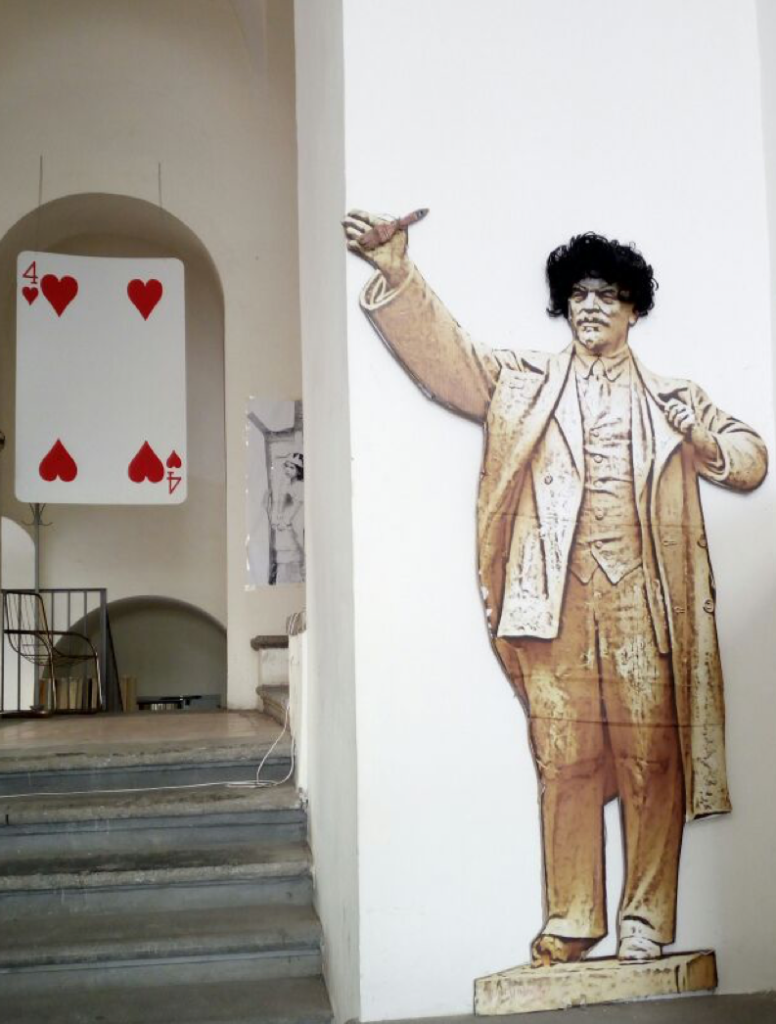
The entrance of the ex Asilo Filangeri
Urban regeneration and development
Besides all the efforts done in terms of recognition of the social value of the urban commons, the Municipality demonstrates to be deeply committed to the development of a new urban paradigm, based on the urban commons and on citizens’ participation, by engaging in several participatory regeneration processes. Through the work of the 2nd Chance network, which the city of Naples is leading within the framework of the URBACT project, the community will be called to participate in a path which aims at bringing back to life urban sleeping giants (abandoned places), and in particular the complex of Santissima Trinità delle Monache. Naples has also recently joined the URBinclusion network, which will work on fighting socioeconomic disparities and social exclusion in different cities. Furthermore, through a process that will be activated in the Borgo Vergini-Sanità area with the support of MiBACT, the city will direct its efforts towards the regeneration of difficult neighborhoods. In developing these projects the Municipality is always engaging the community in the process by fostering participation, generating knowledge and advancing a new vision of cultural heritage as a commons.
Conclusion
The process activated by the Naples administration is highly relevant as it not only allows citizens to re-appropriate common spaces of high social and civic value, but it also builds an ecosystem of collaborative practices that will generate a radical transformation of the city and of its governance. The case of Naples demonstrates that when cities are aware of the need to radically innovate institutions and regenerate urban life in order to answer to the multiple requests of their citizens, a real paradigm change is possible. What is more, it proves that such objectives will only be achieved if citizens will be allowed to participate in the decision-making process, so that the cities of the future will be designed according to the real demands and desires of their inhabitants.
This article is part of the CO-Cities Series
……………………………………………..
[1] Maria Rosaria Marella, The Commons as a Legal Concept, Law Critique (2016).
[2] Saki Bailey and Ugo Mattei, Social movements as constituent power: the Italian struggle for the commons, in Indiana Gobal Legal Studies 20, 2, 2013 at 965-1013. See also Ugo Mattei, Protecting the Commons: Water, Culture, and Nature: The Commons Movement in the Italian Struggle against Neoliberal Governance South Atlantic Quarterly (2013) and, form the same author The Commons Movement in Italy, South Atlantic Quarterly (2013).
[3] Gabriella Punziano (eds.) Società, Economia E Spazio a Napoli. Esplorazioni E Riflessioni (2016), L’Aquila: GSSI Social Sciences, Working Papers, 28.. Available at SSRN: https://ssrn.com/abstract=2753565 or http://dx.doi.org/10.2139/ssrn.2753565.
[4] Harvey, David (2013)Rebel Cities: From the Right to the City to the Urban Revolution, Verso Books, London.
[5] As expressed in Naples City Council Resolution n. 466, 1.06.2016, available here http://www.comune.napoli.it/flex/cm/pages/ServeBLOB.php/L/IT/IDP
agina/16783.
[6] Translated by the italian original version: Micciarelli, Giuseppe (2015) Pratiche di commoning nel governo dei beni comuni: il caso dell’ex Asilo Filangieri, Il tetto, sommario n. 306-307, at 92.
[7] Ibid.
[8] Ibid.
[9] The complete text of the Declaration of civic use of Asilo Filangieri is available here: http://www.exasilofilangieri.it/regolamento-duso-civico/.
[10] Giuseppe Micciarelli, I beni comuni e la partecipazione democratica, Jura Gentium, XI:1, 2014.
………………………………………………..

Ex OPG “Je so pazzo”, courtyard
Negli ultimi anni la città di Napoli è stata teatro di una serie di sperimentazioni e innovazioni che hanno permesso di sviluppare e rafforzare pratiche di democrazia urbana attraverso i commons. Riconoscendo degli spazi occupati come beni comuni generativi di valore sociale, promuovendo processi di rigenerazione e di partecipazione e ricostruendo un dialogo tra cittadini e amministrazione la città ha saputo costruire un vero e proprio ecosistema di pratiche collaborative.
by Francesca Spigarolo | Apr 22, 2017 | The Urban Media Lab
All over the world, cities are facing multiple and ever-changing challenges, ranging from growing economic inequalities, widespread gentrification and increasing segregation to issues of environmental degradation and scarcity of resources. In the most extreme cases, such challenges are at the origin of a phenomenon defined by the sociologist and economist Saskia Sassen as political, social and economic expulsions.
In such a climate of widespread insecurity, the number of cities that are becoming aware of the limits implied in the traditional top-down decision making processes, seen with suspicion and detachment by many city inhabitants, is continuously growing, alongside with the numerous voices calling for the necessity of a new governance paradigm. Such paradigm should aim at strengthening citizens’ participation in decision-making, in order to allow for the creation of public policies and institutions able to answer to the needs expressed by the community, to increase the legitimacy of political choices and to foster inclusion.
One path that is being object of experimentation in different cities and that holds the potential to bring about a substantive transformation in urban life is based on the idea that participation and collaboration could be built around the urban commons, resulting in benefits for the whole community. Such path will eventually lead to the creation of Collaborative Cities (CO-Cities), as envisaged by Professor Christian Iaione and Sheila Foster in their work The City as a Commons, where the two scholars advance the idea that not only common resources, but the city itself should be governed as a commons.
Cities from all over the world appear to be heading in this direction, by focusing on the development of different forms of collaborative governance, designed according to the peculiar characteristics of the context and resulting for this reason in a wide variety of experimentations. While throughout the past years we have been closely following the path that led to the creation of the Bologna Regulation on collaboration for the urban commons and to the activation of the CO-Bologna process, it is fundamental to bring our attention to the similar phenomena that are taking place all over the country, where different strategies and approaches are being adopted in order to design public policies for the urban commons.
This is what we will try to do through our CO-Cities series, which will look into the variety of strategies adopted by other Italian cities like Turin, Naples, Reggio Emilia, Milan, Messina, Rome, etc.) in order to improve their inhabitants’ lives by enabling the governance of the urban commons.
Stay tuned for more stories!

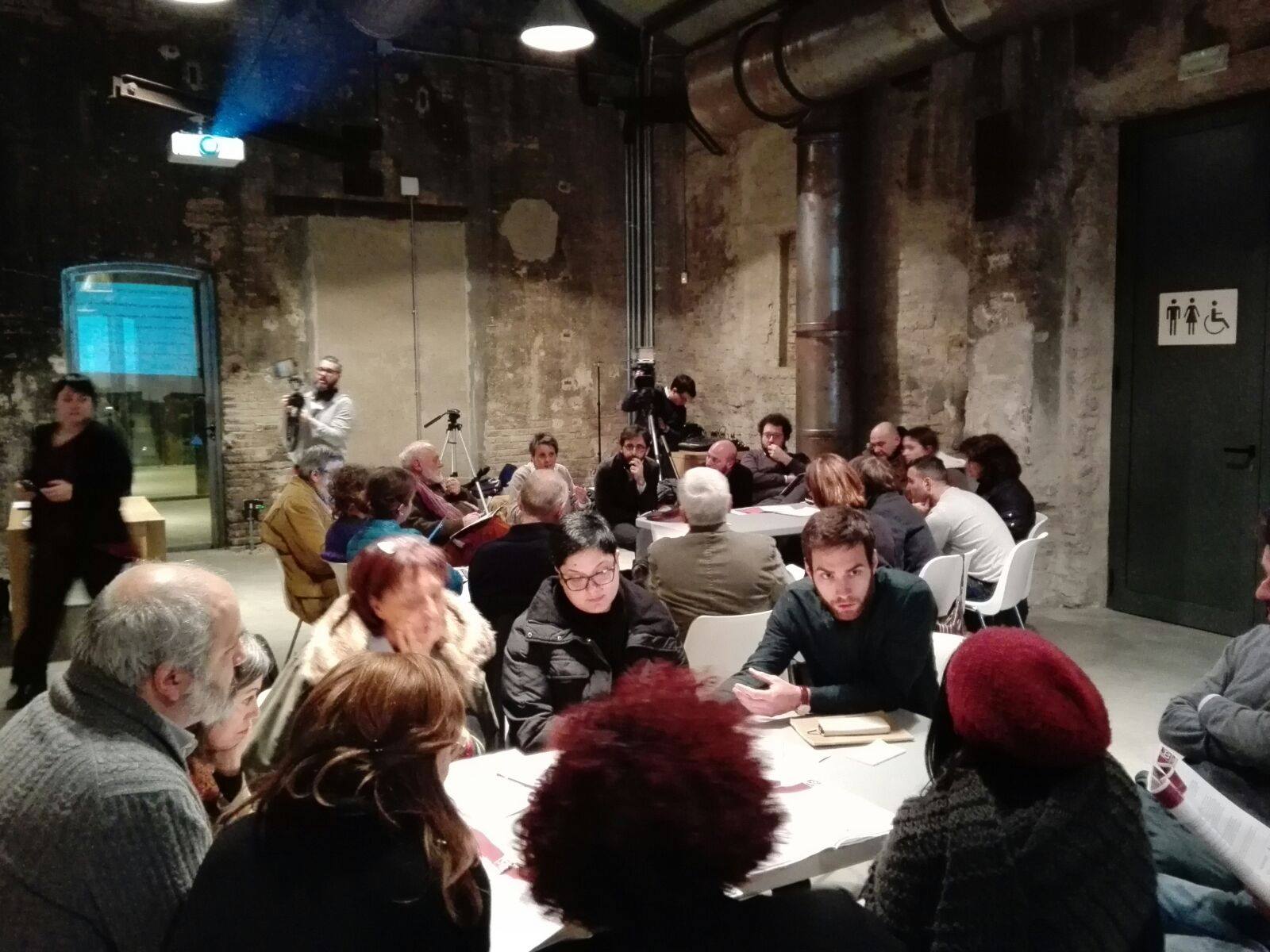
The participatory process #CollaboratorioRE in Reggio Emila
———————————–
Da Bologna a Napoli, da Torino a Palermo, passando per Milano, Reggio Emilia, Messina e per tante altre città italiane, osserviamo la nascita di risposte innovative alle problematiche che caratterizzano l’ambiente urbano. Molte di queste risposte ci mostrano come i beni comuni e la collaborazione possano essere alla base di un nuovo paradigma di governance urbana.
Attraverso la serie CO-Cities racconteremo storie di cambiamento provenienti da tutta Italia. Non perderti i prossimi articoli!

by Chiara De Angelis | Mar 15, 2017 | Storytelling 2016-2017
On Friday, March 10th, we had the honor to host Professor Sheila Foster, LabGov’s co-founder, co-director of the Fordham Urban Law Center and founder of the Fordham University Urban Consortium, and Professor Maria Rosaria Marella, professor in Private Law at the University of Perugia. Two experts at the international level together to talk about the city as a commons, and about use and property in the urban space as well.
To govern the city as an urban common is the goal for witch we’ve been working for years. Cities are at the same time resources and generative elements so that we can bring by them other several different resources and our duty is to take care of them and to use them as better as we can. How do we create these processes of distribution of resources by the commons to the citizens? What are the limits to the private property and how we decide what’s the right moment to entrust the management of the property to the comunity in order to avoid the “slippage” phenomenon?”.
It is not easy to find answers to these questions but we can notice that the Italian law system tries to solve this problem with a juridic act according to witch is possible to buy properties in collectives without having in return money, but reinvesting it in the society.
Professor Sheila Foster shared with the labgovers her experience on urban commons, defined as something that has to be open, accessible and potentially collectively owned, and talked about the big issue of resource distribution within the city, which leads us to the problem of how do we allocate resources. Professor Foster also shared her knowledge on experiences in New York City (a city that is currently acting as a private land owner) on community-owned networks (broadband) and collaborative ecosystems, that act as incubators fostering common-pooled small business and start-ups, and teach them how to create tech goods, and how to use the commons to pull and distribute resources.
Professor Marella, starting from the assumption of the city as a commons as a place where value and wealth are produced, proposed the legal tools we currently are putting in place to have access to and redistribute resources: the right of access and use, and the limits to the property.
A great moment of discussion and thinking with the students followed the two speeches.

Il 10 marzo, durante il terzo workshop di LabGov EDU 2016/2017, abbiamo avuto l’onore di avere come relatrici dell’incontro la professoressa Sheila Foster, co-fondatrice di LabGov, co-direttore del Fordham Urban Law Center e fondatore del Fordham University Urban Consortium, e la professoressa Maria Rosaria Marella, docente del Dip. di Giurisprudenza presso l’università di Perugia. Due esperti di beni comuni a livello internazionale, insieme per condividere con i labgover la loro esperienza.
La prof.ssa Foster, esperta di governance dei beni comuni urbani intesi sia come risorse in sé sia come elementi generativi, ha condiviso la visione di beni comuni urbani come qualcosa che deve essere aperto, accessibile, e “collectively owned” e parlato di esperienze portate avanti a New York, nello specifico nel Bronx e ad Harlem, concentrandosi sugli ecosistemi collaborativi
Ha poi proseguito la prof.ssa Marella portandoci ad esempio il caso di “salute ambiente e territorio” sul quartiere del Pigneto di Roma per evidenziare i problemi che la proprietà pubblica e privata stanno affrontando negli ultimi anni concernenti i limiti del loro utilizzo e la mancata valorizzazione dei loro benefits.
È emerso che la città è:
- luogo di produzione, di ricchezza e di produzione.
- luogo di espressione.
Una prima riflessione/domanda emersa è stata:
‘’Tutti producono valore, ma come possiamo avere accesso a questa ricchezza? In che misura questa ricchezza può essere distribuita?’’
 Giuridicamente non esistono molti riferimenti: tendenzialmente ci sono strumenti che hanno in qualche modo realizzato il diritto di uso agli spazi, e di conseguenza limiti alla proprietà (pubblica e privata). Il caso Pigneto a Roma è molto sentito ed è una situazione molto articolata. Vi è una piccola piazza molto frequentata, gestita dai residenti, in cui organizzano cene e feste particolari. Un giorno una fila di box viene venduta ad un imprenditore che presenta subito un cambio di destinazione di uso per farci una sorta di Starbucks italiano.
Cosa si può fare? C’è un modo per resistere al cambio di utilizzo? In che misura questa comunità ha la possibilità di utilizzare questo spazio e quanto può rivendicarlo?
Si può pensare di evitare la proprietà dando ai singoli utenti l’uso di un’unità in modo che la circolazione dell’immobile nel mercato può essere controllata dalla comunità.
Ci sono già degli esempi di uso comune come i regolamenti (patto tra i cittadini e il comune in cui si stipulano delle regole), immobili assegnati alla comunità con amministrazione favorevole, ad esempio l’ex asilo filangieri (Napoli) (serie di beni diventati accessibili al pubblico).
Nel caso Pigneto questo diritto della cittadinanza non è realizzabile perché non si può rivendicare un bene accessibile – anche se privato – alla comunità.
Ai due speech è seguito un interessante momento di dialogo e confronto con gli studenti.
Appuntamento al 17 e 18 marzo per il primo co-working del secondo semestre!
by Chiara De Angelis | Mar 1, 2017 | The Urban Media Lab
In the framework of the Idea Camp 2017, the City of Madrid, the European Cultural Foundation and the Connected Action for the Commons are organizing the Innovative City Development meeting with municipal and city officials who are working in a progressive approach on cultural and urban related issues, using participatory methods. On March 2nd and 3rd attendees from Poland, Spain, Greece, Moldova will co-exchange about the city as commons and also meet with the Idea Makers.
The meeting will have two fundamental goals:
- To facilitate co-exchange and learning about the city as commons through presentation of practices and experiences
- To engage the participants to broaden knowledge on both activists’ and institutions’ approach to city space and its problems.
Connected Action for the Commons will contextualize the meeting: it is a network and an action research program working mainly on topics linked to the commons such as public spaces, culture and democracy. It is in the process of co-developing and exchanging expertise as a network and engaging its local communities.
Christian Iaione, LabGov’s co-founder, will attend the meeting and facilitate the majority of the sessions.
Further information about the Idea Camp 2017 is available here: http://www.culturalfoundation.eu/connected-action/

by Francesca Spigarolo | Nov 9, 2016 | The Urban Media Lab
CO-Reggio Emilia is a process promoted by the municipality of Reggio Emilia in collaboration with the University of Modena and Reggio Emilia and with the scientific, strategical and organizational support of LabGov (LABoratorio per la GOVernance dei beni comuni) and Kilowatt.
The first phase of the project is centered upon the creation of a collaboratory, #CollaboratorioRe, a path that will lead to the creation of the Open Laboratory (Laboratorio Aperto) of Reggio Emilia. November the 8th and Wednesday the 9th of 2016 the partecipants will come together to engage for the last two co-design sessions, with the aim of assessing the proposals that emerged during the first phase and of drawing the path that will be followed in the phases to come. Those sessions are the closure of a 3 months process, with four workshops and a public launch event.
Valeria Montanari, Councillor for innovation, administrative simplification, participation and care of the neighborhoods of Reggio Emilia, defines the collaboratory as the new “incubator” for the sharing economy, a reality that will generate a new way of thinking about the city. The path of #CollaboratorioRe will enable us to define the subject that will take care not only of a physical space (The Chiostri di San Pietro, that were completely regenerated thanks to an investment of the Municipality) but also of a new economic institution. The Open Laboratory will be a space to experiment, a space where new forms of democracy and economy will be practiced, a space where employment and competences will be created, a space where innovative solutions will be created to answer to the needs of individuals and of the community. For this place to come into existence #CollaboratorioRe has imagined a path of collaborative planning, composed of three different phases.
The process
The first phase consisted in launching a public call to allow all the actors to express their interest in participating in the co-design process and to propose their ideas. Alongside with this, a series of thematic workshop of presentation took place and saw the participation of hundreds of citizens. The two days of co-design that close this first phase will be the occasion to reflect on the themes, values and suggestions that emerged from these initiatives and to identify the elements that could become the foundations of the Open Laboratory.
Following the co-design sessions a second phase will open, a phase that will see the transformation of Reggio Emilia into a field of experimentation for collaboration, where the multiple realities involved will work together to produce immediate solutions to the needs that have been identified.
Building on what will emerge from the whole process, in the third phase it will be possible to define the guidelines for the Open Laboratory and to design the identity, the methods and the form of governance of the future actor.
More informations on the #CollaboratorioRe process are available on the official website, where it is also possible to find the calendar of the next activities.
—————————————–


