
by Chiara De Angelis | Sep 10, 2016 | The Urban Media Lab
Collaboratorio Reggio è un cammino di progettazione partecipativa, promosso dal Comune di Reggio Emilia e dall’Università di Modena e Reggio Emilia con il supporto tecnico di LabGov e Kilowatt, attraverso il quale si intende generare scambio e confronto di idee per progettare insieme gli ambiti e le attività del futuro Laboratorio Aperto.
Cosa sarà il Laboratorio Aperto?
- un luogo dove si genererà impresa e lavoro a partire dall’innovazione nei servizi alla persona e dalla collaborazione fra mondi e approcci differenti.
- un’occasione di incontro tra diversi soggetti e diverse competenze per scambiare conoscenza.
- un’impresa pubblico-privata che, nella fase di start-up, verrà finanziata da Unione Europea, Regione Emilia-Romagna e Comune di Reggio Emilia con l’obiettivo della sostenibilità economica nel tempo.
Al cuore della missione del Laboratorio Aperto ci saranno i servizi alla persona, e le persone saranno al centro del progetto. Il Laboratorio svilupperà sharing economy e pooling economy: la prima per generare nuove tipologie di servizi alle imprese o al consumatore, nuove forme di lavoro e impresa basate sulla condivisione, e la seconda per sperimentare nuove forme di servizi alla persona, economia sociale e solidale, produzione e manifattura digitale (artigianale, creativa, cognitiva, culturale), cura e rigenerazione urbana basate sulla collaborazione.
Nell’ambito del progetto è stata lanciata una Open Call, il cui testo completo si trova a questo link. La call è indirizzata ad una serie di attori (comunità locali, imprese locali, istituzioni cognitive, società civile organizzata e istituzioni pubbliche), e resterà aperta fino al 25 ottobre 2016. La comunità che risponderà alla call e che parteciperà a questa prima fase di “manifestazione di interesse”, avvierà un primo momento di progettazione collaborativa ad ottobre. Primo oggetto del Laboratorio Aperto saranno i Chiostri di San Pietro, uno degli edifici storici più apprezzati di Reggio Emilia.
Il primo appuntamento del Laboratorio è fissato per martedì 13 settembre: alle 18.00 presso i Chiostri di San Pietro sarà presentato il percorso di progettazione partecipativa. All’incontro interverranno il sindaco Luca Vecchi, l’assessore alla Partecipazione Valeria Montanari, il direttore dell’area Competitività ed innovazione sociale Massimo Magnani, e vari esperti tra cui: Christian Iaione, co-direttore di LabGov, Renato Galliano, direttore dell’Area centrale politiche del lavoro, sviluppo economico e università del Comune di Milano, Fabrizio Montanari, docente presso l’Università degli studi di Modena e Reggio, e Fabio Sgaragli, Open & Social innovation manager della Fondazione Brodolini di Roma.
Maggiori informazioni su http://www.municipio.re.it/retecivica/urp/pes.nsf/web/Hmttl?opendocument e http://www.co-reggioemilia.it/

by Ieva Punyte | Jul 18, 2016 | The Urban Media Lab
On the 15th of July, Unipolis Foundation in collaboration with Fitzcarraldo Foundation and Make a Cube association organised a second mentoring workshop for the 15 finalists (the description of finalists see below, or at: http://culturability.org/notizie/finalisti-bando-culturability/) who have been selected from the “Culturability” call – an Italian national call to support innovative projects in cultural and creative fields to promote urban regeneration processes (see more about Culturability at: http://culturability.org/).

The third day of the workshop series was complemented by Urban Law professor at Fordham University Sheila Foster and LabGov coordinator, prof. Christian Iaione’s presentation as well as an interactive discussion with the audience. Scholars focused on bringing the attention of the 15 progressive cultural innovators to the idea of urban commons and, more specifically, addressing the collaborative governance of commons as the main target in the urban regeneration processes of today.
Coming from the school of thought on commons, Sheila Foster began with questions of what exactly an urban common is and what does it mean to the society and the city as a whole. “Urban commons are what city inhabitants share daily, in fact, these commons are of a deeply democratic nature, because they have an open access meaning that the usage of them is non-excludable”. From a property law perspective it is very important to distinguish urban commons from what is conventionally understood as common pool resources within the field of environmental law. Such distinction is necessary, because these commons differ in terms of their nature, characteristics and value that they create to the society, and hence this affects the character of their governance. “Urban commons are city spaces, such as squares, parks, abandoned or non-utilised buildings, streets, vacant lots, even cultural institutions, for instance, museums, and other urban open-access units – spaces of a truly common good nature”- addressed S. Foster. “These spaces are unique because they generate value, that is precisely of a social and cultural origin and a wide range of city actors have a stake or an interest in these urban commons. Thus, by preserving commons together, we can contribute to an inclusive and sustainable well-being co-creation by and for city inhabitants”.

On the other hand, scholar stressed that commons are not a simple concept in law or theory. “Commons are neither private nor public, it is something in between. Therefore, the question of governance of the commons is condemned to be a challenge from both practitioners and scholars’ viewpoints”. Having addressed the “Tragedy of Commons” (see H. Garrets), S. Foster emphasised that urban commons are not something that should be governed either by private or public, because these commons are not necessarily in threat of over-consumption or degradation like natural commons, as some scholars suggest. The opposite – open-access urban spaces, which increase multi-stakeholder usage, even enhance shared social, economic and environmental value and contribute to the so-called “Comedy of Commons” (see C. Rose). “The issue is that today every urban common is overly regulated, today nothing is an open access and non-excludable anymore and having mentioned the value of urban commons the re-opening and collaboratively governing urban commons is a highly valuable process for all stakeholders. The opening urban commons – contributes to the stimulation of a social value to the community. To add, the value of opening up the commons is directly linked to the production of culture, of housing. Commons are not about tragedy, rather about solidarity and shared value” – stressed S. Foster.
Christian Iaione took over the debate stressing that today there is a growing need to rethink economy, institutions and focus on the energy that the community possesses. “The community should recognise the value of commons. It is not the tangible commons that matter, it is the collaborative governance of commons and the value to the community that it produces”- said C. Iaione. Professor focusing on governance of commons stated that between the state and the market there is a room for experimentation and this is the space of commons that connect different stakeholders. So far, what the overly regulated cityscape has produced is scarcity and collaboration, or collective action, as stressed by E. Ostrom, yet in an urban context, is the way to introduce new approaches to governance and eliminate the problem of scarcity. Despite the fact that “[w]orking on commons requires constant experimentation, what we have accomplished thus far is writing the Regulation which is a strong step towards the recognition of urban commons at the city level and the introduction of collaborative urban governance”.

Lastly, by sharing experiences from the Parco Centocelle project in Rome and the project on #CollaboraToscana, C. Iaione emphasized that the governance of commons is an arrangement between 5 different actors (or “quintuple helix” model, see more about this in “City as a Commons“), where (1) the unorganized public (e.g. social innovators, active citizens, urban regenerators, urban innovators, etc.), (2) public authorities, (3) businesses, (4) civil society organisations, and (5) knowledge institutions (e.g. schools, universities, cultural institutions, etc.) work together to establish public-private-community partnerships and contribute to the preservation of the cultural heritage and the co-creation of the social as well as economic value.
Laboratory for Collaborative Governance of Urban Commons appreciates the energy and the ideas that 15 finalists of the Culturability Call possess. These finalists are promising examples of urban regeneration processes and therefore are strongly supported by LabGov.
The information about the finalists:
An initiative which regards culture in proposing a hybrid agricultural production system which creates a lively ecosystem. This, while restoring the role of not only agricultural production, but also of culture, contributes to the creation of welfare and strong community. This is a biological and social farmhouse of innovation and agriculture to improve the integration and employment, aggregation of space and the production of cultural places. It creates a sustainable local supply chain between farmers as well as it is a museum contributing to the regeneration of an area.
A non-profit organisation, founded by people who share a dream: to return the Cascina Sant’Ambrogio – an important place of agriculture and economy. This place regarded as poor and outdated due to the transformation of society is just an error of perspective. The Cascina is place rich in culture, memory and practices that need to be rethought by integrating them with the needs of present times. Citizens must not just be consumers and voters, but producers and active citizens able to concretely transform a portion of reality. This path does not come from nothing, but by a gradual emergence of the collective application that, with more and more insistently, asks sustainable and alternative lifestyles, as well as adequate opportunities.
- Caserma Archeologica + Art Sweet Art – San Sepolcro (Arezzo) | artsweetart.net
This is a platform of artists to display their works in private homes to visitants. A homeowner can choose an artist via the website artsweetart.it from those who have joined up to the initiative. After assessing the home, the artist decides what type of art work to display in the new location. The art has to fulfil both the customers’ needs (the house as a location, the artwork’s theme, etc.) as well as those of the artist (who is invited to carry out a piece of art which fully respects their artistic expression). The initial drafting phase is followed by the artist creating their work. The artist is hosted in the customers’ private home, an unprecedented experience which influences the creative process. During the artists’ stay, the organisers-together with the hosts’ family- promote the art in construction and facilitate workshops in schools, local cultural guides, gatherings with friends, etc.
The projects seeks to reform the system of support the cultural industry in Italy. It highlights the critical issues and illustrates the best solutions.
The project promotes different cultural tradition lines belonging to all Italian regions. Through musical concerts, plays, lectures and seminars, many of the popular culture heritages met within the framework of demonstrations made in Pisa, which due to its characteristics naturally prepares to host a dialogue between diverse communities and different cultures.
The project that seeks to create a network of people and spaces, such as, the abandoned buildings and underused of sites, with the objective of denunciation of situations of abandonment and then revaluation of the buildings by putting the spotlight on forgotten places, abandoned or fallen into disuse, showing its potential for reuse, it will foster a new collective interest in these spaces. This is a project that wants to revolutionise the way of seeing and understanding the assets disposed of a city, turning it into a resource.
This is a residence project that was born in a former industrial factory, able to provide hospitality for the whole year to travellers and tourists, and simultaneously transform into a school on urban regeneration: a “training of the mind” in the heart of central Italy, where two cities, Terni and Rieti meet. The idea is to experiment with new solutions and re-design territorial integration policy.
- LAB+: Piazza Gasparotto Urban Living Lab – Padova | copiu.it/lab
The project that focus on workers with different skills to meet, share ideas and expertise in urban regeneration practices. Gasparotto Square in a space of co-design living between citizens, private organisations and public institutions. To achieve this objective, the project makes the system a series of micro-actions of re-appropriation of public space: the urban expansion, construction of a weekly market of organic producers, involvement of local residents through the social theatre and community, realisation of works public art, use of storytelling and the creation of micro-community events.
- Mana Grika – Hub Culturale della Grecìa Salentina – Calimera (Lecce) | managrika.it
It is a Cultural Hub of the territory that will be made available to local communities to create initiatives with a strong cultural and social impact spaces. The main objectives are the territorial promotion and enhancement of the local culture through affiliated initiatives for social activation of communities and by creating a synergistic network among all organisations working in the area.
- MUFANT, MuseoLab del Fantastico e della Fantascienza di Torino – Torino | mufant.it
This is a project by a team of professionals and industry experts, academics, journalists and researchers who are aspired to imagine a world, in which people are aware that this is just one of the possible worlds. This is being accomplished by the multiple permanent or temporary exhibitions, performances, conferences, events, and such, in the MusueoLAB.
Piazza dei Colori is one of Co-Bologna “construction sites”, and the aim is to turn it into a collaborative district that could later include different realities from Croce dei Biacco and all the migrants that live there.
The project aims to put an end to the progressive abandonment and degradation of one of the most prestigious and representative testimonies of the assets of the industrial archaeology resulting from the old age epic mining of Sardinia, which UNESCO declared a universal value in 1997 . With the completion of the project they intend to preserve and make available the public buildings of great architectural value at the Sella Well located in the mining complex-Monteponi on the outskirts of the city of Iglesias. The work of protection and restoration of the industrial archaeological heritage will accompany the exhibition. The abundance and beauty of the available space will also allow to set up an area for conference activities with its audiovisual and multimedia equipment. With the completion of the project, as well as regeneration of the museum space, the site will be returned to the local community.
Station Chiaravalle project focuses on the regeneration of the unused gym of neighbourhood school and creation of a hybrid space in order to host a community hub: operational production based on cultural content, artistic home and an urban laboratory. Additionally, it reinterprets the disused railway line along the Vettabbia channel as space in transformation. Lastly, it activates a participatory observation with the local community and generates landscape projects and custody of places and common open spaces for the enjoyment of the area as a landscape for immersive experiences.
The project which has an aim to enter into the social and productive fabric of Rome and spread to further cities. It focuses to put in place cultural practices and job opportunities that would promote inclusion and integration of those individuals who are in need for help and solidarity. It is a job creation, but also the artistic expression, which can also become a source of income, are the ways in which we intend to intervene in the social and cultural fabric of Rome.
This is a non-profit organization active in the field of contemporary art and culture both at a local and international level. It produces and organises art exhibitions, theatre shows, publications, audio-visual works, training and residency programs with the aim to encourage artistic mobility and the promotion of artists on an international scale. It intends to invent original devices in order to promote projects and enable processes that mobilise unconventional strategies and plans of intervention in the artistic and cultural system. The members of the core working group are artists who chose not to limit their activities and their identities to “the creation of artworks”, but to work actively – and independently – for the activation of shared processes and the redefinition of the role of the artist in society. The project starts from an idea of hospitality and sharing to create a symbolic place where experience and the individual journey are set aside to make way for the development of a collective strategy. The network of people intertwined constitutes a network able to relate with institutions, questioning established practices and models, with the aim of generating concrete outcomes/results in the community.
LabGov congratulates all finalists and looks forward to new collaborations!
Secondary sources:
- Garrett, Hardin, (1968) The Tragedy of the Commons
- Iaione, Christian. (2016) “The CO-City: Sharing, Collaborating, Cooperating, and Commoning in the City.” American Journal of Economics and Sociology, 2: 415-55.
- Ostrom, E. (1990) “Governing The Commons: The Evolution of Institutions for Collective Action”, Journal of Natural Resources Policy Research, Volume 6, Issue 4, 235-252
- Rose, C. (1986) The Comedy of the Commons: Custom, Commerce and Inherently Public Property, 53

by Adriana Marasco | Jul 14, 2016 | The Urban Media Lab
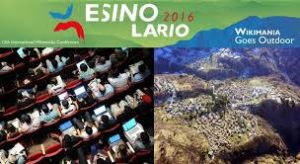
With many important cities in the world such as London, Hong Kong, Atlantic City, Mexico city and Manila, all competing to be the host of the 12th international Wikimedia Conference, Esino Lario, a little town that overlooks the Como lake, about 900 meters above the sea level with 760 inhabitants, has been the place where, from June 22nd through June 28th 2016, the Wikimedia community gathered convening “wikipedians” from every part of the world.
The international Wikipedia conference was a three-day meeting that saw the participation of Wikipedia contributors from more than 30 countries in the world who regularly update the entries in the largest open encyclopedia in human history, used by users from all around the world.
As explained by Iolanda Pensa, the organizer of Wikimania Esino Lario 2016, in an interview relased to the Corriere della Sera, the reason why Esino Lario was preferred to the other finalist, the city of Manila, was the strong idea that in the era of knowledge sharing and knowledge open to all, a global event like this could take place either in an international city or in a little town as Esino Lario.
The program of the Wikimania 2016 edition included various kinds of talks, discussions and activities. The Wikipedia experts have talked more in-depth on problems and solutions relating to: State of Research, Imbalance, the Wikisource, Wikivoyage, Wikidata and OSM Projects, the Verifiability of Wikipedia, GLAM Projects, Education and Contests, Licenses and Open Policies, WMF talks, Chapters and Affiliates, the Community, Tools and Extensions, Adaptability and Visibility. The Critical Issues presentations revolved around themes like Technical, Policy, Outreach, Projects, Research and Governance. In Esino Lario the participants had the possibility to discuss in a formal way during the sessions, but also in a informal way thanks to the welcoming bars of Esino Lario.
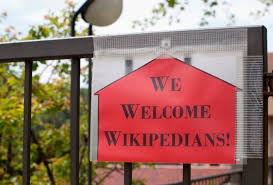
Esino Lario gives us an example of the meaning of community, of the sense of collective participation and active citizenship. When citizens and institutions work together for the same goals they are stronger and they can cope with any problems thinking in terms of solutions. They create new possibility for all the community. Esino Lario hotels or b&bs did not have enough beds and rooms to host all the participants. Many inhabitants decided to open their houses and offered to host the wikipedians. Most of the people who lives in Esino Lario in particular old generations did not speak English. so they organized English courses and now many inhabitants are able to speak English and will be able to welcome the participants to other gatherings or tourists willing to visit this nice little Italian town. Active citizenship means also this: to think of our local commons in a new way, as a collective endeavor to promote local social and economic progress. We should be proud of this little Italian town for the big contribution that has given to the country as a whole and to universal knowledge. It shows that everybody, everywhere can give a strong contribution to the commons.
———————————————————————————-
Esino Lario un paesino di 760 abitanti ha ospitato la dodicesima edizione della conferenza internazionale Wikimedia. Ha vinto competendo con grandi e importanti città del mondo diventando la città che ha ospitato il più grande evento di Wikipedia al mondo grazie alla partecipazione attiva di tutti i cittadini che hanno dato un esempio di cittadinanza attiva, che pensa in termini di soluzioni e opportunità e collabora con le istituzioni. Ciò che ha reso vincente il piccolo paese lombardo è stata l’idea che nell’era della condivisione e della conoscenza aperta a tutti, un evento globale può avvenire tanto in una città internazionale, quanto in una piccola città come Esino Lario. Tutti in tutto il mondo possono dare un forte contributo alla conoscenza come bene comun e ai beni comuni.
by Cristiano Gatti | May 25, 2016 | EducationLabs, The Urban Media Lab
Henry Mintzberg, Cleghorn Professor of Management Studies at McGill University, wrote an interesting article about the identity and the role of Plural Sector. This article was published on Stanford Social Innovation Review in Summer 2015.
The article talks about the third sector that has not been able to settle on an acceptable label: indeed, third sector reminds a third-rate thing, non-profits and non-governmental organisations are not clear because governments are literally non-profit and businesses non-governmental. If we call it voluntary, we will underline the role of volunteers, if civil society, we will consider it in opposition to an uncivil society. Social sector is a good label only if it is used with political and economic sector.
The author thinks that the label plural sector is the best choice for two reasons: first of all, because of the variety of this sector’s associations and their range of ownerships and secondly, because it can take its place naturally alongside the labels public and private.
In addition, it is clear that this sector is really plural: there are associations owned by their members (i.d. Mondragon, the world’s largest federation of worker cooperatives) and associations owned by no one such as foundations, religious order, think tanks, activist NGOs and service NGOs. On this point, the article “The Invisible World of Association by Henry Mintzberg et al., shows an interesting categorization of the associations:
- Mutual associations which serve their own members (book clubs);
- Benefit associations which serve other people (food banks);
- Protection associations which advocate for their members (chambers of commerce);
- Activist associations which advocate for the needs of others (Amnesty International).
A lot of these associations are formally organized but the most significant are the spontaneous one. There are two types:
- Social movements: their aim is to struggle some aspects of the status quo such as the occupation of Wall Street and the American Tea Party movement.
- Social initiatives: their goal is to defend programs of social change, first in local communities such as Grameen Bank.
Then, according to the author, plural sector has been attacked by different forces and it is trying to defend itself by the pressures from the other two sectors and the consequences of new technologies. In history, both communism and capitalism have been undermining the plural sector where they have dominated. Communists government have never loved community associations, in fact, the first crack in the URSS was caused by two plural sector organisations: the Catholic Church and the Solidarity Union in Poland. Even democratic governments sometimes had a strange relationship with community organisations: i.d. the amalgamations of small towns into bigger cities as a consequence of economic growth no matter the social outcome. If it is possible, the private sector is more “dangerous”: an example of this is the struggle between fast food chains and local cuisines.
At this point, the author affirms that: “There is a homogenizing effect in globalization that is antithetical to the distinctiveness of communities. As a consequence, while private sectors have been expanding their powers globally, plural sectors have been withering locally”.
New technologies even are detrimental for the plural sector because the new social media connect people creating network not communities. The New York Times columnist Thomas Friedman, reporting an Egyptian friend about the role of social movement, says that Facebook really helped people to communicate but not to collaborate.
In Mintzberg’s opinion, today, it is time to rebalance society. People require attention to three basic needs: protection provided by governments, consumption provided by businesses and affiliations found in communities. A healthy society combines these three factors balanced. Weaken any one of these and a society falls out of balance.
It is clear that there was not balance in communist regimes because the public sector dominated the other two, but it is also easy to understand that in the “developed” world consumption has become excessive. So, communist regimes collapsed because they were out of balance but US are out of balance (demise of democracies, ongoing denigrations of ourselves, …).
The question is: “Who will lead radical renewal?” Certainly not the private sector because the imbalance favors many of them. The answer is, of course, the plural sector: the renewal will have to begin in communities on the ground.
Although the plural sector seems to be obscure, surely it is not impotent: a good point is attributed to the independence and flexibility of many of its associations. If the private sector is about individual ownership and the public sector is about collective citizenship, the plural sector is about shared communityship (these associations are able to function as communities of engaged human beings rather than collections of passive human resources).
The plural sector is not perfect but it offers a way to restore balance in society, in other words, constructive social movements and social initiatives, carried out in local communities and networked for global impact, are the greatest hope we have for regaining balance in this troubled world. But something will first have to change in the plural sector.
In the last part of the article, Mintzberg says that the main problem is that the sector does not act collectively because of its plurality. This is not a problem for the private sector because it is less dispersed especially when profit is involved. This does not mean that the plural sector should imitate business practices but it can learn from it (and vice versa). According to him, “it [the plural sector] has to focus on its distinctiveness. Let’s welcome partnerships across institutions of the three sectors, as long as they are balanced, with full recognition of the contributions that can be made by each of the partners”. In conclusion, what plural sector needs are partnerships for the cause of better balance in the world.
L’etichetta “terzo settore” non mostra chiaramente e senza alcun dubbio l’identità e le caratteristiche di questo settore. Henry Mintzbeg in questo articolo spiega come il “terzo settore” meriti un nome migliore in ragione dell’importanza che ha nel ristabilire un equilibrio in questo mondo tormentato.
by Benedetta Gillio | Mar 8, 2016 | The Urban Media Lab
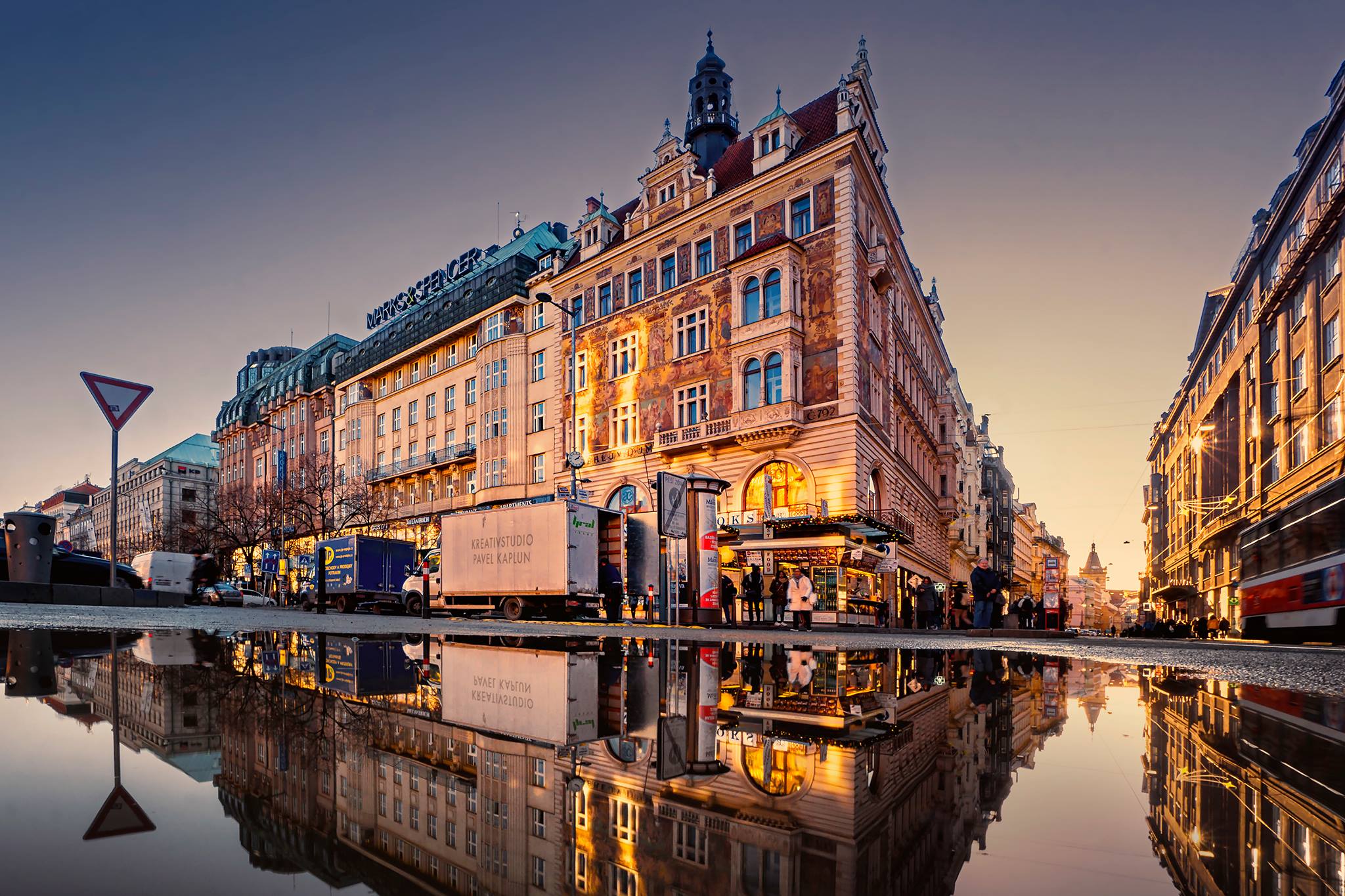
UN-Habitat is the United Nations programme working towards a better urban future. Its mission is to promote socially and environmentally sustainable human settlements development and the achievement of adequate shelter for all. Cities are facing unprecedented demographic, environmental, economic, social and spatial challenges. There has been a phenomenal shift towards urbanization, with 6 out of every 10 people in the world expected to reside in urban areas by 2030. Over 90 per cent of this growth will take place in Africa, Asia, Latin America, and the Caribbean. In the absence of effective urban planning, the consequences of this rapid urbanization will be dramatic. In many places around the world, the effects can already be felt: lack of proper housing nd growth of slums, inadequate and out-dated infrastructure – be it roads, public transport, water, sanitation, or electricity – escalating poverty and unemployment, safety and crime problems, pollution and health issues, as well as poorly managed natural or man-made disasters and other catastrophes due to the effects of climate change. Mindsets, policies, and approaches towards urbanization need to change in order for the growth of cities and urban areas to be turned into opportunities that will leave nobody behind. Sustainable housing plays a key role in human quality of life in general in the European region. The positive impact of housing can be increased through application of the following principles: environmental protection, economic growth, social inclusion, citizen participation and cultural adequacy. Development of sustainable housing in the UNECE region afaces many challenges caused in particular by globalization, demographic changes and the recent economic crisis. In some cases urbanization has led to urban sprawl, which has had a negative impact on existing settlements and has reduced the land available for other uses.In other cases, urbanization has been uncontrolled, creating and expanding informal settlements, whose residents may lack security of housing and social and physical infrastructure. The Czech Republic has proposed the High Level Regional Meeting for Habitat III in Prague in March 2016 with a theme of “Sustainable Housing in Livable Cities: European Habitat”. During the meeting, it is expected that the Habitat III Regional Report and Prague Declaration will be available and adopted.
Habitat III Europe Regional Meeting “European Habitat” will involve a wide range of participants, that will debate regional priorities for the New Urban Agenda, and policy recommendations in the form of a final regional participants’ declaration. Habitat III – Regional Meeting, Europe will take place in Prague from 16/03/2016 to 18/03/2016. The “European Habitat” is focusing on the region of the United Nations Economic Commission for Europe consisting of 56 Member States, while participation is open for all. In this regard, “European Habitat” will gather recommendations reflecting the consensus reached at the regional level on sustainable housing and other topics from the spectrum of a proposed New Urban Agenda.In the process towards a New Urban Agenda, Habitat III Europe Regional Meeting “European Habitat” will discuss how to ensure access to decent, adequate, affordable and healthy housing for all, with due attention to reducing the impact of the housing sector on the environment. Final declaration from “European Habitat” will be considered official inputs to the Habitat III process. Join us at this exciting opportunity to discuss the challenges of Sustainable Housing in Liveable Cities. Final “Prague Declaration” from “European Habitat” will be considered official inputs to the Habitat III process.
Here the programme: https://www.habitat3.org/prague


