by Benedetta Gillio | Mar 8, 2016 | The Urban Media Lab
UN-Habitat is the United Nations programme working towards a better urban future. Its mission is to promote socially and environmentally sustainable human settlements development and the achievement of adequate shelter for all. Cities are facing unprecedented demographic, environmental, economic, social and spatial challenges. There has been a phenomenal shift towards urbanization, with 6 out of every 10 people in the world expected to reside in urban areas by 2030. Over 90 per cent of this growth will take place in Africa, Asia, Latin America, and the Caribbean. In the absence of effective urban planning, the consequences of this rapid urbanization will be dramatic. In many places around the world, the effects can already be felt: lack of proper housing nd growth of slums, inadequate and out-dated infrastructure – be it roads, public transport, water, sanitation, or electricity – escalating poverty and unemployment, safety and crime problems, pollution and health issues, as well as poorly managed natural or man-made disasters and other catastrophes due to the effects of climate change. Mindsets, policies, and approaches towards urbanization need to change in order for the growth of cities and urban areas to be turned into opportunities that will leave nobody behind. Sustainable housing plays a key role in human quality of life in general in the European region. The positive impact of housing can be increased through application of the following principles: environmental protection, economic growth, social inclusion, citizen participation and cultural adequacy. Development of sustainable housing in the UNECE region afaces many challenges caused in particular by globalization, demographic changes and the recent economic crisis. In some cases urbanization has led to urban sprawl, which has had a negative impact on existing settlements and has reduced the land available for other uses.In other cases, urbanization has been uncontrolled, creating and expanding informal settlements, whose residents may lack security of housing and social and physical infrastructure. The Czech Republic has proposed the High Level Regional Meeting for Habitat III in Prague in March 2016 with a theme of “Sustainable Housing in Livable Cities: European Habitat”. During the meeting, it is expected that the Habitat III Regional Report and Prague Declaration will be available and adopted.
Habitat III Europe Regional Meeting “European Habitat” will involve a wide range of participants, that will debate regional priorities for the New Urban Agenda, and policy recommendations in the form of a final regional participants’ declaration. Habitat III – Regional Meeting, Europe will take place in Prague from 16/03/2016 to 18/03/2016. The “European Habitat” is focusing on the region of the United Nations Economic Commission for Europe consisting of 56 Member States, while participation is open for all. In this regard, “European Habitat” will gather recommendations reflecting the consensus reached at the regional level on sustainable housing and other topics from the spectrum of a proposed New Urban Agenda.In the process towards a New Urban Agenda, Habitat III Europe Regional Meeting “European Habitat” will discuss how to ensure access to decent, adequate, affordable and healthy housing for all, with due attention to reducing the impact of the housing sector on the environment. Final declaration from “European Habitat” will be considered official inputs to the Habitat III process. Join us at this exciting opportunity to discuss the challenges of Sustainable Housing in Liveable Cities. Final “Prague Declaration” from “European Habitat” will be considered official inputs to the Habitat III process.
Here the programme: https://www.habitat3.org/prague
by Benedetta Gillio | Dec 23, 2015 | EducationLabs, Luiss LabGov 2015-2016
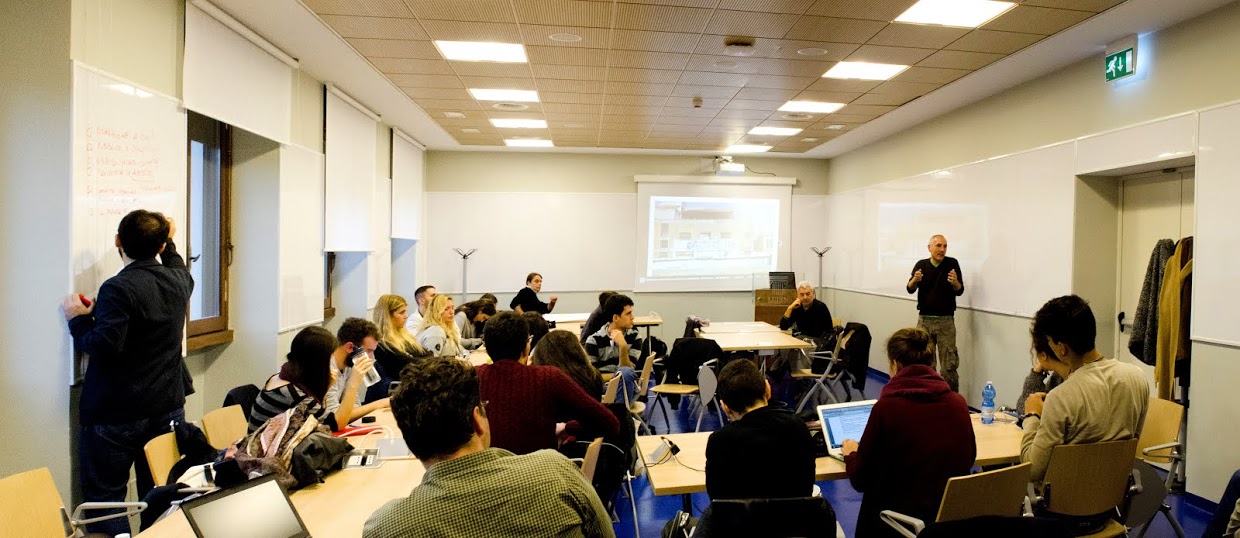
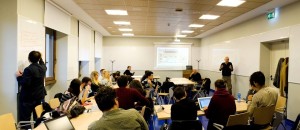 On Friday November 20th , the first day of the LabGov weekend, was dedicated to the activities of co-design. The labgovers listened the experiences carried out in the four sites of experimentation identified: Garbatella, Appia Antica, Ostia and Municipio V.
In each of the four areas, the new labgovers have visited some really active environments meeeting and their activators and founders. Together they reasoned about the difficulties they face every day and how to intervene to continue to carry on their efforts, with strong aggregation and deep innovation. At Garbatella, for example, they have been visited the co-working Millepiani, the CSOA La Strada and the FabLab. These collaborative spaces, as explained Maurizio Moretti, are signals of the needs and demand of citizens. In every field, they found more or less the same problematic situations, with this lack of dialogue with the administration every obstacles seems giant.
In particular, in the neighborhood a common good of cognitive nature of Ostia was identified, namely the Istituto Tecnico Urbani, a high school with great potential. It is a school characterized by a very proactive teaching body, but at the same time a place in unsuitable conditions, nearby a very large and completely abandoned park. The situation is further complicated by the detached school of Acilia, which has the same administration and headmaster that is facing enormous difficulties due to the management of the two institutions apart from each other. The idea is to intervene to make the most of these cognitive and cultural heritage useful for the students and citizens,most of the hardest part of the project is to find the necessary funds to buy the materials for the schools and teachers to enable them to work better.
Another school has been mapped Pisacane school in the district Prenestino, a real intercultural concentration in one of the Romans with the highest number of immigrants. In Municipio V, in addition to the school, other milestones have been the Alveare and the former factory Cantarini. The Alveare is one of the first co-working space with Babysitting in Rome, as the main problem of the allocation of space now expiring. you need to find a way clear and quick assignment of collaborative spaces to ensure the many citizens and professionals who revolve around them to continue their activities. Another stop on Municipio V has been precisely the former factory Cantarini, an abandoned industrial area in 2014 that could become an important resource for the whole neighborhood.
Finally, the inspection of the Appia Antica Park was primarily organized in three milestones: the first in the Hortus Urbis, not a simple garden! The Labgovers listened to the stories and experiences of some of the people who work there, it is a real place of integration and dissemination of knowledge. They were subsequently visited the Cartiera Latina, a structure which often hosts exhibitions and conferences, and the Casale di Vaccareccia, for now largely abandoned. They focused on another highly critical point of the park represented by the mobility obstacle, in particular cycling is practically impossible.
This was followed by a moment of co-design, during which the labgovers, having posted placards, each with a theme, started to write on post-its their ideas, highlighting on the critical issues, opportunities and actions to solve the various problematic ideas identified. Then a moment of confrontation follows with experts from various sectors, such as Roberta Franceschinelli, creator of the Culturability Competition for the foundation Unipolis, Prof. Luigi Corvo, who stressed the importance to intercept the civic need to intervene where there is a more concrete need.
This concept was then taken up by Michele Gradoli, who argued that the objective must be thought in concrete and deep manner with a strong knowledge of the places where you are going to work. Instead ,Nicola Cabria for Human Foundation invited the labgovers to take this model of analysis in all areas of life: turning problems into opportunities, reversing the negative situation into a positive is the best mantra.
The architect Eloisa Susanna recalled that the temporary use can be a very important tool for urban regeneration that allows the immediate reactivation of the abandoned areas.
The second day, November 21st, was divided into two parts: the first during which Giorgio De Finis, director of the MAAM (Museo dell’altro e dell’Altrove), told them about the Museum and its development, and second part during which the students, around the tables of co-design, continued to give shape to their ideas in the search for the termination to the problems and limits identified for each common good.
The tables of co-design and, more generally, these two days have shown what can be challenged, and what Rome really needs. All this first phase, in fact, served just to try to understand the city, its problems, its needs and desires. We understand that it will be a long and difficult process, but so worth it to wait and to get busy on.
————————————————————
Sessione di co-progettazione del 20/21 Novembre
La prima giornata del workshop, venerdì 20 Novembre 2015, è stata dedicata alle attività di co-progettazione. I ragazzi hanno raccontato i sopralluoghi effettuati nei quattro cantieri di sperimentazione individuati: Garbatella, Appia Antica, Ostia e Municipio V.
In ciascuno dei quartieri, i nuovi labgovers hanno visitato alcune delle realtà attive e hanno conosciuto i loro attivatori; insieme hanno ragionato sulle difficoltà che incontrano ogni giorno e su come poter intervenire per continuare a svolgere le proprie funzioni di formazione, aggregazione e innovazione. A Garbatella, ad esempio, è stato visitato il co-working Millepiani, il CSOA La Strada e il FabLab. Questi spazi collaborativi, come ha spiegato in un secondo momento l’arch. Moretti, tra le loro funzioni hanno quella di segnalare i bisogni e le richieste dei cittadini. Riscontrano tutti più o meno la stessa problematicità, ovvero il mancato dialogo con l’ amministrazione, i cui tempi e meccanismi di funzionamento non sono altro che un ostacolo.
In particolare, nel quartiere di Ostia è stato individuato un bene comune di natura cognitiva, ovvero l’Istituto Tecnico Urbani. Si tratta di una scuola caratterizzata da un corpo docenti molto propositivo e desideroso di fare, ma al tempo stesso da luoghi in condizioni non idonee, ad esempio uno spazio verde, adiacente alla scuola, molto grande e completamente abbandonato. La situazione è resa ancor più complicata dalla sede distaccata di Acilia, che ha la stessa amministrazione che quindi incontra enormi difficoltà dovute anche alla gestione dei due istituti distanti l’uno dall’altro. Bisognerebbe intervenire e riuscire a sfruttare al meglio questi beni cognitivi e culturali e trovare i fondi necessari per acquistare i materiali utili agli studenti e ai docenti per metterli nelle condizioni di lavorare al meglio.
Altra scuola mappata è stata la scuola Pisacane, nel quartiere Prenestino-Centocelle, un vero e proprio presidio interculturale in uno dei quartieri romani con il più alto numero di immigrati. Nel Municipio V, oltre alla scuola, altre tappe sono state l’Alveare e l’ex fabbrica Cantarini. L’ Alveare è uno dei primi co-working con spazio baby di Roma, ha come problema principale quello dell’assegnazione di uno spazio ormai in scadenza. E’ necessario trovare una modalità chiara e rapida di assegnazione degli spazi collaborativi in modo da garantire ai tanti cittadini e professionisti che ruotano intorno ad essi di proseguire le loro attività. Altra tappa del Municipio V è stata appunto la ex fabbrica Cantarini, un’area industriale dismessa dal 2014 che potrebbe diventare una importante risorsa per tutto il quartiere.
Infine, ma non per questo meno importante, il sopralluogo nel Parco dell’Appia Antica organizzato essenzialmente in tre tappe: la prima nell’Hortus Urbis, non un semplice orto! Ascoltando le storie ed esperienze di alcuni dei soggetti che vi operano, si tratta di un vero e proprio luogo d’integrazione e diffusione di conoscenze. In seguito sono stati visitati la Cartiera Latina, struttura che ospita spesso mostre, convegni, (anche se va registrato un suo grande limite: l’assenza di un impianto di riscaldamento non ne consente il suo pieno utilizzo), ed il Casale della Vaccareccia, ormai per gran parte in stato di abbandono. Un’altra grande criticità del parco è rappresentata, inoltre, dalla mobilità, in particolare ciclabile, praticamente impossibilitata.
A ciò è seguito un momento di co-progettazione, durante il quale i ragazzi, dopo aver affisso dei cartelloni, ciascuno avente un tema, hanno iniziato a scrivere su dei post-it le loro idee, evidenziando le criticità, le opportunità e le azioni possibili per risolvere le varie problematicità individuate. A seguire un momento di confronto con esperti di vari settori come Roberta Franceschinelli, ideatrice del Concorso Culturability della fondazione Unipolis, il Prof. Luigi Corvo, che ha sottolineato l’ importanza di intercettare il bisogno civico e di intervenire laddove c’è una maggiore concretezza di intervento.
Quest’ultimo concetto è stato poi ripreso da Michele Gradoli, sostenendo che bisogna pensare all’obbiettivo in concreto e conoscere approfonditamente i posti su cui si sta andando a lavorare. Nicola Cabria, per Human Foundation, ha invitato i ragazzi ad assumere questo modello di analisi in ogni campo della vita: trasformando i problemi in opportunità, ribaltando la situazione negativa in positiva. L’architetto Eloisa Susanna ha ricordato come l’uso temporaneo possa essere uno strumento di rigenerazione urbana molto importante che consente la riattivazione immediata di spazi abbandonati, come ad esempio nel caso delle aree industriali dismesse e Maurizio Moretti di ADLM architetti ci ha mostrato in un video come questo tema potrebbe essere declinato all’interno del V Municipio.
La giornata successiva del 21 Novembre si è divisa in due momenti: un primo durante il quale Giorgio De Finis, direttore del MAAM (Museo dell’ Altro e del’Altrove), ha raccontato di come è nato il Museo e dei suoi sviluppi, ed un secondo momento durante il quale i ragazzi, attorno a dei tavoli di co-progettazione, hanno continuato a progettare, a dare una forma alle proprie idee nella ricerca di quella risolutiva per i problemi e limiti individuati per ciascun bene comune.

I tavoli di co- progettazione e, più in generale, queste due giornate hanno dimostrato quanto possa essere stimolante ed efficiente unire le forze, ed è proprio quello di cui ha bisogno Roma. Tutta questa prima fase, infatti, è servita proprio a cercare di capire la città, i suoi problemi, i suoi bisogni e desideri, con la consapevolezza che sarà un processo lungo e difficile, ma per cui vale la pena di aspettare e soprattutto darsi da fare.

by Staff | Dec 3, 2015 | The Urban Media Lab
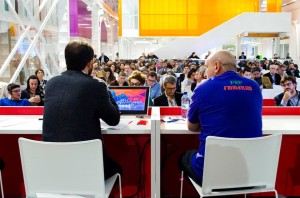
“The City as a Commons” conference has produced a body of knowledge that can guide future research and policymaking on which we can build. Specifically, after some reflection, we came away from the conference with at least 10 lessons for the developing field of the urban commons:
1. There are many kinds of urban commons, some existing for many decades (e.g. housing cooperatives) and others just emerging. Social innovation is important for designing some types of urban commons and the conditions for commoning;
2. We must embrace the diversity of commons and commoning yet still be careful about what we call the commons; so more work is needed on analyzing what is an urban commons and what is not;
3. In addition to many resources being held or managed in common, in a collaborative fashion, the city itself must be considered a commons–both as an urban space and as a governing entity. The governance of the urban commons can be a framework to update political and bureaucratic decision-making processes at the city level;
4. The commons is an emerging framework for inclusiveness and equity in cities as the world is urbanizing and cities are the place where different cultures, classes and people come to live together, work together and grow together;
5. The role of technology is important for the commons, but technology is a means and not an end. It must enable and support the urban commons, and the ability of people to come together and collaborate in the interest of the community or communities;
6. Collective action for the urban commons should be enabling existing communities, stakeholders, and city inhabitants as much as creating new urban communities, formal and informal groups, movements, traditional stakeholders and social or collective organizations;
7. Urban commons need an “industrial plan” and new economic and/or social institutions to help transition some cities, and some areas within them, away from an old economic model to one that leverages the power of commoning and collaboration to support sustainable, flourishing as well as more inclusive, just and democratic communities;
8. The urban commons governance principle is not self-government, nor decentralization. It is rather distribution of powers among public, social, economic, knowledge and civic actors and therefore it implies a significant investment in the design of new forms of collaboration and partnerships among these actors;
9. Design principles for the urban commons should be written to reflect the design principles created by Elinor Ostrom, but adapting them to the challenges and characteristics of the more political, confrontational, and overregulated space which cities represent. The study of the commons in the city should be the focus of future research beyond the study of the urban commons. More attention should be put on experimentation, institutional diversity, spreading of social norms within urban contexts;
10. There should be safeguards against opportunistic, exploitative, and short-sighted behaviors, as well as escapist flights and utopian or ideological visions, in developing and sustaining the urban commons. A bottom-up, as well as a circular, approach is crucial for the urban commons and confirms Focault’s argument that power is “not something that is acquired, seized, or shared, something that one holds on to or allows to slip away; power is exercised from innumerable points, in the interplay of non egalitarian and mobile relations”.
This is just a tiny part of the huge body of knowledge generated by “The City as Commons” conference thanks to your support and cooperation. We look forward to building new advancements in the study of the urban commons hope that we can continue to partner with you towards this end.
———————————-
La conferenza “The City as a Commons” ha prodotto un patrimonio di conoscenza che negli anni a venire fungerà sicuramente da fonte di ispirazione per la ricerca e la formazione e dal quale si potrà partire per costruire nuove politiche pubbliche e immaginare nuovi strumenti di coesione sociale e sviluppo economico locale. I materiali per i quali gli autori presteranno il proprio consenso verranno resi gradualmente disponibili alla pagina: www.labgov.it/urbancommons/press/. Nello specifico, dopo alcune riflessioni svolte a valle della conferenza, abbiamo pensato di distillare “dieci lezioni sui beni comuni urbani”, consapevoli che si tratta solo di una possibile “mappa nautica” in un campo di studi con ancora enormi margini di esplorazione:
1. per commons (o beni comuni) devono intendersi anche e soprattutto le istituzioni abilitanti l’azione collettiva. Ci sono tipologie diverse di queste istituzioni, alcune esistono da molto tempo (ad es. le associazioni di volontariato, le cooperative), altre stanno emergendo solo adesso. L’innovazione sociale è un fattore importante per il design di alcune tipologie di istituzioni per i beni comuni urbani e per le condizioni che favoriscono il commoning (o collaborazione civica) a livello urbano;
2. dobbiamo abbracciare la diversità dei beni comuni, delle loro istituzioni e delle pratiche di commoning (o collaborazione civica) e porre molta attenzione quando definiamo i beni comuni: c’è bisogno, quindi di un approfondito lavoro di analisi per comprendere cosa è e cosa non è un bene comune urbano;
3. oltre alle sue risorse, da gestire con un approccio collaborativo, la città stessa deve essere considerata come un bene comune sia come spazio urbano, che come entità di governo. La governance dei beni comuni può essere un framework adeguato per aggiornare il processo decisionale politico e amministrativo a livello locale;
4. quello dei commons è un framework emergente che si sta affermando per migliorare l’inclusione e l’uguaglianza nelle città, tenuto conto del fatto che il mondo si sta urbanizzando e le città sono oggi quei luoghi dove culture, classi sociali, persone differenti si insediano per vivere, lavorare e crescere insieme;
5. il ruolo della tecnologia è importante per i beni comuni, ma la tecnologia è un mezzo e non un fine, il cui compito è abilitare e supportare i beni comuni urbani e la capacità delle persone di collaborare nell’interesse della comunità o, ancora meglio, delle comunità;
6. l’azione collettiva per i beni comuni urbani dovrebbe essere abilitante tanto per comunità, attori sociali, gruppi formali e informali, abitanti delle città preesistenti, quanto per nuove comunità urbane, nuovi gruppi formali e informali, nuove formazioni sociali e nuovi movimenti e attori e organizzazioni sociali o collettive;
7. i beni comuni urbani necessitano di un “piano industriale“ e di una nuova istituzione economica e sociale che aiuti la transizione di alcune città e di alcune aree urbane all’interno di esse da un vecchio modello economico ad un nuovo modello che faccia leva sul potere del commoning e della collaborazione civica per supportare comunità sostenibili, prospere nonché inclusive, eque e democratiche;
8. il principio generale di design della governance dei beni comuni urbani non è l’auto-governo, nè il decentramento. Il principio generale è piuttosto la distribuzione del potere tra attori pubblici, sociali, economici civici e cognitivi e pertanto implica un investimento significativo nel design di nuove forme di collaborazione e partenariato tra questi attori;
9. i principi di design per la governance dei beni comuni urbani o dei beni comuni nella città dovrebbero ispirarsi ai principi elaborati da Elinor Ostrom per il governo dei beni collettivi. Essi tuttavia vanno modulati e adattati alle sfide e alle caratteristiche di quello spazio politico, conflittuale e sovra-regolato che le città rappresentano. Lo studio dei beni comuni nella città, più che lo studio dei beni comuni urbani, dovrebbe essere uno dei focus verso i quali indirizzare le ricerche future. Si dovrebbe porre un’attenzione maggiore alla sperimentazione, alla diversità (o differenziazione) istituzionale, alla diffusione di norme sociali all’interno dei contesti urbani;
10. nello sviluppo e nel sostegno ai beni comuni urbani dovrebbero essere inserite delle clausole di salvaguardia contro comportamenti opportunistici, strumentali e di breve termine, così come si dovrebbero evitare fughe in avanti e costruzioni utopiche o ideologiche. Un approccio dal basso e circolare è cruciale per i beni comuni urbani e conferma la visione di Michel Foucalt, secondo il quale “il potere non è qualcosa che si acquista, si strappa o si condivide, qualcosa che si conserva o che si lascia sfuggire; il potere si esercita a partire da innumerevoli punti, e nel gioco di relazioni disuguali e mobili.

by Diletta Di Marco | Oct 27, 2015 | Luiss LabGov 2015-2016
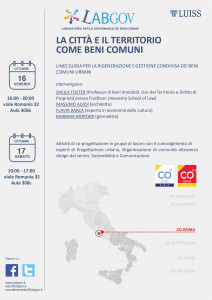
Last weekend, on 16 and 17 October LabGov held the first co-working session for 2015-2016. On Friday afternoon, the new LabGovers came together to discuss and to co-design a new idea for Rome together. Students were inspired by foremost experts in the field of regeneration and care of the commons. Each expert, with his or her own particular approach, could make an important contribution to the discussion.
The afternoon began with the intervention of the famous architect Massimo Alvisi, promoter of the project CO-Battipaglia and G124. The intervention has shown, through its key points for urban regeneration and using as example the cities of Turin, Catania and Rome, how collaborative relationships between the city and its inhabitants can stimulate active citizenship in the care for the commons. Massimo Alvisi told of the importance of working in a multidisciplinary environment and acting with determination in the territory. Because public buildings are a common good, participation is a key issue, especially for citizens. His method for participation was simple, with small interventions that have created wealth and stimulated energy. The focus is how citizens who are reclaiming their places in the city should not transform the territories but synthesize impactful solutions for the things that have gone wrong. Massimo Alvisi also demonstrated how a city can be developed through simple ideas in the service of its people to really meet the needs of a city. It can care of all its participants, where every small stimulus is a big step towards a path of cooperation. It is precisely in the areas most abandoned and suffering, that the presence of basic services can activate citizenship. That is where you have the key role of urban regeneration and the creation of a barrier-free city.
The second intervention involved Professor Sheila Foster, Professor of Law and Faculty Co-Director, Fordham Urban Law Center. She told the student how being an an activist and at the same time an expert could impact on things at different levels. She worked with environmental groups in New Jersey, Philadelphia, and New York and she reported to the students with energy her experiences. At LabGov, she discussed how the city can benefit from new forms of collaboration and participation through a new administrative approach. The creation of links is the basis of trust in a smart city.She focused on there the difference between “planning vs. doing” things, in order to help the administrations with experts to re-design and plan the commons.According Sheila Foster, collaboration is already a practice but we should push that to the next level, especially here in Rome.
The afternoon dedicated to building a new Rome, also had the pleasure of hosting a prominent communication expert. Michele D’Alena currently works at the Press and Communications Office of the City of Bologna, for which he also coordinated the process of the Digital Agenda and the project of the new civic network. Michele trasmetted to LAbgov students the basic know-how to enable them to change the administration with a buttom-up process, for Michele, that means first of all change the connection between citizens and the communication and transparency of their legislators and public policers. The proper communication, the marketing and the co-design of the processes shoulb be aimed at creating an active citizenship and an open-government.
The last guest was Flavia Barca, former commissioner of the culture of Rome, who gave us a very personal contribution on how, in Rome, to overcome the crisis, we must recognize the importance of cultural heritage. The impact that cultural heritage can have on economic, cultural and social, is the cornerstone of a new way of doing politics. This idea of culture for us is new, and we must rethink and revive the historical memory. Re-inhabiting the ruins, the past must be reconsidered and switched to instrument. The 1st part of the session was also attended by Lavinia Pastore, Paola Cannavò, Enrico Parisio for Mille Piani and Sara Seganti for Human Foundation.

The second part of the session was held on Saturday morning, from 10 am to 5 pm. Students spent their first hour in the garden with expert Zappata Romana. Strategists organized lectures with students in which they explained the three stages of analysis, mapping and testing. During the first co-working session, LabGovers they split into groups to co-create and start the process. The sustainability group led by Professor Luigi Corvo and Lavinia Pastore had the goal of making feasible the economic-financial, social and environmental ideas of the design group.
During this first session, it was considered necessary to dwell on the economic-financial profile, specifically analyzing the cost items and revenue to be leveraged to make the project sustainable. In particular to do so, after highlighting the various categories of stakeholders potentially affected, we focused on tools for fundraising, to the increase revenue of the project, and crowdsourcing, to reduce their costs. The former included mainly spontaneous donations, especially necessary to start a communication campaign that can reach large groups of people, and corporate investments, both civil and institutional. The latter are needed to lower start-up costs of the project.Special thanks also goes to the point of view reported by Sara Seganti for Human Foundation, thanks to her our students understand the importance of a proper evaluation for investments, and more than anything else the impact that these have on the whole society.
The design team, with the help of Eloisa Susanna, Serene Baldari and Paola Cannavò, worked on areas in which to intervene, reviewing areas and imagining solutions to get in touch with the people. One of the objectives that arose in this group was identifying the potential and the critical places. Another key thing that this group set out to do was to analyze existing structures, in particular those that are already based on collaborative structures such as co-working spaces and fablabs. A short-term objective essential for the group is mapping the area by taking a cue from existing best practices.
The third group worked on the difference between assets and assets not mappable mappable with Guglielmo Apolloni, especially, on how to experience an active search for these on the territory. The Communication’s role more sensitive in the process of starting the project, work on their balance is based on the purpose of receiving more visibility and transparency as possible.
The meeting gave the students a chance to take to the field, having acquired the know-how. The next goal is to go and visit the site to review its territory and its needs. Students have identified the managers of several sites to develop with them a relationship of partnership and trust. On November 13, the group will launch the second module of LabGov 2016 where all the students will report their experiences in comparison with the “collaboration-yards” studied.


by Diletta Di Marco | Oct 14, 2015 | EducationLabs
On 16 and 17 October, Labgov will present the first co-working session for Labgov 2016.
This two-day workshop is based on the proposal to imagine Rome in an innovative way.
The project CO-ROMA is focused on the idea that a city should learn to share, collaborate and cooperate with the institutions, the civil society, universities and all the possible stakeholders in order to create a collaborative community, that wants to improve the quality of life and save the Italian cognitive and cultural heritage.
The programme of this first co-working-day will be structured into four working groups, which will be: urban design; communication; community organization through service design, and sustainability.
The most competent experts in every field will hold the round tables; they will transfer their know-how to the neo-labgovers, and they will imagine all together this transformation for Rome.
Several forces are already present in this new collaborative city: active citizens, voluntary associations, schools, urban gardens, co-working spaces, fab-labs, business leaders, and professionals for the common good.
Moreover, on Saturday morning at 9.00 am, the 2016 Labgov students will work for the first time in the garden, with our technical partner for horticulture, Zappata Romana. It will be a fantastic weekend, full of experiences and adventures. The detailed programme will be published as soon as possible.
For further information, please write to our official address.