by Ieva Punyte | Jul 28, 2016 | The Urban Media Lab

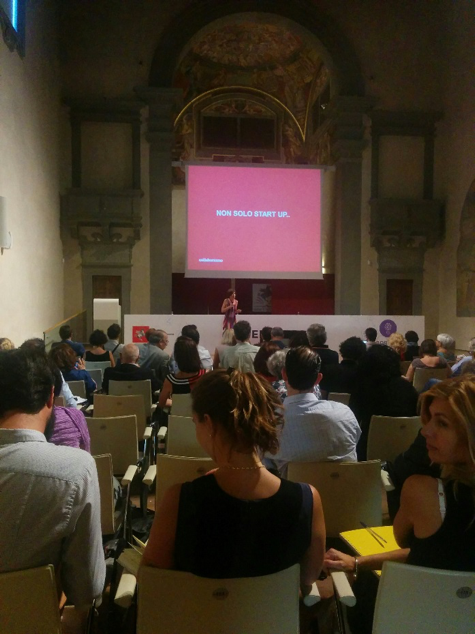
Image From The Urban Age “Shaping Cities” conference (July 14-15) hosted by La Biennale di Venezia
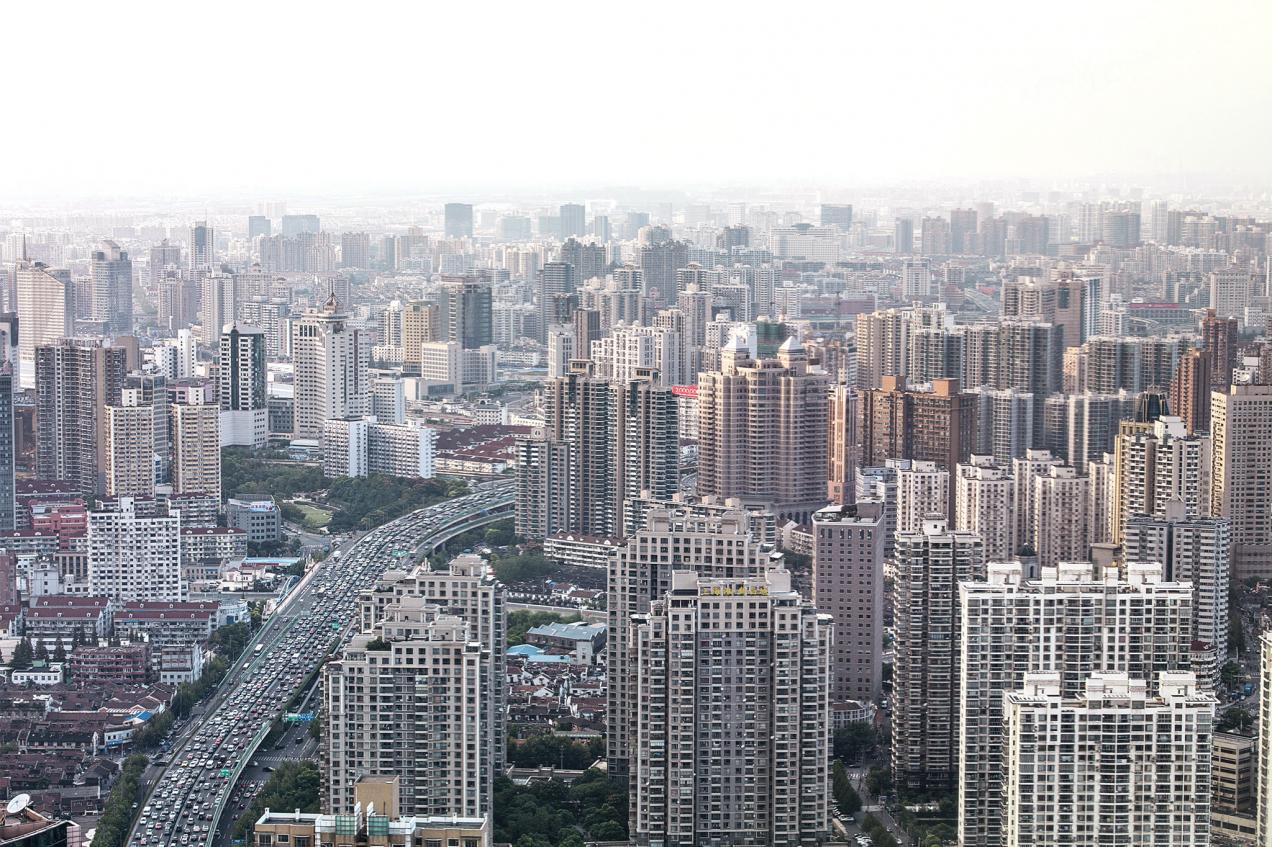
Cities are paradoxical spaces. On one hand, it is commonly known that, for instance, migration has been one of the most effective ways to increase the standard of living. In theory, when coming to the big cities, people are offered a surplus of opportunities to work, get educated, create a family and enjoy the lives they want. Therefore, the rush to settle down in cities, particularly in emerging economies, has been sparked by the image of a better life, full of diverse opportunities and, hence, as the economies have concentrated in the cities, so have the people. On the other hand, it is not a secret that the cities of today are extremely unequal places having a major part of their population, usually characterised by the poor and uneducated, excluded from the above-mentioned image. Disturbingly, exclusion has not only been relevant to the new-comers, but also to the residents who have lived in the urban centres for generations, and this is linked to the process of gentrification.
Thus, who owns the city? – a question addressed by S. Sassen, a Dutch-American sociologist – is very relevant today. Due to the growing foreign investment the major part of cites, in particular the central infrastructure, is now owned by foreign large corporations or shell companies [see more about this topic here]. This creates a kind of meta-reality, because it is an invisible project. Nobody knows that some of the buildings are foreign owned, yet cities slowly become privatised entities, closed from the general public. Additionally, this contributes to the paradoxical lost of urbanity within the cities, because despite the fact that cities are becoming more and more dense, they are becoming less urban. Today “rather than a having spaces for including people from many diverse backgrounds and cultures, our global cities are expelling people and diversity.” – stress S. Sassen. Unsurprisingly, as the diverse public spaces are disappearing and the exclusion based on the socio-economic considerations, frequently tied to the racial or religious minority groups, is increasing, this has a direct contribution to the fragmentation of our societies and often results in an increase in social tensions and criminality. This fact has been addressed also by Suketu Mehta, an Associate Professor of Journalism at New York University, a writer and a winner of multiple awards in literature. Professor Metha has focused on the universal topic of exclusion and noted that “[t]o build a great city, a just city, we have to look at who’s included and who’s excluded. Then we should follow three principles: don’t exclude anybody from the law. Don’t exclude anybody from the conversation. And don’t exclude anybody from the celebration” of a city [a full article can be found here, or a discussion on the same topic between Suketu Mehta and Richard Sennett is available here].
The McKinsey Global Institute (MGI) calculates that between 2015 and 2025, the world’s urban population will grow by 65 million people a year, or almost 179,000 every day [see more about this here]. Therefore, already having more than a half of the world’s population living in the urban settlements, the topics on inclusion and exclusion are extremely relevant while addressing planning, urban commons and governance – the future our cities. Having stressed the fact that cities are being sold off, this constitutes a great challenge for urban planners to secure the ability for everyone to take ownership of their city and ensure the true urban experience.This is the reason why in the annual Urban Age “Shaping Cities” conference, which is jointly organised by the LSE Cities at the London School of Economics and Political Science and Deutsche Bank’s Alfred Herrhausen Gesellschaft in a partnership with United Nations Habitat III, scholars and practitioners, despite their respective expertise, implicitly or explicitly, yet continuously reflect upon the issues on exclusion in the cities – how to manage it today and reduce it in the future.
“The cities everyone wants to live in should be clean and safe, possess efficient public services, be supported by a dynamic economy, provide cultural stimulation, and also do their best to heal society’s divisions of race, class, and ethnicity” –stressed Richard Sennett, a Centennial Professor of Sociology at the LSE and University Professor of the Humanities at New York University, while addressing the open system of cities in “Shaping Cities” conference [find original essay here]. Although, having addressed the paradoxical nature of the cities this is not necessarily the reality.
Cities are enormously expanding as well as they are full of religious, cultural, ethnic diversities whereby individuals belong to different communities at the same time. However, who actually shapes the life of our cities? Is it the voice of the diverse society, or the absence of this voice? Having addressed the urban diversity, S. Sassen identifies a city as a mixity of complexity and incompleteness, which has the capacity to thrive for a very long life [see her talk on this at this year’s “Shaping Cities” conference here]. However, stressing the above-mentioned foreign investment threat, cities are losing their dynamic cityness and are even de-urbanised, which contributes to the completeness of the cities. This is caused by the ownership and the construction of new glass boxes and predictable commercial spaces or isolated enclaves for homogeneous uses and users that prevents urban dynamism from even coming into existence.
Therefore, having in mind the social dynamics and diverse currents of our cities, it is very important to understand the social dimensions and ramifications as well as implications of urban planning and of certain governance policies to the society. And this is what Suketu Mehta means by not being excluded from the conversation – the conversation around urbanism. It is crucially important for urban planners and society to share the same language. Planners therefore should be public intellectuals, because “without political will, all our grand city plans will remain on the drawing board. And political will can only be generated if we get the public informed and excited about planning. The public is ready, because they’re already excited to be in the city”– stresses Mehta.
Coming back to S. Sassen’s definitions of the city, she additionally stresses that even if infrastructural density “for someone is enough to have a city, there is more, because the large cities especially are one of the few places where those without power get to make a history, a culture, a neighborhood economy”. Cities, according to the sociologist, “are also today’s frontier zone where powerless and power encounter each other”. This goes together with the considerations by Jane Jacobs, (1916-2006) a famous urban writer and activist who tried to understand what results when places become both dense and diverse, as in packed streets or squares, their functions both public and private. She stressed that out of such conditions comes the unexpected encounter, the chance of discovery and of the innovation. Out of this encounter between, for instance, low wage workers and the wealthy, comes learning as well as positionality.
Thus, all the above-mentioned scholars could agree that city needs common spaces where the real life can take place: where local economies can be made and where local cultures can thrive, because this phenomenon does not happen in the large private and complex corporate setups. This comes hand in hand with S. Mehta’s statement that no one should be excluded from the celebration and, I would add, the celebration of the cityness – city’s diversity, complexity and incompleteness. Here everyone is not excluded from being part of this celebration which indeed should be open, affordable and accessible. Additionally, this is closely tied to R. Sennett’s notion of the porous city, – a concept that he developed after visiting Nehru Place market in Delhi. “It’s a completely porous spot in the city, people of all castes, classes, races and religions coming and going, doing deals or gossiping about the small tech start-ups in the low offices which line the square; you can also worship at a small shrine if you’re so minded, or find a sari, or just lounge about drinking tea.” [see the article here]. According to the scholar, a porous city is based on the “opening up and blurring the edges of spaces so that people are drawn in rather than repulsed; they emphasize true mixed use of public and private functions . . . they explore the making of loose-fit spaces which can shift in shape as people’s lives change”. Porous spaces of the city are closely related to the urban commons. Spaces produce a fertile medium to take the ownership of live in the unpredictable setting, experience urbanity by surprise, and provide social and economic possibilities for all citizens – this therefore represents a truly inclusive city.
Lastly, in the Shaping Cities conference Ed Glaeser, a professor of Economics at Harvard University said that “so much of what we find most precious about our successful cities are the common spaces, are the spaces that provide a form of equity, meaning that anyone can come and enjoy”. These spaces, according to the scholar, are open spaces welcoming everyone’s experience regardless of their socio-economic background – if they are able or not to afford a drink in a square where everybody gathers. The promotion of social inclusion hence is done by creating these democratic spaces – “a forum for . . . strangers to interact”– as stresses R. Sennett. However, the creation and maintenance of these spaces is a long and experimental process, because communities to grow time and space are needed, since the bonds of an inclusive “community cannot be conjured in an instant, with a stroke of the planner’s pen”. This is fully reflected by the main principles of the City as a Commons, and it is not the alternative rather the only – inclusive and sustainable- way to help us live together. Thus, urban commons provide democratic “spaces of unplanned interactions that so often make one of the most precious things that happen in cities” – said Ed Glasear. Scholar adds that the promotion of open and shared spaces, which are the attempts of truly inclusive cities, should not be just merely defined, but actively defended, and this should incluively be done by reforming governance institutions, some of which could be purely public, some – purely private and some could occupy the space in between and this is the way to include everybody in the law, in the conversation, and in the celebration of cities and dynamic urbanity.
————————————————-
Le città sono spazi complessi e colmi di paradossi. Se da un lato per coloro che scelgono di migrare verso la città si aprono maggiori opportunità di successo economico e mobilità sociale, che possono condurre ad una migliore qualità della vita, dall’altro, come ben sappiamo, le città sono il luogo in cui diseguaglianza ed esclusione si manifestano in modo più accentuato. Diventa perciò sempre più importante interrogarsi, come molti studiosi stanno facendo, su quali soluzioni possano essere adottate per far si che l’ambiente urbano sia sempre di più uno spazio di incontro tra le diverse realtà sociali e culturali che coesistono nella città, in cui si generino comprensione e inclusione. In quest’ottica il ruolo dei beni comuni urbani come “spazio democratico di interazione pianificata” emerge come un elemento fondamentale nell’immaginare un percorso verso uno sviluppo urbano sostenibile.

by Ieva Punyte | Jul 18, 2016 | The Urban Media Lab
On the 15th of July, Unipolis Foundation in collaboration with Fitzcarraldo Foundation and Make a Cube association organised a second mentoring workshop for the 15 finalists (the description of finalists see below, or at: http://culturability.org/notizie/finalisti-bando-culturability/) who have been selected from the “Culturability” call – an Italian national call to support innovative projects in cultural and creative fields to promote urban regeneration processes (see more about Culturability at: http://culturability.org/).

The third day of the workshop series was complemented by Urban Law professor at Fordham University Sheila Foster and LabGov coordinator, prof. Christian Iaione’s presentation as well as an interactive discussion with the audience. Scholars focused on bringing the attention of the 15 progressive cultural innovators to the idea of urban commons and, more specifically, addressing the collaborative governance of commons as the main target in the urban regeneration processes of today.
Coming from the school of thought on commons, Sheila Foster began with questions of what exactly an urban common is and what does it mean to the society and the city as a whole. “Urban commons are what city inhabitants share daily, in fact, these commons are of a deeply democratic nature, because they have an open access meaning that the usage of them is non-excludable”. From a property law perspective it is very important to distinguish urban commons from what is conventionally understood as common pool resources within the field of environmental law. Such distinction is necessary, because these commons differ in terms of their nature, characteristics and value that they create to the society, and hence this affects the character of their governance. “Urban commons are city spaces, such as squares, parks, abandoned or non-utilised buildings, streets, vacant lots, even cultural institutions, for instance, museums, and other urban open-access units – spaces of a truly common good nature”- addressed S. Foster. “These spaces are unique because they generate value, that is precisely of a social and cultural origin and a wide range of city actors have a stake or an interest in these urban commons. Thus, by preserving commons together, we can contribute to an inclusive and sustainable well-being co-creation by and for city inhabitants”.

On the other hand, scholar stressed that commons are not a simple concept in law or theory. “Commons are neither private nor public, it is something in between. Therefore, the question of governance of the commons is condemned to be a challenge from both practitioners and scholars’ viewpoints”. Having addressed the “Tragedy of Commons” (see H. Garrets), S. Foster emphasised that urban commons are not something that should be governed either by private or public, because these commons are not necessarily in threat of over-consumption or degradation like natural commons, as some scholars suggest. The opposite – open-access urban spaces, which increase multi-stakeholder usage, even enhance shared social, economic and environmental value and contribute to the so-called “Comedy of Commons” (see C. Rose). “The issue is that today every urban common is overly regulated, today nothing is an open access and non-excludable anymore and having mentioned the value of urban commons the re-opening and collaboratively governing urban commons is a highly valuable process for all stakeholders. The opening urban commons – contributes to the stimulation of a social value to the community. To add, the value of opening up the commons is directly linked to the production of culture, of housing. Commons are not about tragedy, rather about solidarity and shared value” – stressed S. Foster.
Christian Iaione took over the debate stressing that today there is a growing need to rethink economy, institutions and focus on the energy that the community possesses. “The community should recognise the value of commons. It is not the tangible commons that matter, it is the collaborative governance of commons and the value to the community that it produces”- said C. Iaione. Professor focusing on governance of commons stated that between the state and the market there is a room for experimentation and this is the space of commons that connect different stakeholders. So far, what the overly regulated cityscape has produced is scarcity and collaboration, or collective action, as stressed by E. Ostrom, yet in an urban context, is the way to introduce new approaches to governance and eliminate the problem of scarcity. Despite the fact that “[w]orking on commons requires constant experimentation, what we have accomplished thus far is writing the Regulation which is a strong step towards the recognition of urban commons at the city level and the introduction of collaborative urban governance”.

Lastly, by sharing experiences from the Parco Centocelle project in Rome and the project on #CollaboraToscana, C. Iaione emphasized that the governance of commons is an arrangement between 5 different actors (or “quintuple helix” model, see more about this in “City as a Commons“), where (1) the unorganized public (e.g. social innovators, active citizens, urban regenerators, urban innovators, etc.), (2) public authorities, (3) businesses, (4) civil society organisations, and (5) knowledge institutions (e.g. schools, universities, cultural institutions, etc.) work together to establish public-private-community partnerships and contribute to the preservation of the cultural heritage and the co-creation of the social as well as economic value.
Laboratory for Collaborative Governance of Urban Commons appreciates the energy and the ideas that 15 finalists of the Culturability Call possess. These finalists are promising examples of urban regeneration processes and therefore are strongly supported by LabGov.
The information about the finalists:
An initiative which regards culture in proposing a hybrid agricultural production system which creates a lively ecosystem. This, while restoring the role of not only agricultural production, but also of culture, contributes to the creation of welfare and strong community. This is a biological and social farmhouse of innovation and agriculture to improve the integration and employment, aggregation of space and the production of cultural places. It creates a sustainable local supply chain between farmers as well as it is a museum contributing to the regeneration of an area.
A non-profit organisation, founded by people who share a dream: to return the Cascina Sant’Ambrogio – an important place of agriculture and economy. This place regarded as poor and outdated due to the transformation of society is just an error of perspective. The Cascina is place rich in culture, memory and practices that need to be rethought by integrating them with the needs of present times. Citizens must not just be consumers and voters, but producers and active citizens able to concretely transform a portion of reality. This path does not come from nothing, but by a gradual emergence of the collective application that, with more and more insistently, asks sustainable and alternative lifestyles, as well as adequate opportunities.
- Caserma Archeologica + Art Sweet Art – San Sepolcro (Arezzo) | artsweetart.net
This is a platform of artists to display their works in private homes to visitants. A homeowner can choose an artist via the website artsweetart.it from those who have joined up to the initiative. After assessing the home, the artist decides what type of art work to display in the new location. The art has to fulfil both the customers’ needs (the house as a location, the artwork’s theme, etc.) as well as those of the artist (who is invited to carry out a piece of art which fully respects their artistic expression). The initial drafting phase is followed by the artist creating their work. The artist is hosted in the customers’ private home, an unprecedented experience which influences the creative process. During the artists’ stay, the organisers-together with the hosts’ family- promote the art in construction and facilitate workshops in schools, local cultural guides, gatherings with friends, etc.
The projects seeks to reform the system of support the cultural industry in Italy. It highlights the critical issues and illustrates the best solutions.
The project promotes different cultural tradition lines belonging to all Italian regions. Through musical concerts, plays, lectures and seminars, many of the popular culture heritages met within the framework of demonstrations made in Pisa, which due to its characteristics naturally prepares to host a dialogue between diverse communities and different cultures.
The project that seeks to create a network of people and spaces, such as, the abandoned buildings and underused of sites, with the objective of denunciation of situations of abandonment and then revaluation of the buildings by putting the spotlight on forgotten places, abandoned or fallen into disuse, showing its potential for reuse, it will foster a new collective interest in these spaces. This is a project that wants to revolutionise the way of seeing and understanding the assets disposed of a city, turning it into a resource.
This is a residence project that was born in a former industrial factory, able to provide hospitality for the whole year to travellers and tourists, and simultaneously transform into a school on urban regeneration: a “training of the mind” in the heart of central Italy, where two cities, Terni and Rieti meet. The idea is to experiment with new solutions and re-design territorial integration policy.
- LAB+: Piazza Gasparotto Urban Living Lab – Padova | copiu.it/lab
The project that focus on workers with different skills to meet, share ideas and expertise in urban regeneration practices. Gasparotto Square in a space of co-design living between citizens, private organisations and public institutions. To achieve this objective, the project makes the system a series of micro-actions of re-appropriation of public space: the urban expansion, construction of a weekly market of organic producers, involvement of local residents through the social theatre and community, realisation of works public art, use of storytelling and the creation of micro-community events.
- Mana Grika – Hub Culturale della Grecìa Salentina – Calimera (Lecce) | managrika.it
It is a Cultural Hub of the territory that will be made available to local communities to create initiatives with a strong cultural and social impact spaces. The main objectives are the territorial promotion and enhancement of the local culture through affiliated initiatives for social activation of communities and by creating a synergistic network among all organisations working in the area.
- MUFANT, MuseoLab del Fantastico e della Fantascienza di Torino – Torino | mufant.it
This is a project by a team of professionals and industry experts, academics, journalists and researchers who are aspired to imagine a world, in which people are aware that this is just one of the possible worlds. This is being accomplished by the multiple permanent or temporary exhibitions, performances, conferences, events, and such, in the MusueoLAB.
Piazza dei Colori is one of Co-Bologna “construction sites”, and the aim is to turn it into a collaborative district that could later include different realities from Croce dei Biacco and all the migrants that live there.
The project aims to put an end to the progressive abandonment and degradation of one of the most prestigious and representative testimonies of the assets of the industrial archaeology resulting from the old age epic mining of Sardinia, which UNESCO declared a universal value in 1997 . With the completion of the project they intend to preserve and make available the public buildings of great architectural value at the Sella Well located in the mining complex-Monteponi on the outskirts of the city of Iglesias. The work of protection and restoration of the industrial archaeological heritage will accompany the exhibition. The abundance and beauty of the available space will also allow to set up an area for conference activities with its audiovisual and multimedia equipment. With the completion of the project, as well as regeneration of the museum space, the site will be returned to the local community.
Station Chiaravalle project focuses on the regeneration of the unused gym of neighbourhood school and creation of a hybrid space in order to host a community hub: operational production based on cultural content, artistic home and an urban laboratory. Additionally, it reinterprets the disused railway line along the Vettabbia channel as space in transformation. Lastly, it activates a participatory observation with the local community and generates landscape projects and custody of places and common open spaces for the enjoyment of the area as a landscape for immersive experiences.
The project which has an aim to enter into the social and productive fabric of Rome and spread to further cities. It focuses to put in place cultural practices and job opportunities that would promote inclusion and integration of those individuals who are in need for help and solidarity. It is a job creation, but also the artistic expression, which can also become a source of income, are the ways in which we intend to intervene in the social and cultural fabric of Rome.
This is a non-profit organization active in the field of contemporary art and culture both at a local and international level. It produces and organises art exhibitions, theatre shows, publications, audio-visual works, training and residency programs with the aim to encourage artistic mobility and the promotion of artists on an international scale. It intends to invent original devices in order to promote projects and enable processes that mobilise unconventional strategies and plans of intervention in the artistic and cultural system. The members of the core working group are artists who chose not to limit their activities and their identities to “the creation of artworks”, but to work actively – and independently – for the activation of shared processes and the redefinition of the role of the artist in society. The project starts from an idea of hospitality and sharing to create a symbolic place where experience and the individual journey are set aside to make way for the development of a collective strategy. The network of people intertwined constitutes a network able to relate with institutions, questioning established practices and models, with the aim of generating concrete outcomes/results in the community.
LabGov congratulates all finalists and looks forward to new collaborations!
Secondary sources:
- Garrett, Hardin, (1968) The Tragedy of the Commons
- Iaione, Christian. (2016) “The CO-City: Sharing, Collaborating, Cooperating, and Commoning in the City.” American Journal of Economics and Sociology, 2: 415-55.
- Ostrom, E. (1990) “Governing The Commons: The Evolution of Institutions for Collective Action”, Journal of Natural Resources Policy Research, Volume 6, Issue 4, 235-252
- Rose, C. (1986) The Comedy of the Commons: Custom, Commerce and Inherently Public Property, 53

by Ieva Punyte | Jul 6, 2016 | The Urban Media Lab
On Friday, the 8th of July, “Federico II” University of Naples is going to host a conference on “The European Private Law“.
The conference is held on the occasion of the “European Private Law” book presentation by professor Guido Alpa, which is going to be followed by the discussion among professors and scholars from Italy and United States:

The focus of a seminar is to address and assess the reality and future prospects of the European Private Law.
The seminar begins at 15:00 in Aula Cicala, Corso Umberto I, n. 40.
Venerdì 8 luglio l’Università Federico II di Napoli ospiterà un seminario in occasione della presentazione del libro “Il Diritto Privato Europeo: realtà e prospettive” del professor Guido Alpa.

by Ieva Punyte | Jul 1, 2016 | The Urban Media Lab
On June 29th 2016 academics, practitioners and active citizens gathered at the Auditorium of Saint Apollonia in via San Gallo 25 in Florence for the opening of #CollaboraToscana, the public policy co-design process led by Tuscany Region, supervised by LabGov and managed by SocioLab.
#CollaboraToscana projected to focus on collaboration and sharing economy aiming to co-create a map of regional public policies – a synergy and a proposal for targets, actions and measures which would be co-designed and deployed at different levels to maximize opportunities and minimize risks for the sharing economy and collaborative development of the region. Therefore, the objective of the conference and workshop series was to introduce diverse, yet interconnected approaches and tools for regional collaborative practices. By emphasizing on sustainability, inclusion and the themes of presentations varied from start-ups to infrastructure, territorial regeneration and security, and from participatory governance to digital innovation and communication – all being closely tied to collaboration and sharing economy.
The event was opened by the Deputy President of the Toscana Region Vittorio Bugli who after a warm welcome acknowledged the promising #CollaboraToscana initiative. V. Bugli stressed that in regards to the sharing economy, sustainability and collaborative management of the region the recognition of civic participation is crucial. The Deputy President thus emphasized that it is important to address migration while focusing on collaboration. “In Tuscany we are very attentive to the reception of migrants fleeing from their countries”- said Bugli. “But we have to think of a greater integration, these people can be an important vantage rather than obstacle in terms of collaboration”- after the conference stressed V. Bugli.
 The first keynote Marta Mainieri (Collaboriamo.org), focused on collaboration in terms of innovation and start-ups. M. Mainieri stressed that the new economy model – a collaborative economy – is important first of all because its volumes are rapidly growing. “Gross revenue in the EU from collaborative platform and providers was estimated to be 28 billion in 2015. Growth in recent years has been spectacular with revenues almost doubling from 2014 to 2015”- presented M. Mainieri. Yet, despite of the growing amount of the sharing economy practices, M. Mainieri emphasized the need to recognize the real value of collaboration, which is based on collective knowing, connection, co-planning and communication and therefore is projected to contribute to the construction of open, more inclusive systems that are based on trust and reciprocity, rather than exclusion.
 The second speaker, Massimo Alvisi (Alvisi-Kirimoto, Renzo Piano G124) focused on city requalification and regeneration. By illustrating his presentation with the experiences from Viadotto dei Presidenti in Rome, Via Fossata in Torino, and Librino in Catania, M. Alvisi emphasized that in terms of urban regeneration, collaboration has a great potential to contribute to social wellbeing, security as well as revitalization of deteriorated urban areas (more information related projects: http://renzopianog124.com).
 This was followed by the engaging Annibale D’Elia’s presentation. While addressing collaboration A. D’Elia, a consultant for innovation policies, touched upon topics of inclusion and citizens’ engagement. He stressed that collaboration in terms of governance is mainly about the unleashing the energy of the people, who should be enabled and facilitated in order to actively participate and collaborate. Furthermore, the last speaker Michele D’Alena, an expert in e-government processes and social innovation, supported Annibale’s comments by adding that digital means – the information communication technologies (ICT), are essential for sharing economy, collaboration as well as active citizens’ engagement.
The presentations were followed by Silvia Givone who represents Sociolab and works with #CollaboraToscana project. After thanking to all presenters S. Givone introduced the road map and the critical phases of #CollaboraToscana (more about #CollaboraToscana: http://open.toscana.it/).

The first part of the conference was followed by the debate between Antonella Galdi, the vice secretary of the National League of Italian Cities, Stefano Bartolini, a professor of political economy at the University Siena, Ernesto Belisario, an expert in law of technology and innovation in public administrations, and Marta Leonori, representing the department of Civil Service.
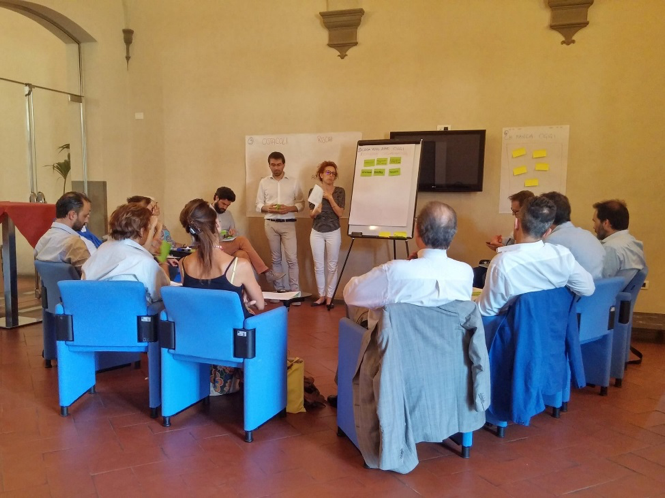
Lastly, the conference was finalized by the series of workshops on co-planning to co-create concepts of collaboration and sharing economy by mapping (meaning, opportunities and problems) activities. Participants were divided into 4 groups (representing public and private sectors, knowledge institutions, civic social organizations) and were asked to further reflect on prevalent issues (infrastructure, services, goods and governance) and to design possible tools for a regional policies on the economy of sharing and collaboration.


The event was moderated by Christian Iaione, LabGov co-director, who outlined the prevailing currents of collaboration and sharing economy and supported the presentations as well as panel debates by insightful comments.