by Staff | Apr 21, 2026 | Aware, The Urban Media Lab
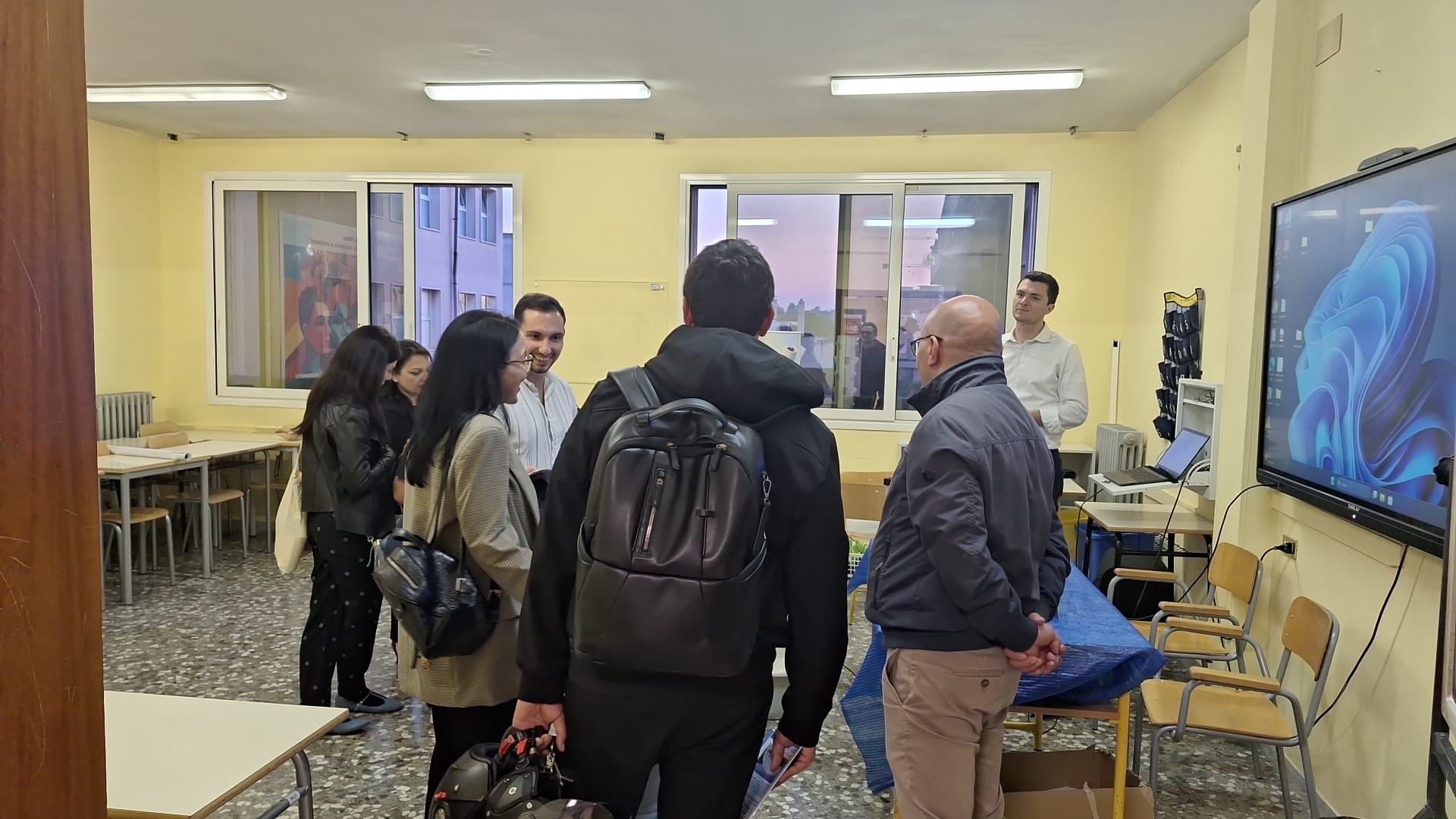
Il 19 aprile 2026 si è tenuta presso l’Istituto di Istruzione Secondaria Superiore “Luigi Dell’Erba” di Castellana Grotte (BA) la IX Edizione della Giornata della Scienza e della Tecnologia
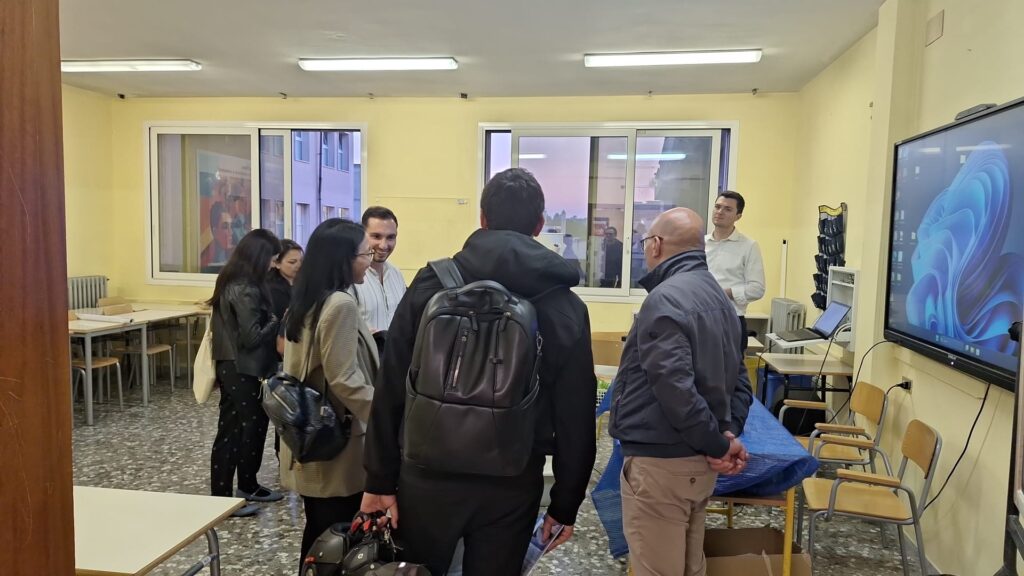
La giornata è stata accolta dall’intera comunità scolastica — e non solo — con grande interesse e viva partecipazione, rendendo l’evento un’occasione di grande valore per la diffusione della scienza e di arricchimento culturale e formativo per l’intero territorio.
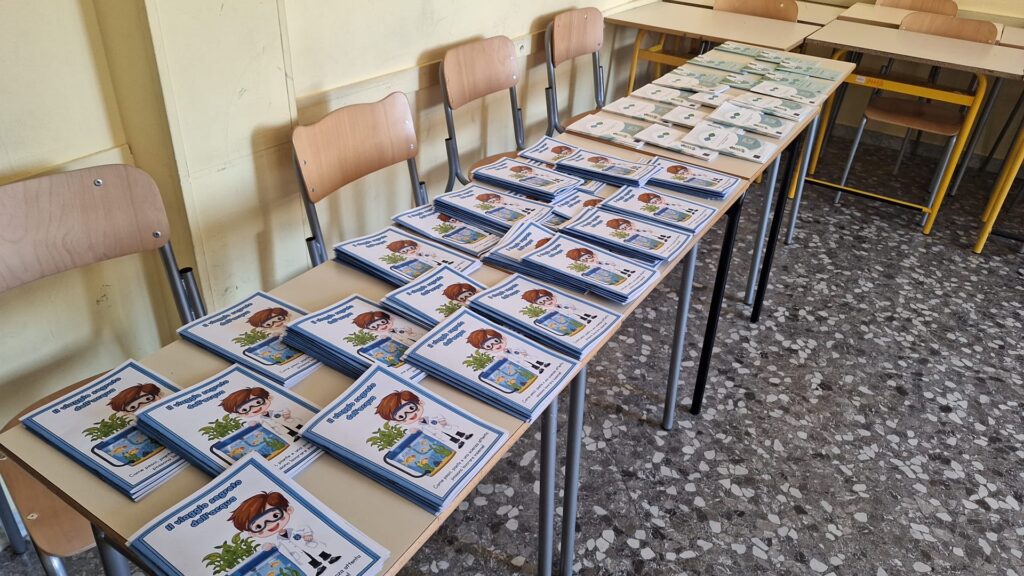
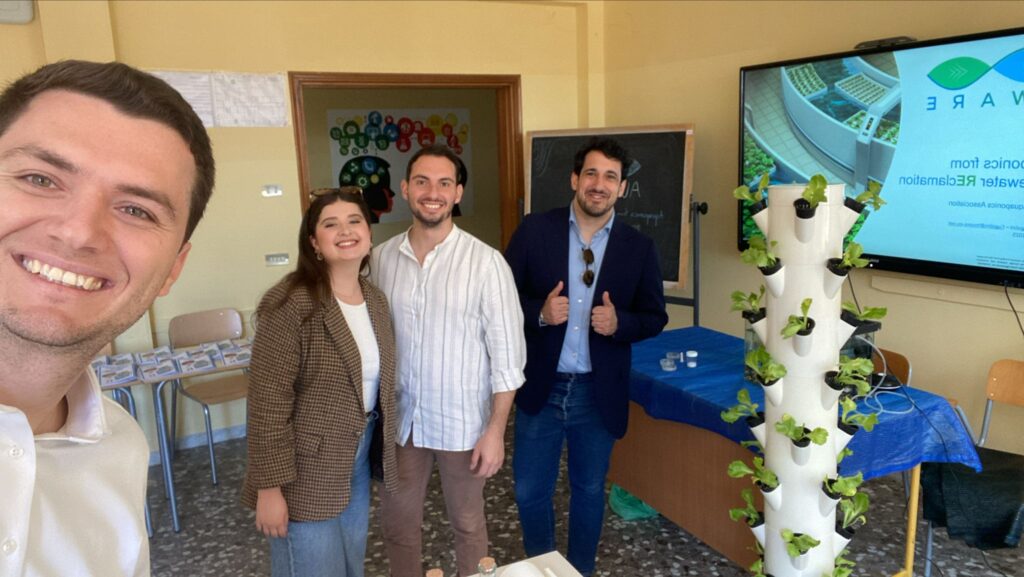
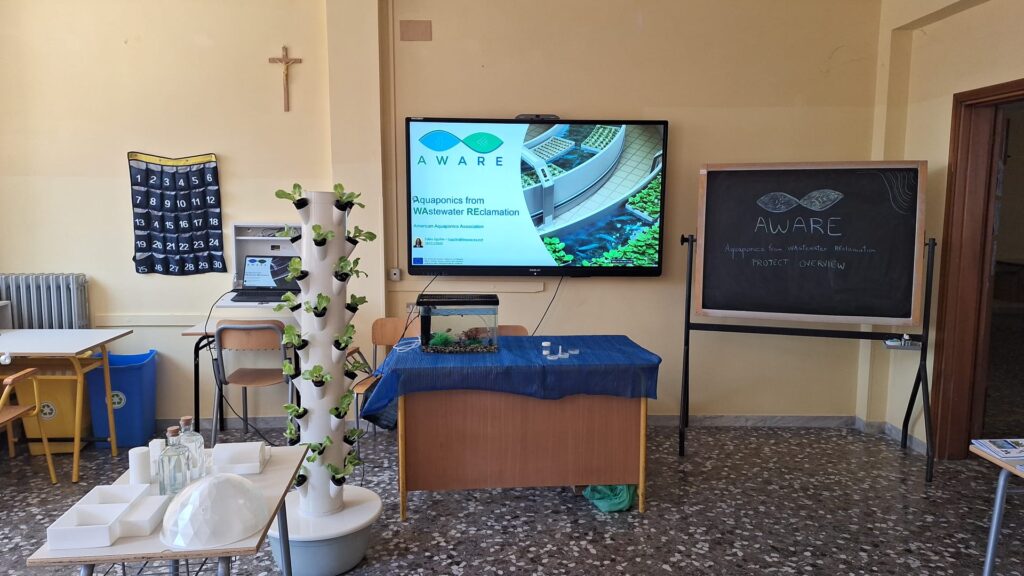
In particolare, nell’Aula 21 dell’Istituto è stato allestito un modellino dimostrativo che riproduceva il funzionamento del sistema acquaponico sviluppato nell’ambito del progetto AWARE (“Aquaponics from WAstewater Reclamation”) finanziato dal programma Horizon Europe.
Sono stati presenti in rappresentanza del consorzio AWARE la dott.ssa Teresa Masi e Dott. Oronzo Santoro (AquaSoil s.r.l.), Dott. Alessandro Sicuro (Università del Salento), Ing. Roberta Rana (Autorità Idrica Pugliese), Dott. Mario Manna (Università LUISS Guido Carli) e il Dott. Adriano Contardi (LabGov ETS).
On April 19, 2026, the 9th Edition of the Science Fair was held at the “Luigi Dell’Erba” Secondary School Institute in Castellana Grotte (BA).
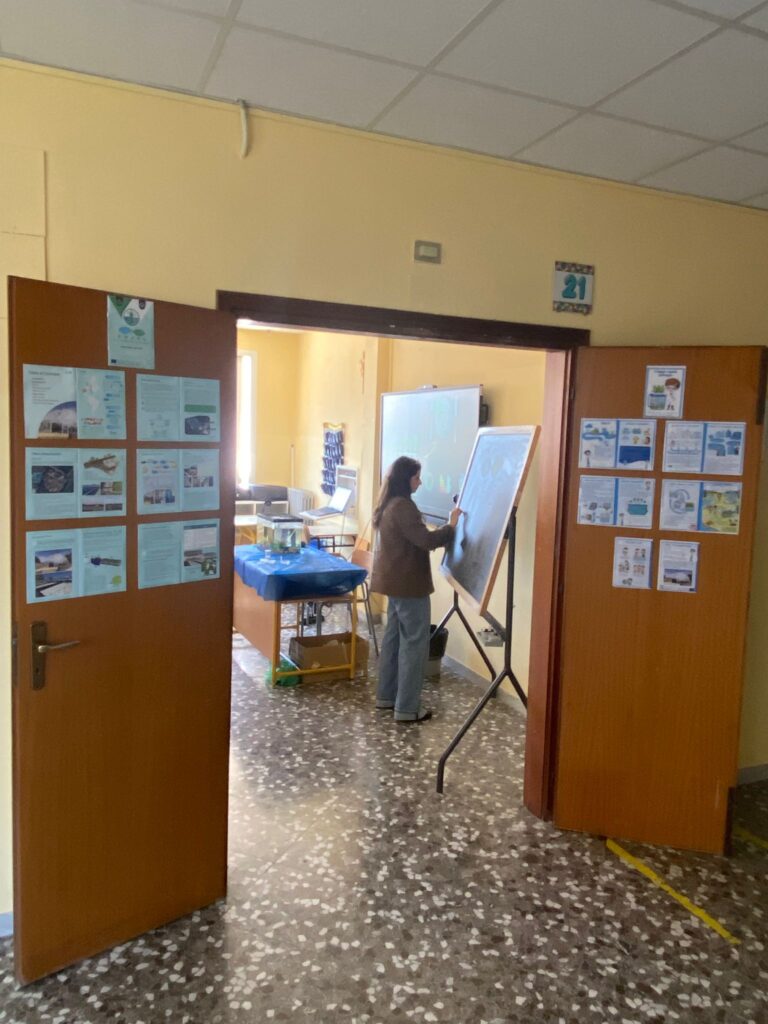 The event was welcomed with great interest and active participation by the entire school community, making it a valuable opportunity for the dissemination of science and for cultural and educational enrichment across the local area.In particular, in Classroom 21 of the Institute, a demonstration model was set up to reproduce the functioning of the aquaponic system developed within the project AWARE (“Aquaponics from WAstewater Reclamation”), funded by the Horizon Europe program.
On behalf of the AWARE consortium, there were Dr. Teresa Masi and Dr. Oronzo Santoro (AquaSoil s.r.l.), Dr. Alessandro Sicuro (University of Salento), Eng. Roberta Rana (Apulian Water Authority), Dr. Mario Manna (LUISS Guido Carli University), and Dr. Adriano Contardi (LabGov ETS).
by gionolfi | Apr 14, 2026 | Aware, The Urban Media Lab
On March 24 and 25, 2026, within the framework of the AWARE project, two meetings were held in Puglia to prepare the project’s participation in the upcoming Science Fair, a scientific event to be held in Castellana Grotte on April 19,2026 and open to the local community.
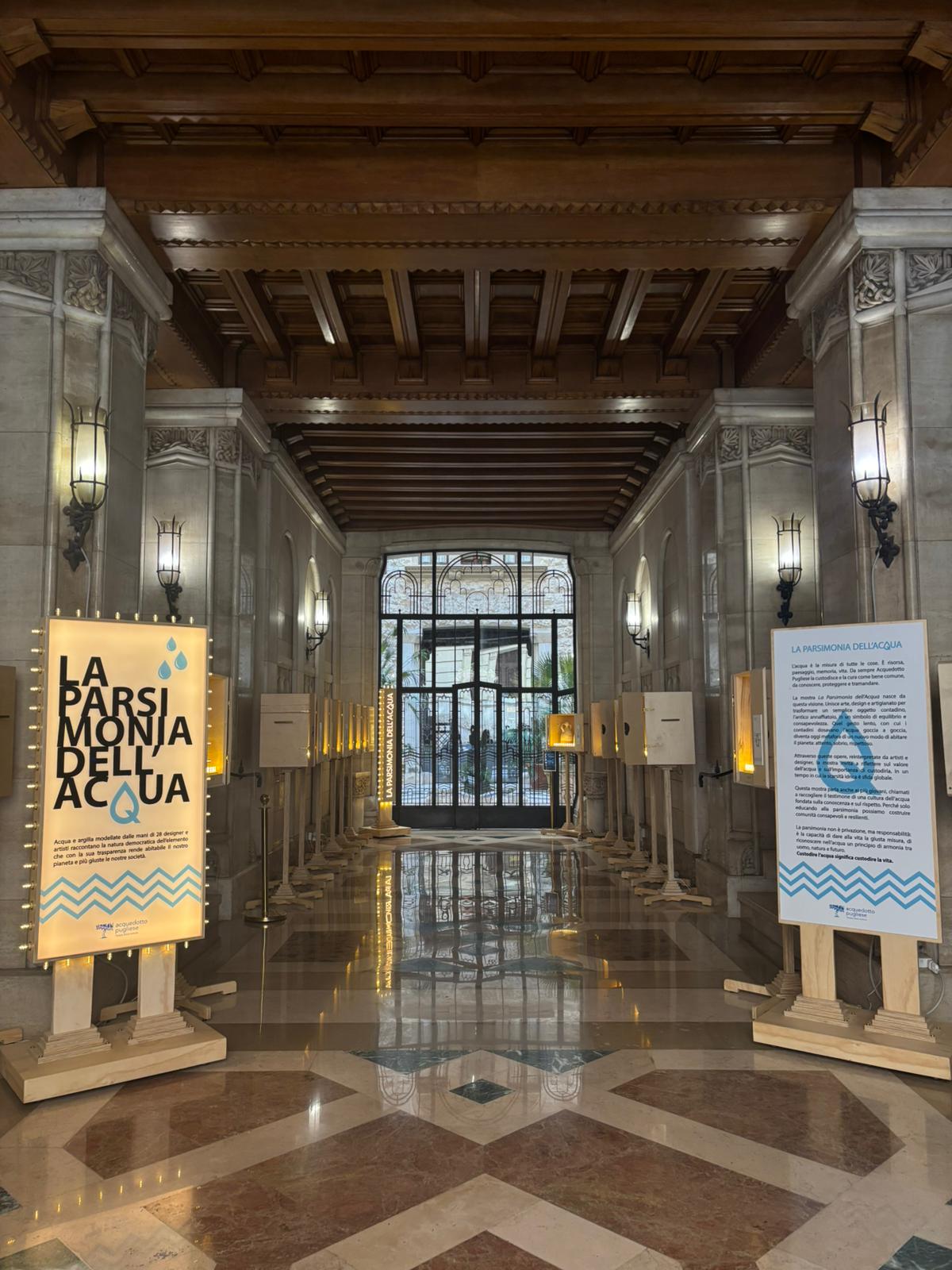
Arrived in Bari, the first meeting took place at the Palazzo dell’Acqua. It brought together representatives of LUISS University and LabGov, as partners of the AWARE project, together with Acquedotto Pugliese (AQP) and Autorità Idrica Pugliese (AIP), which participated as external institutional stakeholders. The discussion focused on how AWARE could be presented during the event and a central point of the exchange was the importance of AWARE’s presence at the event, not only to present the project to people already familiar with it, but also and especially to raise awareness among the wider local public. Participants discussed the possibility of framing AWARE through a narrative centered on water and sustainability, with the project presented as a concrete case study.The meeting also highlighted the importance of reflecting on the elements of replicability that have emerged around AWARE, as well as the usefulness of involving external technical actors such as Aquasoil and the University of Salento in the next steps.
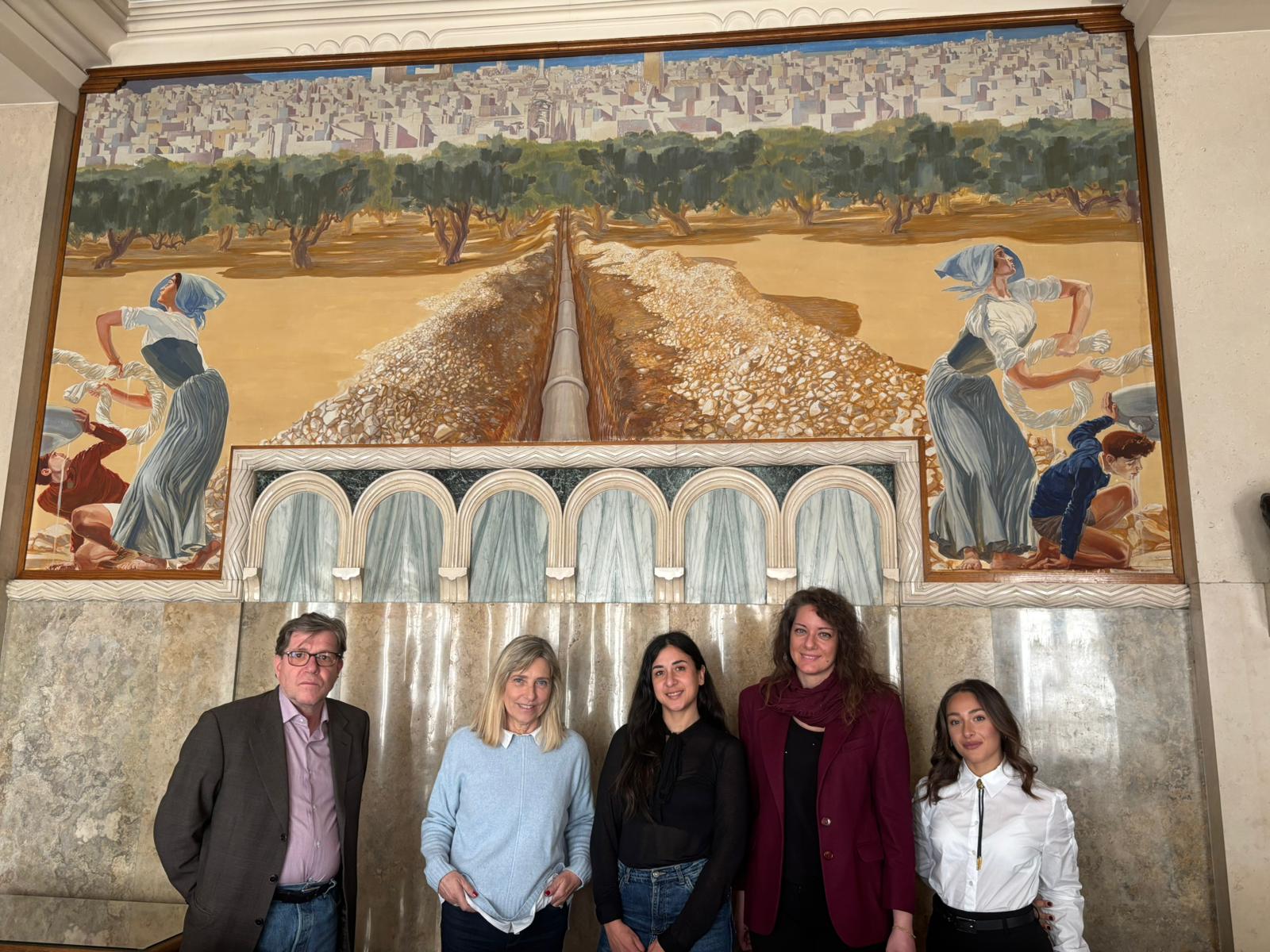 On 25 March, the second meeting took place at the Municipality of CastellanaGrotte. It involved representatives of LUISS University and LabGov, again as project partners, together with Autorità Idrica Pugliese (AIP), IISS Luigi dell’Erba, Aquasoil, and the Municipality of Castellana Grotte, which took part as external stakeholders. This second exchange was pointed at concretely organizing AWARE’s presence during the Science Fair. Participants discussed the programme of the school’s Science Week and the public opening scheduled for April 19, 2026, when the school will open its spaces to the territory and present laboratories and multidisciplinary activities. In this context, the group explored the opportunity of setting up a dedicated AWARE exhibition space. Among the ideas, discussed were the presentation of the plant and its model, posters, research outputs, water samples, videos explaining how the system works, and the possible analysis of water from the plant in a dedicated laboratory. A particularly importantpoint that emerged was the need to make the AWARE space accessible to different audiences, stressing the importance of combining simple and more immediate communication tools for younger visitors with more detailed and in-depth materials for adults.
 Taken together, the two meetings represented an important step in aligning institutional, educational, and technical stakeholders around AWARE’s participation in the Science Fair as an event where awareness around the project can effectively be raised. They helped moving from a general intention to a more concrete reflection on contents, formats, audiences, and organizational needs, with the shared understanding that Castellana Grotte offers a particularly meaningful context to communicate the project beyond its already engaged actors and to open it up to the wider territory.

by Carlos Lougourou | Apr 7, 2026 | The Urban Media Lab

photocredits: Tobias Weinholds on Unsplash
In 2025, nearly 40% of European SMEs still viewed sustainability as a constraint or a cost. This perception may seem perfectly reasonable, especially when one does not yet have access to all the information needed to fully understand what is currently unfolding in the global economic environment.
And yet, sustainability is no longer a secondary issue. Contrary to what some may still believe, it is neither a luxury nor a mere communication exercise. As Paolo Taticchi rightly points out, sustainability is not the future, it is the present for those who aim to succeed. This concise statement captures a profound transformation of the economic landscape.
We are living in a world evolving at an exponential pace. This evolution generates consequences, disruptions, uncertainties, and new impacts on businesses. At the same time, the market increasingly rewards those who can adapt. Recent studies show that companies building long-term resilience are those capable of integrating, at the core of their strategy, three now essential dimensions: ecological transition through ESG criteria, technological innovation particularly artificial intelligence and organizational resilience.
Innovation is no longer a privilege reserved for a few actors; it has become a strategic necessity. Consequently, innovating for sustainability has become almost self-evident: being sustainable to remain competitive, attract more customers and talent, access new markets, meet regulatory expectations, and strengthen adaptability. Of course, such a process is not simple. Data collection, internal assessments, surveys, impact analysis, and, in some cases, the development of sustainability reports require real effort. They involve costs, time, and a level of organizational structuring that not all companies can immediately achieve.
This leads to a fundamental question: why should a company choose to integrate sustainability into its strategy, even when it is not directly subject to regulatory obligations?
To answer this, it is useful to revisit key milestones in the evolution of economic and managerial thought. In 1976, Nobel laureate Milton Friedman argued that the sole social responsibility of a business is to increase its profits. This position deeply influenced modern economic thinking. However, in the following years, this perspective began to be challenged.
By 1987, corporate social responsibility (CSR) gradually emerged as a new framework, integrating environmental, social, and governance issues at the heart of business strategy. This marked a major shift: a company’s responsibility was no longer limited to creating value for shareholders but extended to how this value is generated and its impact on society, people, and the environment.
This transformation is part of a broader movement. Debates around innovation, growth, and adaptation intensified. Research emphasizing innovation as a driver of continuous progress clearly shows that companies refusing to innovate eventually stagnate, lose ground, and sometimes disappear. In an unstable and competitive economic environment, inertia is no longer neutral it becomes a risk.
In 1990, another key concept reinforced this evolution: the triple bottom line, introduced by John Elkington. This model evaluates corporate performance not solely through profit but through three complementary pillars: People, Planet, and Profit. In other words, companies must now be assessed not only on financial results but also on their social and environmental impact.
A further step was taken in 2004 with the Who Cares Wins report, supported under the United Nations Global Compact. This marked the emergence of ESG within the international financial sphere. Major institutions were encouraged to integrate environmental, social, and governance factors into their analyses and decision-making processes. This movement, which has steadily strengthened, clearly shows that sustainability is no longer a marginal discourse but a fundamental reconfiguration of how economic performance is understood.
Although this brief historical overview is not exhaustive, it already demonstrates that we are not dealing with a passing trend. We are witnessing a paradigm shift in economics, in the relationship between businesses and society, and in how performance is evaluated.
So, what are the concrete factors that should encourage companies to place ESG criteria at the core of their strategy?
The first factor is regulation and compliance. There is increasing pressure, particularly at the European level, regarding sustainability reporting, due diligence, and disclosure requirements, especially in finance. While not all companies are currently subject to the same obligations, SMEs are far from being excluded. Voluntary frameworks such as VSME modules already enable them to meet growing ESG data demands from clients, partners, and investors. The voluntary nature of these tools should not be seen as a weakness but rather as an opportunity to anticipate, structure, demonstrate maturity, and position strategically in an environment where compliance is becoming a standard of credibility.
The second factor is reputation and corporate image. Integrating social, environmental, and economic dimensions enhances external perception. It reflects a commitment to employee well-being, environmental preservation, transparency, and responsible management. For investors, partners, clients, and talent, this approach is increasingly a marker of seriousness. It does not merely improve image, it becomes a competitive advantage.
The third factor relates to risk reduction and resilience. ESG adoption allows companies to better identify vulnerabilities, analyze risks, and anticipate emerging challenges. This proactive approach enables preventive and corrective measures before issues become critical. Integrating ESG is not only about doing better, it is also about avoiding higher future costs, internal crises, and loss of trust.
The fourth factor concerns market opportunities. Increasingly, tenders, large corporations, and contracting authorities require ESG data in their selection processes. Environmental and low-carbon criteria are becoming standard, particularly in public procurement and value chain relationships. Companies unable to document their commitments risk exclusion. Most importantly, large companies subject to reporting obligations are now requesting ESG data from their partners, including smaller ones. This means that even SMEs not directly regulated may be indirectly impacted as part of a rapidly evolving ecosystem. ESG integration thus becomes, in many cases, a strategic positioning decision.
It is equally important to consider the risks of non-adoption.
The last is reputational risk. Companies that ignore ESG may weaken their credibility by failing to demonstrate transparency or meet stakeholder expectations.
The case of Boohoo illustrates this clearly. In 2020, the company faced a major reputational crisis following revelations about working conditions in its Leicester supply chain. Reuters reported a drop of over 23% in its share price, while an independent review confirmed significant failures. In such cases, the issue is no longer purely social or legal, the company becomes publicly associated with unacceptable practices, directly affecting its credibility with consumers and investors.
And Boohoo is only one example. The consequences can include declining market value, loss of investor confidence, reduced customer attractiveness, strained partnerships, and brand deterioration. Ultimately, these impacts affect the core economic foundations of the business.
In conclusion, this analysis highlights the evolution of the economic landscape and why companies should integrate ESG strategies at the heart of their operations. Strategy remains the key differentiator between companies. It determines their ability to position themselves sustainably in the market. Placing ESG at the center of business does not guarantee success, but it provides the tools to succeed in an increasingly competitive, demanding, and structurally evolving environment.

by Carlos Lougourou | Mar 2, 2026 | The Urban Media Lab

Photocredits: Towfiqu barbhuiya on Unsplash
In 2025, ESG investing moved beyond the hype that defined the early 2020s and entered a phase of discipline and recalibration. What was once promoted as a fast-growing investment revolution became a more structured and data-driven framework integrated directly into financial decision-making. After global sustainable assets climbed to roughly $30–35 trillion in the early part of the decade, according to the Global Sustainable Investment Alliance, the market slowed and matured. Investors became more selective, shifting their focus from Economic Social and Governance labels to measurable financial impact.
One of the biggest turning points in 2025 was regulation. In Europe, the European Commission pushed forward stricter sustainability disclosure rules under the Corporate Sustainability Reporting Directive (CSRD), requiring companies to publish standardized ESG data. Globally, the International Sustainability Standards Board (ISSB) standards gained wider adoption, aligning sustainability reporting more closely with financial accounting. This regulatory shift reduced greenwashing risks and forced companies to back up sustainability claims with verifiable numbers. ESG metrics increasingly carried weight in earnings forecasts, risk assessments, and cost-of-capital calculations.
Meaning that Market conditions also reshaped strategies. Rising interest rates and energy volatility in previous years challenged simple exclusion-based approaches, especially when traditional energy companies outperformed during certain cycles. By 2025, many investors adopted transition-focused strategies instead of blanket divestment, supporting companies actively reducing emissions rather than excluding entire sectors. Climate risk analysis became more sophisticated, often aligned with frameworks developed by the Task Force on Climate-related Financial Disclosures. ESG integration shifted from a marketing narrative to a core risk management tool. Technology played a crucial role in strengthening accountability. With Artificial intelligence, satellite monitoring, and supply-chain analytics allowed investors to verify environmental data beyond company self-reporting. This improved transparency and helped differentiate credible sustainability efforts from superficial claims. As a result, companies with strong governance and realistic transition plans often benefited from more stable capital access, while those facing environmental or governance controversies experienced faster investor withdrawal.
By the end of 2025, ESG investing had evolved into a structural component of modern portfolio management. It no longer relied on momentum driven inflows but on financial materiality, regulatory alignment, and measurable performance. Markets became increasingly responsive not only to quarterly results but also to long-term resilience, regulatory exposure, and climate preparedness.
Looking ahead to 2026, the trajectory points toward consolidation rather than expansion. We are likely to see fewer but stronger ESG funds, deeper integration of climate scenario analysis into credit and fixed-income markets, and continued convergence between sustainability and financial reporting standards. ESG’s future appears less about branding and more about embedding sustainability as a permanent lens for evaluating risk, competitiveness, and long-term value creation in global markets.

by Shasa Calì | Jan 27, 2026 | The Urban Media Lab
Water as commons: blue capital in the era of global  water bankruptcy
Source: David Becker on Unsplash
Introduction
In recent years, an increasing number of cities around the world, especially in the global south, have experienced frequent alternation of extreme events at close intervals such as floods and prolonged droughts. Aquifers are depleted, glaciers are melting and urban water networks are inefficient as demand for water grows.
A flagship report by the UNU-INWEH organization uses the phrase “global water bankruptcy”(https://collections.unu.edu/eserv/UNU:10445/Global_Water_Bankruptcy_Report__2026_.pdf) to refer to the situation in which renewable water income is insufficient to cover growing global needs, metaphorizing in financial terms a condition of availability of the most fundamental resource of the globe that can no longer support the weight of our expectations. For years we have treated natural resources, constituting natural capital, as inexhaustible and infinite: the reality of the facts forces us to confront the bitter scenario in which for many citizens of the world a good that was taken for granted can become difficult to find, with more unequal and conflictual access.
The report highlights the following data:
- 50%: lakes worldwide that have lost water since the early 1990s (with 25% of humanity directly dependent on those lakes)
- 70%: Major aquifers showing long-term decline
- 30%+: Global glacier mass lost in several locations since 1970, with entirely low- and mid-latitude mountain ranges expected to lose functional glaciers altogether within decades
- 75%: Humanity in countries classified as water-insecure or critically water-insecure
- 4 billion people facing severe water scarcity for at least one month each year
- $307 billion annually as a global cost associated with drought
Source: https://unu.edu/inweh/news/world-enters-era-of-global-water-bankruptcy
In this article, I use natural water capital to mean freshwater stocks and systems (aquifers, rivers, lakes, glaciers) that generate and store water over time. I use blue capital to mean marine and coastal ecosystems and their services. The two are connected, but they are not the same governance and accounting problem.
In this perspective, the “failure” concerns the erosion of natural water capital (aquifers, glaciers, rivers, lakes) that produces and stores water in the long term. At the same time, blue capital, marine and coastal ecosystems, whose services often remain invisible in the financial statements, are also weakening. That is why the accounting lens matters: it helps make visible both freshwater depletion and coastal-marine damage that remain largely off the books.
The report not only highlights the material crisis in which we find ourselves, but also an institutional one: crisis due to fragmented governance, insufficient investment and mismanagement of water capital, including its economic treatment from an accounting point of view.
The need for water and blue capital accounting
This detailed evidence from the flagship report, grounded in peer-reviewed research, prompts us to reflect on evidence of dual nature: on the one hand, the crisis exacerbated by its potential irreversibility, and on the other, the awareness that we are underestimating the real social costs related to the mismanagement of water resources.
As a consequence, being able to correctly identify, and consequently account, the impacts on the use of blue capital, understood as the set of resources, ecosystems and ecosystem services linked to marine and coastal environments, from an economic point of view can mean correcting a market failure by reintegrating the negative externalities produced by the impacts on water resources.
Definition: A negative externality is a cost borne by someone (often society) but not correctly accounted for and consequently imputed and paid by the person who is responsible for the production of said externality.
Social cost of carbon (SCC) is a measure that assigns an economic value to CO2 to be able to “tax” (and internalize) the negative consequences produced by pollution and to be able to somehow “repay” the green capital used. Specifically, it is the economic and social cost associated with the emission of one ton of CO2, considering future damage to health, agriculture and ecosystems, but underestimating the importance of water resources.
A study recently published in Nature Climate Change also talks about the value of blue capital in relation to CO2 pollution. The researchers, basing their thesis on the fact that water is a fundamental and often underestimated natural resource, show that by integrating water into the Social Cost of Carbon, through appropriate methodological operations, show that integrating ocean-related impacts into SCC calculations yields an ocean-based component (‘blue SCC’) of about US$48 per tCO₂, almost doubling the SCC estimate from the same model when ocean impacts are omitted.
Just as in the climate field, tools are being introduced to make the externalities of emissions visible and internalize, from the price of carbon to regulatory mechanisms along the supply chains, economic and institutional devices capable of incorporating the cost of scarcity, quality and risk into public and private accounts are also needed for water. Not to “financialize” the resource, but to direct investments and behaviors towards a more efficient and equitable use.
Water as commons
Alongside the possibility of introducing an accounting system that is more sensitive to natural capital, with particular attention to water resources, numerous global institutions such as the European Union, the UNDP, the UN and others recognize that water is a resource to be managed as a common good, belonging to the domain of public goods and not appropriated, therefore governance options for the management of this crisis would be desirable.
Water, following an Ostromian approach, is a CPR (common pool resources) and therefore, in the absence of stewardship, accountability, training, clear and simple rules and multi-level governance, it is subject to reckless use, as well as problems such as free riding.
If water can be considered a commons, the city can act as an enabling platform: not only to provide services, but to build capacity, rules and above all incentives for shared care and co-governance. In concrete terms, this requires polycentric governance: a control room on the scale of an urban basin (or “urban resource”) that coordinates the Municipality, consortia, managers, communities, universities and businesses, clarifying roles and responsibilities. The expected results are not abstract: collaboration pacts for river parks and renaturalizations, sustainable urban drainage systems, nature-based solutions (widespread micro-basins, infiltrating soils) and transparent and community-based monitoring, with accessible and usable data to decide priorities and investments.
Conclusion
If we take the metaphor of “failure” seriously, water sustainability becomes a choice of accounting and institutions: we cannot regenerate water capital without a governance approach capable of distributing costs and benefits in a legitimate way. The blue SCC adds a useful reminder: a major part of the damage remains invisible to prices, but it is no less real. The call to action, for urban and territorial policy-makers, is concrete: experiment with commons pacts, measure water capital, and co-govern at the basin scale, with verifiable objectives and continuous learning.

by Anna Berti Suman | Jan 21, 2026 | The Urban Media Lab
A quest for social and environmental justice? The experience of citizens’ assemblies and participatory monitoring
Anna Berti Suman – Research Fellow, Luiss University & LabGov
 Source: Unsplash, free image
Life in cities is often impacted by matters of concern – for example related to new infrastructural projects or emerging environmental issues – that mobilise city’s inhabitants. Ordinary people – that is, people who do not have professional qualifications – may turn to civic monitoring or to other, more structured ways to engage with the city’s socio-environmental issues (such as citizen assemblies) as they want to promote transformations.
These efforts are frequently coordinated by civic actors or non-profit organisations and rely on digital platforms as spaces for encounter and coordination. On this arena, platform communities are formed. Despite being digital, these platforms are very spatially and socially grounded, and are just coordination spaces for real-world gatherings. Platforms thus become a space for stimulating civic participation in environmental matters and for engaging them in socio-environmental transformations. This can also occur through practices of ‘commoning’ and co-governance.
A recent study published in the ‘Handbook of Platform Urbanism’, questions how civic environmental monitoring and citizens’ assemblies, can effectively steer and foster socio-environmental transformations in particular based on the experiences deployed in the city of Milan, Italy. These experiences are an occasion to question processes of inclusion and exclusion, the level of civic agency, and the actual impact on democratic decision-making.
The two practices discussed can be seen as an affirmation of environmental procedural rights, enshrined in the Aarhus Convention by UNECE (the United Nations Economic Commission for Europe), in particular the right to access to environmental information and to meaningfully participate in environmental decisions.
Citizens’ assemblies are a form of deliberative democracy in which a group of representative citizens are brought together to deliberate upon and make recommendations on a particular issue, including on climate law and policy for example. Civic environmental monitoring is a practice in which ordinary people collect environmental data, often to demand public interventions, such as environmental law enforcement.
The two forms of participation share common features and can have a complementary value. Both instruments can be useful in fostering an informed public opinion and facilitating collective decision-making processes. However, as the cited study argues, they have different influences on the implementation of the decisions taken. In the preliminary phase of the citizens’ assembly, civic monitoring could information for the collective deliberation and decision. Moreover, civic monitoring could be used to watch over the implementation of the decisions taken. Indeed, citizens’ assemblies have deliberative and, in some cases, binding powers, and have the mandate to translate civic inputs into concrete actions.
These less structured (civic monitoring) and more structured (citizens’ assemblies) instruments can be strategic to face collectively complex and divisive social and environmental justice matters. The synergy between these instruments can augment the social capital of a citizens’ assembly, developing the skills and competencies of the participants, and strengthening local knowledge, complementing technical and/or scientific knowledge on a certain topic with the socio-cultural context. In conclusion, city planners and decision-makers should look at these practices and their synergy as an opportunity to build better evidence on a certain matter and take decisions of better quality.

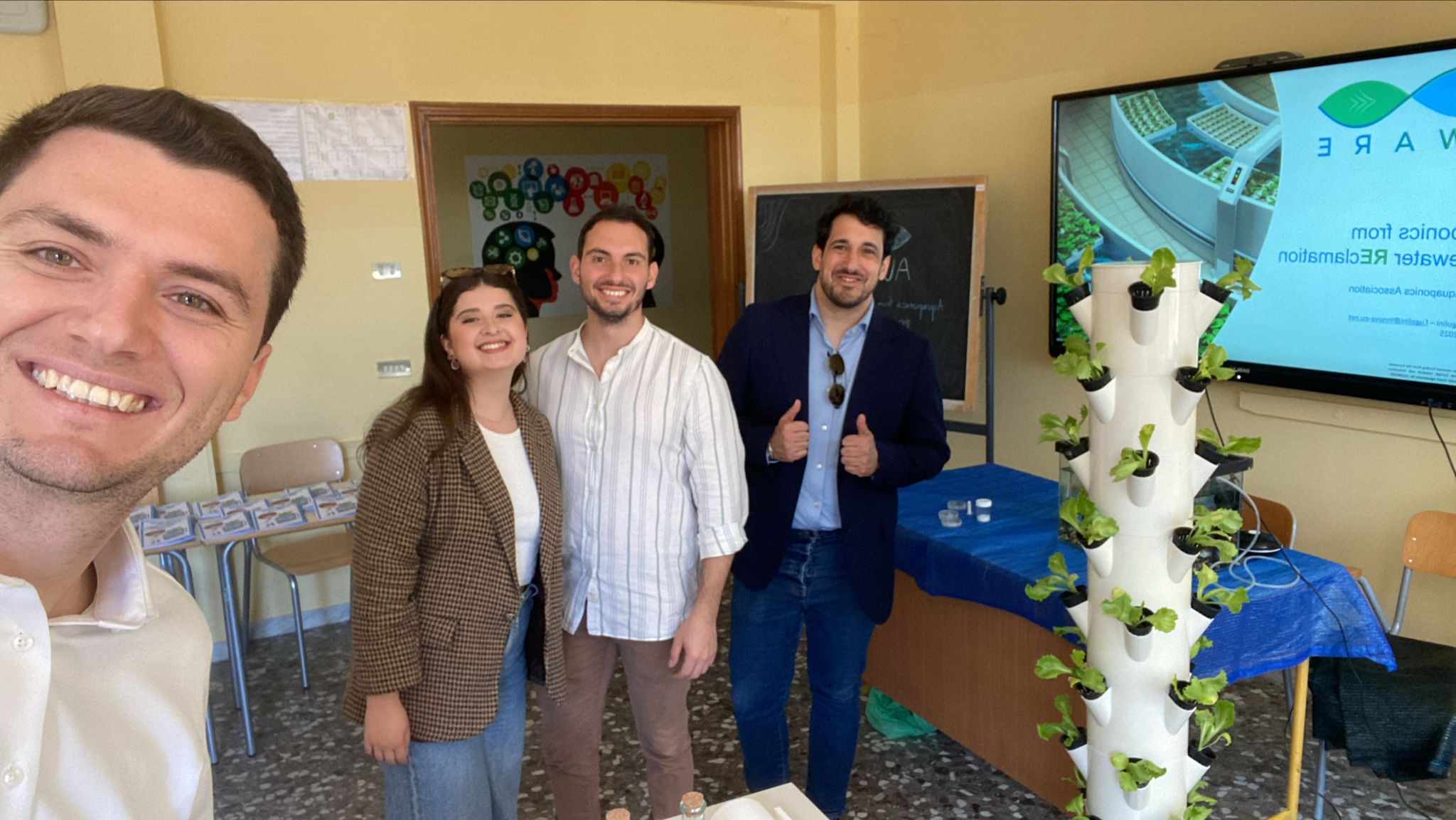
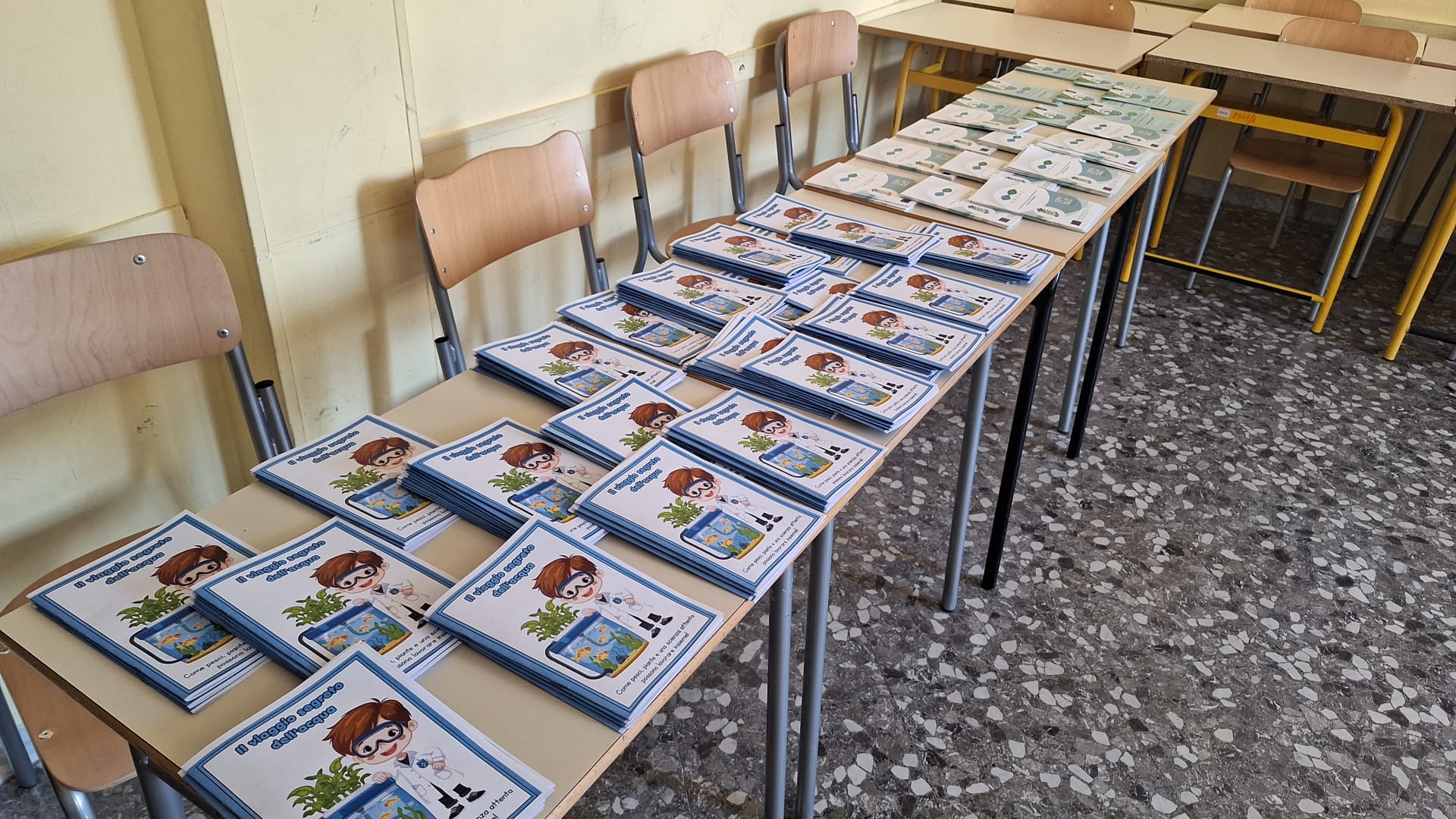
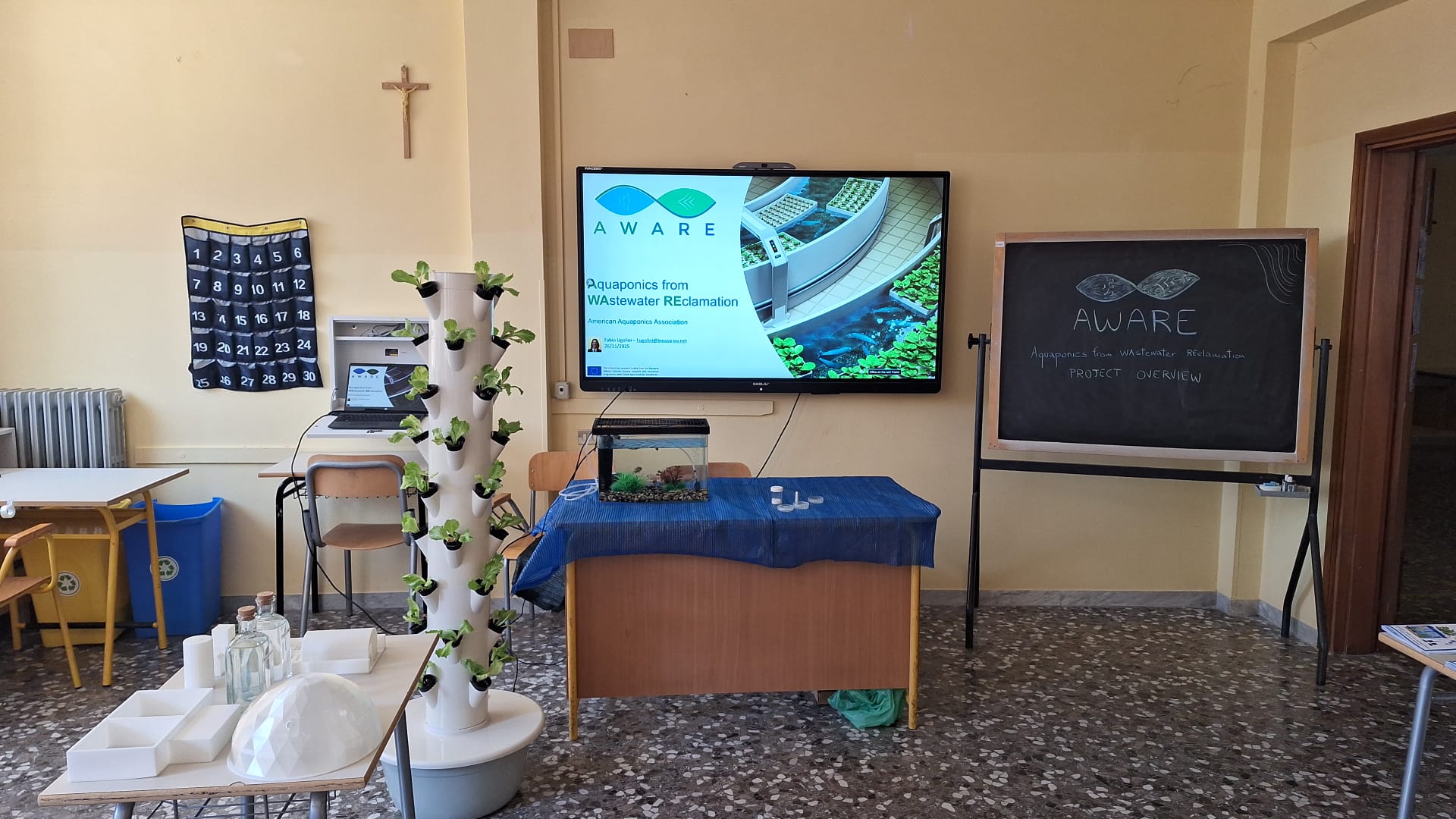
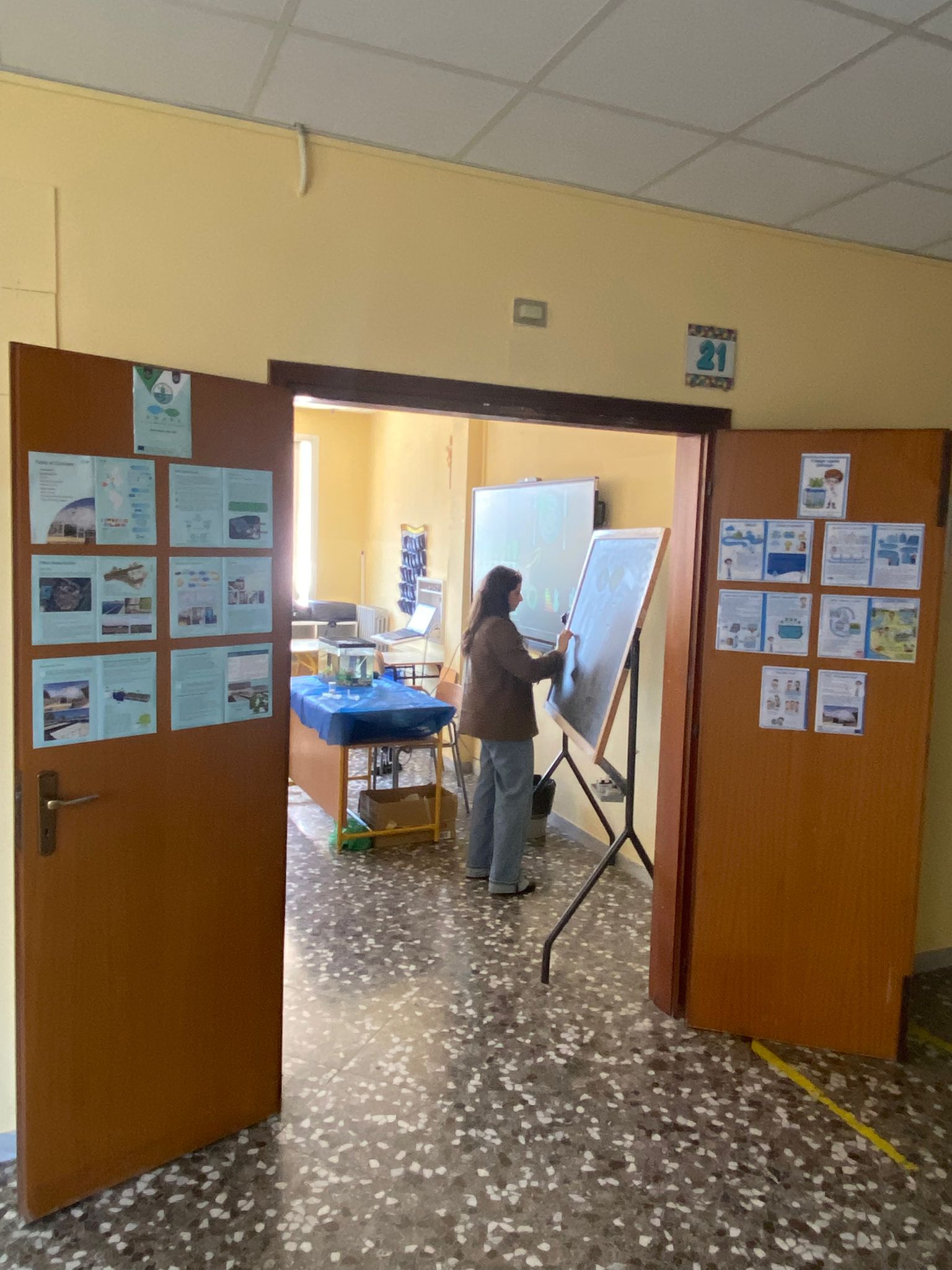 The event was welcomed with great interest and active participation by the entire school community, making it a valuable opportunity for the dissemination of science and for cultural and educational enrichment across the local area.In particular, in Classroom 21 of the Institute, a demonstration model was set up to reproduce the functioning of the aquaponic system developed within the project AWARE (“Aquaponics from WAstewater Reclamation”), funded by the Horizon Europe program.