by gideongalizzi | Dec 19, 2025 | Commons Press, Event, News
With the 2030 deadline approaching and persistent gaps in trust and social legitimacy hindering sustainability transitions, a recent JRC (European Commission) report by Christian F. Iaione and Cecilia Bertozzi examines how commons-based co-governance and joint management of common goods can facilitate and accelerate the localization of Sustainable Development Goals (SDGs) within urban environments.
The report identifies three principal findings: co-governance extends beyond the conventional top-down versus bottom-up dichotomy; it offers evidence-based recommendations that support SDG localization across EU territories, noting that most SDG targets require local action, and contributes to the development of a shared, consensual framework through imposed directives aimed solely at achieving uniformity.
The report grounds its analysis in five case studies ranging from Reggio Emilia to Amsterdam, which demonstrate the use of legal and financial instruments, the role of institutional facilitators such as city science offices, and the common challenges faced across regions, including bureaucratic silos, long-term funding constraints, and the need for inclusive co-design.
A key takeaway is well documented: co-governance can serve as a significant accelerator of sustainability transformations in urban contexts. However, further scaling is required to understand better the contexts in which these models are effective and to assess the long-term sustainability of the supporting institutional capacities.
Read full report:
https://data.europa.eu/doi/10.2760/1245774
by Paola Todisco | May 2, 2019 | Luiss LabGov 2018-2019
Save the date: next Saturday, 4th May 2019, Luiss University will host the last meeting of EDU@LabGov in Luiss Community Garden from 10 am to 12am.
In this occasion the LabGovers (students of the Urban Clinic of LabGov) will work to make the last adjustments to the prototype of the project that they have designed during these months. In particular, they will work on inserting the technological elements that respond to the challenges related to sustainable agriculture, energy, tech justice and many more. Furthermore, they will co-design the event in which they will present their ideas to the public!
This appointment will represent the last moment to put into practice definitively the topics they have discuss during this Urban Clinic of LabGov A.A 2018/2019.
As always, if you are interested in following their work, follow our official
social networks!
This is a very last moment before the final event.

by Paola Todisco | Apr 29, 2019 | Luiss LabGov 2018-2019
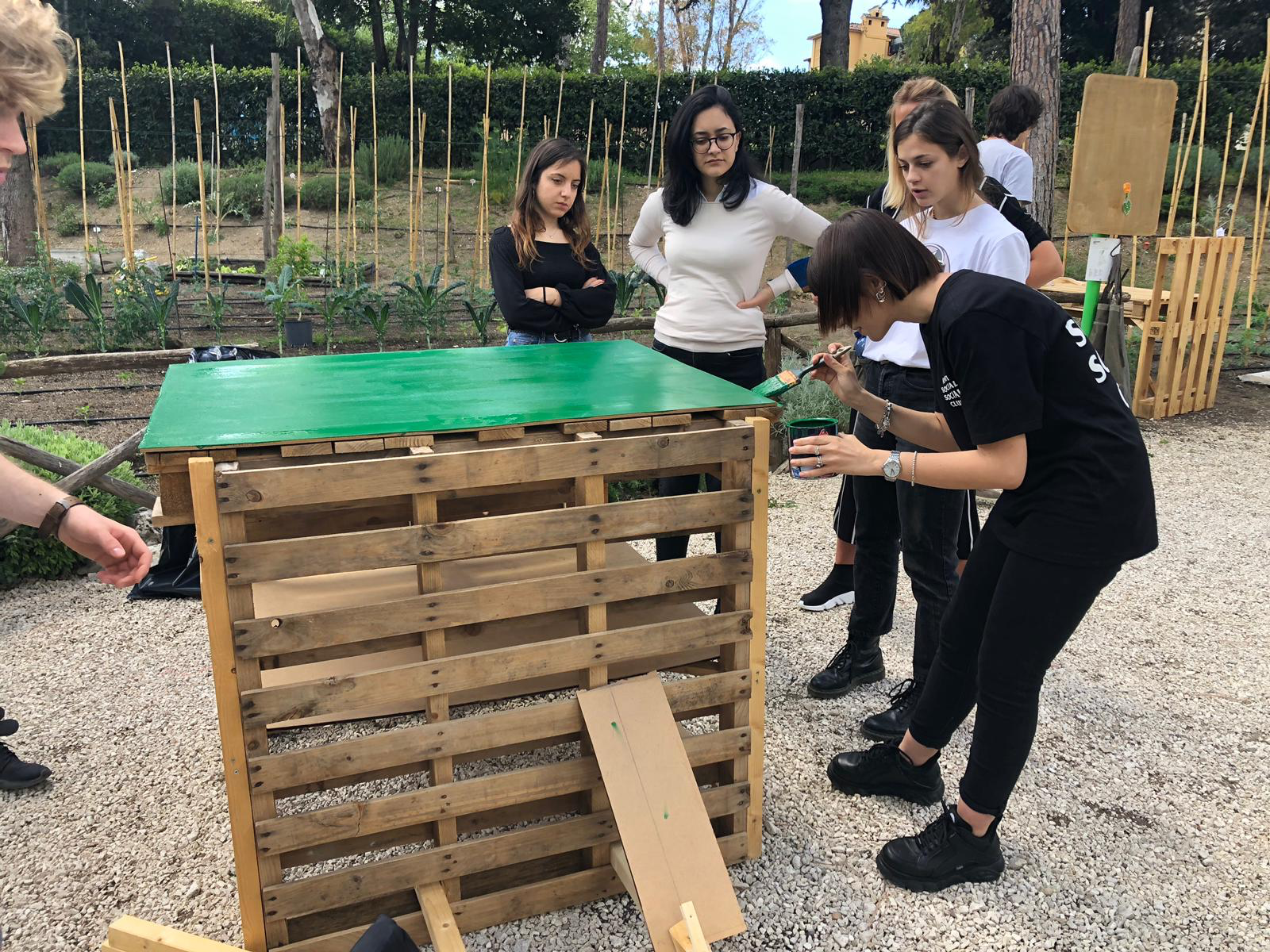
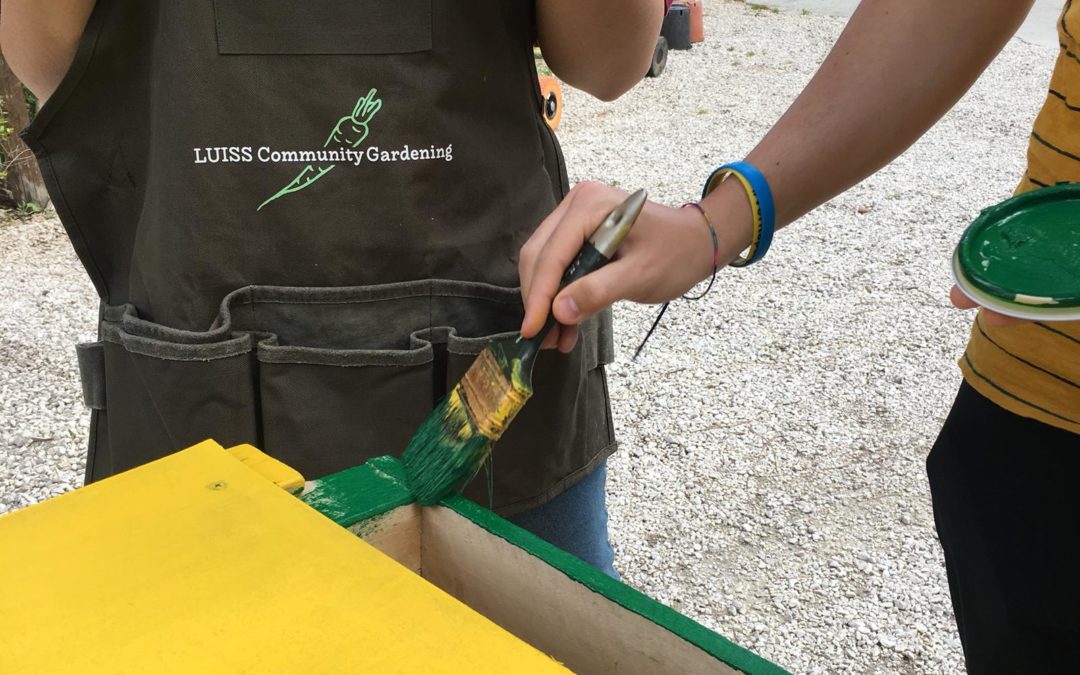
Saturday, April 27th 2019, the third community gardening session of the Urban Clinic EDU LabGov has taken place in Luiss community garden #OrtoLuiss. This last appointment was dedicated to completing the construction of the material prototypes designed during this A.A. of the Urban Clinic by the students.
This appointment was dedicated to completing the construction of their material prototype that is an entry point in cities, and it is also equipped with technological elements. This entry point will link to the immaterial protoype, that want to raise awareness on issues such as sustainable agriculture, nutrition, diet, sport, tech justice and many more.
Labgovers split into groups to perfect their prototype and demonstrated great organizational and collaborative skills. But they still have some things to do and for this reason we will meet again on Saturday 4th May in Luiss!
The LabGovers just don’t want to leave us!
Stay Tuned!

by Paola Todisco | Apr 24, 2019 | Luiss LabGov 2018-2019
Save the date: next Saturday, 27th April Luiss University will host the third EDU@LabGov community gardening session in Luiss Community Garden from 10 am to 13am.
The LabGovers (students of the Urban Clinic of LabGov) will work to make the last adjustments to the prototype of the project that they have designed during these months. This session represents a fundamental moment to put into practice definitively the topics they have discussed in recent months: urban agriculture, urban gardens, healthy nutrition, innovation, technology, justice, sustainability.
The students of the Urban Clinic of LabGov have designed and created an innovative solution to the problems created by the scarcity of knowledge about the state of well being in the cities. They have created two prototypes, one material and one immaterial: a multifunctional structure that will be installed in the city (in strategic points, by starting from the urban gardens) and a digital platform. Through those two tools they will be able to start an awareness/information campaign about the relevance of sustainable models of agriculture and nutrition in the cities and its importance for the individual and collective well-being. At the same time they will investigate the state of the urban well-being by collecting big data on this issue.
As always, this is not just a didactic moment but a collaborative practice born in the walls of the Luiss Guido Carli university and the results will be exported in the city.
If you are interested in following their work, follow our official social networks!
by Paola Todisco | Apr 16, 2019 | Luiss LabGov 2018-2019
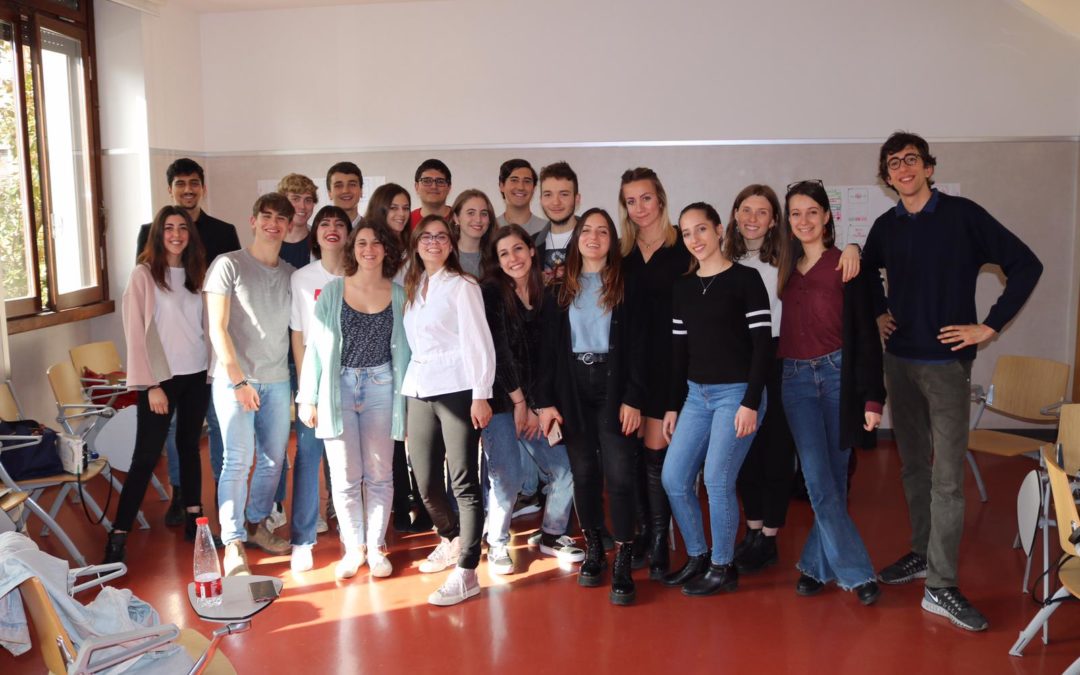
The fifth module of the Urban Clinic EDU@LabGov took place on Friday the 12th and Saturday the 13th of April into the Viale Romania Campus of LUISS University. The workshop has inaugurated the fifth module of the course. The module was dedicated to “Communication”.
The workshop hosted one important expert on these themes: prof. Paolo Peverini, professor at the Department of Enterprise and Management and Political Sciences in Luiss Guido Carli University, and he is expert in Marketing Communication and new media languages. Saturday, we hosted Chiara De Angelis, expert in information architecture and user experience design , who supported the LabGovers in drafting the communication plan for their project idea.
WORKSHOP
Prof. Peverini asked the LabGovers what communication plan they had in mind for their project.
After explaining their idea, prof. Peverini focused on how difficult it is to communicate a message. So, to try to effectively develop a message it becomes necessary to make the most of the cross-media effects.
These effects show how the combined use of different media and the order of the media used to spread a message can cause a different reading of the same.
At the end of the workshop, Professor Peverini gave some suggestions to take care of the communication of our project.
He emphasized how important it is to avoid a techno-deterministic approach, which dwells exclusively on the effectiveness of the medium. In fact, for Prof. Peverini, it is much more important to take care of the substantial and content aspects of the message.
CO-WORKING
Chiara De Angelis explained to LabGovers what are the essential elements that every communication plan should have. Based on the two examples and on the points that Dr. De Angelis highlighted, LabGovers divided into three groups to develop the communication plan for their project. It is important for them to place their project: this means underlining the fact that they are trying to transform the urban gardens into innovation hubs, by developing a new generation of digital gardens and a digital platform that will allow the urban gardeners and farmers to investigate the status of well-being in the cities. Another relevant feature for their path is the focus given to sustainability and in particular to the 17 SDGs of the 2030 Agenda.
After delivering their work, the LabGovers split into groups again to work on the user stories of their digital platform.
At the end of the exhibition, the LabGovers were divided into groups in order to create a prototype of the platform through an app, which allows you to link drawings and photographs between them through hyperlinks that can be placed on the photographs themselves. The result should therefore be a model of the platform that will be developed.
The last module ends like this but I assure you that it’s not over here.