Culturability: Sheila Foster and Christian Iaione on Urban Commons and City as a Commons

Culturability: Sheila Foster and Christian Iaione on Urban Commons and City as a Commons

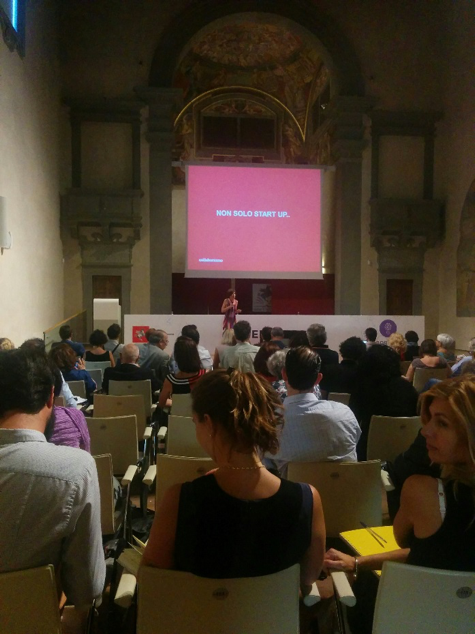
On the 15th of July, Unipolis Foundation in collaboration with Fitzcarraldo Foundation and Make a Cube association organised a second mentoring workshop for the 15 finalists (the description of finalists see below, or at: http://culturability.org/notizie/finalisti-bando-culturability/) who have been selected from the “Culturability” call – an Italian national call to support innovative projects in cultural and creative fields to promote urban regeneration processes (see more about Culturability at: http://culturability.org/).


cartolinaIMMAGINE-IN-EVIDENZA-Culturability


The third day of the workshop series was complemented by Urban Law professor at Fordham University Sheila Foster and LabGov coordinator, prof. Christian Iaione’s presentation as well as an interactive discussion with the audience. Scholars focused on bringing the attention of the 15 progressive cultural innovators to the idea of urban commons and, more specifically, addressing the collaborative governance of commons as the main target in the urban regeneration processes of today.

Coming from the school of thought on commons, Sheila Foster began with questions of what exactly an urban common is and what does it mean to the society and the city as a whole. “Urban commons are what city inhabitants share daily, in fact, these commons are of a deeply democratic nature, because they have an open access meaning that the usage of them is non-excludable”. From a property law perspective it is very important to distinguish urban commons from what is conventionally understood as common pool resources within the field of environmental law. Such distinction is necessary, because these commons differ in terms of their nature, characteristics and value that they create to the society, and hence this affects the character of their governance. “Urban commons are city spaces, such as squares, parks, abandoned or non-utilised buildings, streets, vacant lots, even cultural institutions, for instance, museums, and other urban open-access units – spaces of a truly common good nature”- addressed S. Foster. “These spaces are unique because they generate value, that is precisely of a social and cultural origin and a wide range of city actors have a stake or an interest in these urban commons. Thus, by preserving commons together, we can contribute to an inclusive and sustainable well-being co-creation by and for city inhabitants”.


13702372_10201848766176341_1082986064_o


On the other hand, scholar stressed that commons are not a simple concept in law or theory. “Commons are neither private nor public, it is something in between. Therefore, the question of governance of the commons is condemned to be a challenge from both practitioners and scholars’ viewpoints”. Having addressed the “Tragedy of Commons” (see H. Garrets), S. Foster emphasised that urban commons are not something that should be governed either by private or public, because these commons are not necessarily in threat of over-consumption or degradation like natural commons, as some scholars suggest. The opposite – open-access urban spaces, which increase multi-stakeholder usage, even enhance shared social, economic and environmental value and contribute to the so-called “Comedy of Commons” (see C. Rose).  “The issue is that today every urban common is overly regulated, today nothing is an open access  and non-excludable anymore and having mentioned the value of urban commons the re-opening and collaboratively governing urban commons is a highly valuable process for all stakeholders. The opening urban commons – contributes to the stimulation of a social value to the community. To add, the value of opening up the commons is directly linked to the production of culture, of housing. Commons are not about tragedy, rather about solidarity and shared value” – stressed S. Foster.

Christian Iaione took over the debate stressing that today there is a growing need to rethink economy, institutions and focus on the energy that the community possesses. “The community should recognise the value of commons. It is not the tangible commons that matter, it is the collaborative governance of commons and the value to the community that it produces”- said C. Iaione. Professor focusing on governance of commons stated that between the state and the market there is a room for experimentation and this is the space of commons that connect different stakeholders. So far, what the overly regulated cityscape has produced is scarcity and collaboration, or collective action, as stressed by E. Ostrom, yet in an urban context, is the way to introduce new approaches to governance and eliminate the problem of scarcity. Despite the fact that “[w]orking on commons requires constant experimentation, what we have accomplished thus far is writing the Regulation which is a strong step towards the recognition of urban commons at the city level and the introduction of collaborative urban governance”.


13694204_10201848763056263_297553146_o


Lastly, by sharing experiences from the Parco Centocelle project in Rome and the project on #CollaboraToscana, C. Iaione emphasized that the governance of commons is an arrangement between 5 different actors (or “quintuple helix” model, see more about this in “City as a Commons“), where (1) the unorganized public (e.g. social innovators, active citizens, urban regenerators, urban innovators, etc.), (2) public authorities, (3) businesses, (4) civil society organisations, and (5) knowledge institutions (e.g. schools, universities, cultural institutions, etc.) work together to establish public-private-community partnerships and contribute to the preservation of the cultural heritage and the co-creation of the social as well as economic value.

Laboratory for Collaborative Governance of Urban Commons appreciates the energy and the ideas that 15 finalists of the Culturability Call possess. These finalists are promising examples of urban regeneration processes and therefore are strongly supported by LabGov.

The information about the finalists:

An initiative which regards culture in proposing a hybrid agricultural production system which creates a lively ecosystem. This, while restoring the role of not only agricultural production, but also of culture, contributes to the creation of welfare and strong community. This is a biological and social farmhouse of innovation and agriculture to improve the integration and employment, aggregation of space and the production of cultural places. It creates a sustainable local supply chain between farmers as well as it is a museum contributing to the regeneration of an area.


A non-profit organisation, founded by people who share a dream: to return the Cascina Sant’Ambrogio – an important place of agriculture and economy. This place regarded as poor and outdated due to the transformation of society is just an error of perspective. The Cascina is place rich in culture, memory and practices that need to be rethought by integrating them with the needs of present times. Citizens must not just be consumers and voters, but producers and active citizens able to concretely transform a portion of reality. This path does not come from nothing, but by a gradual emergence of the collective application that, with more and more insistently, asks sustainable and alternative lifestyles, as well as adequate opportunities.


  • Caserma Archeologica + Art Sweet Art – San Sepolcro (Arezzo) | artsweetart.net

This is a platform of artists to display their works in private homes to visitants. A homeowner can choose an artist via the website artsweetart.it from those who have joined up to the initiative. After assessing the home, the artist decides what type of art work to display in the new location. The art has to fulfil both the customers’ needs (the house as a location, the artwork’s theme, etc.) as well as those of the artist (who is invited to carry out a piece of art which fully respects their artistic expression). The initial drafting phase is followed by the artist creating their work. The artist is hosted in the customers’ private home, an unprecedented experience which influences the creative process. During the artists’ stay, the organisers-together with the hosts’ family- promote the art in construction and facilitate workshops in schools, local cultural guides, gatherings with friends, etc.


The projects seeks to reform the system of support the cultural industry in Italy. It highlights the critical issues and illustrates the best solutions.


  • DLF: cantieri interculturali per una città inclusiva –  Pisa | www.pisafolk.org

The project promotes different cultural tradition lines belonging to all Italian regions. Through musical concerts, plays, lectures and seminars, many of the popular culture heritages met within the framework of demonstrations made in Pisa, which due to its characteristics naturally prepares to host a dialogue between diverse communities and different cultures.


The project that seeks to create a network of people and spaces, such as, the abandoned buildings and underused of sites, with the objective of denunciation of situations of abandonment and then revaluation of the buildings by putting the spotlight on forgotten places, abandoned or fallen into disuse, showing its potential for reuse, it will foster a new collective interest in these spaces. This is a project that wants to revolutionise the way of seeing and understanding the assets disposed of a city, turning it into a resource.


This is a residence project that was born in a former industrial factory, able to provide hospitality for the whole year to travellers and tourists, and simultaneously transform into a school on urban regeneration: a “training of the mind” in the heart of central Italy, where two cities, Terni and Rieti meet. The idea is to experiment with new solutions and re-design territorial integration policy.


  • LAB+: Piazza Gasparotto Urban Living Lab –  Padova | copiu.it/lab

The project that focus on workers with different skills to meet, share ideas and expertise in urban regeneration practices. Gasparotto Square in a space of co-design living between citizens, private organisations and public institutions. To achieve this objective, the project makes the system a series of micro-actions of re-appropriation of public space: the urban expansion, construction of a weekly market of organic producers, involvement of local residents through the social theatre and community, realisation of works public art, use of storytelling and the creation of micro-community events.


  • Mana Grika – Hub Culturale della Grecìa Salentina –  Calimera (Lecce) | managrika.it

It is a Cultural Hub of the territory that will be made available to local communities to create initiatives with a strong cultural and social impact spaces. The main objectives are the territorial promotion and enhancement of the local culture through affiliated initiatives for social activation of communities and by creating a synergistic network among all organisations working in the area.


  • MUFANT, MuseoLab del Fantastico e della Fantascienza di Torino – Torino | mufant.it

This is a project by a team of professionals and industry experts, academics, journalists and researchers who are aspired to imagine a world, in which people are aware that this is just one of the possible worlds. This is being accomplished by the multiple permanent or temporary exhibitions, performances, conferences, events, and such, in the MusueoLAB.


Piazza dei Colori is one of Co-Bologna “construction sites”, and the aim is to turn it into a collaborative district that could later include different realities from Croce dei Biacco and all the migrants that live there.


The project aims to put an end to the progressive abandonment and degradation of one of the most prestigious and representative testimonies of the assets of the industrial archaeology resulting from the old age epic mining of Sardinia, which UNESCO declared a universal value in 1997 . With the completion of the project they intend to preserve and make available the public buildings of great architectural value at the Sella Well located in the mining complex-Monteponi on the outskirts of the city of Iglesias. The work of protection and restoration of the industrial archaeological heritage will accompany the exhibition. The abundance and beauty of the available space will also allow to set up an area for conference activities with its audiovisual and multimedia equipment. With the completion of the project, as well as regeneration of the museum space, the site will be returned to the local community.


Station Chiaravalle project focuses on the regeneration of the unused gym of neighbourhood school and creation of a hybrid space in order to host a community hub: operational production based on cultural content, artistic home and an urban laboratory. Additionally, it reinterprets the disused railway line along the Vettabbia channel as space in transformation. Lastly, it activates a participatory observation with the local community and generates landscape projects and custody of places and common open spaces for the enjoyment of the area as a landscape for immersive experiences.


The project which has an aim to enter into the social and productive fabric of Rome and spread to further cities. It focuses to put in place cultural practices and job opportunities that would promote inclusion and integration of those individuals who are in need for help and solidarity. It is a job creation, but also the artistic expression, which can also become a source of income, are the ways in which we intend to intervene in the social and cultural fabric of Rome.


This is a non-profit organization active in the field of contemporary art and culture both at a local and international level. It produces and organises art exhibitions, theatre shows, publications, audio-visual works, training and residency programs with the aim to encourage artistic mobility and the promotion of artists on an international scale. It intends to invent original devices in order to promote projects and enable processes that mobilise unconventional strategies and plans of intervention in the artistic and cultural system. The members of the core working group are artists who chose not to limit their activities and their identities to “the creation of artworks”, but to work actively – and independently – for the activation of shared processes and the redefinition of the role of the artist in society. The project starts from an idea of hospitality and sharing to create a symbolic place where experience and the individual journey are set aside to make way for the development of a collective strategy. The network of people intertwined constitutes a network able to  relate with institutions, questioning established practices and models, with the aim of generating concrete outcomes/results in the community.


LabGov congratulates all finalists and looks forward to new collaborations!


Secondary sources:

  1. Garrett, Hardin, (1968) The Tragedy of the Commons
  2. Iaione, Christian. (2016) “The CO-City: Sharing, Collaborating, Cooperating, and Commoning in the City.” American Journal of Economics and Sociology, 2: 415-55.
  3. Ostrom, E. (1990) “Governing The Commons: The Evolution of Institutions for Collective Action”, Journal of Natural Resources Policy Research, Volume 6, Issue 4, 235-252
  4. Rose, C. (1986) The Comedy of the Commons: Custom, Commerce and Inherently Public Property, 53
 

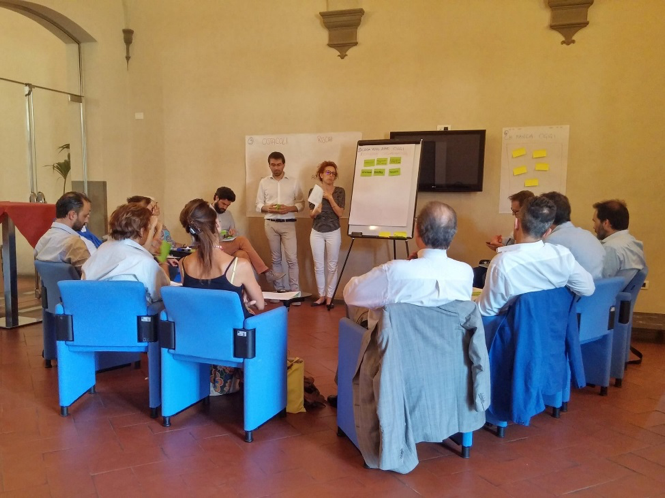
Technical meeting for Pilastro project, July 7, Bologna

Technical meeting for Pilastro project, July 7, Bologna

Pilastro is a development project of the Pilastro area, which is situated in the suburb of Bologna. The aim of this project is to add value to this zone, connecting the shared values of people with the economic needs of the area. Moreover, the Pilastro project is the first attempt to build a collaborative community.

Pilastro is part of the bigger Co-Bologna project, the cooperation agreement between the Municipality of Bologna and Fondazione del Monte di Bologna e Ravenna to develop and promote new approches and cooperative models for the governance of the commons. 

On Thursday, July 7th, LabGov will be in Pilastro to meet some associations’ members and experts, in order to follow the process of collaboration-building. The main purpose of this technical meeting is to draw the basis of a participation strategy to regional and European calls, in order to support the local development office in the beginning of its activities

Due to the very technical nature of the subject, it seemed appropriate to discuss it in an early meeting with professionals (mainly planning experts, bound to the territory), in order to select the most suitable financing sources from the many available ones. The result of this technical meeting will be presented, discussed and refined in September, in a meeting open to those who are willing to participate.

You can find more information on this project here and here.

___________________________

Giovedì 7 giugno LabGov sarà a Bologna per seguire lo sviluppo del progetto di collaborazione del quartiere Pilastro. L’incontro tecnico vedrà la partecipazione di vari membri di associazioni ed esperti, e avrà come scopo la definizione delle strategie di partecipazione ai bandi regionali ed europei, in modo da favorire l’avvio delle attività del progetto. I risultati di questo incontro tecnico saranno presentati, discussi e affinati dopo l’estate, in un incontro aperto a tutti coloro che vorranno partecipare. 

The #CollaboraToscana project

The #CollaboraToscana project

On June 29th 2016 academics, practitioners and active citizens gathered at the Auditorium of Saint Apollonia in via San Gallo 25 in Florence for the opening of #CollaboraToscana, the public policy co-design process led by Tuscany Region, supervised by LabGov and managed by SocioLab.

#CollaboraToscana projected to focus on collaboration and sharing economy aiming to co-create a map of regional public policies – a synergy and a proposal for targets, actions and measures which would be co-designed and deployed at different levels to maximize opportunities and minimize risks for the sharing economy and collaborative development of the region. Therefore, the objective of the conference and workshop series was to introduce diverse, yet interconnected approaches and tools for regional collaborative practices. By emphasizing on sustainability, inclusion and  the themes of presentations varied from start-ups to infrastructure, territorial regeneration and security, and from participatory governance to digital innovation and communication – all being closely tied to collaboration and sharing economy.

1The event was opened by the Deputy President of the Toscana Region Vittorio Bugli who after a warm welcome acknowledged the promising #CollaboraToscana initiative. V. Bugli stressed that in regards to the sharing economy, sustainability and collaborative management of the region the recognition of civic participation is crucial. The Deputy President thus emphasized that it is important to address migration while focusing on collaboration. “In Tuscany we are very attentive to the reception of migrants fleeing from their countries”- said Bugli. “But we have to think of a greater integration, these people can be an important vantage rather than obstacle in terms of collaboration”- after the conference stressed V. Bugli.

2The first keynote Marta Mainieri (Collaboriamo.org), focused on collaboration in terms of innovation and start-ups. M. Mainieri stressed that the new economy model – a collaborative economy – is important first of all because its volumes are rapidly growing. “Gross revenue in the EU from collaborative platform and providers was estimated to be 28 billion in 2015. Growth in recent years has been spectacular with revenues almost doubling from 2014 to 2015”- presented M. Mainieri. Yet, despite of the growing amount of the sharing economy practices, M. Mainieri emphasized the need to recognize the real value of collaboration, which is based on collective knowing, connection, co-planning and communication and therefore is projected to contribute to the construction of open, more inclusive systems that are based on trust and reciprocity, rather than exclusion.


3The second speaker, Massimo Alvisi (Alvisi-Kirimoto, Renzo Piano G124) focused on city requalification and regeneration. By illustrating his presentation with the experiences from Viadotto dei Presidenti in Rome, Via Fossata in Torino, and Librino in Catania, M. Alvisi emphasized that in terms of urban regeneration, collaboration has a great potential to contribute to social wellbeing, security as well as revitalization of deteriorated urban areas (more information related projects: http://renzopianog124.com).


4This was followed by the engaging Annibale D’Elia’s presentation. While addressing collaboration A. D’Elia, a consultant for innovation policies, touched upon topics of inclusion and citizens’ engagement. He stressed that collaboration in terms of governance is mainly about the unleashing the energy of the people, who should be enabled and facilitated in order to actively participate and collaborate. Furthermore, the last speaker Michele D’Alena, an expert in e-government processes and social innovation, supported Annibale’s comments by adding that digital means – the information communication technologies (ICT), are essential for sharing economy, collaboration as well as active citizens’ engagement.

The presentations were followed by Silvia Givone who represents Sociolab and works with #CollaboraToscana project. After thanking to all presenters S. Givone introduced the road map and the critical phases of #CollaboraToscana (more about #CollaboraToscana: http://open.toscana.it/).

5

The first part of the conference was followed by the debate between Antonella Galdi, the vice secretary of the National League of Italian Cities, Stefano Bartolini, a professor of political economy at the University Siena, Ernesto Belisario, an expert in law of technology and innovation in public administrations, and Marta Leonori, representing the department of Civil Service.


Lastly, the conference was finalized by the series of workshops on co-planning to co-create concepts of collaboration and sharing economy by mapping (meaning, opportunities and problems) activities. Participants were divided into 4 groups (representing public and private sectors, knowledge institutions, civic social organizations) and were asked to further reflect on prevalent issues (infrastructure, services, goods and governance) and to design possible tools for a regional policies on the economy of sharing and collaboration.

76

The event was moderated by Christian Iaione, LabGov co-director, who outlined the prevailing currents of collaboration and sharing economy and supported the presentations as well as panel debates by insightful comments.


Focus on the author: Christian Iaione

This article is a focus on the figure of LabGov’s coordinator, professor Christian Iaione.

Christian Iaione is associate professor of public law at Guglielmo Marconi University of Rome, fellow of the Urban Law Center at Fordham University, and visiting professor of governance of the commons at LUISS Guido Carli. He is an expert of the EU Committee of the Regions and he is member of the Sharing Economy International Advisory Board of the Seoul Metropolitan Government.

Prof. Iaione has published several articles in the field of public and administrative law and, in particular, land use, public goods and the commons, public services and public contracts, urban law and local government. He has authored two books on In house publicly-owned companies. Contribution to the principle of self-organization and self-production of local governments (Jovene, 2007 – 2012, II ed.) and The regulation of urban mobility (Jovene, 2008) and has co-authored Italy of the Commons (Carocci, 2012) and The Age of Sharing (Carocci, 2015).

Here is an anthology of his publications:

Books:

  • L’Italia dei beni comuni (with G.Arena), Carrocci, Rome, (2012).
  • L’età della condivisione (with G.Arena) Carrocci, Rome (2015).


Recent Publications:

  • La città collaborativa: la governance dei beni comuni per l’urbanistica collaborata e collaborativa, published in Agenda RE-CYCLE, Proposte per reinventare la città (Il Mulino, 2017). Available soon.
  • The City as a Commons (Yale Law and Policy Review, 2016), together with Sheila R. Foster. “City space is highly contested space. As rapid urbanization takes hold around much of the world, contestations over city space – how that space is used and for whose benefit – are at the heart of many urban movements and policy debates”. Full article here.
  • Lo Stato – Piattaforma di immaginazione civica, la politica e le istituzioni nel secolo del CO-, published in 25 anni di riforme della PA: troppe norme, pochi traguardi, 39 (Forum PA, Annual Report 2016). An analysis of how the State should begin to function as a Platform and of how institutions and policies should evolve in the “CO-” age – a period in which the key words seem to be community, collaboration, cooperation, communication, commons, co-design, co-production, co-management, co-housing, co-design, sharing, knowledge, etc. Full article here.
  • La quintupla elica come approccio alla governance dell’innovazione sociale, published in I luoghi dell’innovazione aperta, modelli di sviluppo territoriale e inclusione sociale, 74 (Quaderni, Fondazione G.Brodolini, Studi e Ricerche, November 2016).  In this paper it is stated that the “Collaborative City” (CO-City) urban co-governance framework, based on the three levels of sharing, pooling and poly-centrism, can facilitate collaborative and open knowledge production and social innovation processes within the city. Furthermore, the CO-City approach further elaborates on the triple helix governance model and develops a more complex and precise version, defined as quintuple helix model, which identifies the five actors of the polycentric governance. Full article here.
  • Poolism: sharing economy vs. pooling economy (LabGov website, 2015). Sharing economy builds on new or revived social patterns having important business, legal and institutional implications: the social practices of sharing and collaboration. They both build on the well known social practice of co-operation.
    Full article here.
  • The Co-City (American Journal of Economics and Sociology, 2015).
    This paper introduces an innovative, experimental, adaptive, and iterative approach to creating legal and institutional frameworks based on urban polycentric governance to foster collaborative urban planning. Full article here.
  • The Collaborative and Polycentric Governance of the Urban and Local Commons (Urban Pamphleteer #5, 2015), together with Paola Cannavò. “Institutions, designed in a historical era in which the government handed out basic services to citizens, are nowadays required to design new types of services in collaboration with citizens. In order to define better forms of urban and local governance, it’s necessary to study and elaborate a new paradigm, to find new theories, policies and development models”. Full article here.
  • Governing the Urban Commons (Italian Journal of Public Law, 2015).
    The purpose of this paper is to investigate a fundamental question relating to institutional design in the public sector. After two centuries of Leviathan-like public institutions or Welfare State, do we still need full delegation of every public responsibility and/or exclusive monopoly of the power to manage public affairs? Full article here.
  • La collaborazione civica per l’amministrazione, la governance e l’economia dei beni comuni (L’età della condivisione, 2015).
    “In Italia i beni comuni sono ormai entrati nel lessico quotidiano. Il rischio è che «beni comuni» diventi un’espressione di senso comune, ma priva di effettivo valore semantico e, soprattutto, di rigore scientifico: casella vuota che chiunque si senta legittimato a riempire con qualunque significato”. Full article here.
  • Città e Beni Comuni (L’Italia dei Beni Comuni, 2012).
    “Dove va una persona se vive in una città, non ha la fortuna di possedere un giardino e sente il bisogno di immergersi in un ambiente naturale, usufruire di tutti i servizi che uno spazio verde può fornire come correre, leggere un libro su un prato all’aria aperta, respirare aria mediamente più pulita?”. Full article here.
  • The Tragedy of Urban Roads: Saving Cities from Choking, Calling on Citizens to Combat Climate Change (Fordham Urban Law Journal, 2009).
    This article argues that the best response to the tragedy of road congestion has to rely on market-based regulatory techniques and public policies aimed at controlling the demand-side of transportation congestion.
    Full article here.
  • Local Public Entrepreneurship and Judicial Intervention in a Euro-American and Global Perspective (Washington University Global Studies Law Review, 2008). “Local public entrepreneurship encompasses a variety of activities carried out by local governments designed to foster local economic development. This article presents local public entrepreneurship as a windfall of the right to local self-government”. Full article here.

A complete list of his publications is available here.


Recent articles and interviews:


The City as a Commons, by Sheila Foster and Christian Iaione

The City as a Commons” is an article written by LabGov coordinator, professor Christian Iaione, together with Sheila Foster, and it was published in 2016 on the Yale Law and Policy Review

As rapid urbanization intensifies around the world, so do contestations over how city space is utilized and for whose benefit urban revitalization is undertaken. The most prominent sites of this contestation are efforts by city residents to claim important urban goods – open squares, parks, abandoned or underutilized buildings, vacant lots, cultural institutions, streets and other urban infrastructure – as collective, or shared, resources of urban communities. The assertion of a common stake or interest in resources shared with others is a way of resisting the privatization and/or commodification of these resources. We situate these claims within an emerging “urban commons” framework embraced by progressive reformers and scholars across multiple disciplines. The urban commons framework has the potential to provide a discourse, and set of tools, for the development of revitalized and inclusive cities. Yet, scholars have failed to fully develop the concept of the “urban commons,” limiting its utility to policymakers. In this article, we offer a pluralistic account of the urban commons, including the idea of the city itself as a commons. We find that, as a descriptive matter, the characteristics of some shared urban resources mimic open-access, depletable resources that require a governance or management regime to protect them in a congested and rivalrous urban environment. For other kinds of resources in dispute, the language and framework of the commons operates as a normative claim to open up access of an otherwise closed or limited access good. This latter claim resonates with the social obligation norm in property law identified by progressive property scholars and reflected in some doctrines which recognize that private ownership rights must sometimes yield to the common good or community interest. Ultimately, however, the urban commons framework is more than a legal tool to make proprietary claims on particular urban goods and resources. Rather, we argue that the utility of the commons framework is to raise the question of how best to manage, or govern, shared or common resources. The literature on the commons suggests alternatives beyond privatization of common resources or monopolistic public regulatory control over them. We propose that the collaborative and polycentric governance strategies already being employed to manage some natural and urban common resources can be scaled up to the city level to guide decisions about how city space and common goods are used, who has access to them, and how they are shared among a diverse population. We explore what it might look like to manage the city as a commons by describing two evolving models of what we call “urban collaborative governance”: the sharing city and the collaborative city.

If you are interested in this subject, please explore the full paper here.