by Paola Todisco | Apr 29, 2019 | Luiss LabGov 2018-2019
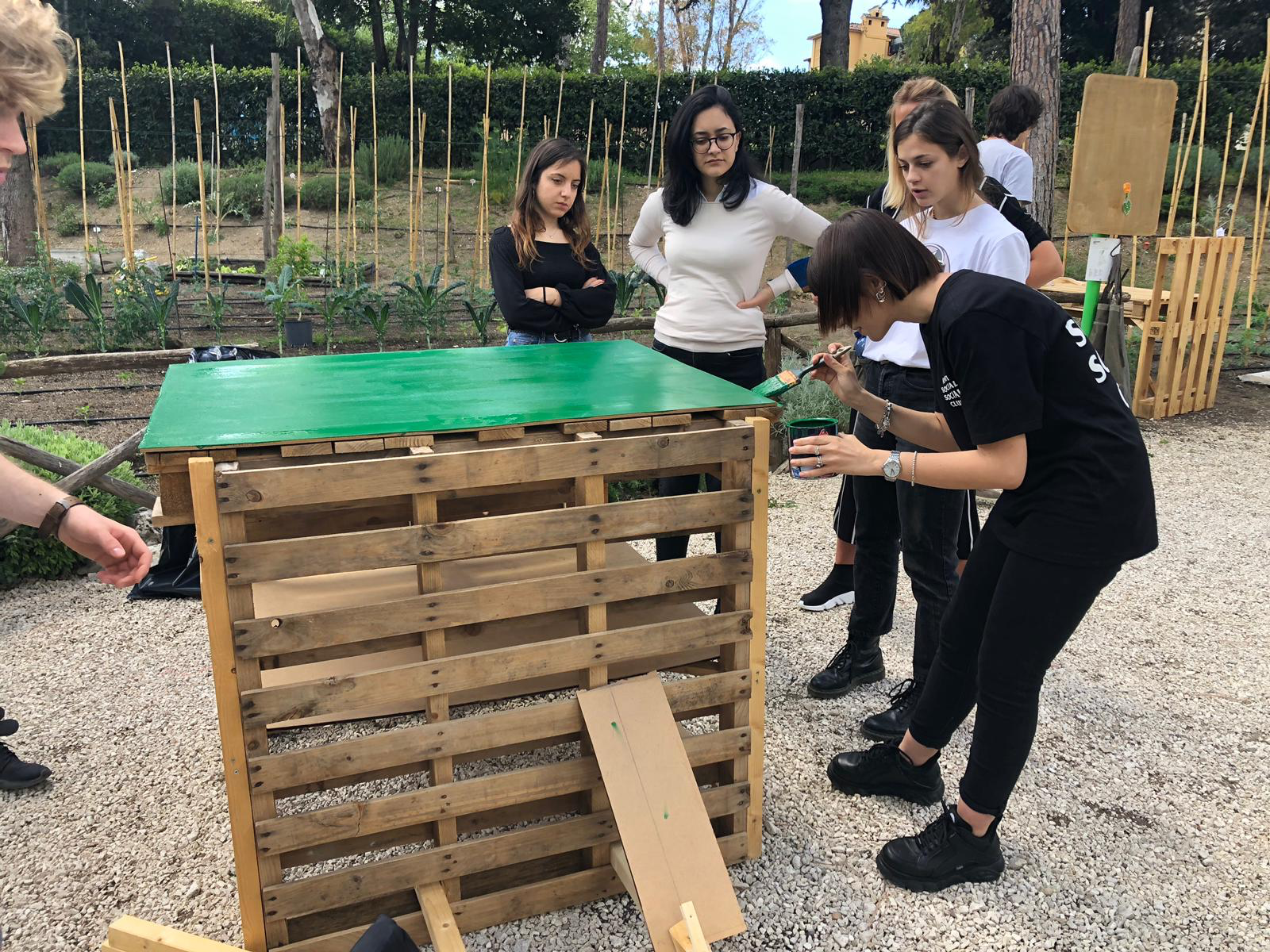
Saturday, April 27th 2019, the third community gardening session of the Urban Clinic EDU LabGov has taken place in Luiss community garden #OrtoLuiss. This last appointment was dedicated to completing the construction of the material prototypes designed during this A.A. of the Urban Clinic by the students.
This appointment was dedicated to completing the construction of their material prototype that is an entry point in cities, and it is also equipped with technological elements. This entry point will link to the immaterial protoype, that want to raise awareness on issues such as sustainable agriculture, nutrition, diet, sport, tech justice and many more.
Labgovers split into groups to perfect their prototype and demonstrated great organizational and collaborative skills. But they still have some things to do and for this reason we will meet again on Saturday 4th May in Luiss!
The LabGovers just don’t want to leave us!
Stay Tuned!

by Paola Todisco | Apr 24, 2019 | Luiss LabGov 2018-2019
Save the date: next Saturday, 27th April Luiss University will host the third EDU@LabGov community gardening session in Luiss Community Garden from 10 am to 13am.
The LabGovers (students of the Urban Clinic of LabGov) will work to make the last adjustments to the prototype of the project that they have designed during these months. This session represents a fundamental moment to put into practice definitively the topics they have discussed in recent months: urban agriculture, urban gardens, healthy nutrition, innovation, technology, justice, sustainability.
The students of the Urban Clinic of LabGov have designed and created an innovative solution to the problems created by the scarcity of knowledge about the state of well being in the cities. They have created two prototypes, one material and one immaterial: a multifunctional structure that will be installed in the city (in strategic points, by starting from the urban gardens) and a digital platform. Through those two tools they will be able to start an awareness/information campaign about the relevance of sustainable models of agriculture and nutrition in the cities and its importance for the individual and collective well-being. At the same time they will investigate the state of the urban well-being by collecting big data on this issue.
As always, this is not just a didactic moment but a collaborative practice born in the walls of the Luiss Guido Carli university and the results will be exported in the city.
If you are interested in following their work, follow our official social networks!
by Paola Todisco | Apr 16, 2019 | Luiss LabGov 2018-2019
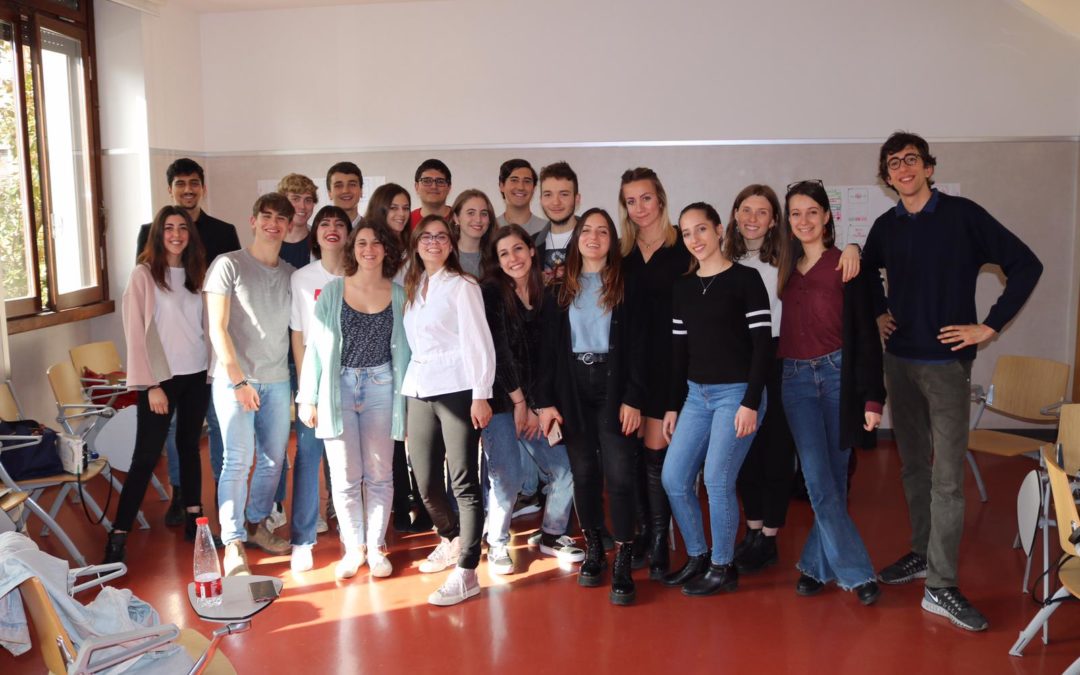
The fifth module of the Urban Clinic EDU@LabGov took place on Friday the 12th and Saturday the 13th of April into the Viale Romania Campus of LUISS University. The workshop has inaugurated the fifth module of the course. The module was dedicated to “Communication”.
The workshop hosted one important expert on these themes: prof. Paolo Peverini, professor at the Department of Enterprise and Management and Political Sciences in Luiss Guido Carli University, and he is expert in Marketing Communication and new media languages. Saturday, we hosted Chiara De Angelis, expert in information architecture and user experience design , who supported the LabGovers in drafting the communication plan for their project idea.
WORKSHOP
Prof. Peverini asked the LabGovers what communication plan they had in mind for their project.
After explaining their idea, prof. Peverini focused on how difficult it is to communicate a message. So, to try to effectively develop a message it becomes necessary to make the most of the cross-media effects.
These effects show how the combined use of different media and the order of the media used to spread a message can cause a different reading of the same.
At the end of the workshop, Professor Peverini gave some suggestions to take care of the communication of our project.
He emphasized how important it is to avoid a techno-deterministic approach, which dwells exclusively on the effectiveness of the medium. In fact, for Prof. Peverini, it is much more important to take care of the substantial and content aspects of the message.
CO-WORKING
Chiara De Angelis explained to LabGovers what are the essential elements that every communication plan should have. Based on the two examples and on the points that Dr. De Angelis highlighted, LabGovers divided into three groups to develop the communication plan for their project. It is important for them to place their project: this means underlining the fact that they are trying to transform the urban gardens into innovation hubs, by developing a new generation of digital gardens and a digital platform that will allow the urban gardeners and farmers to investigate the status of well-being in the cities. Another relevant feature for their path is the focus given to sustainability and in particular to the 17 SDGs of the 2030 Agenda.
After delivering their work, the LabGovers split into groups again to work on the user stories of their digital platform.
At the end of the exhibition, the LabGovers were divided into groups in order to create a prototype of the platform through an app, which allows you to link drawings and photographs between them through hyperlinks that can be placed on the photographs themselves. The result should therefore be a model of the platform that will be developed.
The last module ends like this but I assure you that it’s not over here.

by Paola Todisco | Mar 20, 2019 | Event, Luiss LabGov 2018-2019
Save the date: next Saturday, 23rd March we will host the second EDU@LabGov community gardening session in Luiss Community Garden from 10 am to 13am.
The LabGovers will work in order to improve and complete the prototype of the platform that they are building. This session will represent a fundamental moment to practically apply what they have learnt during the first three modules in the classroom. This is not only a didactic moment, it is a collaborative practice that they will see to bud a project on which the LabGovers (students of the Urban Clinic of LabGov) are assiduously working and with passion. If you are interested in following their work, follow our official social networks!
Stay Tuned!
by Francesca Spigarolo | Jun 30, 2016 | The Urban Media Lab
While the European Union works towards the implementation of the EU Urban Agenda, which aims at increasing cooperation at European, national and local level for the creation of “a more sustainable, socially inclusive, innovative and economically powerful Europe”, cities and citizens have already began to move in the same direction.
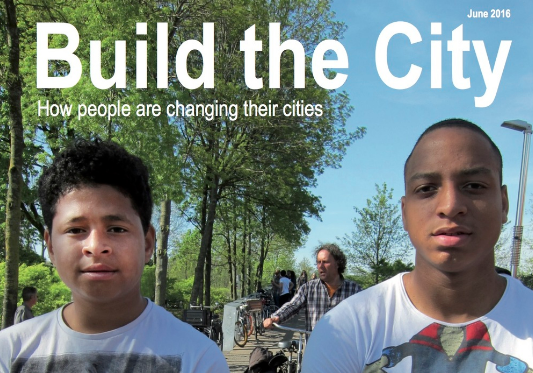
The magazine Build the city, how people are changing their cities (pdf available here), published by the European Cultural Foundation, proposes a thought-provoking collection of good practices from all over Europe that allows us to see how cities are changing to face the new urban challenges, and how these changes are possible thanks to new forms of collaboration. From Portugal to Poland, from Sweden to Greece, this publication shows us how different actors have been able to come together and create civic-public partnerships based on the principles of the commons. These practices constitute further evidence of the importance of citizens and communities participation in the process of shaping a more equitable and sustainable future for our cities.
 We are deeply satisfied to acknowledge that the Bologna Regulation and the collaborative processes that are taking place under the framework of the public policy “Collaborare è Bologna” have been included in this collection. The Bologna process, which has seen a deep involvement of LabGov from its very beginning, has been selected alongside with numerous important experiences coming from different countries as an example of the fundamental role played by civic collaboration in the creation of a new institutional and economic system. We see this also in the case of Madrid, where Medialab Prado, a citizen laboratory for the production, research and dissemination of cultural projects, was built to explore collaborative forms of experimentation and learning which emerged from digital networks, and of Athens, where SynAthina was created by the city to help reaching out to engaged citizens generating small scale solutions for the city. We see it also in the city of Ghent in Belgium, characterized by a long tradition of participation, consultation and facilitating bottom-up experiments through the Policy Participation Unit and in Dortmund in Germany, that shows us how a local government can encourage and coordinate action within a socially and culturally diverse stakeholder environment. The experiences of these cities remind us that civic collaboration and horizontal subsidiarity are necessary, and good governance must become a synonym of co- created cities where urban planning does not follow a top down oriented perspective.
 While going through the stories portrayed in the magazine, it is impossible not to notice one recurring element which appears to be as fundamental as the involvement of civil society; namely, the importance of culture as a driving force for innovation and sustainable urban development. If we want our cities to become more inclusive and participative we need to bring about a cultural change. This cultural change takes numerous forms: it can come as an effort to promote co-creation of art between artists and residents of disadvantaged neighborhoods through participative processes, as in the case of the French association Les Têtes de l’Art, or it can be found in the creation of a central hub where creators, entrepreneurs and civil society can develop ideas together in the context of a strongly ethnically diverse context, as it happens in Sweden with the action of Subtopia.
But it does not end here: the practices highlighted provide an answer to the different challenges characterizing contemporary cities. They focus on housing (La Borda Mutual Housing Cooperative, Mehr Als Wohnen), sustainability (Pick your (city) Fruit, Inurdeco), climate challenges (Transition Towns, The Liverpool Air Project ), urban regeneration (People’s Park, L’ex-Asilo Filangeri, New Life for Marketplaces) and many other issues. We cannot analyze all the practices in this post for a matter of space, but it definitely is worth going through them one by one, as they all provide a unique example of how cities can be changed through citizens’ participation.

@Build The City Magazine
Having these examples of good local practices in our minds, when we now return to the European level we easily notice the deep commonalities existing between the goals which are being pursued both at local and at European level. All the practices highlighted in the magazine are targeting some of the themes that the EU Urban Agenda has selected as its priorities, such as housing, energy transition, climate, air quality, urban poverty, inclusion of migrants and refugees, sustainable use of land and so on.
The material collected in Build the City offers us further evidence of the need for coordination between actions developed at all levels, be it European, national or local, and makes us understand that only by bringing all the different actors and stakeholders to participate and cooperate a better future for our cities and for their citizens can be imagined.
Note: the good practices presented in the magazine were extracted from a broader work conducted by the European Cultural Foundation together with Krytyka Politykzna, which lead to the publication in 2015 of the book Build the City: perspectives on commons and culture. A pdf version of the book is available here.
———————————————————————————————-
La European Cultural Foundation ha pubblicato nel mese di giugno la rivista Build the City, how people are changing their cities, una raccolta di buone prassi provenienti da tutta l’Europa che ci mostra come collaborazione civica e partecipazione di tutte le componenti della società civile siano fondamentali nel costruire una risposta alle nuove sfide che ci troviamo ad affrontare in ambito urbano. Il Regolamento di Bologna è stato incluso in questa raccolta in quanto esempio di riuscita collaborazione civica, che ci insegna come il futuro delle città non possa più essere disegnato e imposto dall’alto ma debba invece essere co-creato.
Le buone prassi proposte dalla rivista (qui il testo in inglese) sono un estratto del libro Build the City:perspectives on commons and culture, pubblicato nel 2015 da European Cultural Fundation e Krytyka Politykzna ( il pdf del libro in lingua inglese).