by Francesca Spigarolo | Feb 10, 2017 | The Urban Media Lab
In his book “Cities for People” the Danish Architect Jan Gehl tells us that if we want to build lively, sustainable, safe and healthy cities, we need to pay more attention to the human dimension, which in the last decades has been highly neglected. According to Gehl, urban planners need to observe the city at eye level, adopting the point of view of a pedestrian rather than thinking about the city only in abstract terms, as “the battle for quality is on a small scale”. Gehl’s view is deeply influenced by the seminal work of the American activist and journalist Jane Jacobs, the first strong voice who denounced the dominant urban planning ideology for having lost contact with real cities and with the needs of their communities.
Today, more and more cities are realizing the importance of going back to the human dimension as a starting point for dealing with the interconnected issues resulting from intense urbanization.
This appears particularly true when we turn to consider the question of traffic. Since the car’s advent, a great amount of time and energies have been devoted to the transformation of the urban environment required to accommodate the ever-growing traffic. This has often meant sacrificing common spaces in order to allow for car’s circulation and parking, which resulted in what could be defined as the “Tragedy of the urban roads” [1], that we discussed in this article.
The dramatic consequences of such approaches have become evident, and contemporary cities are focusing on finding ways to reduce traffic, re-appropriating public spaces and making their streets and neighborhoods more livable and sustainable. Different traffic-reducing measures have been experimented and implemented in the past years, ranging from investments in sustainable and accessible public transportation and bike sharing to measures aiming at discouraging cars’ usage, including car bans, no-cars zones, increases in parking prices combined with reduction of parking spots, and much more.

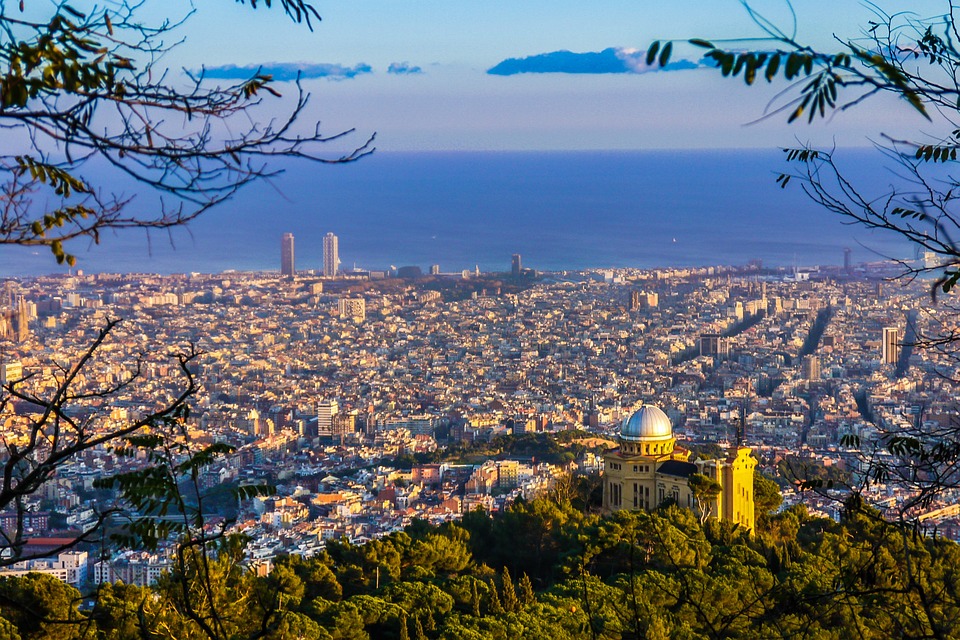
The city of Barcellona, picture under CC license (available here:https://goo.gl/images/aYqPKZ)
One innovative solution which is worth observing comes from the city of Barcelona, where the newly elected administration is not limiting itself to the introduction of traffic-reducing measures, but is instead completely rethinking the entire city structure, bringing it back to the human scale. Such transformation will take place through the creation of Superilles, macro-neighborhoods designed by adopting the point of view of the pedestrian, with the aim of making the city more livable and sustainable for its citizens. The program Superilles “Let’s fill streets with life” envisages the creation of nine macro-areas, within which car-circulation will be reduced at its minimum, favoring the development of sustainable mobility, green areas and new spaces for collective living. Car circulation will be limited to the perimeter roads of the neighborhoods and parking spots on the street-side will be greatly reduced, resulting in the re-appropriation of collective space. The project is ambitious in its objectives: the city aims at reducing its car use by 21% over the next 2 years, while at the same time increasing the amount of mobility by foot, bicycle and public transport. To facilitate this transformation in people’s habits, the creation of superilles will be complemented by the introduction of a stronger orthogonal bus network, limited to the main streets, and by the creation of 300 kilometers of cycling lines.

This innovative approach to traffic and urban development is only one of the novelties introduced by the new administration, which since its election in 2015 has been attempting to “win back the city”. The administration, guided by the ex-housing activist Ada Colau, who was elected on behalf of the citizens’ movement Barcelona en Comù, is strongly committed to the defense of the common good and to the improvement of people’s quality of life. Furthermore, it believes in the importance of bringing about a transformation by challenging the economic and political dominant paradigms from below, by involving as many people as possible in transparent and participatory decision-making processes. In this way, as explained in the How to win back the city en Comù guide, the city can go back to being the place of encounter, of innovation and of exchange of ideas that it should be, and can become the place where a true democracy is reconstructed.
As stated by Ada Colau, “We’re living in extraordinary times that demand brave and creative solutions. If we’re able to imagine a different city, we’ll have the power to transform it”. This is exactly what is being done in the Barcelona where, through the creation of the superilles, the human dimension is brought back to the center and we are reminded of the importance of creating “cities for people”.
[1] Christian Iaione, The Tragedy of Urban Roads: Saving Cities from Choking, Calling on Citizens to Combat Climate Change, 37 Fordham Urb. L.J. 889 (2009).
——————————————–
Una soluzione innovativa al problema del traffico (recentemente discusso in questo articolo), arriva dalla città di Barcellona, in cui la nuova amministrazione si propone di ripensare l’intera struttura a partire dal punto di vista dei pedoni, riconoscendo l’importanza di quella che l’architetto danese Jan Ghel descrive come la “dimensione umana”. Questo avverrà attraverso la creazione di Superilles, macro-aree al cui interno la circolazione dei veicoli sarà impedita, favorendo invece lo sviluppo di aree verdi e spazi comuni. Complementare alla riduzione del traffico sarà un forte investimento nello sviluppo di trasporti pubblici e piste ciclabili, volto a stimolare lo sviluppo di forme di mobilità sostenibili.

by Francesca Spigarolo | Jan 25, 2017 | The Urban Media Lab
When looking for examples of innovative experiments in urban governance and collaborative practices, many observers are turning to the city of Bologna and to its experience with the Regulation on public collaboration between citizens and the city for the care and regeneration of urban commons and with the legislation “Collaborare è Bologna”. In the last years the city has dedicated a lot of efforts to the promotion of a culture of collaboration and has tried to fill a legal gap, reducing the distance between the local administration and its citizens and bringing all urban actors to work together around the city’s common goods. These efforts are not going unnoticed, and numerous observers are looking at the city with curiosity, recognizing it as an innovative experimentation which could lead to creation of a new urban governance framework based on collaboration.
In a similar perspective, the Bologna case will be presented and discussed in Berlin on Friday the 27th of January during the Urban Change Talk: Bologna – a Laboratory for Urban Commons?, an event organized by Actors of Urban Change, a program aiming to achieve sustainable and participatory urban development through cultural activities, in cooperation with the Urban Research Group ‘Urban Commons’ at the Georg Simmel Center for Metropolitan Studies of Humboldt University.

The event will consist in a conversation between Dr. Martin Schwegmann, member and founder of the Urban Research Group “Urban Commons” and program manager of “Actors of Urban Change”, and different actors engaged in research and practice around the urban commons, coming both from Bologna and from Berlin. Professor Christian Iaione, LabGov’s coordinator, will take part in the event and, together with Giovanni Ginocchini, (Director of the URBAN CENTER BOLOGNA), will present the case of Bologna, while Marco Clausen, (Prinzessinnengarten), and Dr. Mary Dellenbaugh from the Urban Research Group “Urban Commons” will contribute to the conversation by also considering the experiences that are taking place in Berlin.
——————————————
Venerdì 27 Gennaio avrà luogo a Berlino l’evento Urban Change Talk: Bologna – a Laboratory for Urban Commons?, organizzato da Actors of Urban Change con il supporto dell’ Urban Research Group ‘Urban Commons’ del Georg Simmel Center for Metropolitan Studies della Humboldt University.
L’evento consisterà in una conversazione tra diversi attori impegnati nella ricerca e nella sperimentazione sui commons urbani che analizzeranno il caso della città di Bologna, considerato un esempio di pratica innovativa attraverso cui viene promossa una cultura di collaborazione e si sviluppa un nuovo modello di co-governance urbana. Il caso bolognese verrà presentato dal Professor Christian Iaione, coordinatore di LABGov, e da Giovanni Ginocchini, Direttore dell’Urban Center di Bologna, che racconteranno il percorso di CO-Bologna, dal Regolamento sulla collaborazione tra cittadini e amministrazione per la cura e rigenerazione dei beni comuni urbani e la politica “Collaborare è Bologna” alla sperimentazione nei cantieri.

by Francesca Spigarolo | Jan 24, 2017 | The Urban Media Lab
On January 10th, a one-day long seminar organized by the interdepartmental agency PUCA (Plan Urbanisme Construction Architecture), sponsored and hosted by the French Ministries of Housing and the Environment in Paris, gathered researchers from different fields (urbanism, architecture, law, and sociology) to discuss the state of the art and the future objectives of the research on habitat participatif[1]. This seminar has been an opportunity to retrace the origins, evolution and main implications of habitat participatif since the movement has gained momentum in the 2000s.

Over the last fifteen years, France has witnessed a resurgence of interest in residents-led housing projects as a response to the difficulties that a growing number of households encountered in getting access to housing due to the economic, financial, and real estate crisis. In particular, middle-income households – until then protected by their level of education and social integration – have seen their chances to get access to decent and affordable housing, especially in major cities and towns, seriously undermined[2]. On the one hand, the speculative rise in house and land prices prevented these groups from entering the private real estate and rental market. On the other hand, their income level was far too high to be eligible for social housing, also provided that the supply of social accommodation was unable to meet the demand of an increasingly large share of the population.
The instability created by the crisis, however, has served as the breeding ground for the re-emergence and spread of residents-led housing initiatives in France and, since the beginning of the 2000s, new housing projects have developed throughout the country and they are now in the hundreds[3]. At the heart of this spontaneous, residents-led mobilisation there is an increased awareness of the importance of protecting and fostering values such as environmental sustainability, mutual solidarity, citizens’ participation, and sharing of resources, knowledge and expertise. Rather than relying on the private market or being the passive recipients of social housing policies, groups of residents have increasingly been engaged in the conception, building, and management of their own housing projects, so playing an active role in shaping the city in a way that better responds to their needs and expectations. The multiplicity of terms that are used in France to describe these projects – habitat groupé, habitat autogéré, habitat alternatif, habitat participatif, habitat cooperatif and cooperatives d’habitants – captures the diversity of values, principles, layout, design, and legal arrangements that characterises the projects[4]. However, in spite of this heterogeneous mix, the expression habitat participatif has been increasingly chosen as a term capable of referring to all housing projects whose common goal is to place the resident at the earth of the realisation and management of her living space and to provide a valuable alternative to both the private market sector and public-led initiatives[5].
Grown out from the mobilisation of groups of residents, the habitat participatif movement has also acquired a national and institutional dimension due to the creation of national networks[6] and the involvement of social housing promoters[7] and other institutional players[8]. The dialogue among the different stakeholders culminated, after a long process of public consultation and discussion, in the legal recognition of the habitat participatif in the Loi ALUR[9]. The law reformed the Code de la construction et de l’habitation by introducing in the Code a definition of habitat participatif and by providing a new legal framework for its practical implementation. On the one hand, the law defined habitat participatif as a “citizens-based initiative that allows individuals to associate, if necessary with legal persons, in order to participate in the definition and design of their individual dwellings and common spaces, to construct or acquire one or more buildings and, where possible, to ensure their management”. Emphasis is placed on sharing and solidarity, since the habitat participatif is meant to promote “the construction and the supply of housing, as well as the development of collective spaces, under a logic of sharing and solidarity between inhabitants” [10]. On the other hand, the reform provided a completely new legal framework to be used by habitat participatif projects, and notably the cooperative d’habitants and the société d’attribution et d’autopromotion[11], which should replace, at least to a certain extent, the legal scheme of the copropriété des immeubles[12].
Although major innovations have been accomplished by this law reform and projects are flourishing throughout the country, the habitat participatif keeps raising important questions that deserve further study and investigation, as emerged during the afternoon workshops of the PUCA seminar. A first suggested line of research might investigate the major implications and changes that the institutionalisation of the habitat participatif, recently accomplished by the Loi ALUR, have brought about. A second line of research might instead focus on the individual/collective dimension of the projects and address issues related to the residents’ life and sustainability of the projects in the long-term. From a legal perspective, focusing on the individual/collective dimension of the habitat participatif would also lead to investigate and reconsider the way ownership, and multi-owned housing legal schemes in particular, have been conceived of and used so far in the framework of these projects[13]. Finally, a third line of research may attempt to further explore the reciprocal interaction between habitat participatif projects and the city, by examining both the role of the stakeholders involved and the outcomes of this interaction.
To conclude, what the state of the art of the research on habitat participatif has revealed is that habitat participatif represents more than a means to get access to housing by way of sharing common spaces and services; rather, the values it promotes and its structure deeply affect the role individuals play within the community and in the city. As Alain Jünd observed during the seminar, habitat participatif not only concerns the way in which projects are built and spaces shared, but also represents an entirely new way of “fabriquer la ville collectivement” [14].
Fabiana Bettini, Postdoctoral Researcher, Sciences Po Law School, Paris
This article is drawn from a broader research conducted in the framework of the ERC-funded project “INCLUSIVE” (2014-2019) led by Professor Séverine Dusollier and hosted by the Sciences Po Law School, Paris
—————————————————————-
[1] The program of the seminar and the links to the relevant documents can be found at http://www.urbanisme-puca.gouv.fr/seminaire-l-habitat-participatif-les-derniers-a1048.html
[2] S. Bresson, L. Tummers, L’habitat participatif en Europe. Vers des politiques alternatives de développement urbain?, in Métropoles, 15 (2014), 15 décembre 2014, available at https://metropoles.revues.org/4960.
[3] Data are taken from a survey of habitat participatif projects made by La Coordin’action, an association that gathers and coordinates fourteen French associations involved in the promotion, development and realization of habitat participatif projects as well as in keeping the dialogue with other institutional actors open. The mapping of existing habitat participatif projects, at the different stage of their completion, is available at http://www.habitatparticipatif.eu/cartographie-de-lhabitat-participatif-2017/.
[4] S. Bresson, S. Denèfle, Diversity of self-managed co-housing initiatives in France, in Urban research and practice, 8:1, 2015, p. 5-16. On the major trends of habitat participatif projects, their roots and ideologies, see A. D’Orazio, La nébuleuse de l’habitat participatif: radiographie d’une mobilisation, in Métropolitiques, 16 janvier 2012, available at http://www.metropolitiques.eu/La-nebuleuse-de-l-habitat.html.
[5] This is the definition given in the preamble of the Livre Blanc de l’Habitat Participatif, where the term habitat participatif is used to encompass “toute une série d’initiatives dont l’objectif est la recherche d’alternatives aux cadres de production classiques du logement, en positionnant l’usager au cœur de la réalisation et de la gestion de son lieu de vie. […] il pourra s’imposer comme une voie alternative au logement aux côtés du parc privé et du logement social”: Livre Blanc de l’Habitat Participatif, Strasbourg, 2011, p.1. The Livre Blanc has been realised by the association Eco-Quartier Strasbourg on behalf of the Coordin’action in the aftermath of the national habitat participatif meetings held in Strasbourg during 2010.
[6] The Réseau national des collectivités pour l’habitat participatif formed in 2010 with the aim of bringing together municipalities, groups of municipalities, and regions, whose involvement in participatif housing was increasingly requested by the citizens’ initiatives. The brochure of the network is available for downloading at http://www.strasbourg.eu/developpement-rayonnement/urbanisme-logement-amenagement/projets-urbains/autopromotion-habitat-participatif/reseau-national-collectivite-habitat-participatif. Likewise, associations involved in supporting and promoting habitat participatif gathered into a national network called La Coordin’action : http://www.habitatparticipatif.eu/la-coordinaction/.
[7] Social housing in France is mostly provided by the organismes d’habitations à loyer modéré (HLM). They are organized in the Union Sociale pour l’Habitat and the Fédération des Coopératives HLM. For the role played by HLM organisms in the context of the habitat participatif projects, see La place et le role des organismes HLM dans l’habitat participatif, Réseau HLM pour l’Habitat Participatif, septembre 2016, available for downloading at http://habitatparticipatif.hlm.union-habitat.org/ush/Blog/La+note+de+positionnement+du+Mouvement+Hlm+sur+l%27habitat+participatif+est+parue.
[8] Other institutional players have been the Ministry of Housing, the Caisse des Dépôts et Consignations, banks (and notably the Crédit Mutuel), the Architectes Association, the CAUE Federation for Architecture, Urbanism and the Environment, the National Chamber of civil law notaries. The process of institutionalisation of the habitat participatif movement has been explored by C. Devaux, De l’experimentation à l’institutionalisation: l’habitat participatif à un tournant?, in Métropolitiques, 23 janvier 2012, available at http://www.metropolitiques.eu/De-l-experimentation-a-l.html, and more extensively, C. Devaux, L’habitat participatif. De l’initiative habitante à l’action publique, PUR, 2015.
[9] Cfr. Loi n°2014-366 du 24 mars 2014 pour l’accès au logement et un urbanisme rénové, available at https://www.legifrance.gouv.fr/affichTexte.do?cidTexte=JORFTEXT000028772256&categorieLien=id.
[10] Art. 200-1 provides that “l’habitat participatif est une démarche citoyenne qui permet à des personnes physiques de s’associer, le cas échéant avec des personnes morales, afin de participer à la définition et à la conception de leurs logements et des espaces destinés à un usage commun, de construire ou d’acquérir un ou plusieurs immeubles destinés à leur habitation et, le cas échéant, d’assurer la gestion ultérieure des immeubles construits ou acquis. […] L’habitat participatif favorise la construction et la mise à disposition de logements, ainsi que la mise en valeur d’espaces collectifs dans une logique de partage et de solidarité entre habitants”.
[11] See articles 201-1 to 201-13 and articles 202-1 to 202-11 of the Code de la construction et de l’habitation. More detailed rules are still in the process of being adopted thorough implementing decrees of the Conseil d’Etat.
[12] Copropriété des immeubles is the most widespread legal arrangements used in France for multi-owned housing and a large portion of habitat participatif projects so far built have resorted to the copropriété scheme. Although the Loi ALUR has provided a new legal framework mostly based on cooperatives, copropriété will still be used in the future to a certain extent.
[13] This is the main focus of the research conducted in the framework of ERC-funded project “INCLUSIVE” led by Professor Séverine Dusollier and hosted by the Sciences Po Law School, Paris.
[14]Alain Jünd is Deputy Major of the city of Strasbourg responsible for town planning and environmental transition, and president of the Réseau national des collectivités pour l’habitat participatif.
————————————–
Il 10 gennaio a Parigi ha avuto luogo un seminario dedicato all’habitat participatif (abitare partecipativo e collaborativo), una pratica abitativa sempre più diffusa, caratterizzata dal coinvolgimento degli abitanti nella progettazione, realizzazione e gestione dello spazio abitativo. Questa soluzione, nata dalla mobilitazione di gruppi di residenti, rappresenta una valida alternativa sia al mercato immobiliare privato, con i suoi prezzi sempre più proibitivi, che alle iniziative di housing pubblico.
Ciò che emerge dalle ricerche sull’habitat participatif è che questa soluzione abitativa, oltre ad offrire una modalità differente di accesso all’abitazione, basata sulla condivisione di spazi e servizi, genera una profonda trasformazione nella concezione del ruolo dell’individuo all’interno della città e della società.

by Ornella Martinello | Apr 18, 2016 | The Urban Media Lab
As two thirds of Europeans live in urban areas, the latter have become the core of both institutional relations and economic activities. By carrying out almost 55% of public investments, cities are inescapably fore-front players at different political dimensions. Faced by increasingly more complex issues – from urban poverty and social exclusion to environmental protection and action against climate change -, they represent the locus where challenges arise but also where innovative solutions bloom.
More and more, communities, local authorities, national governments are developing their awareness about the role and importance that the city plays nowadays.
As stated in “Cities of tomorrow“, an EC report published in 2011, cities are and must be “centres of creativity and entrepreneurship, in short: a bundle of opportunities”.
As a matter of fact, to date, little has been achieved in order to sponsor and support a thorough coordination of actions between different levels of governance that should involve cities, States and the European Union in a tangled matrix.
The European Union took on the mission to support the formulation of a coherent EU Urban Agenda through the Riga Declaration of June 2015, in an attempt to foster bottom-up, inclusive and participatory forms of implementation of its social and economic policies.
Most recently, urban governance has been adopted by the Dutch Presidency of the Council of the European Union as one of its top priorities for the first half of 2016. Ultimately, by the end of May, Member States will adopt the Amsterdam Pact that will finally give to the EU its new Urban Agenda.
Despite the fact that it is the outcome of a large-scale effort to an open dialogue involving stakeholders in its formulation, the new document will represent only half of the puzzle.
In other words, the reform of the city as we all knew it must be the outcome of a two-fold, concerted approach that mixes top-down and bottom-up instances.
An EU eager to recognize the importance of the city as the crux of policy implementation indeed represents a big achievement. However, this must be complemented by the promotion of local processes aimed at rebuilding the meaning of “citizenship” at the neighbourhood and city level.
Betting on urban governance means contributing to a new, responsible and inclusive political culture, making citizens’ participation and active cooperation with both private and public sectors structural features of a new form of governance.
Current institutional settings are still inappropriate to embrace the structural, qualitative transformation that such an ambitious idea entails.
A need-based, integrated, cross-sectorial approach built on creative processes and social innovative projects is necessary to start an urban revolution from the bottom.
As a forerunner of participatory forms of governance of the commons, LabGov is extremely open to dialogue with other stakeholders.
That is the reason why we will be in Amsterdam on the 19th of April on the occasion of the conference “The Commons and the Principle of Equality“. The event is part of the “New Amsterdam –City in Transition” series, organized by Pakhius de Zwiger with the ambitious goal to “inform, inspire and debate” on the role of the city within the context of the transition to a society more sustainable, inclusive and capable to face today complex challenges.

Amsterdam has become the capital of the urban revolution in Europe. We were there in February (here the post) to give a contribution to the above-mentioned EU Urban Agenda.
This time we will share our experience on the “bottom-up” side of the urban coin, illustrating how grassroots cooperative projects enable citizens to create their own cities collectively by taking care of the commons and developing a new social culture.
Tine de Moor, Professor of “Institutions for Collective Action in Historical Perspective” at Utrecht University, will open the conference with a lecture on the commons and the sharing economy. Christian Iaione, Professor of Public Law, Director of the Laboratory for the Governance of the Commons, LUISS Roma and member of the International Association for the Study of the Commons, will make a link between the commons and the principle of equality, trying to detect whether it has to be redesigned and whether the governance of the commons can be seen as a new regime for equality and access to resources.
For further details click here.
—–
Amsterdam, capitale delle rivoluzione urbana in atto in Europa, accoglierà domani la conferenza “The Commons and the Principle of Equality“, il quarto incontro della serie “New Amsterdam –City in Transition” organizzata da Pakhius de Zwiger. Informiamo, ispiriamo, dialoghiamo!
by Chiara Fratalia | Mar 14, 2016 | The Urban Media Lab
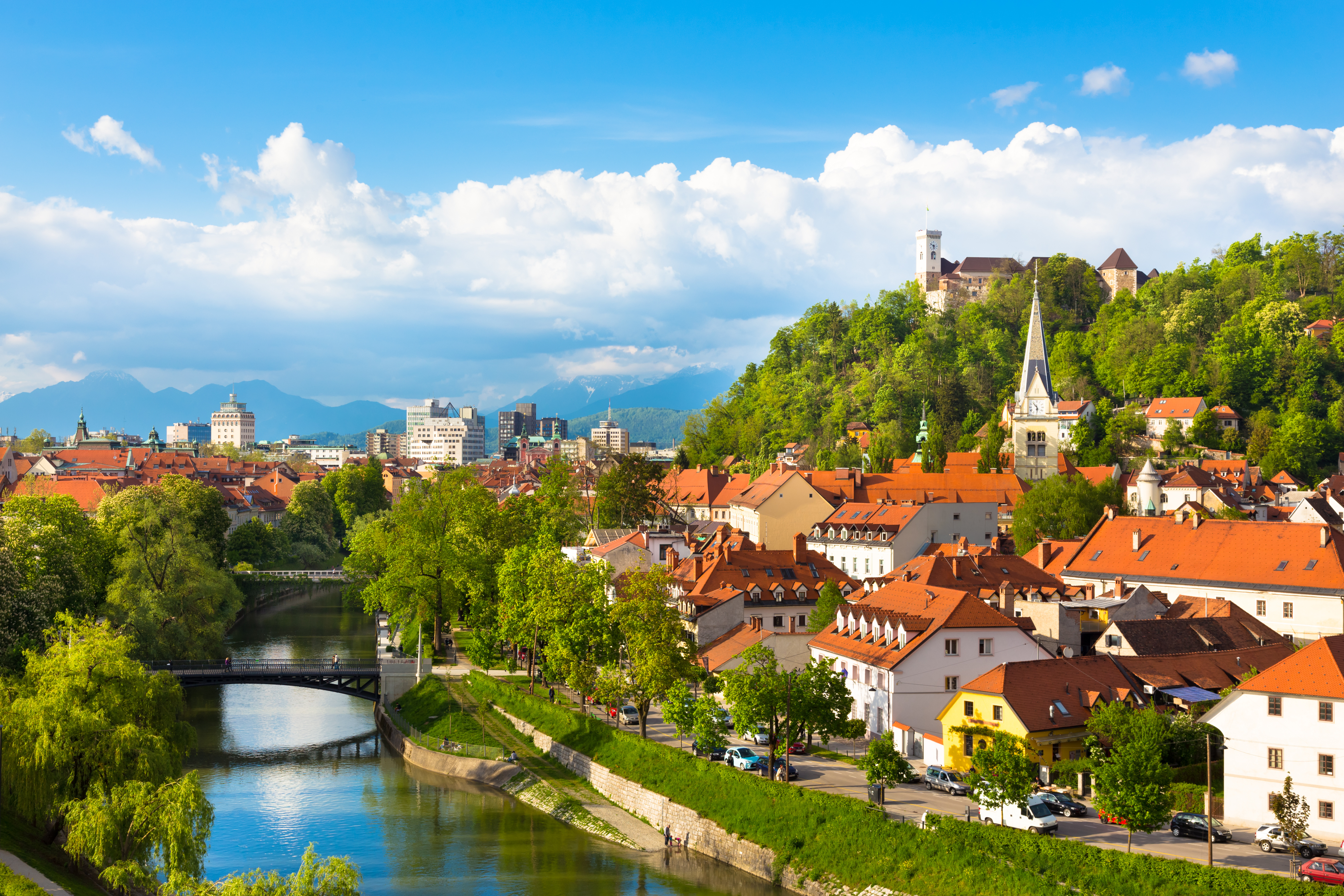
 Ten years ago, the streets in Ljubljana compact core were clogged with traffic, with little room for pedestrians and a negative effect on the quality of air. In 2016, the European Commission has named Ljubljana European Green Capital. How is this even possible?
The answer lies in Vision 2025, a long-range plan to improve the quality of life developed by Zoran Janković, Ljubljana’s mayor since 2006. The plan sets plenty of ambitious goals on sustainability and environment protection, that influenced every decision made by Ljubljana policymakers.
The most impactful (and effective) decision was by far the one made in 2006 to ban cars from the city centre: only pedestrians, bikes and buses are allowed, and there’s an electric taxi service that offers free rides to elderly and disabled. This led to quieter and safer spaces for pedestrians, a much better air quality, and an increase in business and tourism in the historic centre.
Since its small dimensions, Ljubljana is a contained laboratory to fine tune this kind of policies. The successful experiment conducted in Ljubljana has given good ideas to other European cities: Oslo, Madrid and Brussels have recently announced plans to partly close their city centres to traffic.
Ljubljana’s efforts also aim towards other goals: the city recycles almost two-thirds of its waste, and is the first EU capital to implement a “zero waste” strategy, promoting innovation to increase sustainability of the waste collection system and encouraging people to produce less waste.
The city’s green spaces are also getting a fresh look, thanks to the bottom-up efforts of civic groups and associations. For example, the associations Bunker Institute and Prostorož began regenerating Tabor Park by hosting cultural festivals, flea markets and concerts, and thus drawing many people to use this green space near Ljubljana centre.
Alenka Korenjak, one of the founders of Prostorož, says: “The success of these initiatives demonstrates that investments of millions of euros are not the only way to promote urban regeneration”.
—–
In che modo la città di Lubiana è passata in soli dieci anni da maglia nera per inquinamento e traffico a capitale verde europea? Un sindaco volenteroso ed una serie di ambiziosi progetti su sostenibilità e protezione ambientale.


