by Adriana Marasco | Jan 25, 2016 | The Urban Media Lab

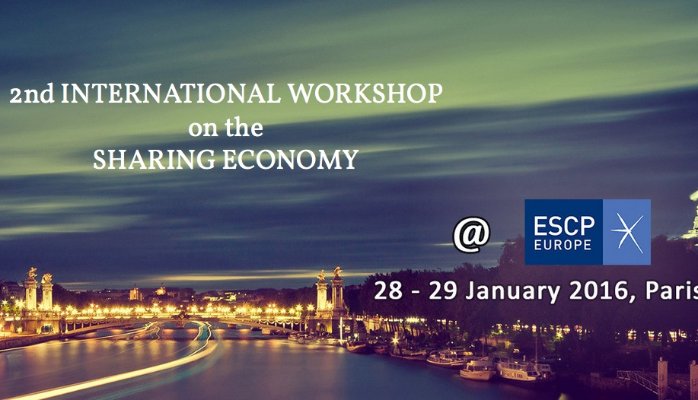
The second edition of international workshop on the sharing economy will have a meeting the next 28th and 29th January in Paris. The main topic will be How the sharing economy influence individual behavior, companies and public regulation.
Nowdays it’s common to talk about collaborative economy , with its uses and benefits ,however, despite the rise of the “sharing economy”, no consensus about its definition yet exists. Botsman (2013) defines this sector as “an economic model based on sharing, swapping, trading, or renting products and services, enabling access over ownership.”
It thus pertains to a broad set of industries, including collaborative finance (crowdfunding), collaborative production (3D printing, FabLabs, DIY, etc.) collaborative education (e.g. open education and open knowledge) and finally collaborative consumption. Throughout this workshop, they will aim to explore the impact of the sharing economy on various dimensions: Individual behaviors,Industry, competition and public regulation.
Among Italians participate in the event Davide Arcidiacono (Catholic University of the Sacred Heart), Ivana Pais (Catholic University of the Sacred Heart) and Marta Mainieri (Collaboriamo!) who will present the collaborative platforms of italy .
Speakers also Filippo Sallet (University Sapienza) and Venere Stefania Sanna (Sapienza University) who will discuss digital reputation, while Emanuela Mora (Catholic University of the Sacred Heart) will focus on the combination of intimacy-friendliness in the economy collaborative. Francesca Oven (University of Bergamo) with Roberta Garibaldi (University of Bergamo), however, analyze the reasons that characterize the category of tourists in the era of the sharing economy.
Airbnb, Kickstarter, Uber, Fab Labs, The Food Assembly, etc.: the rise of these collaborative initiatives no doubt constitutes one of the most striking revolutions of the present day. it’s time to better understand what are the motivations that drive us to share, how is turning the sharing economy, and how we are turning by sharing economy ,about emerging business models and how they evolve collaborative platforms. That’s what 2nd international workshop on the sharing economy is going to do in Paris .
——————————————————————————-
In che modo l’ economia della condivisione influenza i comportamenti individuali, le aziende e la regolamentazione pubblica? Questa è la domanda a cui cercherà di dare risposta la seconda edizione dell’International Workshop on the Sharing Economy durate l’incontro che si terrà a Parigi i prossimi 28 e 29 gennaio. Un incontro accademico , che vedrà l’intervento di vari professori italiani testimoni del fenomeno della sharing economy italiana e delle nuove piattaforme collaborative che sul territorio si stanno sviluppando. Si discuterà di quali sono le motivazioni che ci spingono a condividere, di come si sta (e ci sta) trasformando la sharing economy, dei modelli emergenti di business e di come si evolvono le piattaforme collaborative.
by Pratusha Erraballi | Oct 19, 2015 | The Urban Media Lab
The European University Centre for Cultural Heritage and Federculture will launch the tenth edition of Ravello Lab , an International Forum, in Ravello (Salerno) from October 22-24, 2015. Ravello Lab involves study, discussion, and proposals on cultural policies for Europe and the Euro-Mediterranean. The ultimate goal is finding proposals and solutions to territorial development policies centered on the promotion of cultural heritage and support for creative industries, through the exchange of experiences between operators, administrators, and experts from Italian, European, and Euro-Mediterannean areas. Ravello Lab seeks to promote social inclusion and citizen participation, promoting dialogue between the two shores of the Mediterranean.
This year’s Ravello Lab will hone in on the framework of guidelines defined by European institutions, specifically the new round of programming for 2014-2020 community funds. Panels will discuss (1) public-private partnerships for local development based on culture and (2) development tools for territories and creative industries. There, Professor Christian Iaione will speak on the sharing economy.
Source:
http://www.ravellolab.org/News/66-Presentazione-Ravello-Lab-2015.htm
PROGRAMMA Ravello Lab 2015 web def
——————————————-
RAVELLO LAB 2015: Cultura e Industrie Creative per lo Sviluppo dei Territori
Nelle giornate che vanno dal 22 al 24 Ottobre 2015, a Ravello ( Salerno ), si terrà la X edizione di Ravello Lab, durante la quale verranno discussi i seguenti temi: 1. Il partenariato pubblico- privato per lo sviluppo locale a base culturale e 2. Territorio e Industrie creative tools per lo sviluppo. L’obiettivo dei Colloqui di Ravello è quello di fornire un contributo alla ridefinizione di politiche pubbliche focalizzate sul rapporto tra cultura, industrie creative e sviluppo dei territori.

by Federica Maranesi | Oct 8, 2015 | The Urban Media Lab
A great Italian entrepreneur used to say: “The term utopia is the easiest way to sell off what you don’t want to, you don’t have the skill for or have the courage to do. A dream seems just a dream until you start somewhere and only then it becomes a purpose, which is something infinitely greater.” Purpose has begun to materialize from dreams with the upcoming 1st IASC (International Association for the Study of the Commons) Thematic Conference on the Urban Commons. Not long ago, the Urban Commons were just a thought, something indefinite and impalpable. Well, now we are at the crucial moment when scholars, researchers, policymakers, practitioners and social innovators are ready to join a one-of-a-kind committee, which creates a unique opportunity to conceptualize and develop the idea of the “urban commons”.
The IASC Conference, named “ The City as a Commons: Reconceiving Urban Space, Common Goods And City Governance” is organized by LabGov in collaboration with Fordham University of New York and the International Center on Democracy and Democratization (ICEDD) of the LUISS University of Rome. The conference will take place in Bologna on 6-7 November 2015 and will be co-chaired by LabGov coordinator Prof. Christian Iaione (UniMarconi University and LUISS Guido Carli) and by Prof. Sheila Foster (Fordham University), a scholar who pioneered the conception of the urban commons. The International Scientific Review Committee is composed by leading scholars in the field of urban commons, such as Tine De Moor (Utrecht University), Insa Theesfeld (Martin-Luther-Universität), Richard Burdett (London School of Economics), Paola Cannavò (Università della Calabria), Christian Borch (Copenhagen Business School), Leonardo Morlino (LUISS Guido Carli) and Ivana Pais (Università Cattolica del Sacro Cuore). Keynote speeches will be delivered by Tine De Moor (Utrecht University), Richard Sennett (London School of Economics, New York University), Silke Helfrich and Michel Bauwens (both from Commons Strategies Group).
This unique conference and this prestigious committee mean something. They are signs that we are no longer talking about something that exists only in words or in theory. Indeed, the Urban Commons are already a reality. A reality, which has not been created by professors at school, but something that people—citizens— have made possible. The social innovation, the citizen’s participation, and the sharing economy have been applied to different fields of our life and are concretely creating new standards and paradigms of welfare, commons based cities, urban economy, and forms of governance. The 1st IASC Thematic Conference on the Urban Commons, will bring out questions, methodologies, and disciplinary approaches necessary to more concretely implement the challenges of urban commons in different fields. Urban Commons are not a utopia, and are even more than a purpose. They are something real. Something happening.
Do not miss the deadlines:
- By October 9th, presenters should confirm attendance by registering and paying the conference fee through the conference website and paper presenters should register here.
- Auditors should register with this form, by October 25th
Follow also LabGov’s Facebook and Twitter. The official hashtag of the conference: #commonscities
Stay tuned!

by Marina Bassi | Oct 5, 2015 | The Urban Media Lab
FROM 9th TO 10th OCTOBER, THE EVENT “LE GIORNATE DI BERTINORO PER L’ECONOMIA CIVILE” WILL BE HELD IN BERTINORO, IN THE CEUB – VIA FRANGIPANE, 6.
 Every year, in early October, on the hill of Bertinoro, the protagonists of the academic world, the Social Economy and Volunteers, and institutions meet with a community of students and young social entrepreneurs, to think and talk about the issues of Civil Economy. Since fifteen years, Le Giornate di Bertinoro have represented a laboratory for the analysis and the comparison of future challenges of the third sector with the aim of developing a paradigm of Development and Sociability.
The meeting has been promoted by AICCON. It is the Research Center sponsored by the University of Bologna, the cooperative movement and by many public and private organizations, operating in the Social Economy. The Association aims to encourage, support and organize activities to promote the culture of solidarity, with a focus on ideals, attitudes and activities of Cooperatives and Non Profit Organizations.
 The Economics of Cohesion will be the focus of this year. It will shine the spotlight and spark a debate on new production of social value, the governance of the Commons, the Social Impact Assessment and on the long-awaited reform of the Third Sector. Plenary sessions and round tables will alternate in a well-established format during this year edition of the #GdBLab – Giornate di Bertinoro Laboratory. Professor Iaione – coordinator of LabGov – will attend the event, addressing the issue of the #Commons. LabGov is dealing with this issue, especially in expectation of the 1st IASC Conference on urban commons.
Today, tissue regeneration and social levels of social cohesion of communities also pass through the economy (economic cohesion) and the identification of new mechanisms of production value. Cohesion becomes, therefore, a fundamental element for the competitiveness of the territories and, consequently, for the local business fabric. To rebuild the bonds of trust, a fundamental element for the proper functioning of economic and social institutions, it is necessary to restart from the repositioning of the economic discourse on the Commons (environment, water, land, knowledge, biodiversity, culture and identity), because their characteristics require a mode of management that is based on sharing practices. In particular, based on the sharing economy, the cooperative represents the role model, because it is able to guarantee inclusive governance structures that organize the offer and, at the same time, pay attention to the demand side, intercepting the needs of the communities in which those goods are placed.
_____________________
L’Economia della Coesione – Le Giornate di Bertinoro per l’Economia Civile
Anche quest’anno, i prossimi 9-10 Ottobre, avrà luogo a Bertinoro l’evento Le Giornate di Bertinoro per l’Economia Civile, nel CEUB – Centro Universitario Residenziale Bertinoro, in Via Frangipane 6. L’Economia della Coesione sarà il tema centrale che quest’anno accenderà i riflettori e il dibattito sui nuovi meccanismi di produzione del valore sociale, sulla governance dei Beni Comuni, sulla Valutazione dell’impatto sociale e sulla tanto attesa Riforma del Terzo settore.
by Elena De Nictolis | Oct 3, 2015 | The Urban Media Lab
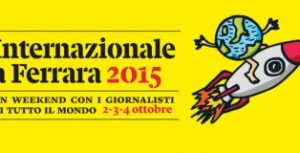
On 3rd October, at 5 pm, Internazionale Ferrara festival will host an event where prof. Christian Iaione, LabGov coordinators, Albert Canigueral from OUIshare, and Gea Scancarello, journalist and writer, will discuss about the sharing economy, as a phenomenon between the market and social innovation. Marta Mainieri (Collaboriamo) will moderate the discussion. The event is organized in collaboration with Fondazione Unipolis.
According to the British economist Paul Mason, and journalist for The Guardian, which is giving great attention to urban commons, collaborative economy and urban commoning in the so-called “Collaborative cities”, societies need to take advantage of the technological revolution we are experiencing and create a postcapitalist sharing society. Both at the national level, like in California, and at the local level, like in Seoul and New York City, institutions are designing governance arrangements to promote and foster sharing and commoning practices. The European Union is facing this challenge, too. The aim of the event at the Internazionale Ferrara Festival is to investigate if it is possible for the collaborative/sharing economy to constitute the ground for a commons-based urban economy, which is also the aim of the fourth track of “The city as a commons” IASC conference: What are the lessons and forms of innovation that we can learn from this literature and this movement in managing the urban commons? Some possibilities are the regeneration of common spaces in cities for co-working and co-manufacturing, forms of cooperative ownership models such as community land trusts and real estate investment cooperatives, and the conscious emergence of a collaborative class in the cities that transforms the economic relations among urban inhabitants.
LabGov is deeply involved in the analysis of the sharing economy context. See: Interview on Shareable; Interview on Commons Transition; The XXI Century as a collaborative century.


