On the occasion of Ermenegildo Zegna XXX Winter 2020 Fashion Show entitled #usethexisting, the installation “Art for Earth” by Anne Patterson has been exposed so to address consumer’s attention to a more sustainable and ethical behaviour in the fashion world.
The exposition was open to the public from the 13th to the 31st of January. The work was commissioned by the fashion house Ermenegildo Zegna in occasion of the Winter Fashion Show. The name of the installation, Art for Earth, designed by the American artist Anne Patterson, draws the attention to the increasing damages caused to the environment by the fashion industry since the phenomena of fast fashion and the era of consumerism took over. The artwork is made by thousands of tapes of recycled fabric, to underline the company’s aversion to waste, to consumer and observers. This immersive installation was admired by visitors who were able to interact with the artwork and become an integral part of it so to be caught by the message that is the very purpose of the work: become responsible consumers and citizens for the Earth on which we live and for future generations: #usethexisting in a creative way, regenerate instead of buying compulsively. We need to start appreciating more what we have instead of continuously desire what we don’t.
The fashion industry accounts for 4% of the Italian GDP and the global clothing production has more than doubled in the last 20 years[1]. Greenpeace estimates that, if sales have risen from 1 trillion dollars in 2002 to 1.8 trillion in 2015,[2] in 2025 they will reach 2.1 trillion[3]. Additionally, about 24% of Italians purchase clothing over their own economic capacities[4]. Therefore, these trends confirm one the one hand an increase in sales caused by the phenomenon of fast fashion, and on the other hand, an increase in the “Made in Italy” shopping by foreign consumers. Fashion represents the emblematic sector for Italy in the world. The challenges that many brands and textile producers are constantly faced to is to find alternative ways to revive the very famous Italian’ craftsmanship so to maintain sales constant, without causing further damage to the environment or future generations. Eco-friendly fabrics, clean-up days, circular economy, innovation and transparency are the cardinal points needed to face these challenges and to stand out from all those big companies that deceive customers with commercial tactics to build an Eco-friendly image of themselves, hiding behaviours that are not sustainable at all.
The high-fashion industry is
engaging itself in subverting this propensity to consume and waste. This is the
case of Pitti Uomo and Milanounica, events that have chosen to dedicate this
year editions to the issue of sustainability. Pitti Uomo was inaugurated with a
video of Prince Charles of England to underline the commitment to an
increasingly sustainable fashion and to promote the campaign for wool, a
project launched in 2010 to promote pure wool, encouraging breeders, retailers
and designers to collaborate for a common cause. MilanoUnica also has selected
the theme “Ecorotica”, combining the commitment to sustainability with the
pursuit of pleasure, two fundamental characteristics in our society.
The collaboration between Zegna
and Anne Patterson is one of many examples of sustainable initiatives in the
fashion world. Indeed, the collaboration between a company that boasts several
years of innovation in sustainable fashion and an artist who commits her
artwork to combat waste of fabrics and other recyclable materials does not simply
impact the observer, but aims to let the spectators dive into the artwork and
be overwhelmed by a sense of
responsibility that can hopefully encourage changes in everyday choices.
Pushed by the urgency to act
and inspired by the commitment of start-ups and associations all over Italy,
the LabGov EDU team will address the topic of sustainable fashion as part of
its soft skill course, with the desire to generate, starting from the university
environment, a first engine of change promoting the role played by students as of “sustainable fashion’ ambassadors’. More
specifically, the Clinic will enhance
cooperation so to connect different urban stakeholders: public, private,
social, cognitive (universities and schools) and above all the urban community.
Fundamental is to consider the trends of
the circular and new sustainable economies, therefore, we believe it is
necessary to “re-think the topic of sustainable fashion” counting on the experience
of many start-ups which are developing fabrics from regenerated raw materials
and local associations specialised to give a rebirth to clothes that were
donated during the Luiss Christmas winter market “Magic City”. The Laboratory
will start on friday 14th and updates will be constantly uploaded on the
instagram page @labgov.city [5]
The Milanese architecture firm “Stefano Boeri Architetti”, who projected the Vertical Forest in Milan, designed the plan for the first Smart Forestry City that will be based in Cancun, Mexico. It is expected to host up to 130.000 inhabitants, by replacing the project of a shopping center. The city will be built on a 5.57 km2, currently employed as a “sand quarry for hotels” (Endel 2019)[1] and 4 km2 will be reserved for green spaces. There will be about 7.500.000 plants in the project and 260.000 will be trees. With a ratio of 2.3 trees per inhabitant, the Smart Forest City “will absorb 116.000 tons of carbon dioxide with 5.800 tons of CO2 stocked per year” (Endel 2019). Public parks, private gardens, green roofs, and green facades will help create a balance within the built environment.
The city has also been imagined to be completely food and energy self-sufficient. Indeed, it will be surrounded by solar panels and agricultural fields. Water will be gathered at the entrance of the city, next to the desalination tower and dispensed by a system of navigable channels in the whole settlement up to the agricultural fields that surround the urban area[2]. Within the city, people will circulate via internal electric and semi-automatic mobility, leaving their cars outside of the city.
The Smart Forest City will also hold “a center for advanced research that could host all worldwide university departments, international organizations, and companies that deal with very important sustainability issues and the future of the planet” (Endel 2019).
The Smart Forest City definitely promotes the idea of sustainable city. In fact, the project seems to create a perfect habitat where human beings can live in total harmony with nature within the urban space. Apparently, this sounds like a perfect solution in a scenario where urbanization is expected to rise in the next years and climate change needs to be handled with innovative solutions. Indeed, this project not only seems to support the idea of reducing urban sprawl by creating dense and compact settlements, but it also seems to avoid one of the main challenges that urban density can bring, which is the lack of green space on urban footprints. Thus, one of the main critiques to the urban density discourse has been the idea that if land is consumed for increasing urban development, areas devoted to green will be necessarily reduced. However, the Smart forest city represents an anti-sprawl and densification project able to reduce urban expansion while increasing the quantity of green within the built city. “A model that connects to the policies for reforestation and naturalization of the edges of large urban and metropolitan areas” (Kucherova and Narvaez 2018: 5)[3]. In fact, as the Stefano Boeri Architetti firm’s manifesto states[4], the reforestation of the urban environment can be an extraordinary help to improve the quality of health and life in a city. Indeed, forests and trees absorb nearly 40% of fossil fuel emissions largely produced by cities every year.
However, there are some challenges which are not self-evident when looking at these projects. First, instead of building sustainable cities or eco-cities out of nowhere, believing that higher densities are necessarily good, planners may better consider that urban design is not enough to make cities more sustainable. As Laurence Crot highlighted, Masdar City (a planned city project initiated in 2006 in the United Arab Emirates) portrayed as the world first sustainable city and the example of Abu Dhabi’s new urban vision, has soon renounced to some of its most ambitious sustainability goals (2012: 2809)[1] such as its car-free mission. Masdar City has been recently rebranded as a carbon neutral project and its previous zero-carbon commitment soon disappeared from the policy agenda. Indeed, eco-cities projects instead of representing the panacea for main environmental and urban challenges seem just able to bring a new label to neoliberal urban development plans, since they rarely innovate and seldom keep their promises of sustainability (Cugurullo 2018: 74)[2]. Another weakness associated with these brand-new urban solutions relates the issue of who could really afford to live in eco-cities or smart forestry city. In fact, density increases the price of land and in turn increases the price of housing. Moreover, reforestation means bringing new amenities in the built environment which represents a new source of housing unaffordability.
Though a project as the Smart Forest City represents a perfect solution to reduce urban sprawl and pollution by increasing green space in cities at the same time; cities are more than their urban form. So, bringing urban design solutions to make cities more sustainable will not work alone, it can only be part of the answer. In fact, as Neuman pointed out, instead of asking ourselves if urban form can produce sustainability, we should question whether the processes of building cities, living, consuming and producing in cities are actually sustainable[7].
FOOTNOTES
[1]Edel, D. (2019), Smart Forest City Cancun Design Is First 100% Renewable Circular Economy City, Available from: https://www-intelligentliving-co.cdn.ampproject.org/c/s/www.intelligentliving.co/amp/smart-forest-city-cancun-first-renewable-circular-economy-city
[2] Stefano Boeri Architetti (2019), Smart Forest City Cancun, Press release available from: https://www.stefanoboeriarchitetti.net/en/urban-forestry/
[3]Kucherova, A. and Narvaez, H. (2018), Urban Forest Revolution, E3S Web of Conferences 33, 01013, pp. 1-11.
[4]Stefano Boeri Architetti (2019), Smart Forest City Cancun, Press release available from: https://www.stefanoboeriarchitetti.net/en/urban-forestry/
[5]Crot, L. (2012), Planning for Sustainability in Non-democratic Polities: The Case of Masdar City, Urban Studies 50(13), pp. 2809–2825.
[6]Cugurullo, F. (2018), Exposing smart cities and eco-cities: Frankenstein urbanism and the sustainability challenges of the experimental city, Environment and Planning A: Economy and Space 2018, Vol. 50(1), pp. 73–92.
[7]Neuman, M. (2005), The Compact City Fallacy, Journal of Planning Education and Research 25, pp. 11-26
On May 11th 2019, the Capri Forum, organised by the LabGov team will gather experts, national and international promotors and investors, including Arpinge, Global Solar Fund, AgID, ENEA, Enel X, Motus E, ANCI, Regione Campania and Federcasa to explore sustainable tourism, smart technologies, social infrastructure and sustainable mobility in order to conceive a model of “smart sustainable island” replicable in other tourist destinations.
While the European Union works towards the implementation of the EU Urban Agenda, which aims at increasing cooperation at European, national and local level for the creation of “a more sustainable, socially inclusive, innovative and economically powerful Europe”, cities and citizens have already began to move in the same direction.
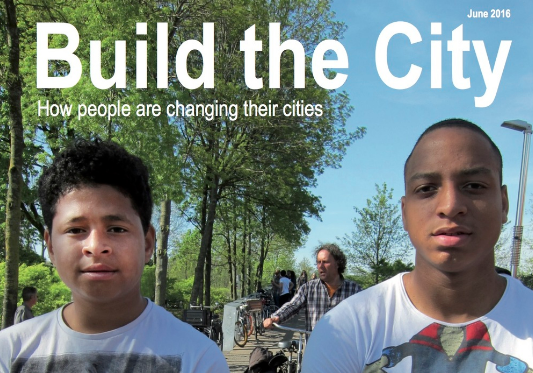
The magazine Build the city, how people are changing their cities (pdf available here), published by the European Cultural Foundation, proposes a thought-provoking collection of good practices from all over Europe that allows us to see how cities are changing to face the new urban challenges, and how these changes are possible thanks to new forms of collaboration. From Portugal to Poland, from Sweden to Greece, this publication shows us how different actors have been able to come together and create civic-public partnerships based on the principles of the commons. These practices constitute further evidence of the importance of citizens and communities participation in the process of shaping a more equitable and sustainable future for our cities.
We are deeply satisfied to acknowledge that the Bologna Regulation and the collaborative processes that are taking place under the framework of the public policy “Collaborare è Bologna” have been included in this collection. The Bologna process, which has seen a deep involvement of LabGov from its very beginning, has been selected alongside with numerous important experiences coming from different countries as an example of the fundamental role played by civic collaboration in the creation of a new institutional and economic system. We see this also in the case of Madrid, where Medialab Prado, a citizen laboratory for the production, research and dissemination of cultural projects, was built to explore collaborative forms of experimentation and learning which emerged from digital networks, and of Athens, where SynAthina was created by the city to help reaching out to engaged citizens generating small scale solutions for the city. We see it also in the city of Ghent in Belgium, characterized by a long tradition of participation, consultation and facilitating bottom-up experiments through the Policy Participation Unit and in Dortmund in Germany, that shows us how a local government can encourage and coordinate action within a socially and culturally diverse stakeholder environment. The experiences of these cities remind us that civic collaboration and horizontal subsidiarity are necessary, and good governance must become a synonym of co- created cities where urban planning does not follow a top down oriented perspective.
While going through the stories portrayed in the magazine, it is impossible not to notice one recurring element which appears to be as fundamental as the involvement of civil society; namely, the importance of culture as a driving force for innovation and sustainable urban development. If we want our cities to become more inclusive and participative we need to bring about a cultural change. This cultural change takes numerous forms: it can come as an effort to promote co-creation of art between artists and residents of disadvantaged neighborhoods through participative processes, as in the case of the French association Les Têtes de l’Art, or it can be found in the creation of a central hub where creators, entrepreneurs and civil society can develop ideas together in the context of a strongly ethnically diverse context, as it happens in Sweden with the action of Subtopia.
Having these examples of good local practices in our minds, when we now return to the European level we easily notice the deep commonalities existing between the goals which are being pursued both at local and at European level. All the practices highlighted in the magazine are targeting some of the themes that the EU Urban Agenda has selected as its priorities, such as housing, energy transition, climate, air quality, urban poverty, inclusion of migrants and refugees, sustainable use of land and so on.
The material collected in Build the City offers us further evidence of the need for coordination between actions developed at all levels, be it European, national or local, and makes us understand that only by bringing all the different actors and stakeholders to participate and cooperate a better future for our cities and for their citizens can be imagined.
Note: the good practices presented in the magazine were extracted from a broader work conducted by the European Cultural Foundation together with Krytyka Politykzna, which lead to the publication in 2015 of the book Build the City: perspectives on commons and culture. A pdf version of the book is available here.
———————————————————————————————-
La European Cultural Foundation ha pubblicato nel mese di giugno la rivista Build the City, how people are changing their cities, una raccolta di buone prassi provenienti da tutta l’Europa che ci mostra come collaborazione civica e partecipazione di tutte le componenti della società civile siano fondamentali nel costruire una risposta alle nuove sfide che ci troviamo ad affrontare in ambito urbano. Il Regolamento di Bologna è stato incluso in questa raccolta in quanto esempio di riuscita collaborazione civica, che ci insegna come il futuro delle città non possa più essere disegnato e imposto dall’alto ma debba invece essere co-creato.
Le buone prassi proposte dalla rivista (qui il testo in inglese) sono un estratto del libro Build the City:perspectives on commons and culture, pubblicato nel 2015 da European Cultural Fundation e Krytyka Politykzna ( il pdf del libro in lingua inglese).