L’Università Luiss Guido Carli ha organizzato delle pillole di sostenibilità online durante il periodo pasquale per incentivare e offrire occasioni di condivisione e riflessione sulla situazione che stiamo vivendo e sulle opportunità che da essa possono derivare.
Tutte le attività si svolgono tra il 9 e il 14 aprile e LabGov si occuperà di due attività online: “L’orto in casa”, questo giovedì alle 11.45 con l’intervento di Francesco Steinhauslin, Alessio Ciotti e Julianne Heusch. La seconda attività “Laboratorio di autoproduzione” si svolgerà lunedì 13 con Caterina Gianni, Tommaso Dumontel e Julianne Heush, in cui vi mostreremo come creare il gel igenizzante e come riutilizzare le mascherine sanitarie.
Luiss University is organizing sustainable online activities during Easter time. The initiative aims to encourage and offer opportunities of sharing and reflecting on the situation we are experiencing and the chance that may derive from it.
LabGov will take care of two online activities: “L’orto in casa”, this Thursday at 11.45 with the intervention of Francesco Steinhauslin, Alessio Ciotti and Julianne Heusch. The second activity “Laboratorio di autoproduzione” will be carried out on Monday 13th with Caterina Gianni, Tommaso Dumontel and myself.
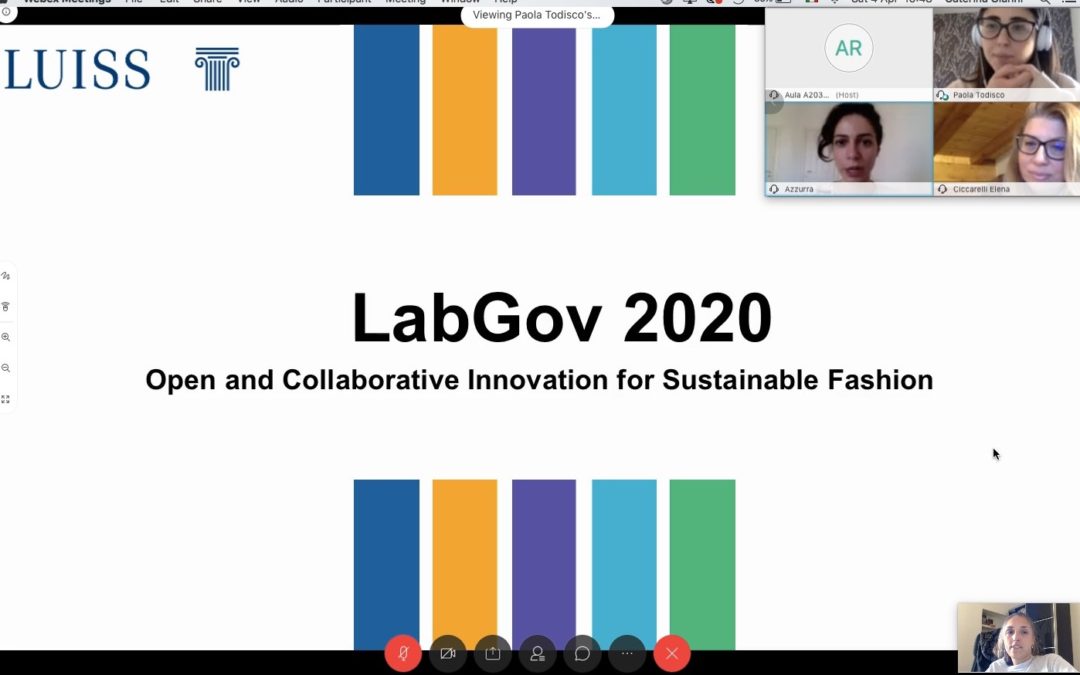
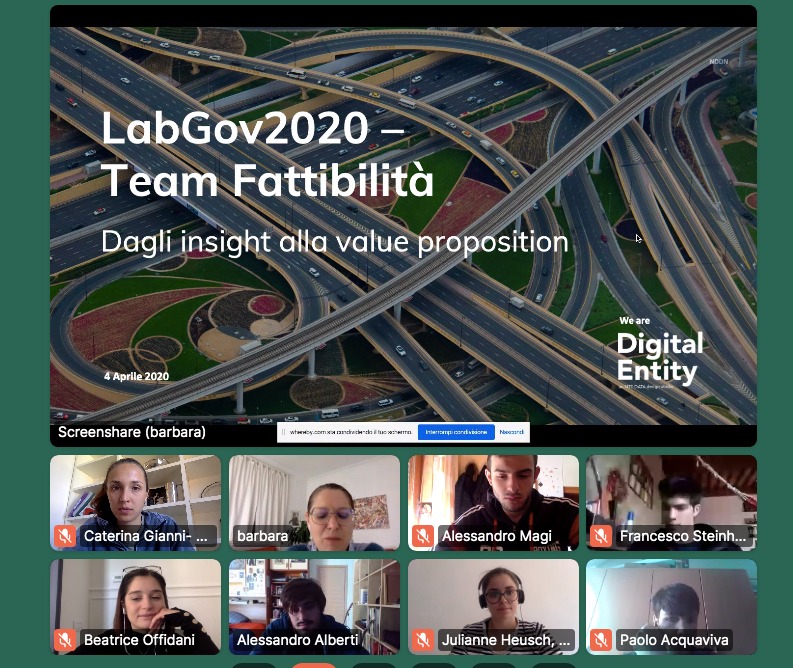
The fourth workshop and co-working of the Urban Clinic hosted NTT Data Design on the Luiss Webex platform.
Our guest, Dr. Elena Ciccarelli and her team explained us how the multinational NTT Data was born and what the “Digital Entity” team is responsible for within the NTT group. Their activity deals with digital transformation, design process and customer experience. Mrs. Ciccarelli highlighted that in her profession open innovation is a fundamental element, especially during this period in which technology is having an exponential growth amplifying its range of action to several sectors and activities of daily life. Mr. Michele Danti, a member of the Digital Entity team remembered us the importance of designing on the basis of big data. To be more explicit, the NTT team exposed some examples of digital innovation processes by exposing Case Studies from previous contracts, for instance, the creation of apps for customers of telephone carriers (TIM and Vodafone) or Internet Banking Services. Once the consulting session, in the field of design, data processing and storytelling has been held, the Team prepared us for Saturday’s co-working with the scope of deepening and applying the theoretical notions learned during the workshop to the realization of the project of the LabGov clinic.
Let’s get started for Saturday’s co-working! The LabGovers have been divided into three groups, with one member of NTT Data leading each group. The students learned with enthusiasm, how to use the Mural platform in order to perform some practical activities. The first group “Trend” focused on creating a solid basis for the digital platform hosting their project. The second group “Feasibility” took care of defining the customer’s priorities and converge them with the project, so as to focus on various assumptions of products and services to offer. Finally, the third group “Economy” began to map the stakeholders of our project and later, they identified the services and goods needed to create value.
After lunch, everyone gathered to share the activities done during the morning. After that, a member of the LabGov team presented the draft version of the investor pitch to the hosts. The NTT data team had the opportunity to express critiques and gave a feedback and some insights and ideas on which to focus in order to develop the project based on collaborative digital innovation. To conclude the fourth co-working, the students are updated on the execution of community gardening hours that cannot be carried out in the Luiss Community Garden but will be employed in the realization of video tutorials of sustainable activities and advices for a sustainable lifestyle that one can perform at home.
During these next weeks, the LabGovers will work on the presentation of the investor pitch to be ready for the next and very exciting module of Legal Design, in which students will reflect on innovative ways to overcome legal barriers on sustainability with a team of experts from Berlin.
Don’t hesitate to check out our progress on our social medias: Facebook, Twitter and Instagram !
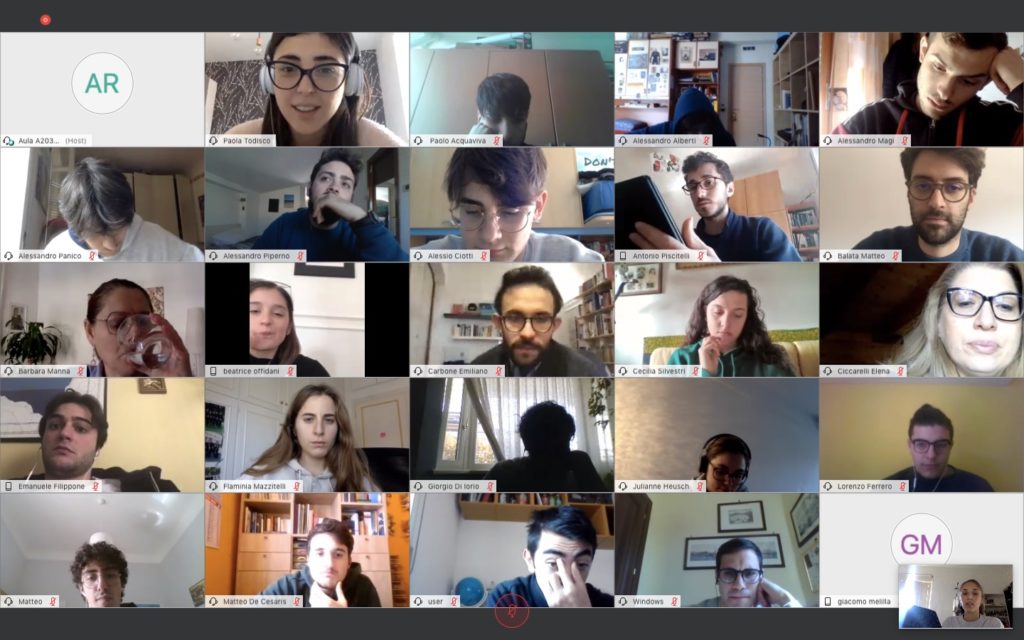
Even though it may seem challenging to carry out online lessons, we have found a growing attention and participation from students. In fact, we have noted that those who did not feel comfortable enough to participate in class, are now more eager to do so. The explanation behind this phenomenon is probably the fact that the screen acts as a protective shield against shyness. We are now delighted to have a growing participation from all our students.
This is the first time ever that an Urban Clinic’s module is entirely carried on digitally through Webex, the online platform which Luiss makes available to maintain the teaching process.
Friday’s workshop opened with Azzura Spirito’s presentation, spending some words on the work she carries on as community led project designer. In an initial part, students focused in creating a storytelling that could attract the interest of potential investors. Thanks to Azzurra’s knowledge and suggestions, students efficiently worked on the platform “Miro” to transcribe and communicate several ideas simultaneously and more generally to carry out a partecipative process of brainstorming.
During Saturday’s co-working the LabGovers, together with Azzurra Spirito, focused on the benchmark, that is the basis to develop a pitch presentation, which students will have to prepare before next module takes place on April 3rd and 4th. Collecting data efficiently is critical to developing an efficient benchmark. As a first step to individualise which typology of data is necessary to collect, the students worked in teams to write semi-structured interviews about consumer’s habits concerning shopping. The main goals were to find consumption patterns in fashion and second-hand clothes, evaluate how sustainable fashion is perceived and finally customer’s propensity to pay more in order to purchase sustainable fashion clothes.
After discussing the points that emerged during the interviews, students organised themselves in groups to carry on some tasks to move forward in the project. Before next meeting, students will have to create a sample of target personas and their relative customer decision journey and successively incorporate such analysis in the pitch that is slowly coming to life thanks to student’s engagement and commitment.
The LabGovers showed us some great enthusiasm towards the project that is taking shape. Moreover, students are exploring the word of innovative tech models that can combine the themes of the data market and the monitoring of health and consumption. Indeed, digital technologies are becoming more and more fundamental to our everyday lives. Perhaps, the use of the GrInn.City platform that was developed last year, could be instrumental in the acquisition of consumer data, thus taking advantage of the great market possibilities regarding the economy of big data.
Next appointment on April 3th and 4th with Dott. Elena Ciccarelli from NTT Data and a team of experts in digital innovation with the module on “Ux Design for Open and Collaborative Innovation Processes”. During the first part of the laboratory students will analyse the surveys’ outcome on consumers’ habits, which you can find here (https://qtrial2020q1az1.az1.qualtrics.com/jfe/form/SV_bkkEOiMMGaQPMWN), and improve the personas identified and relative customer journeys.
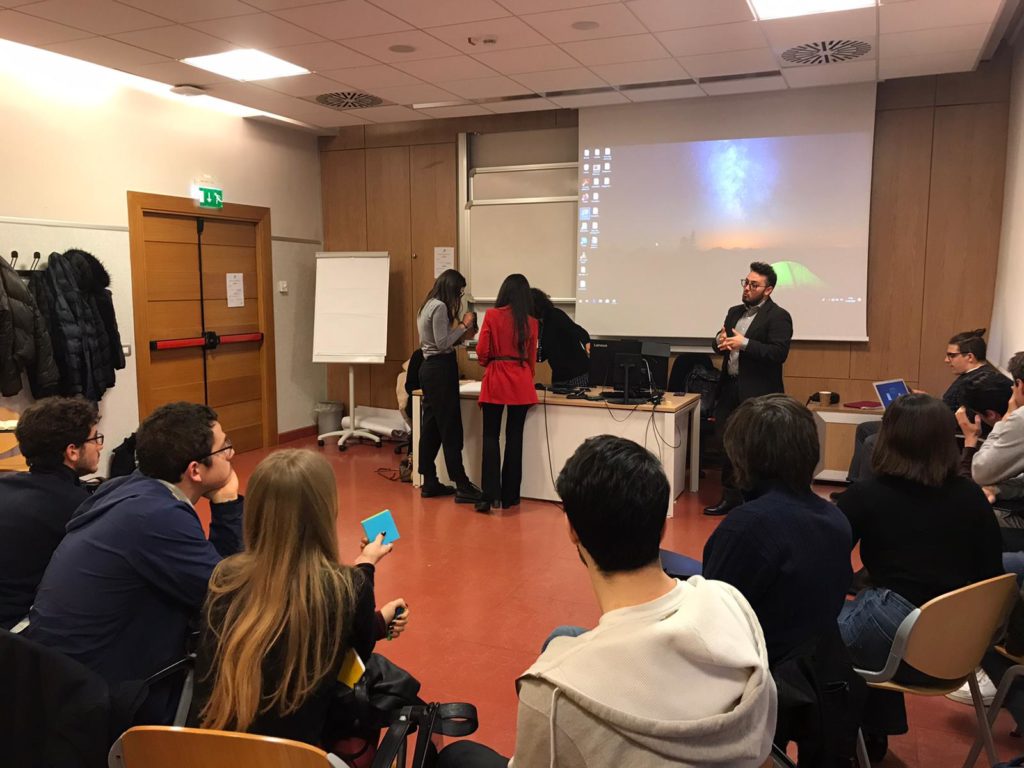
On Friday 21th and Saturday 22th the students of the Urban Clinic Edu LabGov 2020 participated to the first workshop and co-working. The main goal of the meeting was to deepen the knowledge about an “Open and Collaborative Innovation” methodology that is lately gaining popularity.
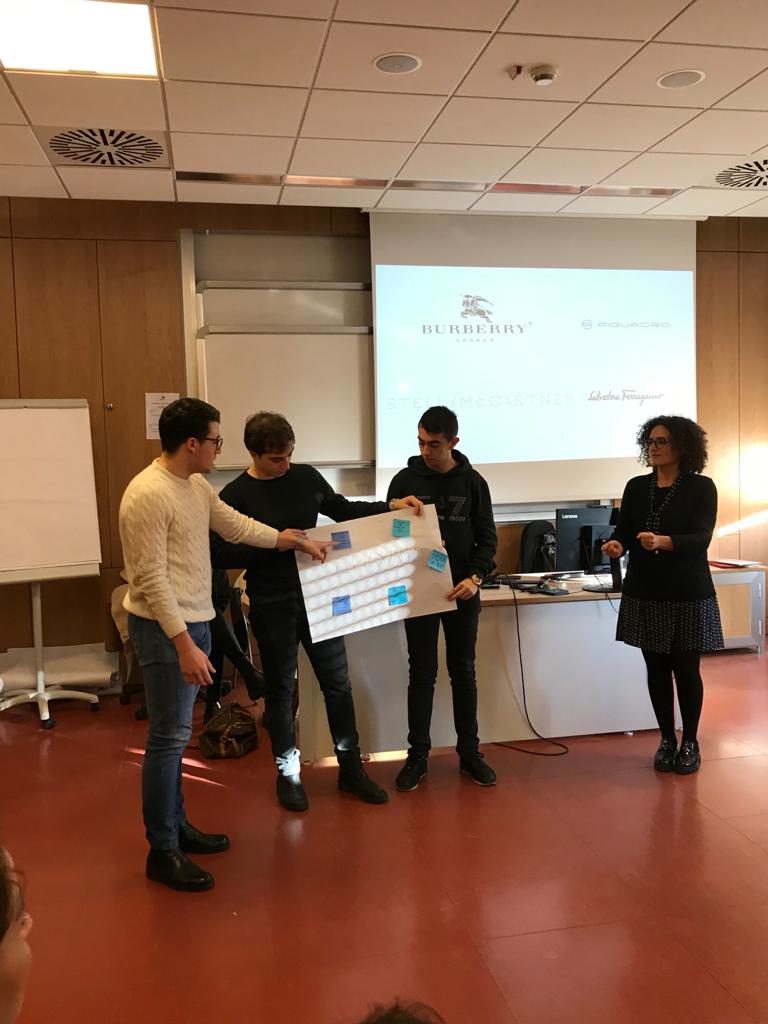
On Friday, Professor Maria Isabella Leone, Director of the master in Open Innovation and IP at Luiss Business School, carried an interactive lesson, successfully involving students in a reasoning process, instead of flooding them with theoretical knowledge which hardly manages to capture students’ interest. The laboratory was based on the analysis of the innovative aspects and strategies of noted fashion brands, namely Ferragamo, Burberry, Piquadro and Stella McCartney and than investigate for business models of companies whose main scope is to revolutionize their activity and differentiate themselves from competitors. The students brought out interesting elements that were a source of reflection for the work they carried out the following day.
What emerged as a common trend is the transformation of waste materials into renewable resources so to create new fibres at low environmental impact. What has been stressed even more is that “Open Innovation” implies collaboration with actors coming from different realities, namely stat-ups, universities, customers, tech industries, incubators, consortia, spin-offs, industries and so on. This means there has to be trust in partnerships but whenever there is a common scope, the collaboration is more prone to be successful and consequentially improve the revenues of all participating actors.
The following day, Alessandro Piperno, PhD student in management at Luiss, exposed what a social enterprises is and how to help communities grow and develop in an urban context. After a brief talk about some important social enterprises like 4ocean, Made in Carcere, Patagonia, and Progetto Quid, students were inspired enough to propose some of their ideas in a process of brainstorming so to come up with three specific ideas to analyse more in detail for the next meeting. The laboratory’s outcome was an important step forward to understand new trends based on upcycle sustainable fashion and circular economy.
Next meeting will be on Friday 28th with the workshop “Entrepreneurship” held by prof. Alessandro Cavallo and Saturday 29th with the co-working “Building a social enterprise” in which EDU 2020 tutors together with a jury of experts will listen to LabGovers’ pitch on their design idea. The laboratory will be an occasion for students to test their ideas and get a feedback from experts in the field so to continue shaping their ideas and let the project evolve throughout the laboratory.
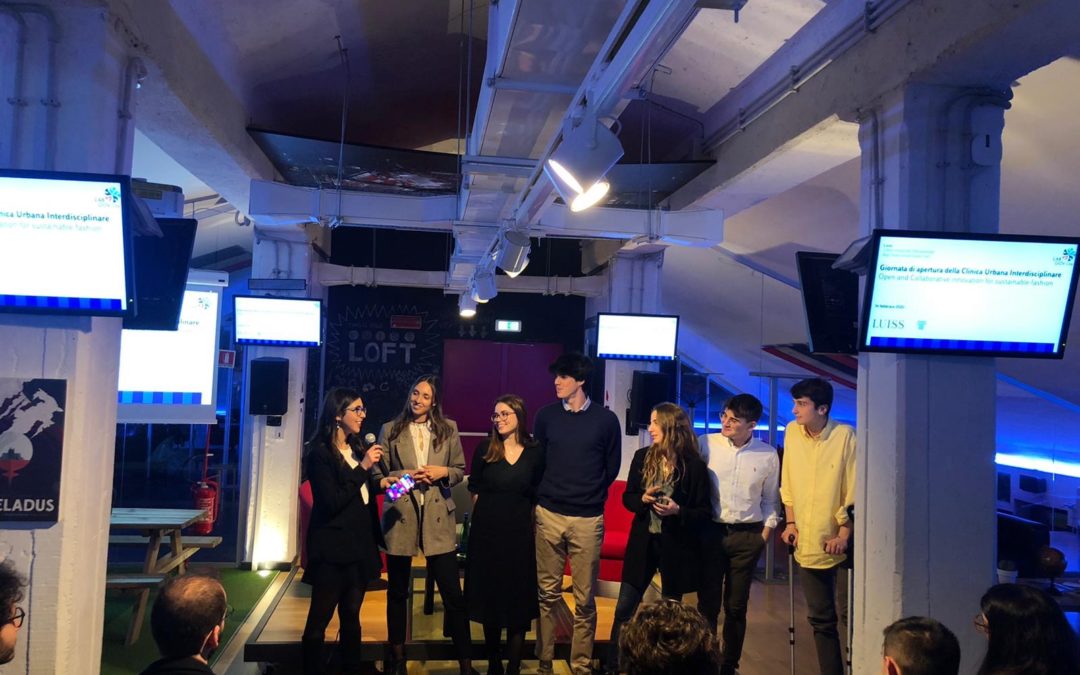
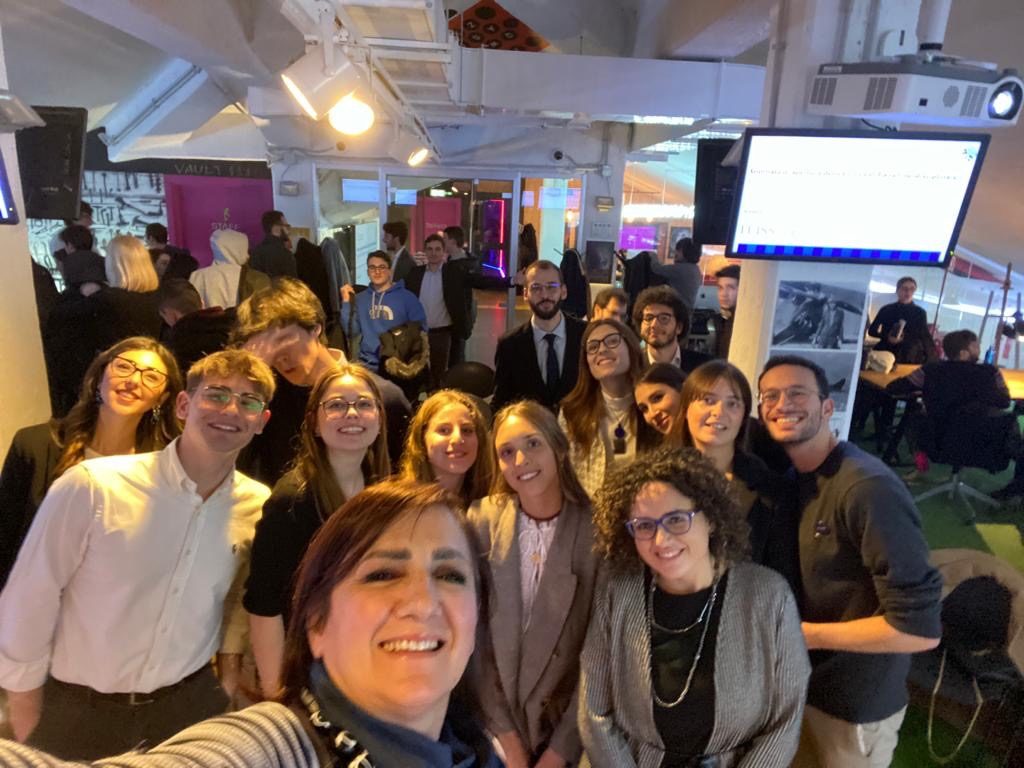
On Friday, February 14th, the opening meeting of the LabGov 2020 Interdisciplinary Urban Clinic took place at the LOFT of the Luiss Guido Carli University .
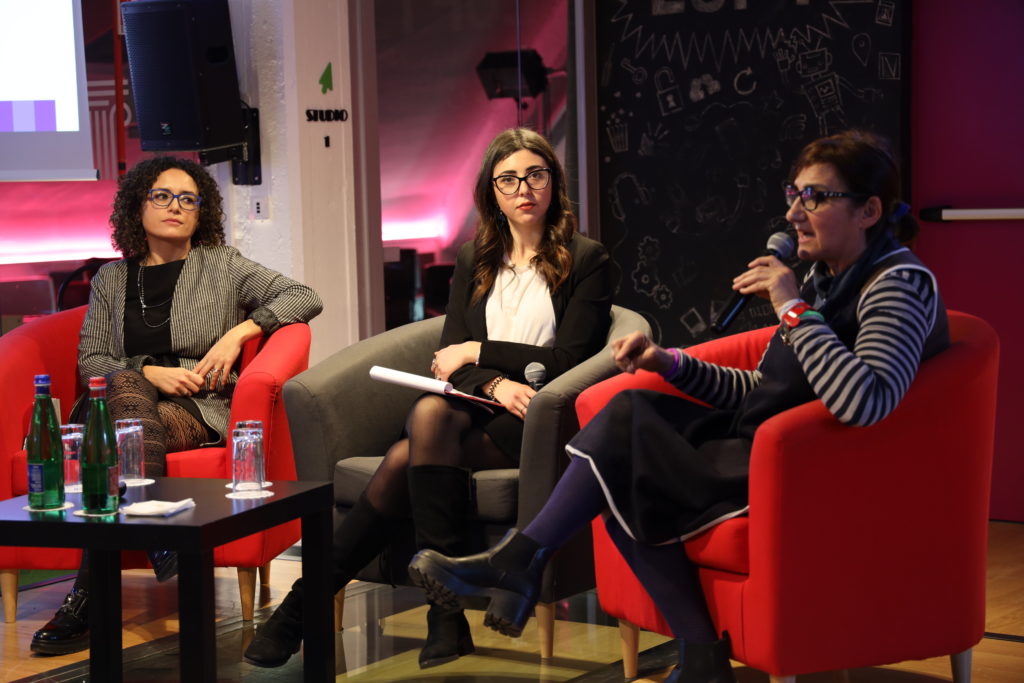
The theme of the meeting was the Open and Collaborative Innovation for Sustainable Fashion and we had the honor to host the Luiss General Manager, Giovanni Lo Storto, Professor Maria Isabella Leone, Executive Director of the Master in Open Innovation & Intellectual Property at Luiss Business School and Dr. Luciana Delle Donne, founder and CEO of Made in Carcere.
Credits to Luiss Loft
The first part of the meeting was dedicated to the LabGov.City team presentation to the students with a focus on the projects carried out so far and the future goals that will see them involved. It was Dr. Lo Storto who welcomed the new LabGovers (the students of the Urban Clinic) and recalled the true meaning of the word “sustainability” that means awareness and coherence and sustain in the sense of creating and sustaining long lasting beauty. LabGov represents this kind of support as well as the exact edge of the role that a university and a training place should have in empowering students to the value of preserving the planet, the value of physical work, the respect for the city and the maintenance of public heritage with the final scope to train not only technicians but good citizens.
The meeting continued with an informal talk between Professor Maria Isabella Leone and Dr Luciana Delle Donne: with them we have combined both the theoretical and practical approach. In particular, Prof Leone highlighted the importance for a company to adopt Open Innovation’s methodology to be competitive in the market and improve the resilience of an enterprise. The real challenge, prof Leone points out, is to transform an Open Innovation methodology into concrete results by creating new business models that have a positive economic and social impact. Together with Dr. Luciana Delle Donne, we observed how innovative and sustainable social enterprises can be generated, involving fragile communities. Luciana told us her story, in particular her “second life” when after twenty years of employment in the world of finance she decided to devote herself to social entrepreneurship: in 2007 the brand “Made In Carcere” was born. The project aims to generate awareness and responsibility by including the inmates of Lecce prison in a dynamic process that gives them a job, a salary and above all the ability to face the world once their detention is over. The real challenge in social innovation is to go against the general trend because habits and mentality are the hardest thing to change.
The second phase of the meeting witnessed the presentation of numerous initiatives that will be invited to cooperate in the Urban Clinic, including the project of Francesco Malitesta and Edoardo Croce creators of the Artwear Lab “X-novo”, a roman start-up based on the exchange and reuse of garments that involves the participation of roman street artists. Flavia Romei told us about her atelier at Pigneto “Cheap Lobster” which creates tailor-made skirts with a mix of fabrics from textile scraps coming from fashion industries.
Finally, during the Magic City, the Christmas market promoted by Luiss, LabGov collaborated with Viving, a local NGO, and Young Ethos, a group of students of the Luiss Business School, to create a collection point of used clothes in order to donate them, regenerate and reuse them.
Claudia Chimenti, President of Viving and Beatrice Signoretti and Jacopo Ventura representing Young Ethos, told us about the evolution of Magic City. A part of these garments will be regenerated during the Urban Clinic thanks to the collaboration of several actors.
Next appointment on February 21st with the first module “Idea Generation Lab” and the workshop on the theme of “Open Innovation” presented by Prof. Leone, and the co-working with Dr. Alessandro Piperno on “Sustainable and Open Business Modelling Lab”. It will be a key moment to pique students’ interest, unite the Edu LabGov 2020 community and find the starting point from which to start a co-design process.