
by Margherita Valle – LabGov Costa Rica

Introduction
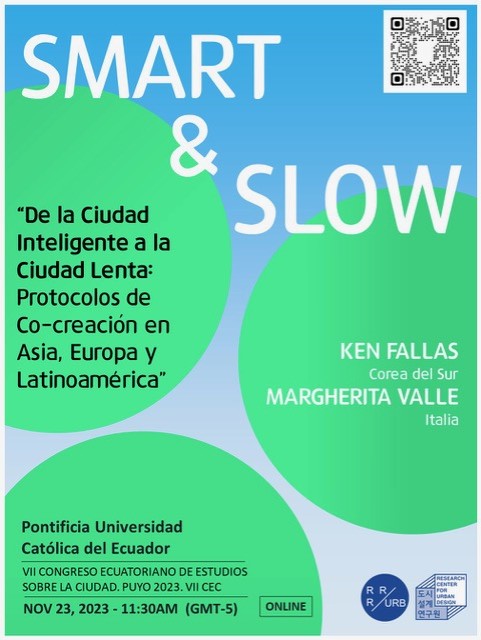
In November 2023, I had the pleasure of presenting a talk at the VII Ecuadorian Congress on Urban Studies, where I introduced elements of the concept of co-city to this Latin American audience for the first time. Within the framework of the session on participatory processes and methodologies, I presented the Lecture titled “From Smart City to Slow City: Co-creation Protocols in Asia, Europe, and Latin America”. The intention was to showcase some case studies of cities that have been promoting the co-city model, both in Italy and Costa Rica, preceded by an overview of the situation of cities in Asia that have embraced the smart city model.
The primary aim of this approach was to compare the two models and highlight the advantages of a citizen-centric approach in the Italian and Costa Rican contexts vs the hyper-technologized model of the smart city in Asia by Ken Fallas, MSc.
Background
The congress was organized by the CIVITIC network and the Universidad Estatal Amazónica. The CIVITIC network was established following the HÁBITAT 3 ALTERNATIVO (H3A) event, held in Quito in October 2016, in response to the need to continue articulating alternative dialogue spaces after Habitat 3. To date, it has organized 53 thematic panels, 6 national congresses, 5 research seminars, 7 film and city exhibitions, 7 citizen forums, and 6 special issues on Ecuadorian urbanism in specialized journals.
The presentation took place within the framework of the session on Spaces of Identity and Participation facilitated by Professor Ekaterina Armijos Moya and Verónica Mena Granda from the Pontifical Catholic University of Ecuador. This conversation was previously opened by a pre-conference panel moderated by Architect Gonzalo Hoyos, featuring María José Carrasco from the Pontifical Catholic University of Ecuador, Leticia Lozano, and Daniel Sardo from the Jesuit University of Guadalajara. They discussed the importance of local knowledge and the preservation of cultural identity in the collaborative construction of spaces and real experiences, aiming to generate proposals that enhance quality of life and foster social innovation.
The architect Isadora Hastings from Mexico introduced the topic with a keynote speech on “Spaces of Identity and Participation in the Context of the Climate Crisis.”
She is the founder and director of the organization Cooperación Comunitaria (https://cooperacioncomunitaria.org) and has extensive experience working with rural communities in Mexico, learning from them to ensure the fulfillment of human rights to life and habitat and for socio-environmental justice.
Personal participation
During my presentation as an international speaker, I delved into the topic of “From Smart City to Slow City: Co-creation Protocols in Asia, Europe, and Latin America,” focusing on several topics relevant to the conference context.
Firstly, I discussed the Italian background, where I examined the concept of the city as a common good and introduced the framework of the co-city. I emphasized the innovative approach to reimagining urban spaces in the 21st century. Furthermore, I analyzed Italy’s experience in implementing the city as a common good, particularly highlighting the regulatory measures for citizen collaboration. I provided a specific case study from Reggio Emilia to illustrate the concept of enabling urban commons.
Moving on to the application of these concepts in Costa Rica, I highlighted the notable growth of urban activism in the country from 2012 to 2022. This period witnessed significant contributions to the city’s transformation. Additionally, I explored the utilization of Information and Communication Technologies (ICTs) in facilitating bottom-up actions for the regeneration of common goods. I focused specifically on the city of San Jose as a case study to illustrate these concepts in practice.
In the case of San Jose, it is important to highlight how the stakeholders involved in this new city governance model have managed to collaborate before the introduction of a regulatory framework for managing urban common goods. An example of the introduction of this concept in Costa Rica is with the Municipality of Alajuelita, with which a project to survey urban commons has already begun through the creation of a georeferenced database, in collaboration with graduates from the Universidad Latina de Costa Rica.
In conclusion, the presentation suggested reflecting on the importance of public time and an ecology of attention; as well as bottom-up management, with spaces for improvisation and spontaneity
It was particularly important to present this model within the framework of the Ecuadorian conference, as it provided an opportunity to showcase innovative approaches to urban development in diverse contexts. Additionally, by presenting cases from two continents, I aimed to bridge experiences from Italy, Costa Rica, and Latin America, enriching the conference program with cross-cultural perspectives.
My goal was to encourage attendees to explore new avenues for urban innovation and learn from global best practices, ultimately fostering a more collaborative and inclusive approach to urban development. Furthermore, the objective of the co-city model aligns clearly with the concept of thinking globally and acting locally, as well as with the vision of the Quito Manifesto for city-making by H3A (Toward an Alternative Habitat 3) and the GPR2C, which is not so much about urbanization but rather about answering the question of how to govern the territory in a fair and democratic manner.
Conclusion
Being able to participate in such an event has been an honor, as these occasions are always enriching opportunities to share perspectives and build connections among professionals from all countries who are interested in promoting solutions for fairer cities at different scales and in different environments. Specifically, the Latin American territory is particularly rich in experiences that open our eyes to the urgency of bottom-up innovation, with scarce resources but an infinite desire to act and solve problems. This type of space also generates high expectations, personally about the importance of creating links between the global South and North.
Finally, the call for a slower city, in contrast to a fast one where citizens are nothing more than data flowing on servers, is the foundation for people to feel part of their communities and alongside them, as peers, to build a true and fair commons governance.
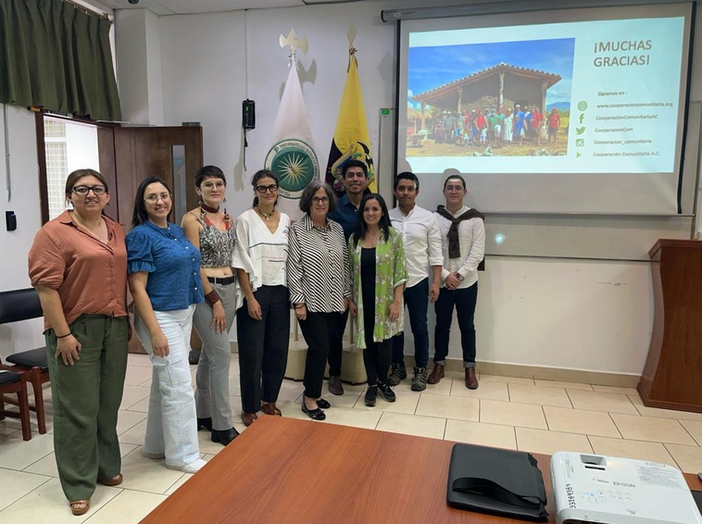
Coordinator team of the thematic axis “Spaces of Identity and Participation” (PUCE), with members from Cooperación Comunitaria of Mexico. Rights to the photo of the university and the organizers.
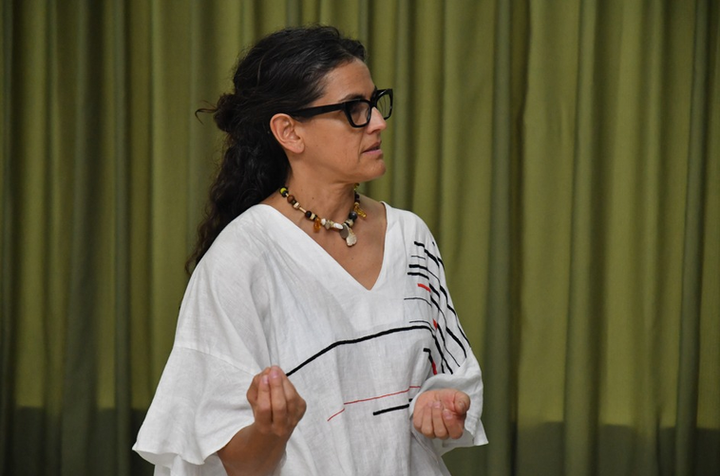
Isadora Hastings keynote speech. Rights to the photo of the university and the organizers.
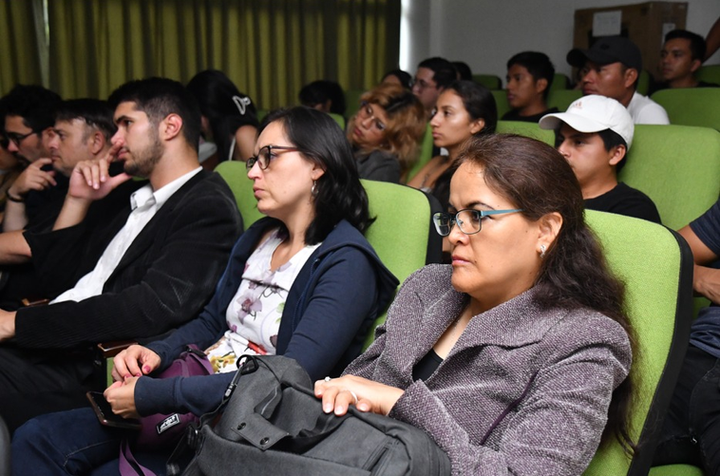
Conference participants. Rights to the photo of the university and the organizers.