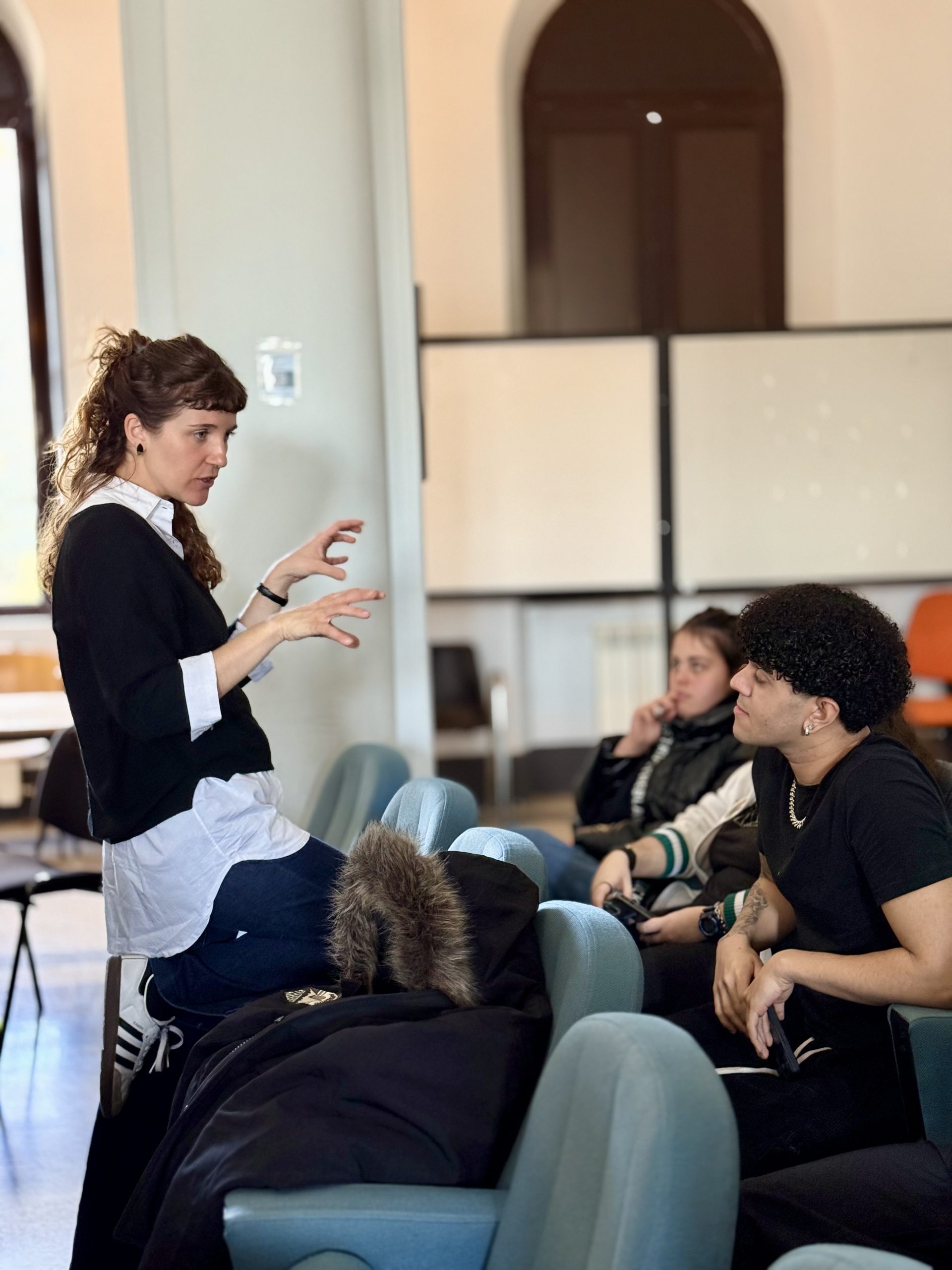
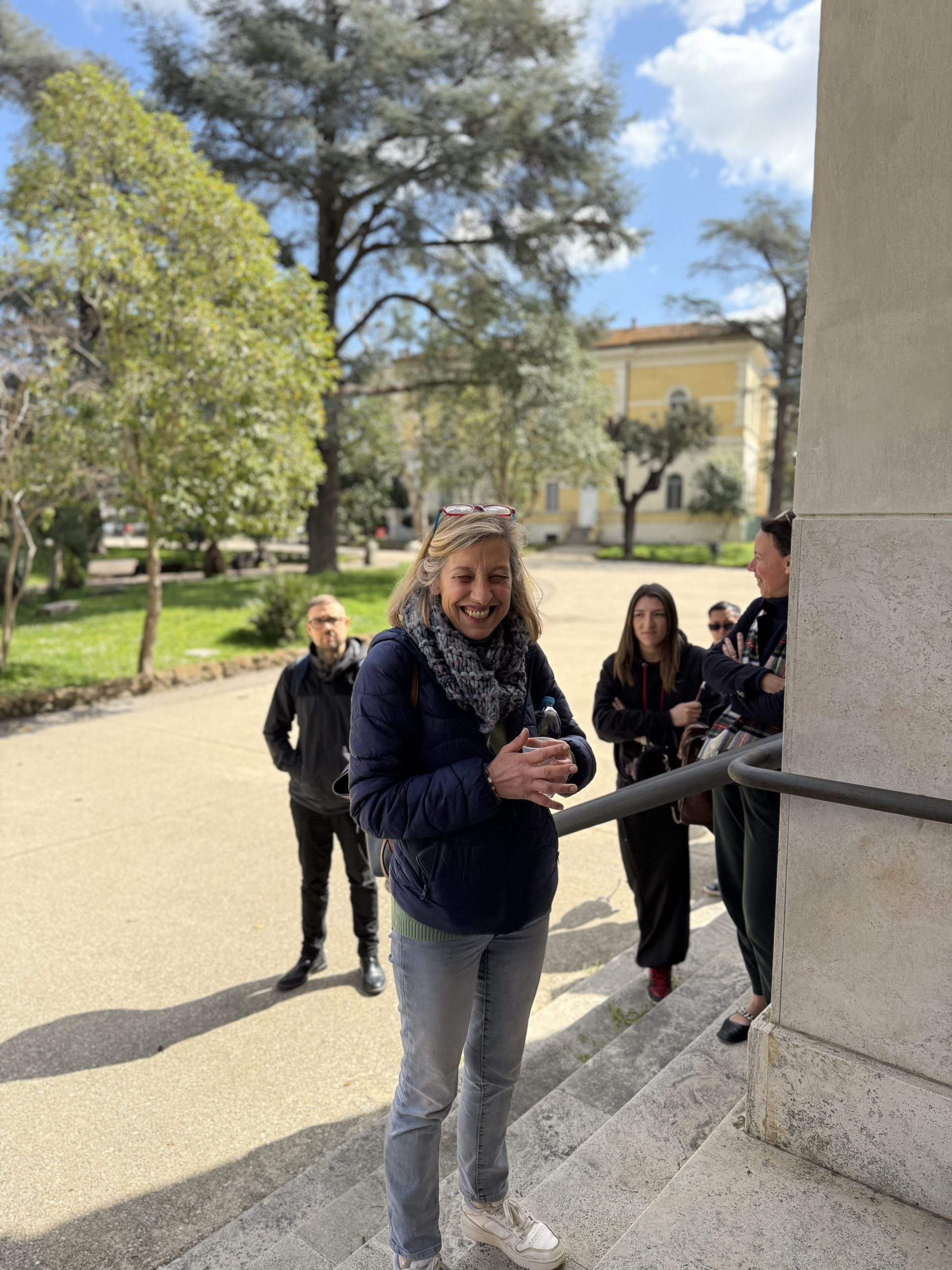
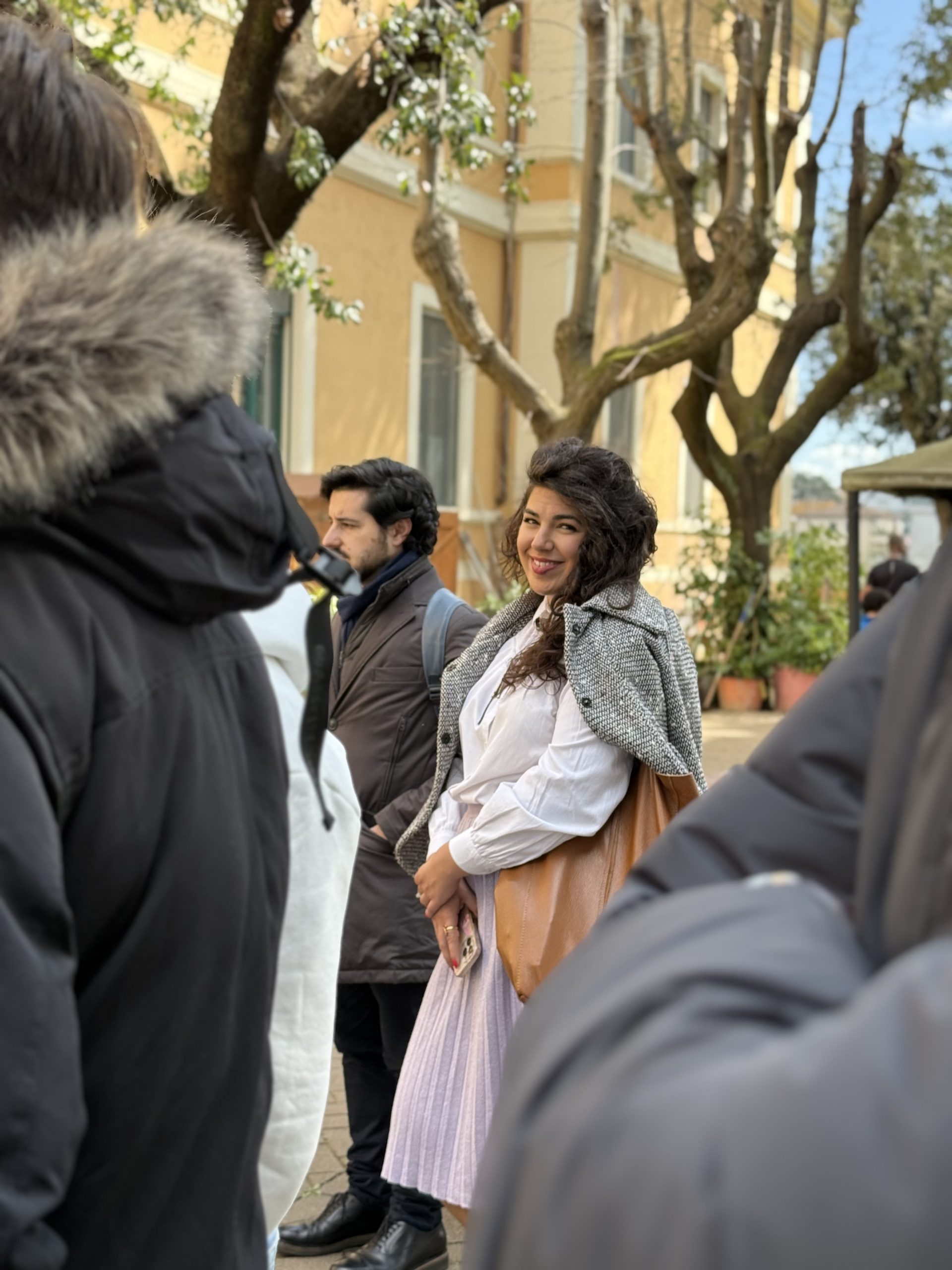
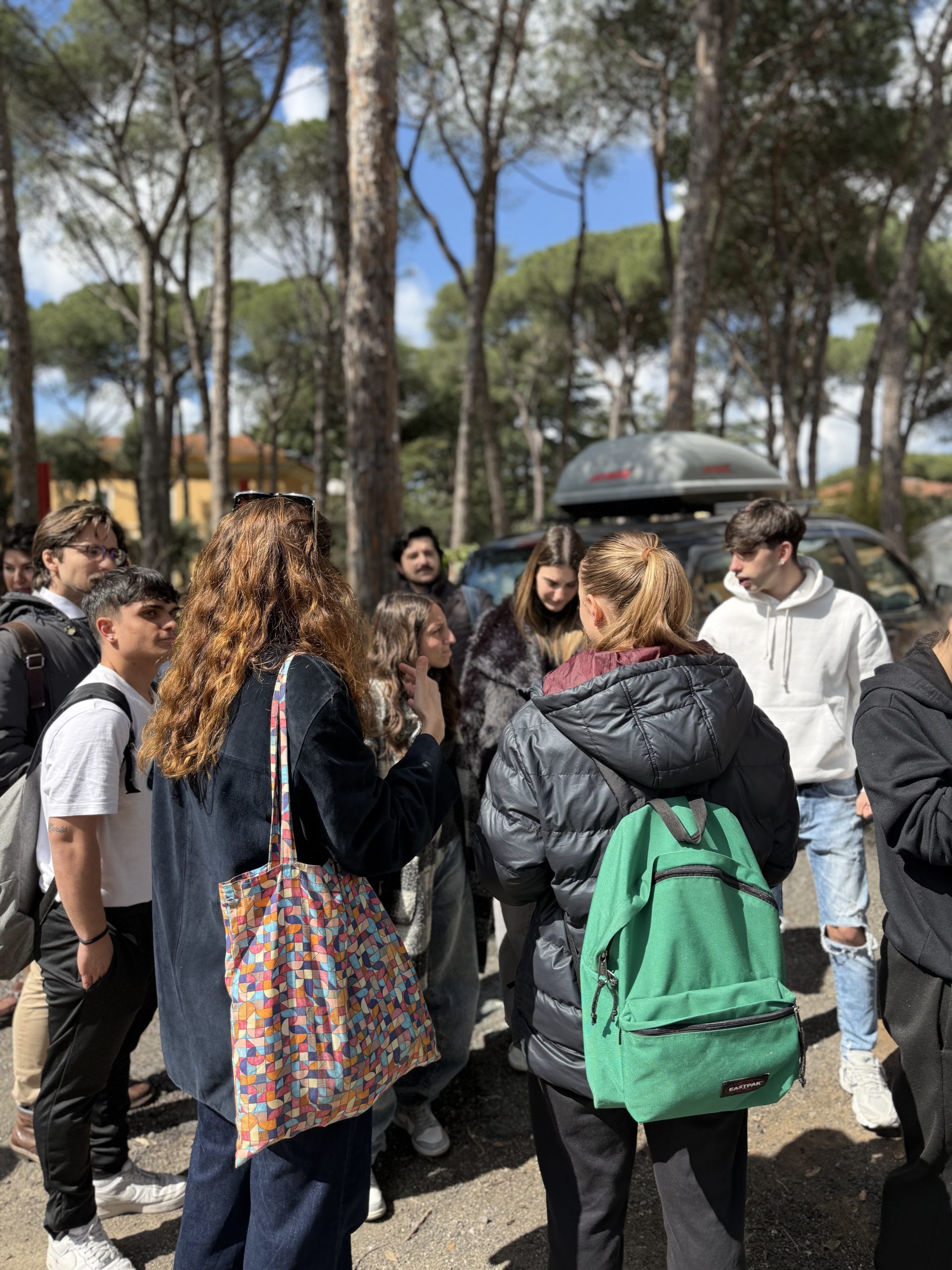
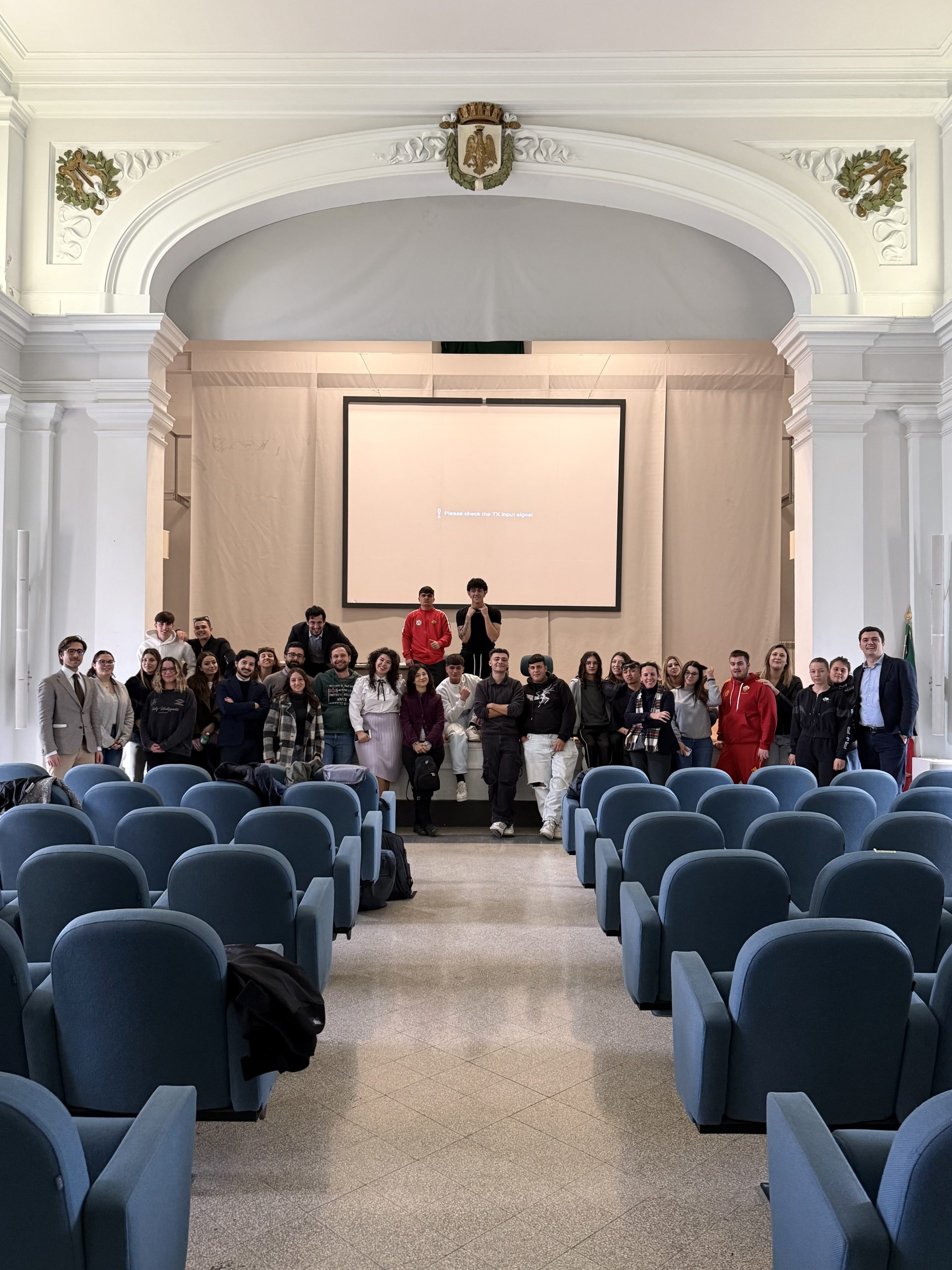
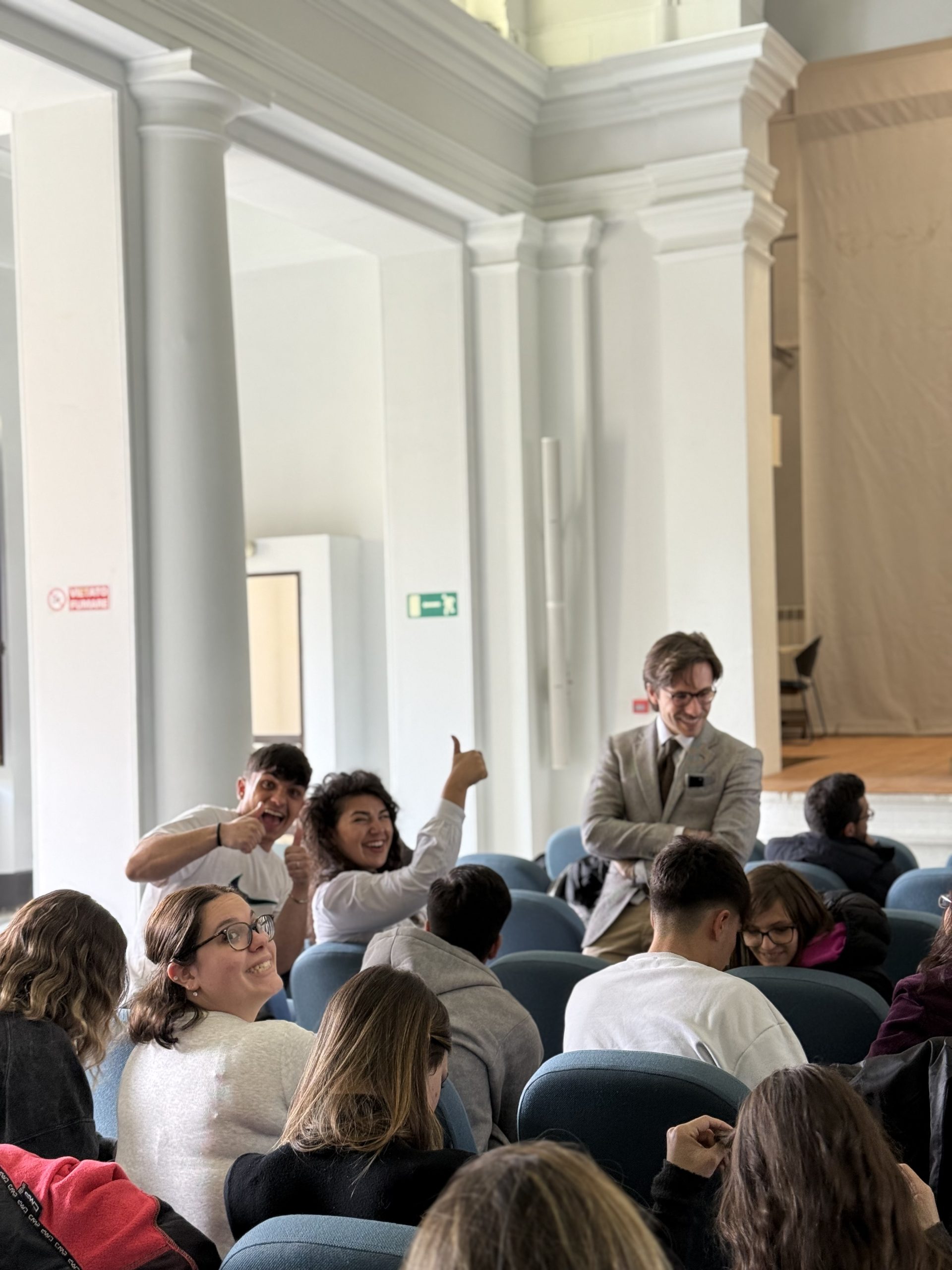
On March 17, 2025, Santa Maria della Pietà (SMdP) opened its doors to students from IIS Domizia Lucilla and LUISS-LabGov researchers as part of the Neighborhood Laboratories Project under the Urban Integrated Plan (PUI), funded by the PNRR, aimed at redeveloping the SMdP Complex. Representing LUISS-LabGov were Drs. Allegra Eusebio, Rubina Michela Galeotti, Marijana Krstic, and Stella Scocco, as well as Drs. Adriano Contardi, Mario Manna, Antonio Persico, and Flavio Petrocelli, who promoted the co-design activities of an innovative laboratory aimed at enhancing the historical and agricultural heritage of SMdP. Contributions included testimonies from representatives of the Cobragor cooperative and the association Ortisti Storici Cura Valle Fontana, as well as Dr. Alvisi from ASL Roma 1. Students from the institute participated actively as potential users of the Complex.
The event began around 10:00 am in Sala Basaglia, attended by students from three different classes of the institute, representing agricultural and hospitality studies.
Dr. Manna opened the event, briefly greeting participants on behalf of LUISS-LabGov and thanking the speakers. Subsequently, the school’s principal, Dr. Ada Maurizio, emphasized the educational value of the project, highlighting the area’s need for redevelopment due to existing socio-economic difficulties. She expressed appreciation for both the institute’s involvement and the symbolic value of the hall hosting the event.
Next, Dr. Baldini from the Department of Urban Planning of Roma Capitale recalled with satisfaction the earlier meeting held at IIS Domizia Lucilla on January 23, 2025, which produced original and interesting proposals. Dr. Baldini emphasized that Rome is Europe’s largest agricultural municipality, presenting significant opportunities for local agro-food production and consumption. He introduced the agricultural potential of Rome, particularly focusing on the SMdP area, which is set to host Europe’s largest urban garden.
Dr. Sabri, Vice President of the XIV Municipality, introduced an anecdote from Rome’s Etruscan era, emphasizing land as a common mother, providing sustenance yet requiring care. This care of the land, he stated, enhances well-being through the efforts and experiences involved in cultivating high-quality products.
Following institutional greetings, Dr. Eusebio outlined the day’s agenda and objectives, urging students to carefully consider testimonies about preserving the memory of agricultural heritage, seeking a balanced approach between urban and agricultural development in a complex city like Rome.
Subsequently, a joint presentation was delivered by Michele Mansi from Ortisti Storici and Emanuele Manta from Cobragor, which included historical and contemporary photographs of the SMdP area and Casal del Marmo. This presentation focused on the historical evolution of SMdP’s agricultural system from the Etruscan period to the present, emphasizing its agricultural and health-oriented legacy. It was highlighted that the adjacent area of Valle Fontana has recently become Europe’s largest urban gardening area, thanks to recent interventions by the Metropolitan City.
Following this presentation, a preliminary discussion and reflection involving researchers and students, divided into four groups, took place shortly after 11:00 am.
Around 11:30 am, a guided outdoor tour led by Dr. Alvisi showcased rehabilitative gardening and horticulture activities performed by users of the complex.
After the guided tour, researchers and students returned to Sala Basaglia for a concluding brainstorming session to formulate project proposals. Students were again divided into four groups, each appointing a spokesperson. The feedback phase yielded interesting proposals aimed at regenerating the SMdP complex through enhancing its historical and agricultural heritage: establishing partnerships with nearby schools for developing organic crops, creating seasonal urban gardens, setting up a center within a pavilion for processing products, organizing public courses on product processing for diverse age groups and individuals with disabilities, and promoting on-site agricultural practices through social media.
The event concluded on schedule (1:00 pm) with a group photo of researchers and students.