On January 23, 2025, researchers from LUISS Guido Carli University and Labgov ETS (Dr. Allegra Eusebio and Rubina Michela Galeotti, as well as Dr. Mario Manna, Antonio Persico and Flavio Petrocelli) met with students from the Domizia Lucilla Institute to promote the co-design of an innovative bioeconomy laboratory in the Santa Maria della Pietà Complex (SMdP). The initiative is part of the Integrated Urban Plan (UI), funded with resources from the PNRR, to redevelop the SMdP area. The initiative aims to promote awareness of the area’s potential value and stimulate innovative and sustainable ideas for value creation, while respecting its strong healthcare vocation.
The event was held at the institute’s main hall (a short distance from the SMdP), and dozens of students from the agricultural and hospitality departments participated.
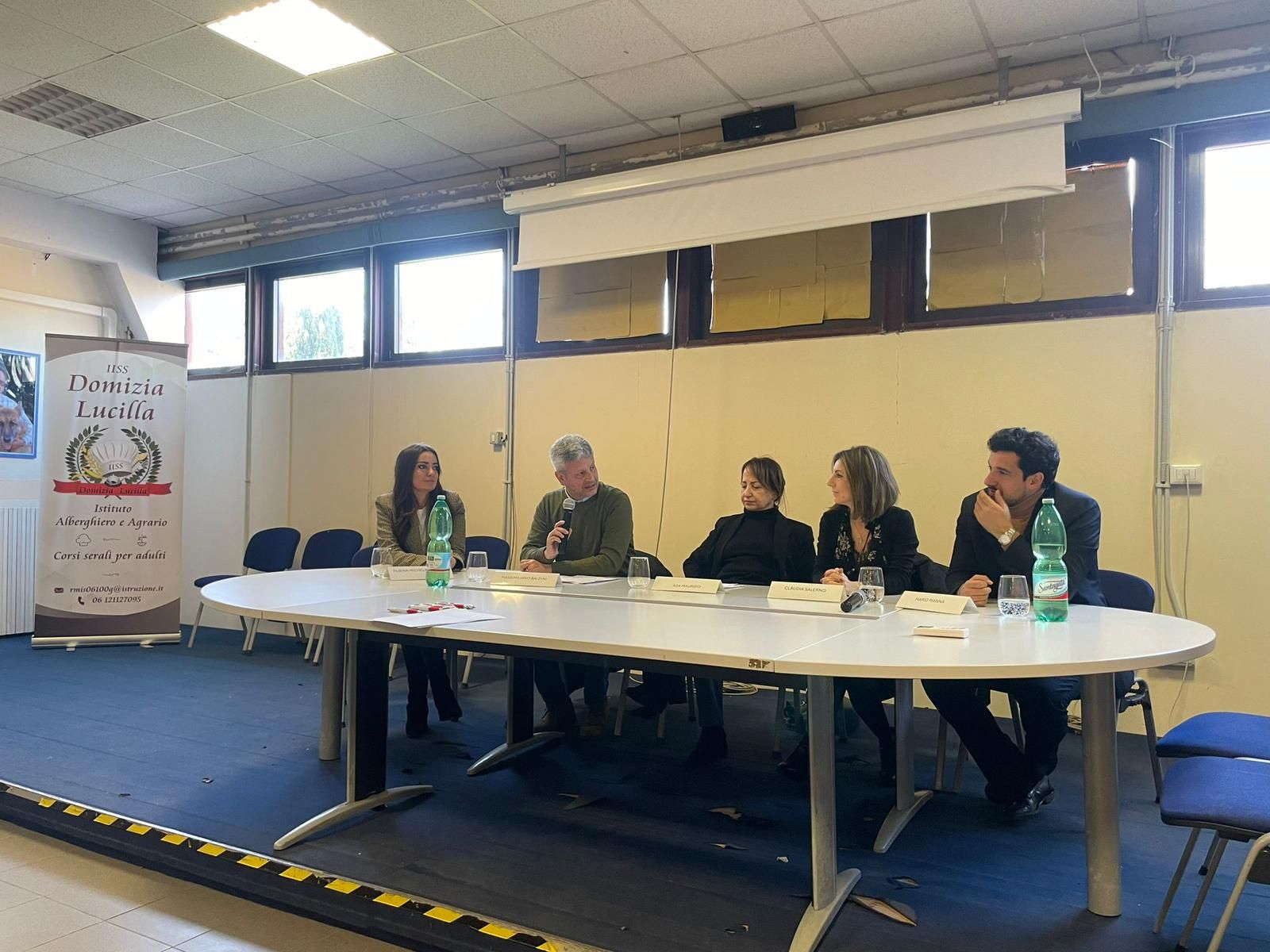
As per methodological protocol, institutional greetings and speeches occurred at about 10:00 am. Headmistress Ada Maurizio welcomed the guests, urging active participation in co-design. This was followed by the intervention of Dr. Massimiliano Baldini, representing the Urban Planning Department of Roma Capitale, who explained the characteristics and opportunities of the plan for the regeneration of the SMDP. The subsequent speech by Dr. Claudia Salerno, councillor for educational and school policies of the XIV Municipality, highlighted the importance of students’ involvement in the co-design activity in order to develop creative, innovative and shared solutions.
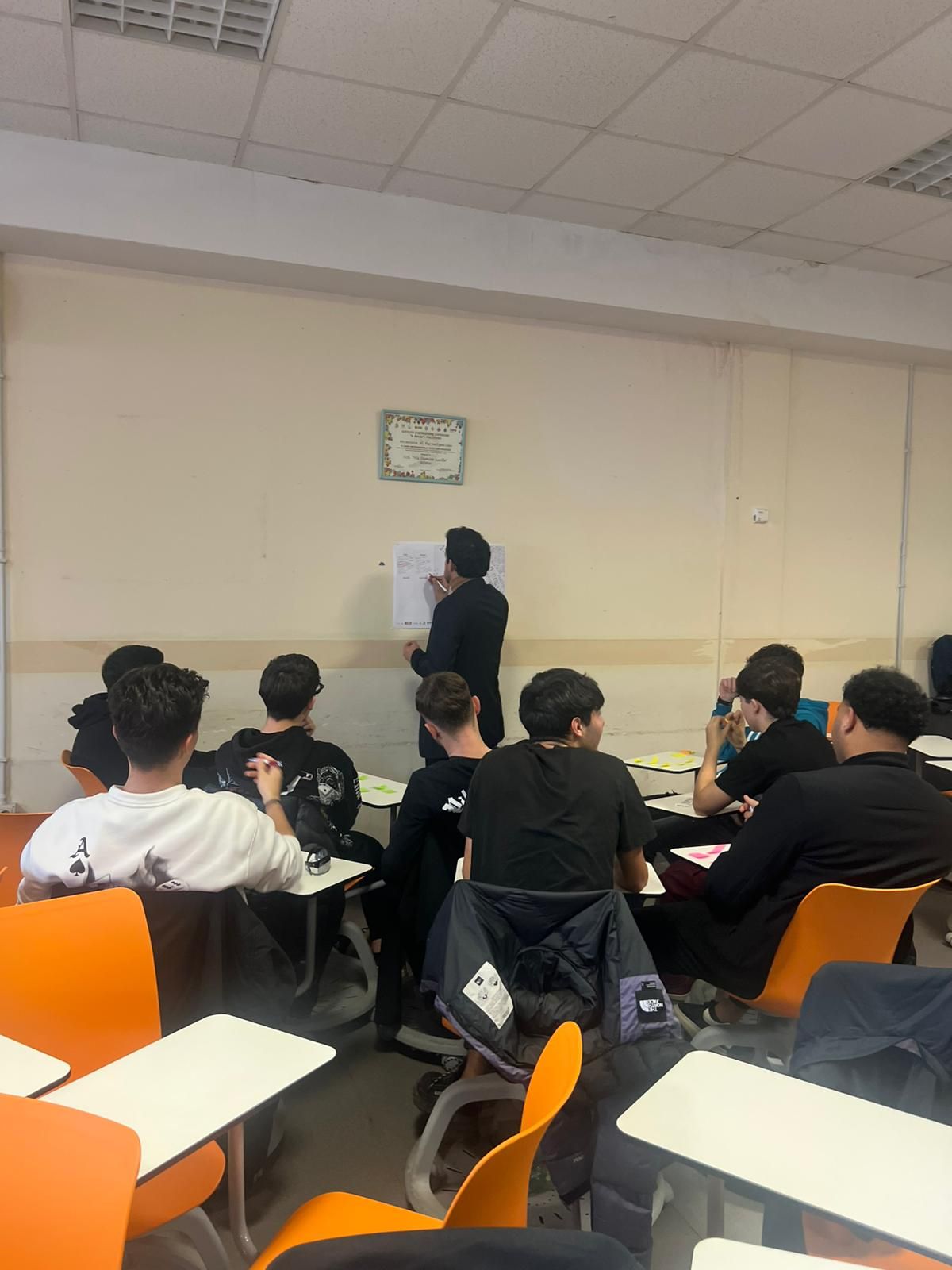
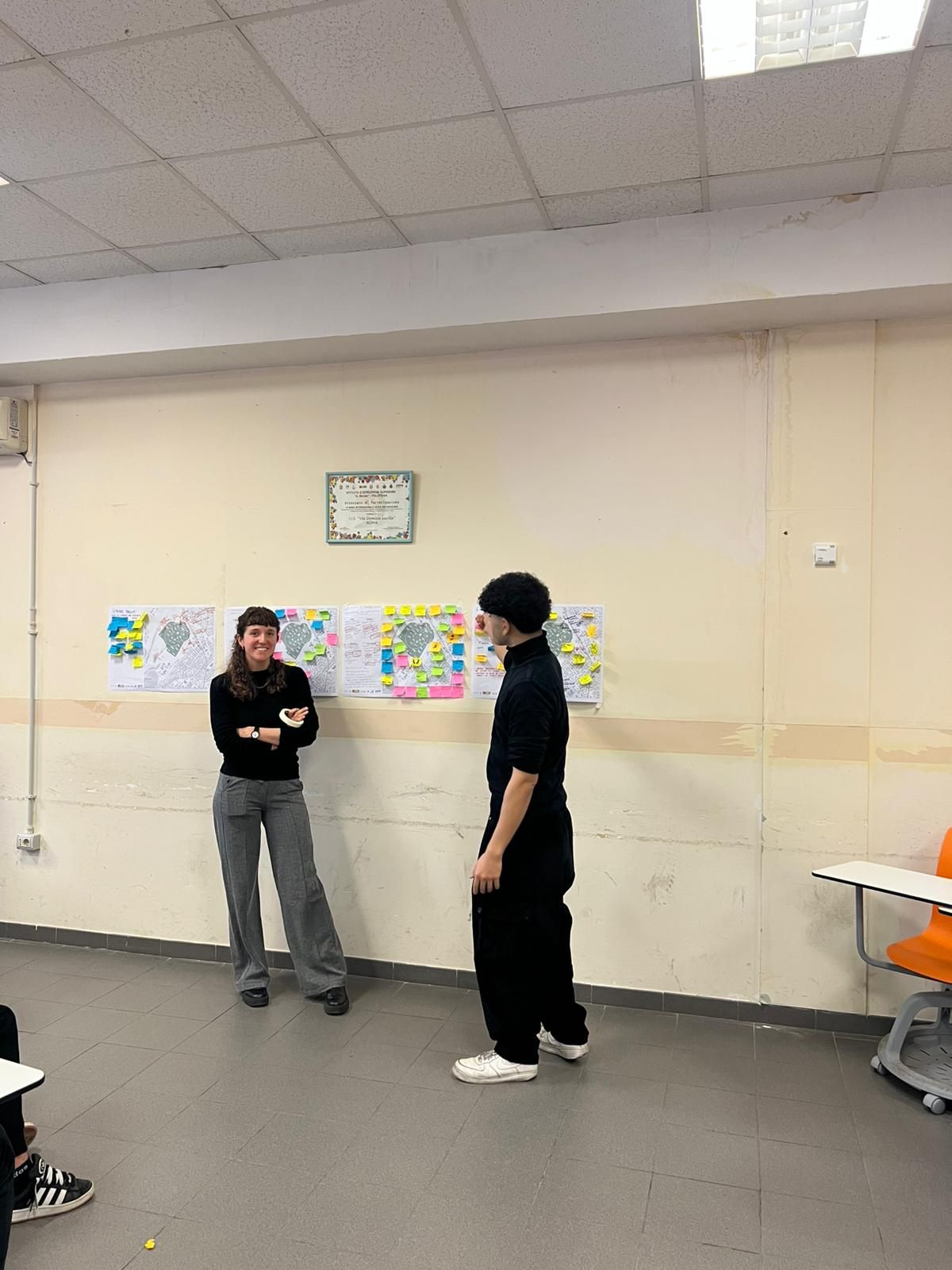
The co-design activity then began, and students split into four groups, which chose expressive names: “the Avengers of Santa Maria della Pietà,” “Generation Z,” “Mind,” and “the Visionaries.” Each group’s work was coordinated by at least one researcher who stimulated the students’ brainstorming activity. The discussion was fruitful, and ideas and proposals revolved around food, culture, health, and sports. The groups were provided with post-it notes, markers, and an A2 sheet bearing a map of the SMDP and neighbouring areas, with the opportunity to represent graphically ideas related to possible uses of the SMDP.
The group work yielded multiple proposals, often fulfilling at least two of the needs related to the above dimensions. Among the many, we can mention the idea of organising cooking workshops under the banner of interculturality, meeting and listening groups for people with special needs, the creation of a garden for growing herbs and spices, the removal of architectural barriers, and the creation of spaces for sociability and conviviality, including for the enjoyment of cultural and sports events. All this emerged in the final phase of the return of the proposals, which took place in the presence of Dr. Baldini, Dr. Salerno and the Institute’s teachers, in which each group, introduced by the reference researcher, represented by at least one student volunteer, exhibited the proposals developed, which, in summary, enhance the multifunctionality of the complex, promoting sociality, inclusion, psycho-physical well-being and sustainability.