by Giulia Spinaci | Jan 13, 2015 | The Urban Media Lab

Ever since the City of Bologna approved in May ’14 the Regulation on Collaboration Between the Citizens and the City for the Care and Regeneration of the Urban Commons, twenty municipalities have approved the Regulation and fourth-three more are examining it. In this sense, the city of Orvieto has numerous predecessors, but this does not change the fact that it should be considered a success in itself.
Every little, medium and big city that voted in favor of a collaborative governance of the urban commons represents an important achievement along the way towards the end of the practice of devolving power. Active citizens have the chance to take care by themselves of the place they live and to do it hand in hand with the public administration, in a constructive cooperation that brings benefits to the whole community.
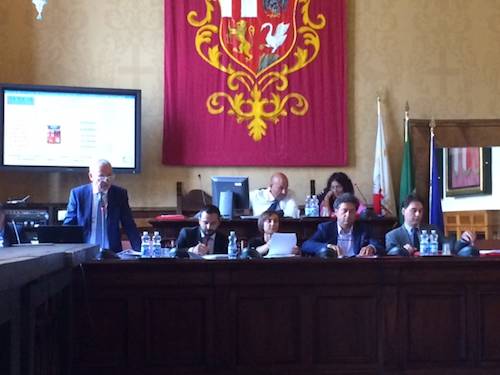
On December 29th, 2014, thus, Orvieto joined the list of the cities that decided to completely revolutionize the way of thinking about the commons, and in particular about the urban ones. The Municipal Council endorsed the Regulation by a unanimous decision. A fact, this, which highlights that behind themes like this, there is a common background able to eliminate the differences between the various political factions in favor of a shared agreement. Furthermore, the approval in itself helps avoiding all those cases in which the active citizenship is blocked and even punished (e.g. the emblematic case of Mrs. Ilaria Montis who was fined for having cleaned the seaside of Is Solinas (CI) and for throwing the garbages in dumpsters far away from her house). To regulate a phenomenon does not mean to block it or to establish boundaries and limits, but rather to let it flow according to its characteristics and according to the different realities it takes place in.
The Regulation found its origin in the work carried out also by LabGov experts in Bologna and is centered upon the principle of horizontal/circular subsidiarity enshrined in the Italian Constitution (Art. 118) in an innovative way. Article 118 should not be interpreted as a way of merely dividing the responsibilities between the private sector and the public one, but rather as a shared background on which a new model of society shall be built. A society where active citizens can practically contribute to the renewal of the reality they live in. Obviously, this implies that the Regulation cannot be applied everywhere in the same form. Changes are firmly supported in order to adapt the goals to the concrete situation and to the history and values of the city at issue.
The analogies and differences between the four different versions of the Regulation approved in the cities of Bologna, Ivrea, Siena and Chieri were already analyzed, through seven parameters. Now, with the same methodology, it has come the moment to present the vision that the city of Orvieto decided to offer with the approval of the Regulation, in comparison to the original version of Bologna.
- Principles. The Municipality of Orvieto maintained all the original principles that constitute the foundations of the original version of the regulation. However, an interesting voice was added by the City Council of Orvieto during the drafting phase: art. 10 makes an explicit reference to the Framework Convention on the Value of Cultural Heritage for Society, approved in Faro in 2005. In the words of Paolo Maurizio Talanti, the Democratic Party councilman of Orvieto “a city with such an artistic and cultural heritage like ours shall know that the knowledge and use of the cultural heritage is an individual right […]”.
- Subjects. For both Bologna and Orvieto, the subjects taken into consideration are the active citizens, namely “all subjects, single or associated, anyhow gathered in social formations, also of entrepreneurial type or with social vocation, which are active for the care and regeneration of urban commons”.
- Organizational aspects. Unlike the case of Bologna, Orvieto does not explicitly provide a unique office for the evaluation of the proposals of the active citizens, thus provoking an organizational gap that risks to provoke overlapping procedures and ambiguity during the implementation. In fact, according to the topic, each proposal will be submitted to the competent office.
- Type of administration. The kind of administration that takes shape in Orvieto is based on the authorization by the public offices, which are competent to technically evaluate the feasibility of the projects.
- Relevance of the private assets. The Regulation of Orvieto puts a particular emphasis on the public spaces as objects of the care of the active citizens, leaving however the possibility for a shared management of the private spaces for public use. Worth mentioning is the fact that the regulation merges the provision about the public spaces with the one about private ones in a unique norm.
- Forms of support. This is probably the most interesting aspect of the whole Regulation of Orvieto. In fact, the text completely eliminate all forms of exemption and relief from levies and local taxes and of administrative facilities, such as in obtaining permits. The Municipality may contribute to the reimbursement of costs only in those cases where an in-kind support is not possible.
- Disputes. Contrary to the Bologna Regulation, which provided for the creation of a Conciliation Board in order to solve future disputes, the City Council of Orvieto did not, thus leaving open the possibility to submit the arising cases to the ordinary jurisdiction instruments.
Strongly adapted to the local situation, the Regulation of Orvieto, with its strengths and weaknesses, constitutes a remarkable example of how much our society is changing and how well the Regulation fits in this challenging and stimulating environment.
_________________________________
Il Comune di Orvieto approva il Regolamento sulla collaborazione fra cittadini e amministrazione per la cura e la rigenerazione dei beni comuni urbani!
Il Comune di Orvieto ha due settimane fa approvato il Regolamento sulla Collaborazione tra Cittadini e Amministrazione per la Cura e la Rigenerazione dei Beni Comuni Urbani. Seppur con un testo adattato alla realtà della città, l’approvazione del Regolamento dimostra un rinnovato modo di pensare sui beni comuni urbani che si sta diffondendo velocemente in tutta Italia.
by Edoardo De Stefani | Nov 23, 2014 | The Urban Media Lab
The capitalist world-system has entered a multiple crisis, while the stalemate of the growth function hampered the socio-economic progress. Energy provision, climate stability, food production and distribution, land access and political stability are consequentially threatened by a system that is no more sustainable and self-reliant. Moreover, the congestion and the rivalry upon the use and exploitation of resources leave no room for development, at least if the current structural paradigm is not questioned. It is far obvious that we need a transition but in order to have a legitimation, it is necessary to establish a new contract that can meet priorities even under a regime of resources constraint. The focal question is then to redesign existing structures in a functional way and appealing to the notion of justice.
In this sense we need to protect the opportunity of people and their ability to participate to the public life; arguably the claim here is simple: if the functioning of the society is based on cooperation, solidarity, democracy, equality and responsibility, then it would be easier to talk about commons. I feel that whenever there is sufficient reason to claim ownership and inclusiveness over public goods -here in the sense of common sharing of resources and assets- there would be enough reason to take care of those commons.
The end of the story is that, if people have the chance to enjoy the public space as something that makes them feeling attached to it, then it is naturally consequential that new inputs and energies will flow in.
The power of commons is the one of making the latent potential of people concrete: the transformative evolution of the capacity of the citizens to serve and cultivate urban life is the product of integration, inclusiveness and social enrichment. However changing paradigm is not merely a matter of smooth transition, rather is it a matter of complete regeneration that goes beyond the classical schemes of social struggles -(see also: TRANSITION EUROPE).
Here there is the twofold dimension of such evolution: revolution is accompanied by innovation and, as far as innovation is concerned, lots of activities founded justification and legitimation across Europe.
In France, the CEPEL centre (Centre d’études politiques de l’Europe latine) follows four main points to study the evolution of such social transformation: public action, identities of citizens, political élites and sociology of elections. Laura Michel, member of CEPEL and professor of Public Action and Governance in Montpellier (Languedoc-Roussillon) underlines how the decentralization of institutional responsibilities and resources criticities forced the inception of new forms of multilevel governance and multi-stakeholder accountability.
First of all, the transformative process that involved the institutional structure is significant for the fact that restored the significance of participatory democracy: citizens, corporations, private entities and public actors are now participating on equal footing at the managerial process.
If we translate it to National ground or to Urban networks, we could easily discover how enhanced participation nourishes people imagination and enhances their willingness in contributing for making the city a better place where to live. Consequently also enterprises and investments would be attracted by a model of active citizenship; the new urban ecosystem would not be anymore a mere storage loci for the depletion of resources,but an incubator of tangible and intangible resources that develop spillover effects throughout the territory.
Clearly we cannot yet simply consider the realm of Commons as a ready to go policy, however it is significative how the paradigm of social innovation is currently spreading all over Europe.
In many Countries it is possible to experience the contours of a new urban outline and the reason is simple: the territory is full of qualities and resources that are not fully exploited and in some cases urban ecosystems resemble the cemetery of lost spaces. Giving life to ghost cities is the effect of a participative governance.
If we investigate our assumptions, it would be possible to understand that the call for a new urban ecosystem is not the sum of few isolated cases, but that the path of Commons -if rightly guided- can lead far away from the classical islands of sufficiency.
Here we have some interesting examples of how social innovation and multi stakeholder participation can produce an high quality social technology, as it positively impact on economy, culture and sustainability.
1. Participatory urban neighborhood, Vienna, Austria
“ Located in the city of Vienna, Austria, the project identifies a set of rules for establishing a sustainable urban neighborhood based on democratic principles of governance, communication, and participation. Instead of proposing a pre-designed urban tissue, the strategy tenders a collective pattern based on a grid of gardens that structure the area. The gardens function as a framework for physical and social development, outlining a porous fabric with low environmental impact and a collective space – re-programmable in time, while furthering ownership capacity-building. The area will first operate as an urban park; a matrix of gardens is inserted around existing trees. Gradually the district grows around these gardens and the shared open space. The approach establishes a minimally-invasive intervention that will develop over time according to the needs of the society at every step – a continuous process of small scale growth and appropriation, with autonomy at every stage ”.
source: Holcim foundation
2. Holcim Foundation for Sustainable Construction, Switzerland :
“Urban growth must deliver urban quality. Cities are defined not just by built density, but also interaction intensity. Only when urban growth results in urban quality will it be accepted by its inhabitants. In the context of the loss of local identity and the globalization of architectural styles and technologies, the research of Yoshiharu Tsukamoto shows that progress and local identity do not need to be mutually exclusive”.
source: Holcim foundation
3. potagers collectifs et familiaux de Bruxelles
The topic of urban gardening is very interesting insofar as it is linked to collective participation.
For example, the Brussels environment is populated by forms of “jarden de quartier”, based on a special project that allows the forming of “contract de quartier durable”.
Some examples of urban gardening in Brussels are: Velt Koekelberg, Jardin majorelle-moelenbeek, Jardin collectif.
Useful links:
www.bruxellesenvironnement.be
www.lizchristygarden.us
www.treebranch.org
www.kbs-frb.be
www..promethea.be

by Stefano Speranza | Nov 23, 2014 | The Urban Media Lab
 On November, 19th the students attending the course “Communication theory” held by Professor Sorice at the department of Political Science of LUISS Guido Carli, had the possibility to meet Professor Giovanni Moro and to talk with him about “Active Citizenship and Quality of Democracy”.
Giovanni Moro was born in Rome in 1958. He is a political and organization sociologist who conducts research and consultations on citizenship and on related issues, such as civic activism in public policy, new forms of Governance and corporate responsibility.
He teaches Political Sociology at the Faculty of Education at the Roma Tre University, and he has been president of FONDACA since its foundation in 2001. He has written extensively on these themes and in 2001 he established his network of European politics, the Active Citizenship Network.
The lecture of Professor Moro started with a foreword about his book, which stresses the quality of democracy and how active citizenship has to deal with it. “My research works deal with anomalies – affirmed Professor Moro – as the philosopher Thomas Kuhn pointed out during the 60’s”.
As we should know, a paradigm changes when anomalies emerge and create new standards. Professor Moro studies and analyses anomalies in the democratic citizenship paradigm and states that “the activism is one of these anomalies”.
After having recalled to the audience the differences between point of view and standpoint, Moro explained what there is inside the democratic citizenship paradigm, namely working together for a common goal, to guarantee quality of life standards and to have these standards recognised by everyone and, finally, to build an institutional system which protects all these issues. “This paradigm takes into account the principles of equality, membership and participation, but it does not work anymore” stated Professor Moro.
This paradigm does not work anymore for various reasons, such as the existence of lots of social groups and, consequently, new democratic citizenship paradigms in the plural sense emerge, which include people continuously moving, ideas always changing and a modification in the mass culture. “All of these traits represent anomalies and contribute to the evolution of the democratic citizenship paradigm” affirmed Professor Moro closing his opening remarks.
Then, he continued his enriching lecture following some clear paths.
The first one cleared the audience’s mind about the concept of active citizenship. “Active citizenship is a practice of citizenship that consists of a variety of organizational forms and collective actions designed to implement rights, treating commons and/or support people in conditions of weakness through the exercise of powers and responsibilities in policy making”. This was the general definition given by Professor Moro who soon explained how this kind of citizenship is divided into different forms of organization with different action fields, that however have to play three or more roles, such as the protection of rights that are proclaimed in laws or patrimony of the common consciousness which are constantly in danger, the care of the Commons and the empowerment of and support to people in difficulty.
The organizations which I am referring to operate through advocacy and through providing services. “I have to say that citizens have very strong powers. I mean the power of influence on the course of things and on the behaviour of other subjects” Professor Moro stated referring to all that innate power that the organizations hold, such as the power of producing knowledge (e.g. knowledge on illegal dumps), symbolic power to make consciences change (e.g. on themes regarding women’s rights), effective power (e.g. to remove architectural barriers for handicapped people) and power of legitimization.
Secondly, Professor Moro explained how these organizations work, and provided the audience with some results of the effective existence of these organizations. “It would be a catastrophe if these organizations were unable to operate as civic organizations all over the world” was the sharable statement made by Professor Moro. Indeed, some of the results collected by these organizations concern enacting laws, activating resources, changing the mass culture and introducing new ways of administration and management of public services.
Getting back to the first remarks, Professor Moro explained why these organizations represent a civic anomaly. They are an anomaly both compared to the Standard View of the participation, both as opposed to the before mentioned democratic citizenship paradigm. Actually, on the one hand we can see how these anomalies exist autonomously from the formal political system, act in policies not in politics, and do not involve the whole electoral constituency. On the other hand, as opposed to the democratic citizenship paradigm, they change the concepts of belonging, participation and rights, seeing the citizens not only as beneficiary but as promoters of rights not acknowledged yet.
Lastly, Professor Moro focused more in depth on the topic of the seminar, that was active citizenship and quality of democracy. “It is an interesting issue because it permits to understand how much a country is democratic and under which aspects it must be empowered or is considered at an excellent point” he affirmed. To do this, Professor Moro has analysed what Professor Leonardo Morlino theorized in 2013 about the three dimensions and the various standards of democratic quality, and he added very useful specifications regarding other standards and specifications, which can be then converted into indicators.
After having answered to some questions from the audience, Professor Sorice made a closing remark and thanked Professor Moro, the students and the Labgovers who attended the seminar .
![The future of transportation?! Now it’s also a series..]()
by Nicolo Traina | Sep 26, 2014 | The Urban Media Lab
Is difficult to say what will be the future, and when it will comes, especially in a fast field such as transportation. Some Years ago we imagined flying cars, teleportation and advertising everywhere, a kind of “blade runner” reality. Today we already have prototypes of cars that drive themselves or streets that incorporate solar panels to light them self and, for example, alert you where the parking is free.
Definitely one of the major problems for us Italians in general, but also for anyone living in a metropolis, is the traffic is blocked and the roads impassable. Getting in the center of Rome or Milan often takes hours, and even on the highway is always difficult to calculate travel times with precision because the traffic is huge and always a great unknown.
Many cities are developing the car-sharing to reduce the number of cars in the parking and streets, or forms of economic-help for those who commute to work or university with a car full rather than single-car. Certainly this are good ideas but where will the future of transport?
In US was born in the last few months a new mini-series in episodes to talk about these problems and their possible solution that will drastically reduce one of the major problems of work: to get there. “The future of transportation” will examine the full extent of America’s transportation challenges and explore how US cities are reinventing the way we navigate them, focus on the Initiatives and technologies being developed right now That will change the way we move around cities in the next 5, 10, and 25 years.
The series will be split into three parts. We’ll begin with the elusive search for “The Perfect Commute,” exploring new and better ways to Enhance what can be the most infuriating part of the day, the journey to and from work. Next we’ll examine “The Smartest Trip,” focusing on the crucial connections between transportation and progress and achieving sustainability. Finally we’ll document the current state of “Design in Motion,” sneaking a peak at the Technological and planning innovations That will fundamentally alter America’s transportation landscape.
Now let’s see what will be and let’s play our role, starting to fill up our car !!
http://www.solarroadways.com/intro.shtml
http://www.citylab.com/special-report/future-of-transportation/


by Nicolo Traina | Sep 18, 2014 | The Urban Media Lab
If you think that Mexico it’s only sombreros, nachos and tequila you are wrong, maybe in a few in the cliché-list there will be also crowfunding.
Crowdfunding is the practice of funding a project by raising many small amounts of money from a large number of people. Supported in recent years by increasing internet access, crowdfunding has been gaining momentum, even if it has been out there for hundreds of years (e.g. church’s alms or tandas) new technologies now allow larger numbers of potential donors or investors creating event or spreading the word.
Why crowdfunding and Mexico?! Because in Mexico borrowing from bank requires high securities and involves high interest rates, and this literally blocked the capitalistic spirit and the culture of growth and investment. That’s why crowdfunding could fill the gap and solve a lot of problems for all the small and medium enterprises that would like to grow the businesses and who have not access to the traditional system.
A recent report, from the Multilateral Investment Fund, member of the Inter-American Development Bank, called Crowdfunding in Mexico: The Power of Digital Technologies to Transform Innovation, Entrepreneurship & Economic Inclusion it’s analyzing the opportunities and challenges that Mexico will faces to foster this practice but also the optimism for the success of crowdfounding in creating the country’s entrepreneurial culture.
But will be a long way, there are big challenges like regulating, businesses education, development and diffusion of internet technology, and other basic aspects to make people sure of what they are doing and understand what they to take informed decision. For example now crowfunding is naturally seen with some skepticism among the main part of the population,but working on the above-mentioned challenges would unveil the potential benefits of accessing to a new and affordable financial source, close and possible for everyone.

