by Ornella Martinello | Jul 11, 2016 | The Urban Media Lab
Join LabGov in Amsterdam at the “Peer Value: Advancing the Commons Collaborative Economy” Conference.
The event will take place next September 2-3, 2016, hosted by the city of Amsterdam, in collaboration with P2P Value, Wikimedia, CSG, Shareable and Ouishare. Its aim is to address the world of the commons on a global scale, to share ideas and offer innovative insights through a mixture of conversations and action plans.
 The event will cover three broad topics:
- P2P: Inclusive Politics, Activism and Law for the Commons;
- Decentralized Tech and Beyond: Global Design, Local Production;
- From Platform to Open Cooperativism.
Participants will offer ground-breaking viable solutions trying to answer to the following question in an open debate:
- What are the conditions that encourage communities to work as peers, creating commons?
- What are the best practices communities can adopt to safeguard their resilience?
- Decentralization – why is it important, and how is it implemented and maintained?
- How can the working methodologies honed by well-established digital communities act as transitional guidelines for sustainable “material” manufacturing?
- What about social innovation and livelihoods – how does contributory and open accounting work with the systems of value creation found in CBPP?
- How can civil society participate in recommending policy proposals that support CBPP for governments at the local, regional, national – even global – levels?
Registration are now open via this link.
For further information visit the event website.
Registrati ora alla conferenza “Peer Value: Advancing the Commons Collaborative Economy” e raggiungi LabGov ad Amsterdam i prossimi 2 e 3 settembre! Parleremo di commons, cooperazione e condivisione!

by Ornella Martinello | Jul 4, 2016 | The Urban Media Lab
If we had to name the current crossroad of studies and events about the commons, we could not but think about Utrecht. In the past few weeks, LabGov attended the Symposium “Cooperation in the field” hosted by the city university and IASC dinner debate there. But there is good news: we will walk our road to Utrecht again!
As anticipated in our previous post, IASC dinner debate was the occasion to launch the XVI IASC Biennal Conference, which will take place in Utrecht from the 10th to the 14th of July, 2017.

The event will be jointly hosted by the “Institutions for Collective action” research team of Utrecht University together with the latter’s strategic theme “Institutions for Open Societies” research team.
600 academics, practitioners and stakeholders in the field of the commons, common-pool resources and cooperatives will gather to exchange their idea about the main theme of the conference, i.e. “Practicing the commons: Self-governance, cooperation, and institutional change“.
The event will represent an outstanding chance to meet, expose and connect. Attendants will have the opportunity to share practices and learn from each other’s experiences. They will also have the chance to focus on the developments of common-pool resources and cooperatives in the Netherlands through public events and field trips.
Debates will cover 8 topics:
- Recipes for resilient cooperation
- Issues of exclusion and control in the formation, defense and governance of commons
- The impact of the commons
- Methods and models to study the commons
- Polycentric governance of global resources
- Crisis on the commons?
- Commons and the city
- Corporations, governments and commons
A call for contributions is open until October 15th, 2016 on these topics.
Up to now, three high-level scholars confirmed their presence:
Saskia Sassen, Robert S. Lynd Professor of Sociology and Chair of the Committee on Global Thought, Columbia University.
Juan Camilo Cárdenas, Professor at the Universidad de los Andes in Colombia. The focus of his work lies with the analysis and design of institutions (rules of the game) that promote cooperation among individuals and the solution of social dilemmas in the most fair, efficient, equitable, democratic and sustainable manner possible.
Jane Humphriesk, Professor of Economic History and a Fellow of All Souls College Oxford.
Tine de Moor – IASC President and Full Professor of ‘Institutions for Collective Action in Historical Perspective’ at the Department of Social and Economic History, Utrecht University – explained the importance of this conference and its aim:
With this conference, we aim to consolidate and expand the important work of the IASC on the study of the commons, both in academia as well as ‘in the field’. As previous conferences have shown, commons are important worldwide, both in the present as well as in the past. Especially in Europe, due to the increased privatization of public goods and the impact of the economic crisis over the past few years, commons and other forms of institutions for collective action have received increasing attention from both academia as form society itself; Europe even seems to experience a new ‘wave of collective action’ in virtually every sector of society: new forms of institutions for collective action pop up in energy, care, infrastructure and food (see for example the results of recent surveys by our research team ‘Institutions for Collective Action’).
[..] We intend to demonstrate that the knowledge brought together within the IASC by scholars and practitioners dealing with the commons from developing countries can be a great source of inspiration for current western developments, in terms of resource management.
IASC is waiting for you! Registrations will be open from February 2017.
For further information visit the official event webpage.
Se dovessimo scegliere il centro nevralgico dello scambio di idee, esperienze e buone pratiche in materia di beni comuni, oggi non potremmo non pensare ad Utrecht. Ci siamo stati spesso nelle scorse settimane. Ci torneremo tra il 10 e il 14 luglio del prossimo anno per la sedicesima edizione della Biennal IASC Conference. Si parlerà di commons e cooperazione alla presenza di esperti di alto livello, in una cornice mozzafiato.
by Chiara Fratalia | May 20, 2016 | The Urban Media Lab
Fulcro della sperimentazione tecnologica delle pratiche di condivisione, le città sono diventate il centro del dibattito sulle politiche pubbliche che riguardano la sharing economy. Città di tutto il mondo, come Seoul, Amsterdam e Londra, hanno cominciato a implementare programmi, legislazioni e regolamenti-quadro per supportare la sharing economy locale. Una di queste città è Milano, patria di Milan Sharing City, un progetto compreso nello Smart City Program.
Abbiamo recentemente avuto il piacere di intervistare Renato Galliano, supervisore di Milan’s Smart City e del progetto Sharing City. Gli abbiamo chiesto di parlarci delle origini di questo progetto, e ci ha anche fornito una prima valutazione dei suoi successi e dei suoi limiti, riguardanti anche argomenti di importanza fondamentale come la partecipazione e l’inclusione.
Questo articolo è il primo d una serie, co-prodotta da LabGov e Shareable, che vuole mettere in evidenza le politiche pubbliche che promuovono la sharing economy e la tutela dei beni comuni urbani.
Enjoy the interview!
“Monica Bernardi and Christian Iaione: How did Milan Sharing City begin?
Renato Galliano: The Smart City Division has always taken a keen interest in innovative processes, especially in the urban setting and, above all, in a period—like this—of economic paradigm change. We looked at the sharing economy as we [had] previously looked at other [developments], such as innovative spaces (ex. co-working) and the relationship between [startups] and traditional industry. Recognizing [the potential of the sharing economy to become] an important phenomenon from different points of view, in early 2014 we decided to accompany its development.
[At that time], there were already several groups working on the topic. Sharexpo and Sharitaly were the main ones. [Sharexpo encouraged] reflection on the potential of sharing economy to [mitigate] the extra load on the city that [Expo Milano] would bring. We engaged with all the actors involved an open and collaborative dialogue, to learn about their needs, goals and problems.
[Our] working method, based on a listening phase, followed by a participatory phase and, as a last stage, the delivery of [a public policy instrument], has been adopted also in other policy areas: in a macro way for the Smart City theme, involving big urban players such as universities, businesses and [voluntary and community organizations]; and also for specific phenomena like co-working.
[Regarding co-working], listening to the actors involved [encouraged] us to rethink our first idea of intervention. [Instead] of creating a public co-working [space, we decided to] support the existing structures, without becoming a player in opposition [to them]. We developed ad hoc public policies such as the Co-working Register and the coworking spaces’ voucher supply system.
The same path has been followed for the Sharing City. [During] the initial phases, we collaborated [with the public] on a draft document on the topic. [We brought the final document] to the City Council [pdf] for approval and published guidelines for the sharing economy [pdf], launching a series of collaborative tools. One example is the Register of the Sharing Economy’s Actors [pdf], [which includes a list of] experts and operators (to date more than 100), followed by other activities [brought to our attention] during consultation, such as: civic crowdfunding platforms; Co-HUB, a physical space to cultivate the culture of sharing and the collaborative economy; and a call from our social innovation incubator, FabriQ, for startups working in the field.
I’d like to underline that we worked on two levels: at the local level, as seen, but also on [the national and international] levels. [We liaised] with the EU Committee of the Regions, which was working on the Opinion on the Sharing Economy at the EU level. On the national level, we worked on a proposed national law on the sharing economy with, the Italian Inter-parliamentary group for innovation, Forum PA, and ANCI. [We also worked] with some international operators such as AirBnb to define specific agreements. However, I believe that public policy [should not aim] to lock the sharing economy within stringent regulatory frameworks, since it responds to a real need—social or economic—that goes beyond the policies adopted at local, national and international levels.
What unites Milan’s various sharing economy policies?
We framed the Sharing City project [within the larger] Smart City process. The latter is a transdisciplinary public policy, and the mandate is of coordination—not of realization. The topic of the smart city is [appreciated less for its] technological dimensions and more from the citizens’ perspective. Within this “human smart city”, the sharing economy represents a tool, among others, to improve the quality of life of city-dwellers and enterprises.
[It is essential that the] different divisions [working on the smart city] dialogue and work [together]. The real problem is related not to the content of the projects, but to the traditional, “siloed” approach of public administration. To overcome this attitude is not easy, but in Milan the entire smart city process has been conducted in a horizontal way, analyzing internally the city’s projects, in a multi-purpose approach and speaking with the individual directors.
What difficulties did you encounter in developing policy for the sharing economy?
The main difficulties are not related to the city itself but to the phenomenon. First of all, the issue of regulation of new unplanned activities that touch corporate interests stratified over the decades. For this reason we decided to work [beyond the] the local level, since some regulatory arrangements depend on national and EU [authorities].
Another general difficulty is connected to the extreme diversification of the sharing economy’s actors, from multinational corporations with international technological platforms to community experiences, such as Social Street, and non-economic exchange platforms of goods and services. The diverse actors hold dissimilar skills, competencies, backgrounds, and economic power, and sometimes don’t recognize themselves as part of the same phenomenon. The approach must be different [for each case], based on specific languages and features.
On the [other hand], the feedback from citizens has been excellent. The public administration’s intervention has been perceived in a positive, non-invasive way, as an accompanying relationship. The current difficulty is to switch from the city level to the metropolitan level. We would like the Register, for example, to take a metropolitan dimension to formally intercept actors and experiences outside of the city.
Which projects have been most successful?
Fifteen high-quality projects were selected through a call and incubated at FabriQ; among them, only two are experiencing some difficulties. [But keep in mind that] the municipality intervened more [at the level of] governance [than at] the projects level. We don’t [directly supervise the projects]. After [an understandably] difficult first phase, the local projects, like Social Street, are doing very well, and are involving a growing number of citizens. The big platforms, like AirBnb, could count on the flywheel effect of universal exposure and are thriving in the city. [Some projects face challenges] related to a series of obligations introduced to respond to real local needs (fees for use of public land, taxes for marketing, etc.).
In terms of projects initiated directly by the municipality, the civic crowdfunding [scheme] is receiving positive feedback. We chose the platform, Eppela, through a public call, instead of creating one by ourselves, and now we are evaluating the projects received [through it].
How would you rate Milan Sharing City’s record on participation and inclusion?
About participation: yes, our process is facilitating participation. It is a subject of interest for [those citizens working on responding to local needs]. These needs can be of an economic nature or related to community building. [In the former case, sharing projects] can produce income for someone or save them money; [regarding] the latter, [projects foster community] relations by encouraging residents’ participation. In addition, the participatory budgeting process, with one million Euros for each of the nine zones of the city, is clearly reinforcing this aspect.
[The issue of inclusion is more closely related to] the content of the projects. For some of them, the main goal is exactly the inclusion of vulnerable subjects; others have cross-cutting [goals]. In general, the topic of inclusion is defined more in terms of social innovation. Therefore, even social businesses’ projects, which aim to solve social problems and favor integration, are able to reduce social exclusion.
An example is the FabLab that will open soon in D’Azeglio Street: the project includes associations, the third sector, schools, other FabLabs, etc., in a logic of deep integration. Other projects that have a clear goal of including specific groups, such as NEET (addressed to young people not engaged in education, employment, or training), or OpenCare, can count on the active participation of FabLab.
The governance dimension is clearly crucial. What new relations and collaborations were established through the project?
The main governance tools that we use are the public calls and the Register, which are inclusive tools by design. They allow a phenomenon to emerge instead of selecting or evaluating the actors that are part of the phenomenon. For example, the Register is public and presents the description of each actor registered. We called them with specific [follow-up] questions [that helped initiate] new interconnections and relations.
In general, new relations are emerging, thanks to the call that allow us to enter into contact with subjects interested in the topic, or through the community’s projects, or in a direct way, as [with] AirBnb. The calls for the Co-HUB space, the crowdfunding platform, and the FabriQ incubator are all important governance tools that are opening new sets of relations.
Are any key actors missing from the Milan Sharing City process as it currently operates?
The entire traditional financial world is still not involved in this discourse. The reason, [I imagine], is that their internal rules do not allow financial institutions to [respond] quickly [to new economic phenomena]. This [affects] not only the sharing economy, but also the smart city discussion as a whole: banks are not able to finance smart city projects, unless they [fall into very specific categories], such as energy projects. In some cases, banks are unable to evaluate the market value of the new platforms, [especially] if they generate a low economic return (as with the platforms for the exchange of goods).
Paradoxically, the stock market [should be] able to assess the value of these platforms, since it doesn’t value only the [projects’] budgets, but also their potential for development, the involvement of other actors, and so on. At some point, the involvement of the financial world will become necessary; otherwise [these initiatives will suffer from a lack of funding].
What will happen to Milan Sharing City in the future, especially in view of the coming elections?
The phenomenon has started, and in my opinion it cannot be stopped. The future is uncertain; [soon we will hold] elections, and a lot will depend on the political approach of the new city government. But even if [the new government is] completely against the sharing economy, the phenomenon will keep going, since it responds to authentic needs. I hope the new City Council will add value to [what we’ve] built [over the past] five years. There are unequivocal figures about the position of Milan in terms of our focus on the smart city, the sharing economy, and social innovation, with awards and recognitions at national and European levels. It would be such a waste not to enhance this legacy and thus lose our competitiveness.
What are the next steps in the Milan Sharing City process?
After working on the emergence of the phenomenon and on the dialogue and agreements with new actors, the goal of the next five years, in my opinion, should be the setting-up of concrete but flexible structures through which the administration can directly dialogue with other stakeholders. Milan should adopt a kind of innovation agency to create new relations and partnerships, and [to address the city’s international standing].
[On the metropolitan level, it would be interesting to see emerge an authority who could] partner with the different municipalities, the chambers of commerce, the universities, and so on, aggregating all the different actors [in order] to promote innovation at all levels.”
Originally published by Shareable, here.
by Cristiano Gatti | May 9, 2016 | The Urban Media Lab
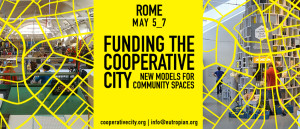 Community financing in collaboration with the Administration. This was the theme of the first event in the three-day long workshop “Funding the Cooperative City – Rome” Nuovi modelli per spazi comunitari, which took place in Rome (@Casa della Città) on 5th May.
In front of the audience, Daniela Patti, Managing Director of Eutropian GmbH in Vienna and Founder of Eutropian association in Rome, introduced local and international speakers:
- Annet van Otterloo, Afrikaanderwijk Cooperative, Rotterdam
- Stefania De Masi, Cascina Roccafranca, Turin
- Jeroen Laven, ZoHo – Stipo, Rotterdam
- Christian Iaione, LabGov Luiss, Rome
- Massimo Allulli, Area Studi ANCI
- Angelo Melpignano, WithYouWeDo Crowdfunding di TIM
Afrikaanderwijk Cooperative and Freehouse bring existing workspaces, entrepreneurs, producers, social organizations and the market together. They promote sustainable local production, knowledge, cultural development and entrepreneurship based on shared responsibility and participation. The primary purpose is for people in the Afrikaander district to reclaim the right to develop their own neighbourhood.
Afrikaanderwijk Cooperative and Freehouse are working in Rotterdam-Zuid’s Afrikaander district to create a stronger and wealthier area for residents and businesses. In order for the Afrikaander district not become the victim of the expansion of the creative city, Freehouse set up small-scale projects to regenerate the districts and its market from within. In collaboration with residents, artists, and fashion designer Freehouse created a workshop for making and designing clothes, a communal kitchen area and a shop selling local products and offering small-scale delivery services. Another crucial element is the Afrikaander Market, which has been in decline for several years because it is not possible to combine products and services on the same stall. With over 300 acts of civil disobedience, they found a solution: red carpet fashion shows presented the work of young local designers and alongside items available on the market. In addition, the one-sided market assortment was expanded with local quality products. At the present, they offer over 48 jobs and various internship to the community.
Fondazione Cascina Roccafranca, founded by Turin municipality and participated by associations and informal groups is an innovative, social and cultural civic centre designed to citizen participation. It is a “container” that provides service: such as an accommodation centre, advice shops, a restaurant and a cafeteria that contribute to economic sustainability. There is also an Eco-museum and activities about ethical consumption, courses (theatre, dance, painting, diction …) reading groups, cinema clubs, foreign language courses, after-school programs, etc. Both the Foundation and other actors organize the activities and the services.
There are 100 courses involving over 3500 people, not only from the neighbourhood but also from the entire city. Actually, 40 volunteers and 20 specialists work in the Foundation. Through the improvement of relationship among different ages, cultures and actors, the Foundation wants to encourage citizens to be a part of their community and to work not only for their private needs but also for the commons. To do this, it is necessary to focus on citizen rights, social cohesion and new models of cooperation (especially PPP).
Zo-Ho is Rotterdam’s makers’ quarter. In 2013, owner Havensteder, Stipo and Municipality cooperated and decided to develop the area in a gradual process called slow urbanism. The area has been the opportunity to redevelop itself for 10 years. Havensteder offered tenants the chance to use and develop their property in an appropriate manner. The municipality provided spaces for experimentation and invested in social strategy and public spaces. Tenants found suitable neighbours and provided frameworks for the development of buildings and public spaces. Thus, users of the area, companies, organizations, inhabitants, and visitors can get involved with the development plans.
Two examples of improving Zo-Ho at eye level are Restaurant Gare du Nord (a successful organic vegan restaurant in a former train wagon on a derelict building site. The staff came from the neighbourhood) and residents from the Noord district starting an area cooperation to improve their district in an economic sustainable way. Zo-Ho become an experimenting and prototyping area and the success of the project persuaded other people to join the district.
LabGov Luiss is a place of experimentation, created to train the “experts in the governance of urban commons”. The goal is to create a new institutional and economic system based on the model of “civic collaboration”, “collaborative governance of the commons” and “circular subsidiarity”, according to which public institutions shall favor all citizens (individuals or in associative forms). In order to achieve social and institutional regeneration, it is necessary to create collaborative relationships between citizens, administrations and businesses to share the scarce resources and to take care of the commons, whether tangible or intangible, in urban and local community.
Prof. Iaione talked about the experiences of Pilastro, Co-Bologna and Co-Roma underlining some key points. First, the scheme of experimentation concerns reproducing institutions in the street (it is a matter of co-design; the results are new forms of social institutions). Then, it is a tension between social norms and formal rules because bureaucracy doesn’t work in the same direction (public procurement is different from co-design) but it is necessary a collaborative approach between internal and external actors to agglomerate knowledge. LabGov’s work is an experimental research on the field; it is natural that there are problems and imperfections in the process because we are in a transition from dualistic to cooperative paradigm. The city could be seen as a laboratory. There is not one solution, it’s a process.
Area Studi ANCI is a part of Cittalia – Fondazione Anci Ricerche and it is a network dedicated to research and study activities on issues of major interest for Italian Municipalities. The Foundation initially got involved in environmental, institutional and innovation programs and then focus on welfare, social inclusion, local governance, public and urban policies. The mission of Cittalia is to support Italian cities and Municipalities in facing the challenges of a changing society, so that they can develop effective public policies and improve their capacity to plan, manage and assess their actions.
Regarding the state of art of the co-city, Dr. Allulli agrees with the previous speaker. He talked about three assumptions: city rulers intend Co-city as a mere replacement of the role of PA (it is not correct because Co-city is more). The second assumption concerns the lack of understanding between politicians and social innovators because the former talks about money, the latter about legitimization, spaces and resources. Then he affirms that, although the contradictory situation, Italy is a land of pioneers: a lot of PA are changing their mind, they think in term of resources not only money. According to this, good news are the crowdfunding growing experience, participatory budgeting and exchanging best practices.
WithYouWeDO is a TIM’s Social Responsibility Enterprise programme. It is a crowdfunding platform, c’est-à-dire a method of web funding by large numbers of people, or crowds, with the goal of raising funds, even of small amounts, to finance projects placed on a platform/website. This platform is available for the non-profit sector and the public. WithYouWeDo promotes and supports the funding of initiatives, ideas and projects in the following areas:
- Social Innovation: from innovative projects for solidarity to building new models for integration.
- Spreading Digital Culture: schools, art and literature, from protecting heritage to innovation in the expression of creativity.
- Environmental Protection: everything that relates to environmental sustainability.
The platform includes two types of support:
- Reward Based Crowdfunding is form of fundraising to support a project in exchange for non-monetary recognition or reward on achieving the objective set out at the start of the campaign.
- Donation Based Crowdfunding on the other hand is a way of donating to support a given idea or campaign, without receiving anything in return: a sort of ‘intellectual investment’.
An example of this, it is Mappina.
In conclusion, we can affirm that this event has been an opportunity to discover citizen spaces and new economic models for community-led urban development with initiatives from Italy and Europe.
–
Funding the Cooperative City – Rome è stata un’occasione per conoscere nuovi modelli economici per uno sviluppo urbano promossi dalla cittadinanza con iniziative italiane e straniere. In particolare, l’evento del 5 maggio intitolato “Finanziamento di comunità in collaborazione con l’Amministrazione” si è caratterizzato come una chiacchierata tra esperienze italiane (LabGov e Cascina Roccafranca), internazionali (Afrikaanderwijk Cooperative e Zo-Ho) e contributi tecnici (Area Studi ANCI e WithTouWeDo).

by Francesca Spigarolo | May 6, 2016 | The Urban Media Lab
“CO-Cities and CO-Territories”, how to create cities and territories where we can share, cooperate and collaborate. This was the theme of the Second Edition of the Sharing School which took place in the city of Matera, European Capital of Culture 2019, from the 27th of April to the 1rst of May. The School, organized by LabGov, Casa Netural, Collaboriamo and Progetto RENA, with Airbnb as a sponsor, offered to all its participants the perfect occasion to understand why and how we need to re-design urban and rural areas in the age of sharing economy, with the guidance of numerous instructors highly experienced in this field.
Just arrived in Matera, the students had a warm welcome in the beautiful location of Casa Natural, where a Welcome Sharing Party took place, an occasion for everyone to learn more about the Sharing School, its program and its organizers, but even more to get to know each other and to socialize while sharing a marvelous dinner prepared by the chef Gino. The day after, everyone was eager to begin.
28 April: The first one who took the floor and opened the works of the sharing School was Marta Mainieri, founder of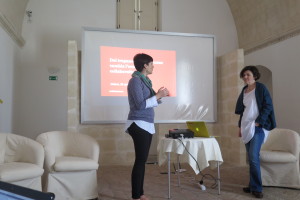
Collaboriamo, who introduced us to world of sharing economy by tracing its history from 2011, when people rediscovered the importance of sharing and cooperating as an answer to the economic crisis, to our days, where the sharing economy is in continuous evolution. We then looked at two cases of cities in which the principles of collaboration are put into practice. Michele D’Alena presented the case of CO-Bologna, where a collaborative city was built by the five actors of polycentric governance working together and generating the Bologna Regulation. The case of Campi Bisenzio was then introduced by Rosanna Prevete, project manager of Progetto RENA, who spoke about how sharing economy can be promoted in the context of a smaller city, by combining resilience and collaboration. It is important not to forget that collaboration does not end when we leave the street and enter the house, as Marta Corubolo (HousingLab and Polimi DESIS Lab) showed us by talking about the collaborative housing.
A fundamental point underlined by Saveria Teston, urban strategist freelance, in her presentation of the process to define the strategic masterplan for the regeneration of the ex SADAM area in Jesi (belonging to the Maccaferri Group), is to always begin from what is already present on the territory and to start from there with the co-design project, involving in it as many actors with as many competences as possible. This point perfectly applies to what is being done in the CO-Roma project by LabGov: as Eloisa Susanna explains, for each context in which you work you have to design a suitable form of governance, and act in order to accelerate those processes that are already in place.
Collaboration takes different forms, and a beautiful example of this is the Ecomuseo Mare Memoria Viva of Palermo, a project presented by Cristina Alga, which contributes not only to the regeneration of the city, but also to the one of its community.
Alongside with all these enriching interventions, the first day of Sharing School also saw the presentations of the five selected projects, which have then been the focus of the co-working and co-design laboratory engaging the students in the following days. The First project was Collaborative polis – sharing neighborhoods for an inclusive community, presented by Silvia Sitton, who aims at physically building a collaborative neighborhood, which will be the basis for the creation of a culture of collaboration. Similarly the project Civic Crowd Founding for Formigine, introduced by Giorgia Bartoli, wants to increase collaboration by transferring new competences to the community and creating deeper links between citizens and between associations. Another project is Valnerina Smart Land, brought to us by Marco Ferrucci, who imagines a way to regenerate the area with endogenous actions originating from the territory. Another interesting reality was presented by Rossella Lombardozzi, founder of Officine On/Off, a cooperative who works to support youth employability through the development of competences then will then be given back to the community in the form of increased social capital. The last project, introduced by Lucia Lupi, was First Life, a platform which works as an archive creating connections between actors present on the territory according to their interests.
To end the day with a bang, all the partecipants had to collaborate and find their way around without getting lost between the beautiful and ancient Sassi of Matera.
29 April: “the human being is a lacking animal, who has as its only resource its ability to adapt to the environment he encounters”. With this quote, the sociologist Falviano Zandonai began his considerations on the “CO” Organizations, where CO stands for Commons but also for Collaboration and Cooperation, two practices which are components of the human nature and need to be brought back into our practice through a social innovation 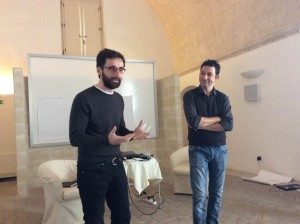 process. In line with this idea is the reasoning of Professor Christian Iaione, coordinator of LabGov, who stated that competitive or collaborative people do not exist – what exists instead are the conditions that make a person competitive or collaborative, and it is on this conditions that we need to work. But how can we work on this? Many elements of reflection came from Annibale D’Elia (Bollenti Spiriti), who spoke about the importance of changing the metaphor we use to look at reality in order to change ideas. We have to move from a view of society as an organism, with a head taking decisions, to a view of society as a net in which everyone is connected and collaborates. Seeing society as a net of interconnected people also involves a change in which services are designed, from the bidirectional relationship between supplier and consumer to collaborative services activated through the participation of all actors: this is what Daniela Selloni, service designer and creator of Cittadini Creativi, proposes. Collaboration can be found also in techonology, as Lorenzo Brambille, co-founder of Collaboriamo, explained us: from the PDF and HTML to Open Source and Copyleft, some technologies are born to be collaborative and to increase collaboration by granting access to everyone.
Overflowing with new information, the students spent the afternoon working on the co-design of the five projects, profiting of the instrument and the support offered to them by GuglielmoApolloni, Marta Mainieri and Andrea Paoletti. But it doesn’t get over here: in the evening we came together in Casa Natural to discuss with Matteo Stifanelli,  Airbnb Country Manager for Italy, about the risks and opportunities involved in a kind of hospitality that wants to transform the tourist in a temporary citizen. At the meeting were present also some local stakeholders, interested in discussing the hospitality options that could be suitable for Matera 2019.
30 April: Which are the new competences needed in the age of sharing economy? A combination of new and old competences, strengthened faith and growing relationships are, according to Andrea Pugliese (Progetto RENA), fundamental in increasing resilience, both of the individual and of the community.
The experience of Casa Netural (co-founded by Andrea Paoletti and Mariella Stella) shows us that by experimenting we can face some failures, but we are able to build a community based on simple and strong relationships, like the ones that we cultivate in our home. By going on the territory we manage to create connections, to activate 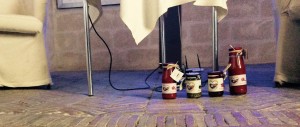 idea and to write a new story of the territory which is shared and participated. One more examples of how sharing economy can generate social inclusion comes from the project Sfrutta Zero, a cooperative reality which includes migrants, farmers and young unemployed by giving them a job and by getting them involved in the construction of a clean and collaborative production chain. The tomato sauce produced by Sfrutta Zero becomes a locally produced alternative to the big distribution chains, and allows for better conditions of workers and empowerment of migrants and local farmers. All these examples stimulate us to reflect on which form of governance can allow the creation of more collaborative and inclusive cities. As Professor Christian Iaione tells us, the city needs to become a laboratory, in which people not only make use of the urban commons, but they also collaborate in their care and regeneration as “ the community is the one who defines the governance’s perimeter, so we need to work from the bottom to build a cohesive system”.
After a second afternoon dedicated to the further development of the students’ projects, Claudio Gnessi presented us the experience of ILoveTorpigna, the regeneration process that is taking place in the Roman neighborhood of Torpignattara.
1 May: The Sharing School was approaching an end, but before parting we had the occasion to present the 5 projects in their new form, resulting from the co-design process to which all the students and experts contributed. From Officine On/Off, to the Civic Crowdfounding for Formigine, Valnerina Smart Land, First Life and Collaborative Poleis, all the projects resulted enriched from the collaborative process, and the participants managed to design the next steps towards the achievements of their objectives.
The Second Edition of the Sharing School came to an end, and the moment arrived for all the participants to leave, but there is much that we will all bring home from this experience. The Sharing School taught us the importance of experimenting with new ideas without being afraid of failing, of starting from what we have and changing the metaphor we use to look at reality, of building the conditions needed for everyone to become collaborative. It was an occasion to learn, from the experts who shared their knowledge with us but also from all the participants who shared their ideas, projects and energies.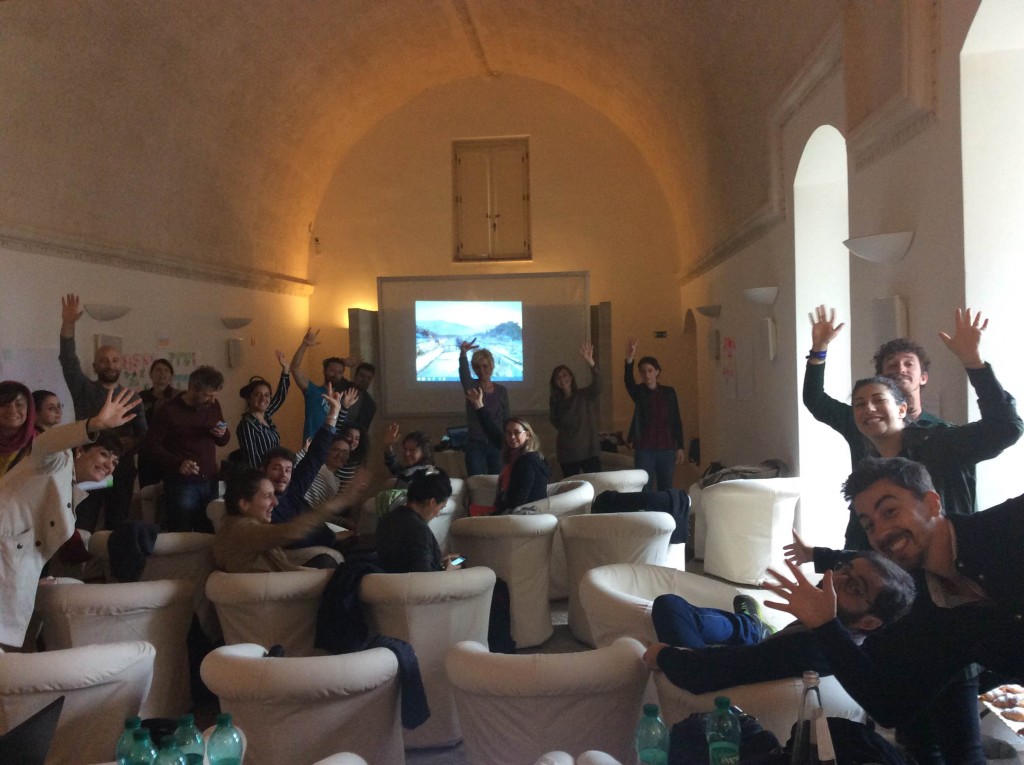
We say goodbye to everyone, knowing that this is only the beginning and many occasions will come to gather again and keep working towards the construction of collaborative cities, territories, communities and beings!
- Here is the link to professors presentations
- Here if the link to participants projects
—————————————————————————————————-
Si è tenuta a Matera, dal 27 Aprile all’1 Maggio, la seconda edizione della Sharing School, organizzata da LabGov, Casa Netural, Collaboriamo e Progetto RENA, con Airbnb come sponsor. I lavori quest’anno si sono concentrati sul tema CO-Città e CO-territori, città e territori collaborativi nei quali si condivide, si coopera, si collabora, si “comuna”, e la Sharing School si è rivelata l’occasione perfetta per riflettere su perché, in che modo e con chi riprogettare le aree urbane e interne al tempo dell’economia collaborativa. Gli studenti hanno avuto modo di imparare molto, non solo dal confronto con docenti dotati di un profilo di alto livello ma anche dallo scambio d’idee, progetti ed energie che ha coinvolto tutti i partecipanti.

 The event will cover three broad topics:


