by Mohtas Anwar Modier | Jan 20, 2026 | Aware
AWARE Project Update – Advancing aquaponic solutions for climate-resilient food systems.
Mohtas Modier | Research Fellow at LabGov
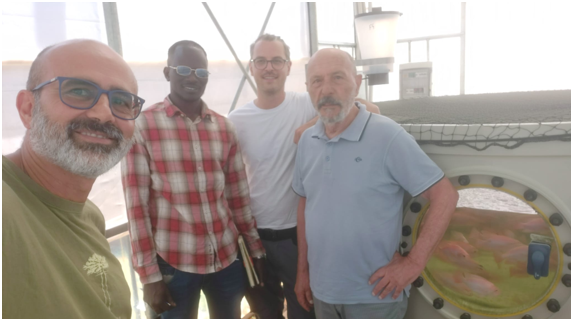
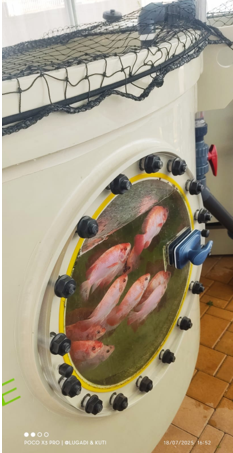
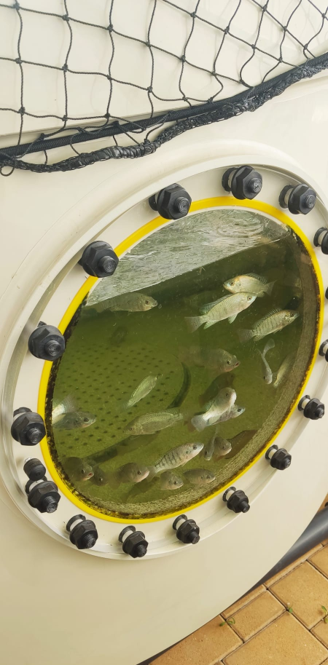
On the 7th of September 2025, I had the opportunity to attend an inspiring training session at Castellana Grotte, led by partner Loïc Le Gouëff, chief engineer at Green in Blue, focusing on the large-scale recirculation aquaponic system developed by Green in Blue for the AWARE project. This innovative approach is designed to combat climate change by integrating fish and vegetable production while reusing wastewater in a sustainable loop.
During the training, I had the privilege of engaging with a diverse group of individuals, including Aquasoil staff, where the plant is located, and Professor Gian Pietro di Sansebastiano of Salento University, both of whom are affiliated with the AWARE partnership.
Furthermore, I had the opportunity to interact with Loïc Le Gouëff, the chief engineer and trainer from Green in Blue.
This experience proved to be highly valuable as I collaborated with such esteemed professionals within the field.
Training Highlights.
The session provided detailed insights into:
- Fish Care Protocols – maintaining optimal health and nutrition for aquatic species.
- System Monitoring – methods for tracking system performance, ensuring water quality, and identifying early signs of imbalance.
- Environmental Regulation – understanding daily, weekly, and monthly operational checks to ensure optimal growing conditions for both fish and plants.
- Plant care protocols include giving the fertilizer schedule, pest control, and watering tips, and from Greenhouse, it shares best practices from university or EU protocol inspection routines, disease prevention, etc.[1]
This training has deepened the team’s technical knowledge and strengthened its capacity for operating and maintaining large-scale aquaponic facilities.
This hands-on experience has deepened my understanding of how aquaponics can be scaled for both food production and climate resilience.
Furthermore, I would like to articulate that this period can be characterised as one in which technology enthusiasts intersect with an individual who shares a profound enthusiasm for innovation.
Prototyping in Progress.
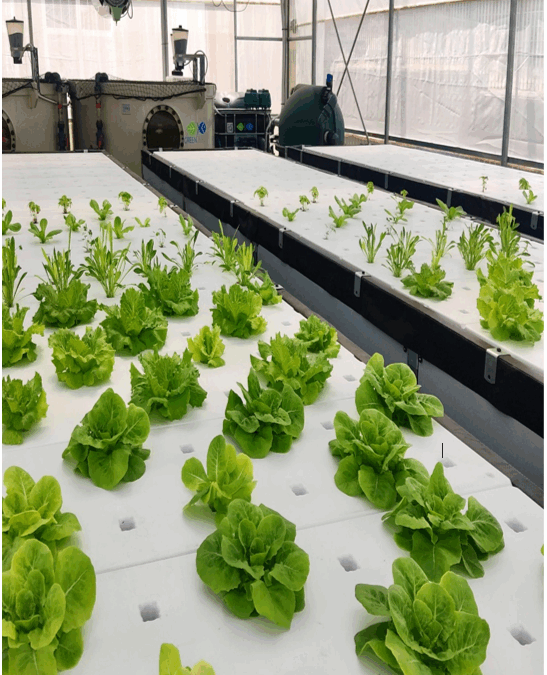
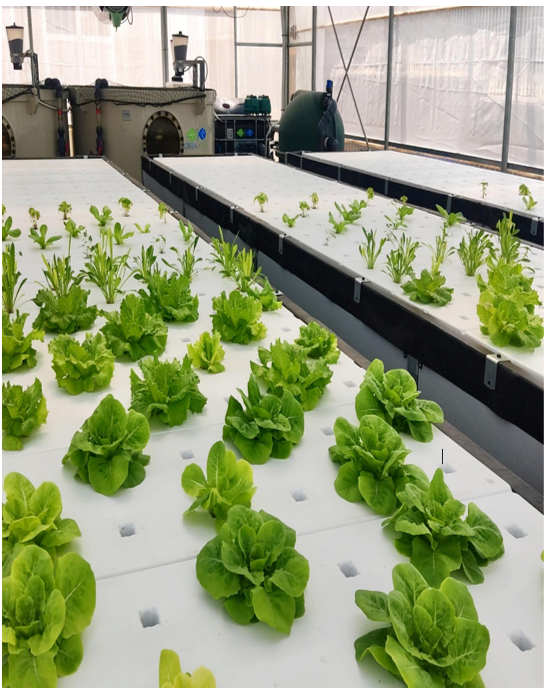
We have also begun prototyping vegetable planting in collaboration with Professor Gian Pietro Di Sansebastiano of the University of Salento, also a partner to the AWARE project, experimenting with optimal growth conditions within the integrated system. It is exciting to see theory come to life in practice.
So far, progress has been promising. Each session boosts my confidence in my skills, increasing my familiarity with the system and strengthening my connection to the project’s mission.
Next steps: Include continuing to refine the prototype, expanding the project’s datasets, and sharing our findings to encourage others to join the movement for climate-resilient food systems.
The lessons learned at the plant will directly contribute to optimising the system and transferring knowledge within the AWARE network.
The Green in Blue system represents a significant step toward achieving climate resilience, food security, and resource efficiency, key pillars of the AWARE Project.
Outcomes: The outcomes encompass the cultivation of safe-to-consume fish and vegetables through sustainable and environmentally responsible practices by conducting accurate food safety trials to ensure compliance with national and international health and agricultural standards.
The project will implement a comprehensive educational and outreach program designed to inform the community about food safety practices and promote awareness of sustainable farming. Techniques, and engage stakeholders in meaningful dialogue and reciprocal exchange of knowledge.
Furthermore, the project aims to influence and shape future regulations related to food production and safety, ensuring that they are grounded in scientific evidence and best practices to protect public health and the environment.[2]
[1] https://eu-cap-network.ec.europa.eu/projects/good-practices-self-controlled-and-sustainable-management-ornamental-nurseries-autofitoviv_de?utm_source=chatgpt.com
[2] Rao, Madhura Ramchandra. “Safe and sustainable valorisation of food waste in the european union: Reconciling public ambitions with private interests.” (2023).

by Mohtas Anwar Modier | Nov 13, 2025 | Aware
AWARE STAKEHOLDER ENGAGEMENT AT CASTELLANA GROTTE.
 Mohtas Modier | Research Fellow at LabGov
Date: November 13, 2025
EXECUTIVE SUMMARY.
The AWARE Project Bootcamp held at Castellana Grotte Secondary School marked a pivotal moment in the advancement of sustainable water practices. This dynamic event drew the interest of both eager students and passionate educators, all gathering under the inspiring theme “Smart Water Use for a Sustainable Future.”
As the bootcamp opened, participants were warmly welcomed by the host, whose enthusiastic introduction set the tone for a day filled with discovery and innovation. They provided a comprehensive overview of the AWARE Project, an initiative dedicated to cultivating creative solutions for water reuse and promoting sustainability in local communities.
To stimulate engagement and foster connections among participants, an interactive icebreaker activity was introduced. This thought-provoking exercise encouraged attendees to reflect critically on the journey of water after it leaves their homes, prompting meaningful discussions about personal responsibility and collective action towards water conservation. This foundational context paved the way for deeper conversations and collaborative ideation in the sessions that followed.
Turning Wastewater into a Resource.
Mohtas Modier, an enthusiastic intern with the AWARE Project, recently delivered a detailed and insightful presentation on the increasingly important topic of reclaimed wastewater. With clarity and passion, he explained the sophisticated processes involved in treating this valuable resource, emphasizing how it can be effectively and safely repurposed for use in both agricultural and aquacultural practices.
His presentation also spotlighted the AWARE pilot plant, situated in the picturesque town of Castellana Grotte. This facility serves as a testament to the project’s innovative approach and its commitment to enhancing water management strategies within the region. Mohtas outlined the pilot plant’s practical applications, showcasing its potential to revolutionize local water practices and contribute to sustainable resource management in the face of growing environmental challenges.
Case Study: Fish and Lettuce from Reclaimed Water.
A comprehensive case study was conducted, showcasing a pioneering integrated system that harmoniously blends fish farming with lettuce cultivation. This innovative model serves as a striking example of sustainable food production, highlighting the multifaceted environmental and economic advantages tied to the efficient reuse of water. Participants were actively encouraged to appreciate the synergistic relationship that exists between these two agricultural practices, recognizing how their collaboration not only boosts productivity but also enhances the health of local ecosystems. By intertwining aquatic life with terrestrial crops, this initiative fosters a balanced and resilient agricultural framework, showcasing the potential for greener farming solutions.
Internship Experience
Mohtas captivated his audience as he shared valuable insights from his enriching experience as an AWARE intern. He elaborated on the skills he has cultivated, particularly emphasizing the significance of teamwork and sustainability planning. His compelling narrative struck a chord with the students, highlighting the critical need to involve young minds in conversations about water reuse and green innovation. With passion and enthusiasm, he inspired his peers to embrace proactive roles as advocates for sustainable practices in their communities, encouraging them to become ambassadors for positive change in fostering a more sustainable future.
Interactive Session / Mini Workshop
The event showcased a dynamic and interactive session where participants eagerly collaborated, pooling their knowledge and creativity to devise innovative plans for launching their own “eco-smart farms.” Divided into small groups, they engaged in spirited discussions, exploring localized strategies aimed at conserving and reusing water. This collaborative atmosphere sparked a flurry of inventive ideas, each intricately tailored to the unique environmental contexts of their respective communities, illuminating pathways toward sustainable farming practices that harmonize with nature.
CONCLUSION
The bootcamp culminated in a lively and dynamic interactive question-and-answer session, which offered participants a valuable platform to voice their thoughts and seek clarity on the various topics explored throughout the event. The enthusiastic reception of the invitation to tour the AWARE plant underscored the project’s deep commitment to fostering education and community engagement. As the event drew to a close, participants departed with a powerful and memorable insight: “Every drop counts. Innovation starts with awareness.” The AWARE Project Bootcamp successfully sparked interest and ignited meaningful dialogue surrounding the critical issue of water sustainability, inspiring the next generation to embrace their role as stewards of our precious water resources.

by Mohtas Anwar Modier | Oct 9, 2025 | Aware
Bootcamp 2025: Luigi Dell’Erba Students Shine at Bootcamp 2025 Award Ceremony.
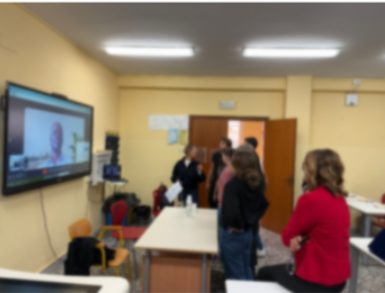
Castellana Grotte, Puglia – October 9, 2025.
The Luigi Dell’Erba Higher Secondary Education Institute buzzed with palpable excitement as students from classes 5Ac, 5Bc, 5As, and SCA gathered to commemorate their remarkable achievements during the highly anticipated Bootcamp 2025 Award Ceremony. The enchanting event, held within the school’s vibrant halls adorned with colorful banners celebrating sustainability, honored these gifted students for their exceptional contributions to the Puglia System for Sustainable and Fair Innovation.
Bootcamp 2025, magnificently coordinated by Luiss LabGov, the Apulia Water Authority (AQP), and the AWARE partners, centers on empowering youth to engage in the co-design and co-governance of innovative solutions addressing critical environmental and social challenges.[1] This inspiring initiative aligns seamlessly with the school’s mission to cultivate the next generation of passionate citizens and insightful critical thinkers, equipped with the skills to lead transformative change and champion a more sustainable world. As the ceremony unfolded, a warm welcome enveloped all attendees, including esteemed guests such as the insightful Prof. Christian Iaione from LUISS University, celebrated for his extensive expertise in governance and climate innovation, and the dedicated Eng. Roberta Rana, Director at the Apulia Water Authority. Their esteemed presence highlighted the profound intersection between academic excellence and meaningful real-world applications.
Students were celebrated not only for their outstanding academic achievements but also for their steadfast commitment to social responsibility and their drive for innovative progress. Each student took the stage, radiating passion and enthusiasm as they showcased their dedication to teamwork and problem-solving, effectively demonstrating that unique and innovative thinking can tackle pressing issues such as climate change adaptation, sustainable urban development, and inclusive governance. The Bootcamp 2025 Awards transcended mere accolades; they represented invaluable learning experiences that prepared students for the complexities of collaboration, innovation, and leadership in an ever-evolving world.[2] The school’s active engagement in such transformative initiatives affirms its strong commitment to nurturing an educational environment that empowers students on their journey to craft a brighter future.
The ceremony drew to a close with an exhilarating and optimistic outlook on the future, emphasizing the essential role of student engagement in spearheading sustainable innovation. As these budding innovators step boldly into the world, their collective efforts symbolize a beacon of hope for a just and sustainable future. The Luigi Dell’Erba Institute proudly remains at the forefront of educational excellence, inspiring students to evolve into visionary leaders capable of shaping our world for the better.
[1] Mahmoud, Israa, et al. “Towards a co-governance approach for nature-based solutions.” Guidelines for Co-Creation and Co-Governance of Nature-Based Solutions: Insights from EU-Funded Projects. European Commission, 2023. 44-54.
[2] Iaione, Christian Fernando, and Cecilia Bertozzi. “Exploring the potential of Co-Governance models to accelerate SDGs at the local level.” (2025).
by Mohtas Anwar Modier | Aug 15, 2025 | The Urban Media Lab
In a remote coastal village in Tunisia, a group of women farmers is revitalizing barren land by combining traditional water management techniques with solar-powered drip irrigation.
In a dry valley in Ghana, young agricultural entrepreneurs are using mobile apps to connect producers with nearby markets, bypassing inefficient distribution systems and bureaucratic obstacles. Across the Afro-Mediterranean region, innovation is emerging as a vital resource, developed from within the communities rather than imposed from outside.
These stories are not isolated incidents; they reflect a new approach to experimentation in response to climate disruption.
Innovation is not always born in labs or boardrooms. Sometimes, it grows from dry soil, whispered through community radio, and irrigated by tradition.
Regulatory voids as a space for experimentation and innovation for sustainability
Much of the global development conversation focuses on scaling solutions. But what if the real opportunity lies in scaling the conditions that allow local experimentation to emerge?
In our forthcoming paper, “From Gap to Opportunity: Regulatory Voids as Spaces for Experimentation and Innovation for Sustainability” (IJPL Special Issue, expected publication in fall 2025), co-authored with Dr Anna Berti Suman and Adaeze Oluchi Ashaheme, we explore this argument.
Instead of viewing regulatory voids as failures of governance, we see them as opportunities for experimentation. In these unregulated or poorly regulated areas, communities, innovators, and civil society actors can develop new models of sustainability.
A regulatory void is not a vacuum; it’s an invitation to imagine something different.
Especially in rural or climate-affected regions, these gaps provide the space for new legal, economic, and technological practices to emerge. These innovations can be community-driven and tailored to local ecosystems.
Collective Entrepreneurship in Action
One driver of this transformation is collective entrepreneurship – not the lone innovator myth, but groups of actors pooling resources, knowledge, and legitimacy to co-create solutions.
In southern Italy, farming cooperatives are turning unused land into biodiverse food forests.
In northern Kenya, communities are co-developing livestock insurance platforms with tech partners.
In Lebanon, informal seed networks are rebuilding local food systems amid state collapse.
These are not pilot projects; they are governance experiments. They are thriving not despite weak regulation, but because of the freedom it offers.
Innovation as a Right
The proposed idea of “right to innovate through experimentalism”, a concept that democratises innovation and moves beyond access to participation.
Innovation should not remain the privilege of Silicon Valley or formal R&D labs. Vulnerable communities must have the agency to define problems, prototype solutions, and help shape the very rules that govern innovation.
This involves access to funding and infrastructure, participatory legal and policy design, and recognition of non-Western knowledge systems.
A truly just innovation system includes the wisdom of the margins.
DFIs Need to Step Up?
Turning grassroots experimentation into systemic transformation requires allies and strategic engagement from key institutions.
Development Finance Institutions (DFIs) need to step up and start funding early-stage, community-led experiments, not only scalable ventures.
International organisations like the Food and Agriculture Organisation, the International Fund for Agricultural Development, and the World Food Program may embed experimental governance into climate adaptation and food security programs. They could also push national policymakers to build adaptive legal frameworks that enable safe, inclusive experimentation.
Universities and research labs should play a decisive role by technically supporting and training local entrepreneurs in these field experiments on technological, economic, legal and policy aspects.
What Comes Next?
As LabGov tries to demonstrate theoretically, empirically and practically, innovation is a critical tool for co-governance building and benefit-sharing development. It focuses on supporting regulatory experimentation in the fields of food, water, and energy nexus to tackle the climate transition in a just and democratic way.
Furthermore, innovation needs to be the result of the cooperation of multi-stakeholder partnerships across different geographical areas and to transform academic insights into practical tools for community-led development.
Innovation is the result of a co-creation process, and benefits must be shared among all those who participate in the co-creation.
The future of development is polycentric. It’s going to be more and more the result of co-governance building for sustainable innovation, local ecosystems and regulatory experimentalism that will empower vulnerable individuals, social groups and communities. This is already happening in too-long-forgotten corners of the world.
