
by Sandra Bos | Dec 17, 2018 | The Urban Media Lab
In imitation of the city of Ghent, Amsterdam has expressed the intention to become a commons city. This happened during the annual Urban Management Conference of the Amsterdam University of Applied Sciences (November 2018).
Stan Majoor, director of the Urban Management programme, was asked to explain the title of the conference ‘The selforganising city: confronting the commons’, since it contains a light critical note. Majoor warned for misuse of the term commons; not all civic initiatives become all of a sudden commoning practices. As a knowledge institution, the AUAS would like to play a role as knowledge partner in this ‘commons movement’ by facilitating, researching, monitoring and being part of commons cases in the city.
To learn from our southern neighboring city Ghent, we had invited Michel Bauwens as key note speaker. He is the author of the Commons Transition Plan of Ghent. In this document he describes the many initiatives in Ghent with a collaborative character and explores how Ghent could become a co-city; which policy changes and instruments are necessary?
The alderman Rutger Groot Wassink (Social work, diversity and democracy for the Green Party) was invited to react on Bauwens’ story. He was very clear from the start: he wants to support the commons in the city of Amsterdam; working together with knowledge institutions and other partners. He understands that you can not create commons as a municipality, but that you should rely on the bottom up initiatives in society. He is willing to facilitate four local commons experiments to learn what a local government should (not) do to strengthen these activities. This new, third way of governance might add new values to the city. Finally he stated that he would like to learn more from Ghent and other European cities.
The lively plenary session ended with many people on stage who subscribe the intention of supporting Amsterdam as a Commons City, among which Municipality Amsterdam, de Waag, Commons Network, Coöpolis en the AUAS.
During the several interactive working sessions the commons practices in Amsterdam were critically discussed. In the session LabGov at Plein 40-45 we played the new unique, Amsterdam made Game of Commons with the 30 participants. An exercise to move from thinking/acting based on individual interests to common interest. After taking into account some small changes, the game will be very suitable to play in different settings with all kinds of stakeholders.
Thanks to this conference the knowledge and discussion about commons and its opportunities have certainly grown in Amsterdam.
For an (Dutch) impression of the conference, watch: https://www.youtube.com/watch?v=SNa12HSU8uA&feature=youtu.be
Practice what you preach
We do not only talk about commons in Amsterdam. In some neighborhoods it is also already happening. At Plein ’40-’45 in the NorthWest of Amsterdam a group of citizens, (social) entrepreneurs, municipal employees and AUAS teachers, researchers and students are trying to design a new way of collaboration. Two years ago we started here the first LabGov pilot. During the last few months for example each Tuesday morning approximately 30 AUAS students Public Administration gathered in the Town Hall, located at Plein ’40-’45 to work on the project Open Plaza: How to make the lower part of the Town Hall a common place? They have interviewed many people and organisations in the neighborhood and designed new ways of involving the neighborhood in this project.
Local network
Thanks to the successful Urban Management Conference on Urban Commons, AUAS and local partners like the municipality of Amsterdam, De Waag and Commons Network are researching the possibilities of mapping the commons initiatives in the city and setting up a local network of commons practices and stakeholders, where people can ask for support and advise.
European network
Not only at local level the AUAS is trying to ask attention for the governance structure of commoning. Within the U!reka consortium, a European network of six Universities of Applied Sciences (Amsterdam, Ghent, Frankfurt, Oslo, Helsinki, Edinborough) will try to set up a joint programme with as a central theme: ‘Comparative Urban Commons’. In the following years the knowledge institutions will collaborate and exchange information and cases from their home-cities. In some cities ‘co-city’ is still an unknown concept. The research and joint programme will therefore include several stages of collaborative governance and civic participation. This spring AUAS will organise a first co-meeting in Amsterdam with these European colleagues and several Amsterdam commoners.

by Maria Elena Santagati | Dec 13, 2018 | The Urban Media Lab
Culture is driving regeneration, creating the jobs of the future and diverting young people from crime. Culture makes us healthier, facilitates civic engagement and gives tourists a reason to visit. It continues to shape the heritage and identity of our cities. In short, culture addresses all the major city challenges we face today – it has moved definitively from niche to mainstream. (…) While there remain serious challenges in all our cities, there has never been a better moment to unlock the potential for culture to transform them. (Justine Simons, p.5)
“How do cities use culture to provide solutions to our contemporary urban challenges?”. This is the question underpinning the World Cities Culture Report, a compendium of the most innovative programmes, policies, key trends and infrastructure projects in culture developed by 35 cities[1] across the world. The Report is the annual document of the World Cities Culture Forum, a collaborative network made up of 38 members from local governments and cultural sector of leading cities around the world, whose activities are delivered by BOP Consulting, on behalf of the Greater London Authority and the members of the Forum. The network was founded in London in 2012 by eight cities (London, New York City, Tokyo, Shanghai, Paris, Istanbul, Sydney and Johannesburg) convened by the Mayor of London, for the purpose of “advancing the case for culture across all areas of urban policy” and “sharing ideas and knowledge about the role of culture in building sustainable cities”. Beyond the annual Summit and Report, the network provides themed symposia, regional summits, policy workshops, collaborative publications and a Knowledge exchange programme.
Two major trends emerge from the 2018 Report, supported by Bloomberg Philanthropies: the “critical role for culture in addressing the inclusion of all citizens and a new definition of how, where and by whom culture is experienced”.
As for the first trend, there seems to be a shared commitment across the cities in increasing participation to “culture for all citizens”, by means of different tools and programmes, recognizing Article 27 of the Universal Declaration of Human Rights stating that “Everyone has the right freely to participate in the cultural life of the community”. The report thus contains some examples of urban practices in access and inclusion, among which the TURN Project in Tokyo, Kulturpass in Vienna, the Agreement to Promote Reading in Milan, Neighbourhood Lives and Memories in Lisbon and many others.
As for the second trend, that is the “opening out of culture”, we assist to a change in both cultural spaces, places and forms and in the approach to support programmes and policies at the urban level. For instance, the Culture Minnesota Street Project in San Francisco, the Bronx Creative District in Bogotá, as well as the Opera Camion in Rome, the Cultural Hotspots in Toronto and so on. At the same time, new governance and policy solutions have been envisaged, such as the Cultural Matching Fund in Singapore, the Mayor’s Grant for Cultural Impact in New York, the Citizen participation shaping public art in Paris etc.
By providing “a city profile” containing data (45 indicators), trends and innovative programmes, the Report refers to more than 200 cultural programmes and practices (considered as the most innovative from the responding member cities), classified into 9 different categories:
- Cultural Diversity and Representation
- Cultural Access and Inclusion
- Culture in the Outskirts
- Citizen-Led Cultural Policies And Programmes
- Making Space for Culture
- Culture and Climate Change
- 21st Century Cultural Infrastructure
- 21st Century Cultural Event and Formats
- 21st Century Cultural Governance and Strategy
Already in 2017, within the World Cities Culture Summit, the 27 participating cities signed the “Seoul Declaration”, with the following commitment: “To ensure that culture is a golden thread in all aspects of city policy (…); To make culture available to and empowering for all citizens (…); To generate and learn from evidence and research, in pursuit of an enlightened and progressive approach to policy development and implementation; To act as leaders in our field and to continue to collaborate in the face of shared challenges and shared opportunities (…)”.
A shift is ongoing in urban culture-related policy across the world, a valuable phenomenon as demonstrated in the Report, especially in a time where “The resilience of world cities resides in their capacity to envision a different future, one rooted in interdependency that reflects and supports all the people they represent. An open culture builds that capacity” (Richard Naylor, p.17).
[1] Amsterdam, Austin, Bogotá, Brussels, Buenos Aires, Cape Town, Chengdu, Dublin, Edinburgh, Helsinki, Hong Kong, Lagos, Lisbon, London, Los Angeles, Melbourne, Milan, Montréal, Moscow, New York, Oslo, Paris, Rome, San Francisco, Seoul, Shenzhen, Singapore, Stockholm, Sydney, Taipei, Tokyo, Toronto, Vienna, Warsaw, Zürich

by Cosima Malandrino | Dec 3, 2018 | Event
An international symposium dedicated to City Agencies and Urban Think Tanks, in which scholars, policy-makers, practitioners, city- makers, and students as much as representatives from NGOs, cultural, administrative, political and funding institutions will be involved in a conversation concerning how is it possible for EU citizens to contribute to the definition of the agenda for the cities they live in, and to influence the shaping of EU policies for cities.
The conference will take place in Turin from the 4th to the 6th of November and is organized by the Urban Center of the City of Torino as part of EUCANET, the European Agencies Network for citizenship, inclusion, involvement and empowerment of communities through the urban transformation process. EUCANET involves five partners from four countries: Urban Center Metropolitano Torino and Urban Center Bologna from Italy, City of Marseille from France, city of Skopje from Macedonia and Cluj Metropolitan Area Intercommunity Development Association from Romania.
The symposium will host a key-note speech, two main sessions and a number of practice-oriented workshops. During the conference people and organizations gathered from all Europe will be involved in the delivery of a Policy brief summarizing the potentialities and possible new roles to be played by City Agencies and Urban Thinks Tanks, from proactively feeding local urban debate, to connecting local issues to the EU policy-making level, to strengthening our common European urban culture.
Elena De Nictolis, Head Researcher at LabGov, will give a key-note speech at the round table on “City agencies as enabling tools” together with Corrado Topi from the Stockholm Environment Institute, moderated by Marco Demarie, Compagnia di San Paolo and Levente Polyàk, Eutropian.
The other round table participants will be: Toni Masevski, City of Skopje; Federica Fulghesu, NESTA Italia; Øystein Leonardsen, City of Copenhagen; Andres Blanco, Inter- American Development Bank; Carla Tedesco, Comune di Bari.
For more information: https://eucanet.wordpress.com/2018/11/21/eucanet-final-conference/?fbclid=IwAR1ea5mSKR6yrJT9TxL5bqyea7_PyKrNaFV3ps69C3LLKY1OJSdLtlDvuJ8

by Chrystie Flournoy Swiney | Dec 3, 2018 | The Urban Media Lab
On October 5-6, 2018, scholars and practitioners from around the globe involved in cutting-edge research and projects were invited to participate in an unprecedented celebration of Commons Scholarship at Georgetown’s Law Center in Washington DC. This two-day event was organized by LabGov co-founder Sheila Foster (Professor, Georgetown Law Center/ McCourt School), Brigham Daniels (Professor, BYU Law), and Chrystie Flournoy Swiney (JD/ PhD (ABD))- with the support of the International Association for the Study of the Commons. The conference coincided with the fiftieth anniversary of Garrett Hardin’s famous 1968 article on “The Tragedy of the Commons,” which spawned a body of eclectic scholarship, largely spearheaded by Nobel Prize Award winner and political economist Elinor Ostrom who challenged Hardin’s claim that shared resources must be privatized or heavily regulated by governmental actors in order to prevent their depletion or decay.
In the 21st century, the concept of the “commons” has been expanded and reconceptualized in a variety of creative new ways to include many kinds of shared resources, beyond just pastoral land, which was the focus of Hardin’s article. Agriculture, water sources, the global atmosphere, urban infrastructure, technology, and knowledge sharing are just of few of the many examples. Commons scholarship today focuses less on the tragedies that result from shared resources and more on the successful and alternative ways in which resource users, and others, come together to collaboratively govern and maintain a shared resource. As a result, a myriad of seemingly unrelated themes were explored at Georgetown’s “Celebrating Commons Scholarship” conference — economic inequality, stewardship, housing, development and gentrification, and the environment, among others—yet, all were explored through the lens of commons theory.
This vibrant conference included nearly 80 participants from more than 20 different nations presenting papers on a wide variety of interdisciplinary and trans-disciplinary topics. Case studies were presented from Barbados, Brazil, Indonesia, Sub-Saharan Africa, Italy, Poland, Israel, Hawaii, and beyond, and topics ranged from “Indigenous Perspectives in the Commons,” to “Reconceiving the Commons,” to “The New Commons: Outer Space, Cyberspace, and Beyond.” Various other panelists applied the Commons Framework to water, cities, the environment, technology, biodiversity, and the media. The opening plenary featured three leading commons scholars–Professors Foster, Daniels, and Shi-Ling Hsu (Florida State University College of Law)–who each discussed recent innovations in commons theory.
Professor Foster described how she is applying the theory of the commons to her work on cities, a new area of commons research which she has further developed with LabGov co-founder Christian Iaione. “I argued in my early work that the same tragic tale can be told about cities, and different kinds of resources in cities,” she said. “Urban streets, parks, vacant land can mimic the tragedy of the commons that result from the self-interested actions of others…cities and their resources can become heavily congested, and resources strained and eventually diminished.” Yet, if there’s a “tragedy of the commons” underway in urban contexts, Foster points out, there are also examples of “comedies,” where adding more people to resources results in more positive outcomes. “We share, with recent work on the commons in the urban environment, a desire to push back on the standard understanding of the commons as a need to avert the tragedy…in a desire to identify alternative economic visions that have the potential to address historic levels of inequality and stratification, particularly in cities.” However, there are problems with importing the theory of the commons into cities, Professor Foster notes: “To state the obvious, many kinds of urban resources, the infrastructure of the built environment, are quite different from traditional commons resources” such as depletable resources like forests and lakes. Cities are heavily regulated, involve many private actors, and raise issues of distribution and inequality not seen elsewhere in such extreme degrees.
Adding to the richness and diversity of this conference was a “Practitioner’s Workshop” offered on the second day, led by Amanda Huron, a professor at The University of the District of Columbia and author of Carving out the Commons: Tenant Organizing and Housing Cooperatives in Washington, D.C., and Paula Segal, a Senior Staff Attorney at the Community Development Project. This workshop specifically focused on Community Land Trusts (CLTs), a legal tool increasingly used as a way to solve the affordable housing crisis in cities throughout the globe. Following three presentations by practitioners working on CLTs in New York City, Baltimore, and Rio de Janeiro, an interactive, hands-on CLT governance exercise was conducted involving participants in the creation and discussion of the various ways in which CLTs can be governed and structured.
This conference was meant to be a launching pad for future research and collaboration among commons scholars and practitioners. Foster and Swiney, both at Georgetown, hope to cultivate a space for future collaborative efforts through LabGov Georgetown, which was launched in the fall of 2018 and hopes to be a place where innovative new scholarship on the commons can be featured and further celebrated.
by Chrystie Flournoy Swiney & Sheila Foster, Georgetown Law Center
by Cosima Malandrino | Nov 29, 2018 | Event
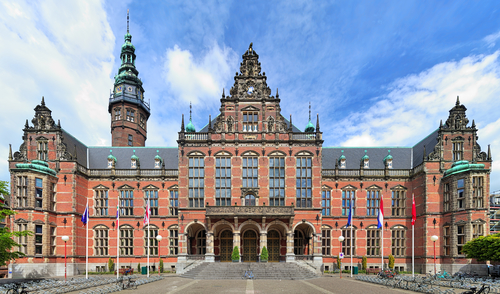
The conference ‘Blockchain, Public Trust, Law and Governance’ will take place at the University of Groningen on November 29 and 30. It will bring together reputed academics, talented professionals, and a selection of innovative entrepreneurs working on blockchain to discuss the applications of this technology to government as well as its regulatory, ethical and policy challenges.
Throughout the world, governments are experimenting with blockchain in different areas. However, it remains a black box to many citizens, public bodies, and companies. This in itself raises concerns for areas where democratic processes are essential to create legitimacy. Additionally, many question whether the technology is stable and secure over the long-run, if total transparency is desirable for all kinds of public services, whether it is scalable enough or consumes too much energy, what its social impact is, whether existing legal frameworks are challenged by this system, and how the technology and its users can be “fixed” if mistakes occur. Hence, the ‘trust machine’ has not been able to conquer the minds and hearts of many skeptical public and private actors.
Elena De Nictolis, Head Researcher at LabGov, will attend the conference and exchange with the participants on LabGov’s experience on the blockchain issue.
