In two days 95 participants attended the workshop, organized in 10 multidisciplinary sessions, 3 very valuable keynotes speeches, 1 academic discussion and 1 stakeholders debate.
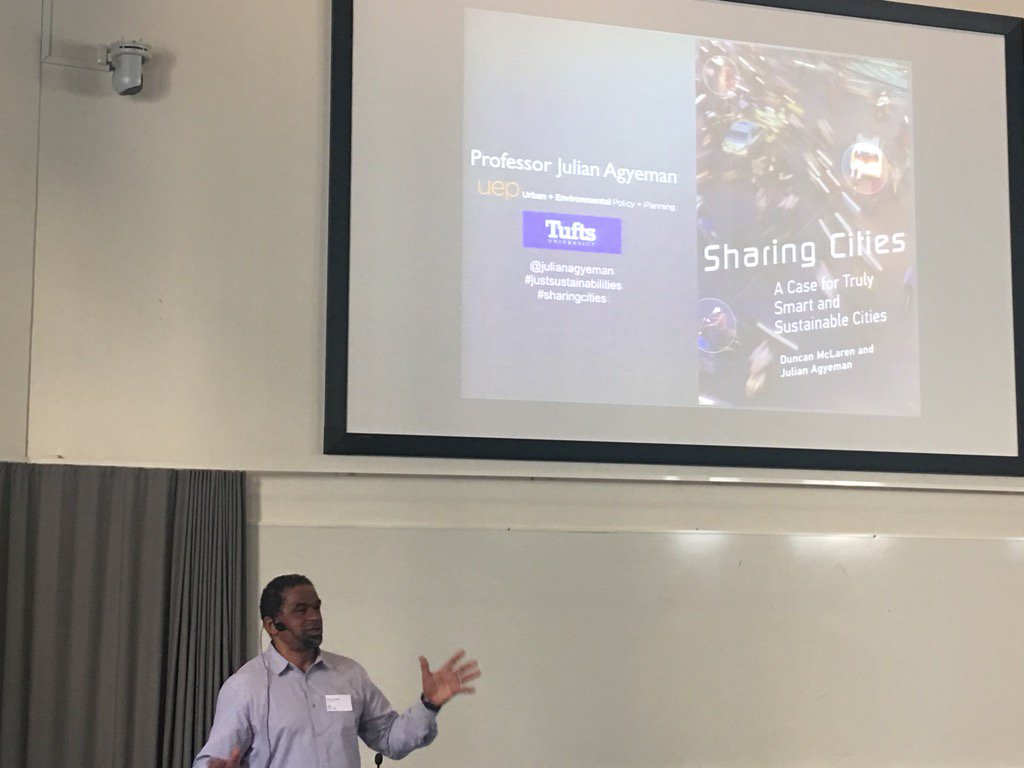
Agyeman started from the concept of just sustainability – to explain how the reinvention and the revival of sharing in our cities could enhance equity, rebuild community and cut resource use; and he presented the “sharing paradigm” proposed in the book: a paradigm which recognizes the shift from socio-cultural sharing practices to (inter)mediated ones as the central transition in contemporary cities, and also highlights a second spectrum from communal/intrinsic to commercial/extrinsic models. The book in fact explores more cultural then commercial, and more political then economic approaches, that are rooted in a broad understanding of the city as a co-created urban commons. The speech ended with some suggestions for governing the sharing city and developing the methodologies of analysis.
The workshop continued with the sessions exploring both conceptual, methodological and empirical questions, such as concepts, methods, impacts, operations, geographical contexts, actors and governance, gathering Ph.D researchers, research fellows and assistant professors from many European countries and universities, revealing a great variety of approaches, methodologies, fields of research. In the two days of the workshop 39 contributions and 3 pitches were presented.
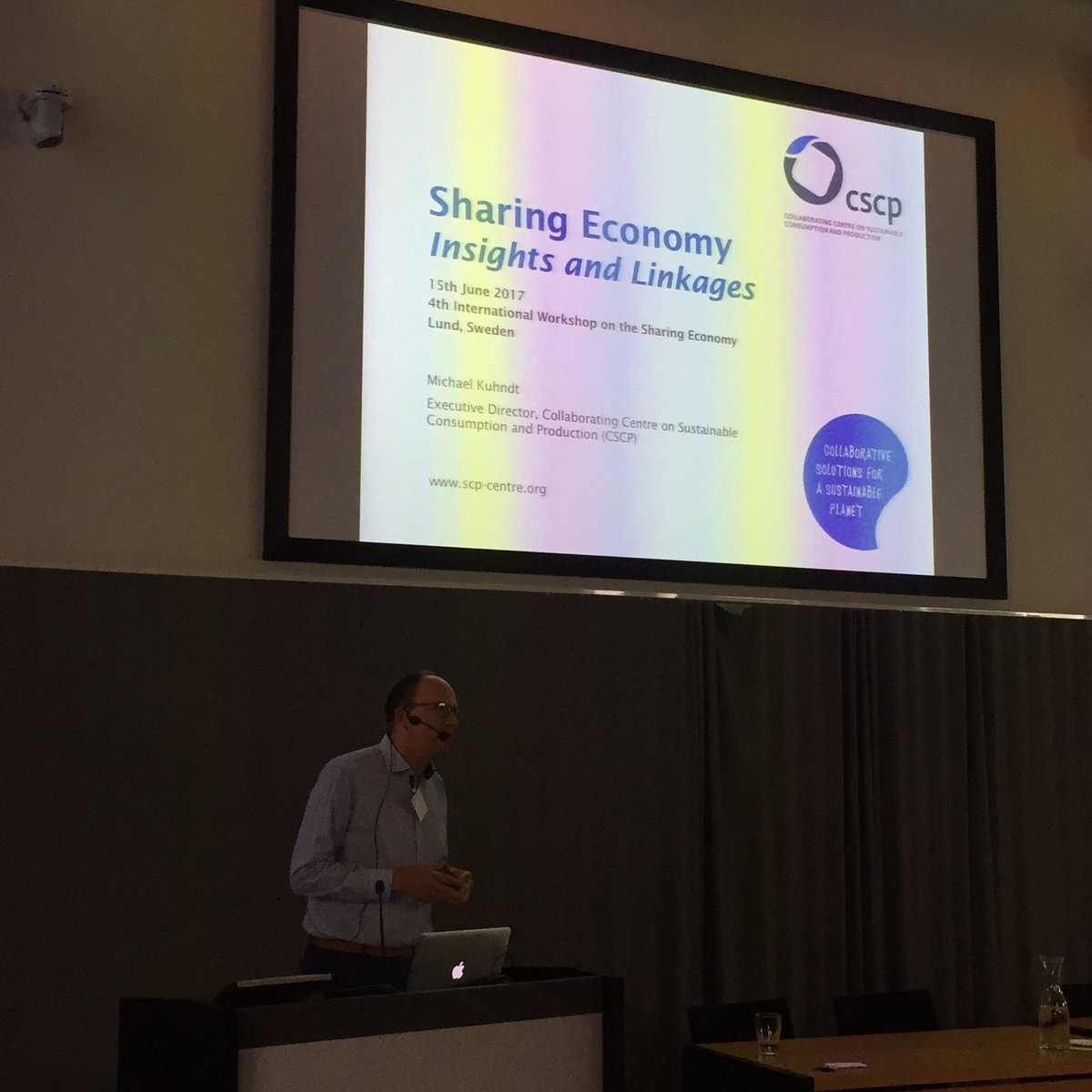
He gave insights and linkages for a sustainable living and presented a global survey on the sharing economy initiatives in North America, Europe and Latin America. He linked the sharing economy with four dimensions, giving data and explanations for each one: lifestyles, digitalization, circular economy and mainstream businesses.
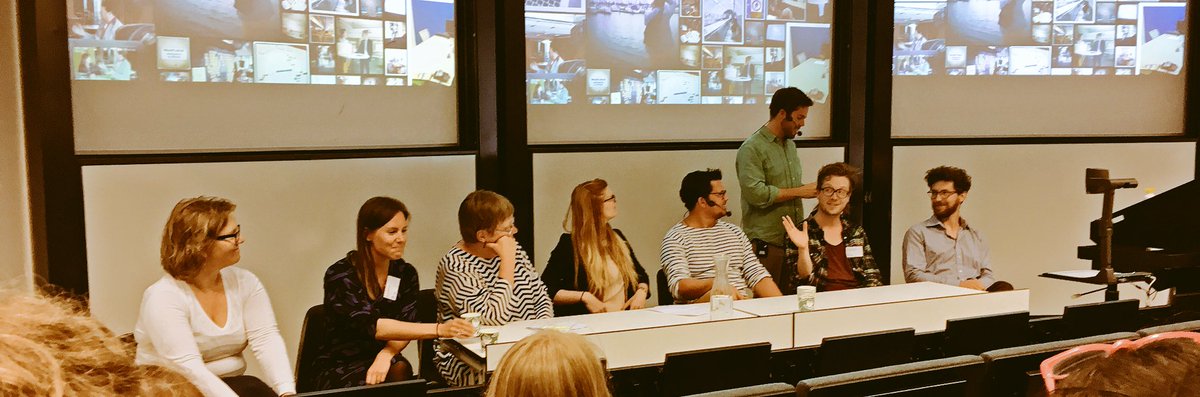
The first day closed with an academic panel discussion titled “Sharing Economy: controversy in the making”. Moderated by Lucie Zvolska, a Ph.D researcher in the sharing and collaborative economy at the IIIEE, it involved Julian Agyeman, Michael Kuhndt, Karin Bradley – Associate professor of the KTH, expert on sustainable urban development, environmental justice and sharing economy, Hugo Guyader – OuiShare Connector Sweden, Ph.D at the Linköping University, Karin Salomonsson – of the Lund University, Department of Arts and Cultural Sciences, and Yuliya Votytenko Palgan – Assistant professor at the IIIEE, expert on new economies (bioeconomy, sharing economy and circular economy) and sustainable urban innovation and experimentation (urban living labs). The panel went through some relevant questions such as topics and issues on which to work today to analyze the sharing economy, and the best methods to use, as well as the social inclusion in the sharing economy as tool for a more sustainable economy.
The first day ended with a collective dinner at the Grand Hotel of Lund.
The second day saw the keynote speech of Martijin Arets, an international experts in the field of scalable online platforms, in particular in the sharing economy, crowdfunding, and the gig economy. He talked about sharing economy and entrepreneurship on the bases of more than 350 conversations he made in 13 countries in the last three years with businessmen and experts.
The speech was followed by a stakeholder debate (after academia a glimpse on the local landscape in terms of sharing economy). Moderated by Steven Curtis – a Ph.D student at the IIIEE researching on urban sharing organisations as a mechanism to realise sustainability transitions in cities, the panel wondered about the future of the sharing economy. Among the participants there were: Eva Eiderström, Director of the Department of Ecolabelling and Green Consumption at the charitable environmental organisation Swedish Society for Nature Conservation. Emma Börjesson, project manager at the Environmental Department in the City of Malmö, expert on sustainable consumption, with particular attention on fair trade, textiles and food; recently, her work has brought her to the sharing economy, due to a project funded by the “European Regional Development Fund”, which focuses on job-creation and lowering living costs. Anna Wittgren, the Business Area Manager of Leisure Travel at Malmö Tourism, an organization that is part of the Malmö Municipality. Matthias Lehner, a Postdoctoral fellow at Lund University engaged in the study of the role of food retailers in promoting sustainable consumption; he is currently collaborating on two projects to examine the role of “the sharing economy” in empowering more sustainable consumer/user consumption behavior. Mattias Jägerskog, founder of the non-profit ridesharing movement Skjutsgruppen who for some ten years now gathers over 70,000 participants, working with over 30 municipalities, counties and regions in Sweden. Jane Olsson, founder of the company SWOPshop, located in central Malmö with the aim to allow people to barter clothes and focused on sustainable consumption in fashion.
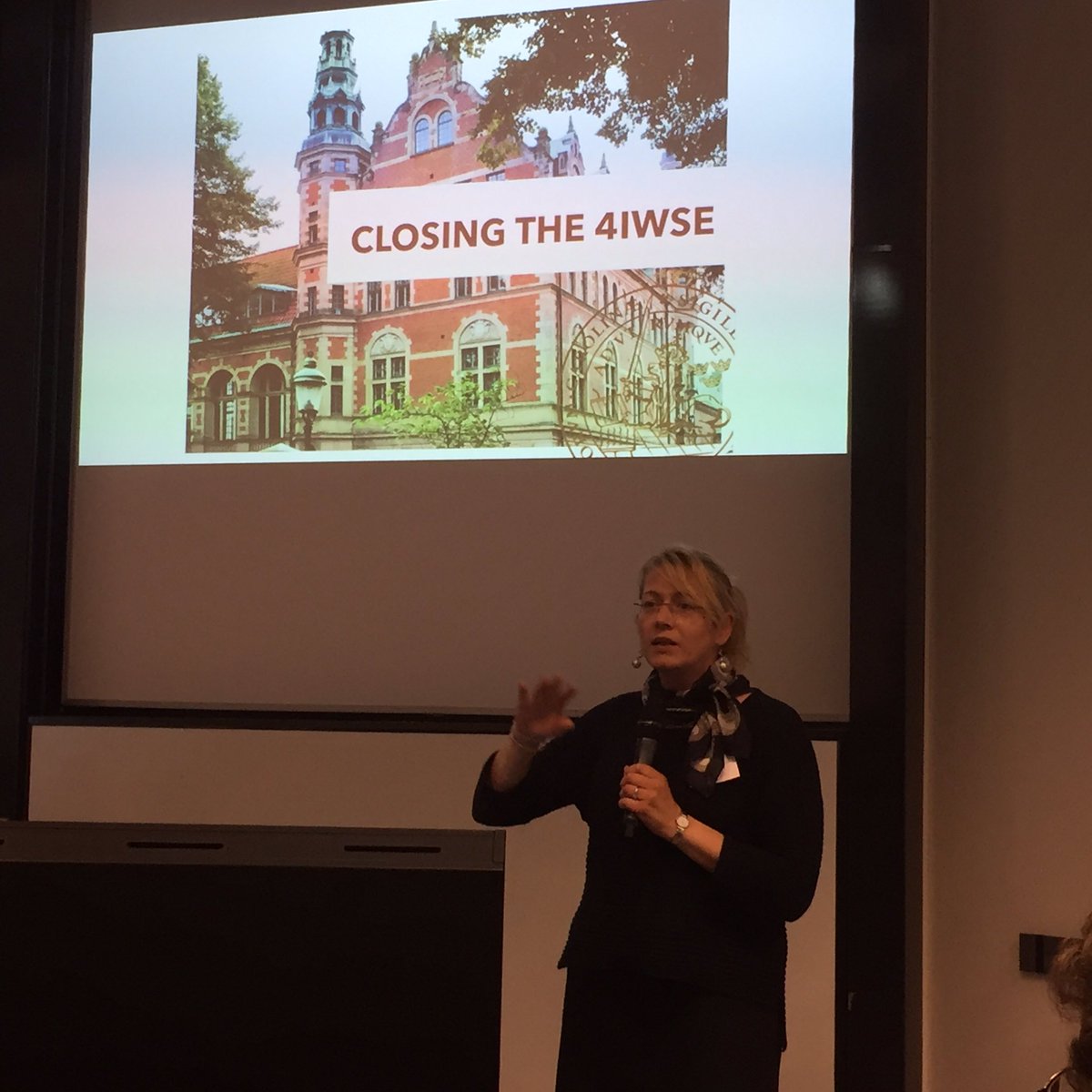
Professor Oksana Mont closed the workshop highlighting the connections made in the event in terms of co-creation and co-sharing values: engaged academic community, engaged young researchers, interest from stakeholders. In line with this approach of co-creation and co-sharing all the sessions were spaced out with networking coffee breaks to give participants the opportunity to exchange opinions, to reflect together, to ask more questions even after the discussion space during the sessions.
Professor Mont also remembered that the workshop contributors can participate at the draft of a book to help in describing and understanding the sharing economy phenomenon, sharing organizations, sustainability impacts and institutionalization processes. In addition a Special Issue of the Journal of Cleaner Production will be issued. A legacy of the workshop will also be the creation of a Ph.D student network on the sharing economy, to connect diverse backgrounds, ways of working, places and perspectives, and to apply for funding for workshops and meetings.
At the end, Dominika Wruk, of the Mannheim University and member of the project I-Share, presented the date and the venue for the next edition of the workshop 5IWSE: University of Mannheim (Germany) , June 28th and 29th. A new opportunity to brainstorm about sharing and to connect researchers and ideas in an innovative city, a real sharing hotspot (there are more than 70 sharing organizations), easily reachable with public transportation from all the European countries. So, save the date!
Il 15 e 16 giugno si è svolto presso l’università di Lund, in Svezia, il 4° International Workshop on the Sharing Economy. Un’importante occasione di confronto per i ricercatori europei che lavorano sui temi dell’economia della condivisione e della collaborazione in diversi ambiti accademici. 10 sessioni per presentare 39 ricerche e 3 pitch, che hanno visto la presenza di 95 partecipanti. Il workshop è stato impreziosito da tre keynote speakers d’eccezione: Julian Agyeman della Tufts University (Boston, MA), Michael Kuhndt del CSCP – Collaborating Centre on Sustainable Consumption and Production e Martijn Artes, esperto internazionale di piattaforme collaborative; oltre a un panel accademico e un tavolo di discussione tra stakeholders locali. Prossimo incontro: 28 e 29 giugno 2018 all’Università di Mannheim per la quinta edizione: save the date!
In the last few years, the commons have enriched themselves with their entry into political institutions at the level of states, large cities or regions, whether in Bolivia, Ecuador, Spain, Britain, France, Italy, and elsewhere in the world. How can this encounter inspire us? How does the commons paradigm fit with other proposals for a post-capitalist alternative, such as de-growth, social and solidarity economy, political ecology, open cooperativism, and much more? How to avoid the “commons washing” and recovery of the project and the values of the commons in the dominant discourse?
Professor Christian Iaione, LabGov coordinator, was between the experts and practitioners interviewed in this occasion. In his speech he touches on different topics: from the experiences that are taking place in numerous Italian cities around the urban commons to the importance of creating a stronger network of cities committed to addressing emerging urban issues; from the understanding of the value of experimentation to development of the capacity to address failure; from the importance to involve all local actors in the care and regeneration of the urban commons to the exigency of rethinking the role of the State and of the local administration.
The city of Reggio nell’Emilia (better known as Reggio Emilia), located in the hearth of Emilia Romagna, counts a population of 172.000 inhabitants. 27.000 of them are involved in activities promoting social cohesion.
These numbers, which highlight the existence of a strong social capital, help us understand the peculiarity of the approach adopted by the city administration. According to Valeria Montanari, Councilor for innovation, administrative simplification, participation and care of the neighborhoods, this peculiarity lies in the idea of “the city as an infrastructure that is made available to people”[1]. In line with this view, the administration guided by Major Luca Vecchi, elected in 2014, has been promoting citizens’ participation in policy making, allowing for “the co-design not only of the actions, but also of the objectives that the city wants to pursue”[2].
The choice to adopt a governance paradigm based on participation and collaboration implies the willingness to challenge and to change the traditional role of the public administration and its relationship with citizens. A process of institutional and bureaucratic innovation is being developed by the administration, which rather than simply providing services to their citizens aims at becoming an enabler for participatory paths and practices, bringing citizens at the center of the decision-making process. As explained by Nicoletta Levi[3], who is in charge of the service Policies for Responsible Protagonism and Smart City, what is being done in Reggio Emilia is strongly experimental, and this requires the administration to continuously stop to understand in which direction they are going. Collaboration might create a strong tension between the rigidity and division that characterize the public administration functioning and the strong flexibility and interconnectedness typical of the reality we live in. To be able to create a dialogue with the civil society the public administration should undergo a transformation and should learn how to work horizontally and be more flexible.
Being aware of this framework allows us to fully understand the innovative processes activated by the city in the last years.
The QUA Program – (Neighborhood as a Commons)
The city of Reggio Emilia has been directly affected by a law that entered into force in March 2010, which prevents cities with less than 250.000 inhabitants to organize their territory into districts (circoscrizioni in Italian). Rather than being an obstacle, this law became an occasion for the city Reggio Emilia to think of new forms of decentralization and city management and to focus on the needs of its citizens. What is particularly interesting about the approach adopted by the city of Reggio Emilia is the choice to work at neighborhood level and to adopt neighborhoods as the unit of measure.
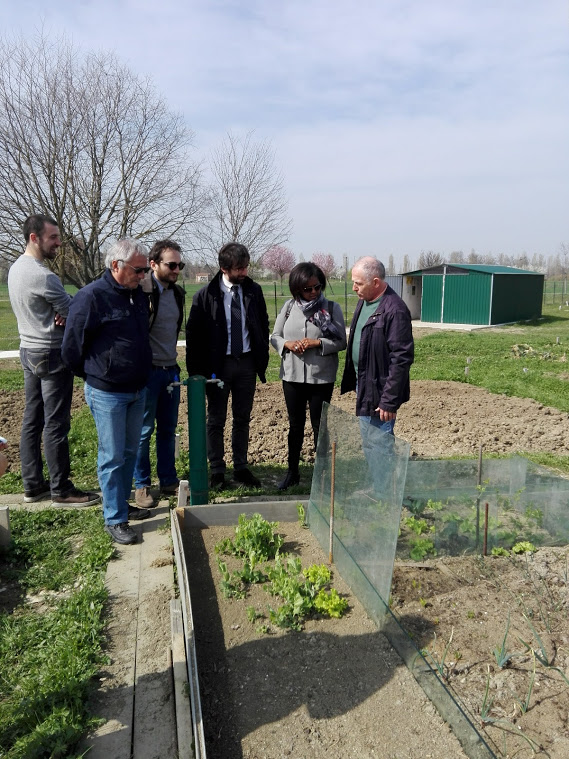
During a visit to the community gardens managed by the cultural center L’Orologio
This is evident when we look at the project QUA (neighborhood as commons) which aims not only at strengthening citizens’ participation, but also at giving citizens a protagonist role, both as single individuals and as associations and informal networks. In December 2015 the City Council of Reggio Emilia approved the Regulation for citizenship labs (full text in Italian is available here). The Regulation establishes collaboration, stimulated and supported through participatory paths, as a crucial feature in the relationship between citizens and the local administration for the care of the city and of the community itself.
As explained on the official website of the city, this document is freely inspired to the Bologna Regulation, but it has a strong territorial connotation as it is adapted to the peculiarity of the local community and environment. Therefore, it underlines how neighborhoods should be understood as commons, meaning with this as fields where associations, informal networks, citizens and administration can connect and can develop together a new idea of participation and active citizenship.
The city has been divided into 19 neighborhoods, or territorial areas (ambiti territoriali), which are being the theater for the establishment of CitizenshipLaboratories and Citizenship Agreements, that are being developed and coordinated by the new figure of the Neighborhood Architect.
The Regulation sets a procedural path, made of 9 phases, to be followed by the Laboratories. The Architect plays a fundamental role in the whole process as he is, using the words of Nicoletta Levi[4], an “activator of social resources and a mediator between center and periphery and between public and private”.
The project has been met with great interest by citizens, and the participation has been high. By December 2016, 9 agreements had already been signed, 896 people had taken part in the participatory paths and 64 projects had been defined. Between these projects we find really different experiences, ranging from the creation of a book-crossing network involving local libraries, community centers and citizens, who imagined and produced structures to be placed in public spaces that allow for the book exchange, to the development of Participation Houses (an example here), places located in the neighborhood that can facilitate interaction and dialogue between a variety of local actors. Furthermore, these projects also include the creation and management of urban gardens (one example are the gardens managed by the cultural space L’orologio) and the development of Wifi communities, like the one that has been put in place in Villa Coviolo, an area located at the South-West of the city .
CO-Reggio Emilia and the path of #CollaboratorioRe
The S.Peter Cloister, object of the #CollaboratorioRe co-design path
The commitment of the Municipality towards participation and collaboration in decision making processes and in city making is at the bases of the CO-Reggio Emilia[5]project, that was promoted by the local administration in collaboration with the University of Modena and Reggio Emilia and with the scientific, strategical and organizational support of LabGov and Kilowatt.
The process began with the activation of the participatory path of #CollaboratorioRe, which brought together citizens, associations, private actors, cognitive institutions and members of the local administration (as envisaged by the quintuple helix[6] approach of urban co-goverance) and allowed them to collaboratively shape the future of the “Chiostri di San Pietro” area, a urban commons holding a particular relevance for the city and for its inhabitants.
As explained by Valeria Montanari “#CollaboratorioRe aimed at creating the first incubator of sharing and pooling economy of Reggio Emilia, a new urban actor that will revolutionize the way we think about the city and will emphasize the role that civic collaboration should play in the care and management of the urban commons”.
What makes the experience of #CollaboratorioRe particularly relevant is that while working on the regeneration of a physical space and on the creation of this new urban actor, the city is also activating a broader reflection on the idea of knowledge and culture as commons[7] by working on the relationship between technology and culture and by attempting to reduce technological inequality through education and informal exchange of information.
Conclusion
The experience of Reggio Emilia shows us that when institutions are willing to accept the challenge and to transform themselves, a paradigm change is really possible. By adopting a view of the city as an infrastructure that is made available to people, institutions and citizens are able to come together and collectively design the future of their neighborhoods, of the urban commons and of the city itself.
[3] Nicoletta Levi presented the experience of Reggio Emilia and of the project QUA – Quartiere Bene Comune in occasion of the CO-city project presentation in Turin,on March the 31st 2017.
[7] Y. BENKLER, Commons and growth: the essential role of open commons in market economies, The University of Chicago Law Review, 2013, and C. HESS, E. OSTROM, Understanding Knowledge as a Commons, from theory to practice, The MIT Press, 2007
……………………………………………………
Reggio Emilia è una città caratterizzata da un grande capitale sociale: su 172 mila abitanti, 27 mila sono impegnati in attività di coesione sociale. Questi numeri ci aiutano a capire la particolarità dell’approccio adottato dell’amministrazione locale che, come ci spiega Valeria Montanari, Assessora ad Agenda digitale, partecipazione e cura dei quartieri, è legata all’idea della città come infrastruttura a disposizione delle persone.
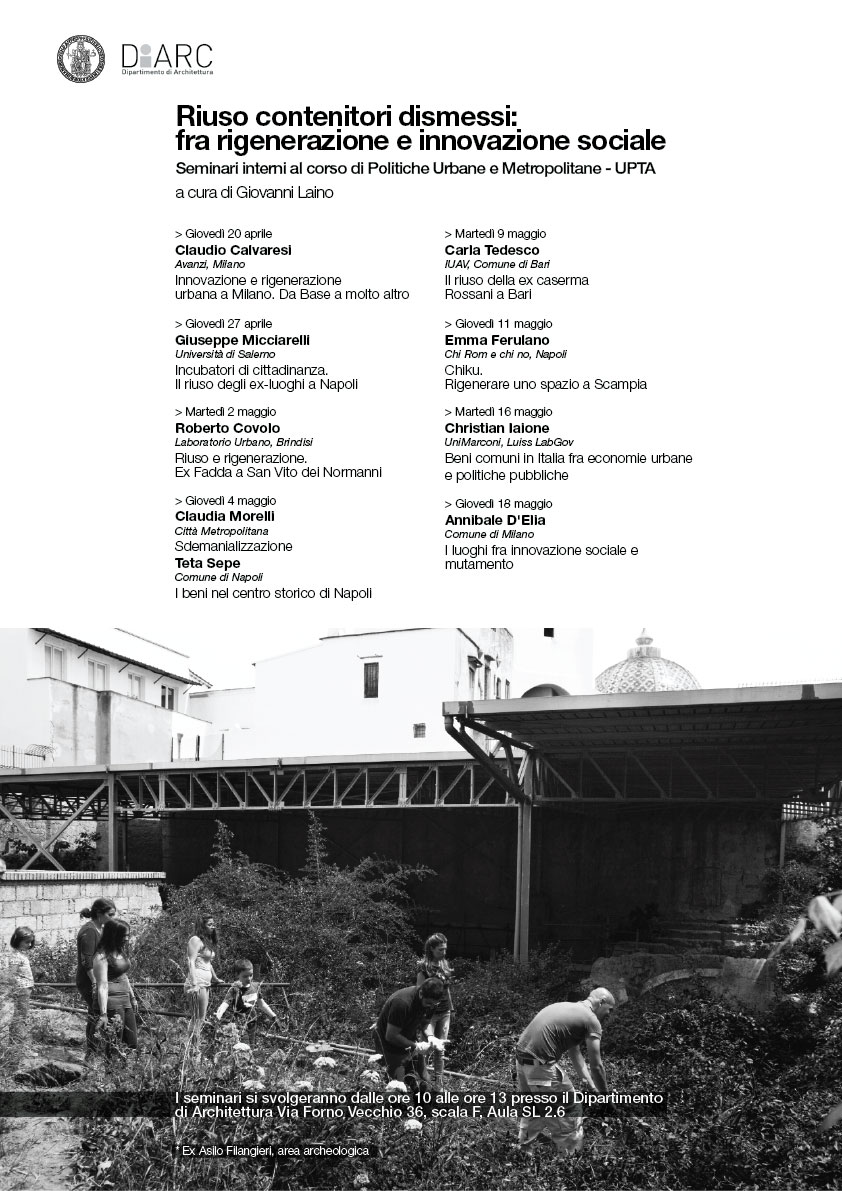
On Tuesday the 16th of May 2017 Professor Christian Iaione, LabGov coordinator, will be in Naples to hold a seminar on the topic “The commons in Italy, between urban economies and public policies”.
His lesson is part of a series of seminars organized by Professor Giovanni Laino within the framework of the course Urban and metropolitan policies (UPTA) offered by the Architecture Department (DIARC) of the University Federico II in Naples.
The series of seminars, titled “Riuso contenitori dismessi, tra rigenerazione e innovazione sociale”, allows its participants to analyze topics such as the reuse of vacant urban spaces and buildings, urban regeneration and social innovation from different perspectives. This is possible thanks to the contributions brought by scholars, experts and practitioners with both a strong knowledge and practice in these fields. Each lesson will be the occasion to discover the experience of a different city (from Milan to Bari and Brindisi, with a special focus on Naples itself) ad to learn about the innovative processes that are regenerating our cities and our communities.
The previous seminars saw the participation of Claudio Calvaresi (Avanzi – Innovation and urban regeneration in Milan, Base and much more), Giuseppe Micciarelli (University of Salerno – The reuse of ex-spaces in Naples as citizenship laboratories), Roberto Covolo (Laboratorio Urbano Brindisi – Ex Fadda in San Vito dei Normanni), Claudio Morelli and Teta Sepe ( Metropolitan city and Neaples Municipality), Carla Tedesco (IUAV and Bari Municipality – The ex-Caserma Rossani in Bari) and Emma Ferulano (Chi rom e chi no – Chiku, regenerating a space in Scampia). Additionally the last seminar, which will take place on Thurday the 18th of May, will be held by Annibale D’Elia and will focus on the topic “Places, between social innovation and change”.
The complete program of the series is available here:
Martedì 16 maggio 2017 il Professor Christian Iaione, coordinatore di LabGov, terrà il seminario “Beni comuni in Italia, tra economie urbane e politiche pubbliche” all’interno del corso di Politiche urbane e metropolitane (UPTA) presso il Dipartimento di Architettura (DIARC) dell’università Federico II di Napoli.
L’intervento del Professor Iaione è parte di un ciclo di seminari dal titolo “Contenitori Urbani dismessi, tra rigenerazione e innovazione sociale”, a cura del Professore Giovanni Laino.
Tutti gli incontri si tengono dalle 10 alle 13 in aula SL 2.6 a via Forno vecchio 36, 2° piano.
A semiotic reading of the business incubation world, towards a model of collaborative incubation between small ecosystems.
This article originally appeared in Italian on Doppiozero.
Since a few years something interesting has been observed around the word “incubation”. Metaphorology scholars define it as “catachresis”. As happens (happened) to the Italian locution “la gamba del tavolo” (the table leg), we are dealing with a phenomenon where a metaphor settles itself in our language, moving from being a “tropo” to real language, so passing from being a rhetoric figure to an independent item included in dictionaries and encyclopaedias. The expression does not need any more to make different worlds communicate with each other (which is the main aim of the metaphors). In our days no one while saying “table leg” has the impression of being using a metaphor. In the same way, (almost) no one, speaking about “incubation”, really means to link the neonatology world to the start-up devices.
The word “incubation” has the power to create narrations so visionary and so relevant, but today it is living a saturation phase. There is enough space for a new way of business incubation, which could refill the hole created by lack of sense and activity in the world of support to the companies and that could go even further, opening new generations of modelling metaphors.
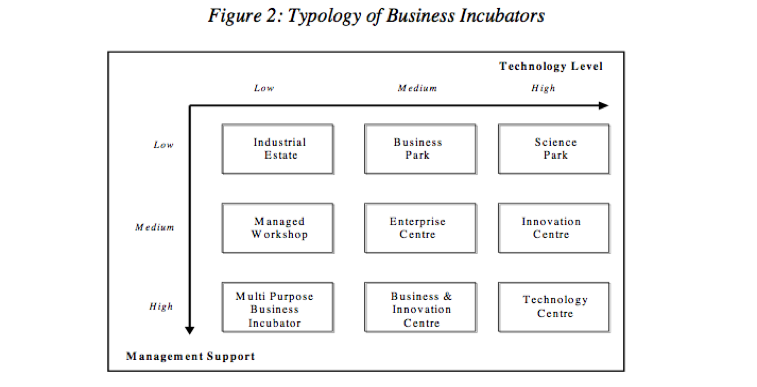
What is an incubator? According to the European Commission, during the 90’, was considered “incubator” a space where to concentrate services and support for the start-ups. Lately, at the beginning of the next decade, this definition already underwent a transformation. An incubator is not a space anymore but an organization, an activating subject, an accellerator, who provides services between which an incubation-space, services for supporting the business idea, network creations and opportunities. The definition even tells us that realizing a typology of incubators is possible with a preventive check of some broad variables: rules of employment and admission, functions and services, intensity of the supporting action. In the same report also appears a diagram that tries to make a topologic (in addition to a typologic) representation of the incubators:
The two dimensions on which the map is constructed are the technological level and the management assistance. It means that the main features of the incubation, underlined by this source, are the financial support and the type of activity generated by the helped start up/s.
An important role is still played by the physical dimension of the “incubator” as a place, be it a park or a centre. In the following years, this word turned into an umbrella-term: it detached itself from the single activity to embrace a broader range of experiences, going from education to services providing, assistance, sponsor searching.
Back to the narrative sphere, “incubator” has an interesting oscillation of meaning, never taken afloat. Differently from what happens in the Italian language, where the word incubator is used both with a male and a female meaning, in the English one, the female acceptation doesn’t exist, making the word far from its bond with a maternal meaning.
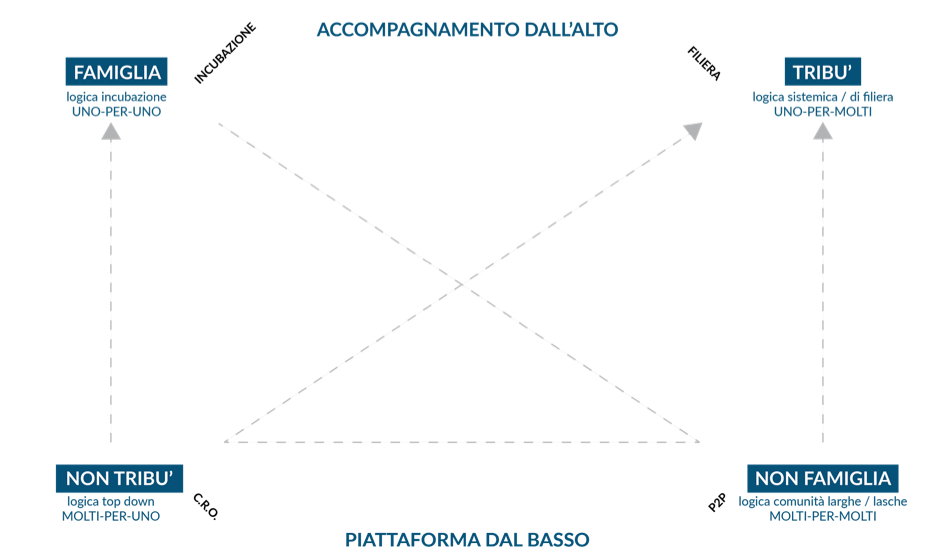
The smart marketing is made of leading narrations: abstracts stories that deals with a complex system of values. An example of leading narration is the myth, which at the same time is general and peculiar. The myth, as all leading narrations, is so effective as it activates those values that represent the basis of a society. Myths are simplifications full of meaning. The narration that has been dominating during these years of fast development in the business support area is based on a kind of familiar relationship, as the one between father or mother and son, whose main feature is the support. In the paternal case, chronologically preceeding the second one, the support came out through the perspective of an economic remuneration; in the maternal one instead, through the physical take caring by giving spaces and other assets for the business development. It is as if we were saying (in this dominant and simplifying narrative) that the father gives a pocket money every month, while the mother takes care of the son. Both the parents make their sons depend on them for heir survival, in a kind of relationship one-to-one. As we can see, in the semiotic square standing downward (like a figurative Cartesian Diagram), in the upper axis are settled the two ruling logics, while in the lower one we find the logics of formation (quite totally paternal) and acceleration (quite totally maternal).
When we put in the diagram all the traditional incubation experiences, expression of the tension generated by these two values, we notice that there are more crowded sections contrasted by sections which are almost empty, and which could therefore be available for new players entering the market.
In all the experiences present in the diagram we observe the activation of a hierarchical relationship between the incubator and the incubated subject. Horizontal links are missing. In the open-innovation world, but generally in the collaboration sphere too, a more “collaborative” kind of narration can be discovered. In order to realize it we need a new leading narration, not based on parenting relationships anymore. In the main narration of traditional incubation, in fact, the collaborative logic brings to a negative competition (as between brothers). What we really need is a different logic, similar to the one that we have found studying the scientific communities, where collaborative platforms are already used in order to realize open innovation (in research), but ,moreover, that we have found during two years of considerations (shared between Kilowatt and Social Lab) developed thanks to the CoopUp Bologna experience.
In our experience (CoopUp Bologna as first experiment of community business incubation, ie. incubation ecosystem – our tribe) we noticed a different logic: more “tribal”, based on the construction of a practice and knowledge community, of a collaborative network, of tools for value distribution and creation, of opportunities for exchange, relationship and comparison, in a common growth perspective. To this, we want to dedicate the proposal of collaborative incubation, dedicated not to a single start-up but to ecosystems of new enterprises that are growing together (even together with already existing and structured companies). This proposal might not be suitable for all new businesses. Our experience is addressed in particular to the so-called cohesive companies, as defined by Domenico Sturabotti and Paolo Venturi, and in general to the startups with a “social vocation”, attentive to their impact and consequently not always feeling comfortable with a form of support that promotes a development model very different from that for which they – the new enterprises – have decided, in the first instance, to start a business.
It is possible and perhaps necessary to move from the familiar logic towards a collaborative logic: from the concept of family – dependence, to that tribe, where there is not a parent, but a chieftain – or a shaman – coordinating all (the community, the chain , etc.) and needing everyone to be independent but collaborative (and conscious), so that the whole community functions. The chieftain has to win the confidence of the community, which the parent is not required to do.
We must try to explore a new incubation narrative, starting from a new ecosystem model based on relationships, trust and community. We have grown too used (we catacresizzati) to import without reflecting models from outside, “in the periphery of the empire”, as it was common to say few decades ago. The economic and especially financial magnetism of the Silicon Valley has become a cultural values and entrepreneurial magnetism. Everyone’s commitment should be to recover a European and cooperative approach to the company support. It is specially for this reason that the tribe seems to us a narration which is worth exploring.
The ecosystem incubation square takes to hart the experiences developed in the last year in the open innovation field. It “contains” the traditional incubation square in the top-left corner, it displays open innovation in the bottom-left corner, the research and development and peer to peer experiences in the bottom-right corner and also leaves open an almost plain space in top-right corner. To say it differently: it is coming to maturity.
In the square of community incubation, in the collaborative and mutualistic ecosystem support, there is need of new figures. The first is a tribal chief, who brings into the system “soft” and interpersonal skills and tools of community organizing. He is in some ways shamanic: his relationships are based on a trust channel, he must be able to read the “health” of an entire community, he needs to know how to manage community-driven dynamics. He is able to go beyond the single sector and above all he knows how to manage in a participatory way the community engagement dynamics. Finally, he knows how not to create dependence on its presence.
But there is not only the head of the tribe, the shaman who knows how to have a systemic vision, the community ecosystem managers. There are also the “community leaders”, situational leaders that activate according to their own talents and skills: those who depending on the specific objective can activate and strengthen the accountability of the entire ecosystem. In open innovation there can be large organizations who work as flying start, which signal a need for innovation that can then activate different collective growth experiences. But also, communities and informal groups, pushed by intense motivation, competence, talent.
The tribe operates as a system in which cooperation prevails over competition. The tribal chief maintains the vision and is able to measure out the roles of the community participants. In the semiotic square of collaborative incubation it is important to firstly populate the team of interlocutors who accept the challenge to co-manage their role as community leaders. We are in an almost-smooth space, more rhizomic that hierarchical, where wit is more important to know how to manage relationships than how to defend positions. “In the smooth […] the points are subordinated to the journey”, was said in Mille plateaux of Deleuze and Guattari. A common journey.
————————————————–
In questo articolo, originariamente pubblicato su Doppiozero, Gaspare Caliri propone una lettura semiotica del mondo dell’incubazione d’impresa e ripercorre la storia del termine “incubazione”, nato come una metafora ed ormai entrato nei nostri dizionari.
“È necessario provare a esplorare una nuova narrazione dell’incubazione, partendo da un nuovo modello di ecosistema basato sulla relazione, sulla fiducia e sulla comunità”

 shop continued with the sessions exploring both conceptual, methodological and empirical questions, such as concepts, methods, impacts, operations, geographical contexts, actors and governance, gathering Ph.D researchers, research fellows and assistant professors from many European countries and universities, revealing a great variety of approaches, methodologies, fields of research. In the two days of the workshop 39 contributions and 3 pitches were presented.
 aker was Michael Kuhndt, the executive director of the Collaborating Centre on Sustainable Consumption and Production (CSCP), an international nonprofit Think and Do tank that works with businesses, policy makers, partner organizations and civil society towards a sustainable planet.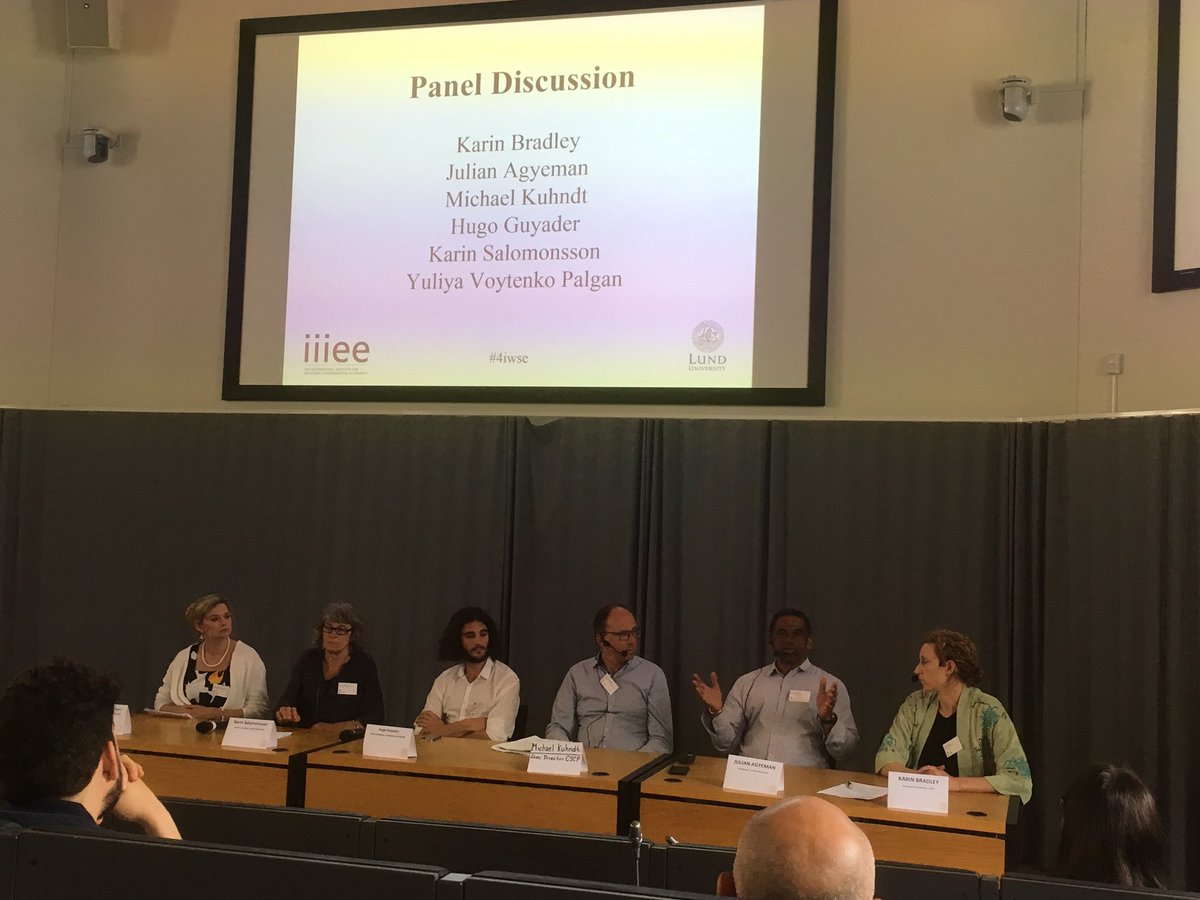
 orkshop contributors can participate at the draft of a book to help in describing and understanding the sharing economy phenomenon, sharing organizations, sustainability impacts and institutionalization processes. In addition a Special Issue of the Journal of Cleaner Production will be issued. A legacy of the workshop will also be the creation of a Ph.D student network on the sharing economy, to connect diverse backgrounds, ways of working, places and perspectives, and to apply for funding for workshops and meetings.