
by Francesca Spigarolo | May 19, 2017 | The Urban Media Lab

What is the role that public administrations should – and must – have in the creation of a new economic development paradigm able to generate sustainable and equitable wellbeing? This question will be at the heart of the series of conferences and workshops organized within the framework of FORUM PA 2017, which will take place from the 23rd to the 25th of May in Rome.
The common thread will be given by the Global Agenda for Sustainable Development and by the related Sustainable Development Goals (SDGs), that the General Assembly of the United Nations aims to achieve by 2030.
Within this general framework, the participants will discuss the importance of innovating public administration in order to provide answers to the pressing and ever growing issues faced by citizens. From unemployment to the right to health care, from raising inequalities to concerns about security, and much more. It is important for the PA to speak not only about itself and with itself, but to focus instead on why this innovation is deeply needed.
To be able to address these complex themes, the program of the convention is organized into 4 different kind of events: “scenarios”, “thematic conferences, “workshops” and “academies”. The complete program of the event is available here.
LabGov will take part in several events:

On the 23rd Professor Christian Iaione, LabGov’s coordinator, together with Giovanni Vetritto, from the Presidency of the Council of Ministers, will be chair of a conference titled “Sharing and Local Public Services”, which will take place from 9h30 to 11h30.
In the afternoon, from 14h30 to 18h00, we will be present during the conference “Social Innovation and Municipalities: from experimentations to policies”, promoted in collaboration with ANG, ANCI and RENA.
On the 24th Professor Christian Iaione will be chair of a conference titled “PARTICIPATION: models, policies and interventions in Italian cities”, an event which is developed within the framework of the Integrated project on Participation and Communication promoted by the Municipality of Palermo, which will be represented during the conference by Giusto Catania, Councillor for Participation, Communication, Decentralization, Demographic Services and Migration. The event will take place from 11h45 to 13h30.
On the 25th, during the national meeting of Italian cities participating in the URBACT network, which will go on from 11h00 to 14h00, Professor Christian Iaione will give a speech on the topic “Italian cities, between innovation and participation”.

…………………………………………………………………………………..
FORUM PA 2017 sta per iniziare: dal 23 al 25 maggio a Roma si terranno una serie di conferenze e workshops, attraverso cui si affronterà il tema dell’innovazione nella pubblica amministrazione. L’interrogativo con cui questa edizione di FORUM PA vuole confrontarsi è quello del ruolo che le amministrazioni pubbliche possono e devono avere nella costruzione di uno sviluppo economico e sociale che garantisca benessere equo e sostenibile.
Il programma completo dell’evento è disponibile qui.

by Monica Bernardi | May 16, 2017 | The Urban Media Lab
Since its birth in 1999, the Department of Sociology and Social Research of the University of Milano-Bicocca has promoted sociological research and scientific investigation of contemporary society, following its changes, with a special focus on the city of Milan.
From May 4th to May 7th 2017, the sociologists and the social scientists of the Department shared and presented their researches, analysis and investigations to the citizens of Milan, within the framework of the initiative “URBANA. Quality of life and social innovation in Milan”. The initiative, coordinated by the Department Director, Prof. Giampaolo Nuvolati, was promoted and organized by the Department under the patronage of the Municipality of Milan and the University Milano-Bicocca; with the aim of bringing university and sociology from the suburban Bicocca neighborhood to the core of the city, and in this way to strengthen and consolidate the relation between the university and the city.
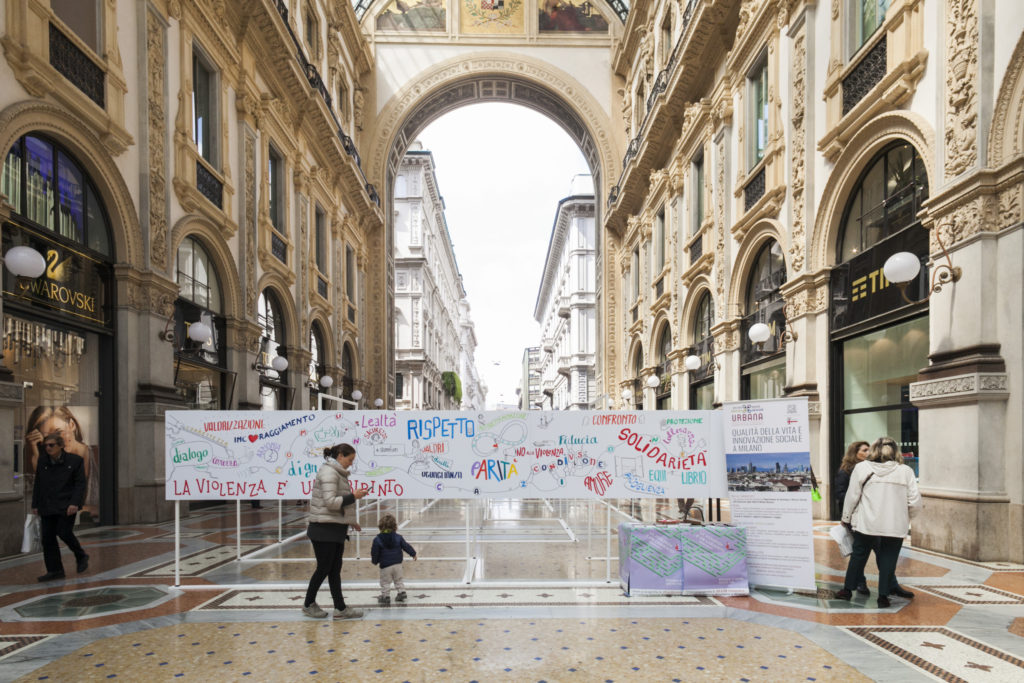
Photo Credit: Simone Barbagallo
Four days of city storytelling to describe its changes through different languages and perspectives, in some of the main representative locations of Milan, with more than 100 experts, social scientists, sociologists, journalists, artists and performers, for a total of 24 free entry appointments. The event, touched many different topics, such as violence, food, gender, ageing, mobility, sharing economy, health, security, job market, sustainability and metropolitan city among others. Not only conferences and workshops but also artistic installations, music and theater performances, that gathered more than 1000 enthusiastic participants. The events was divided into four main macro themes:
Innovation:
- a creative breakfast with sociologists and practitioners to talk about food policies, a topic of great interest in the current international debate;
- a seminar at ‘Fabbrica del Vapore’ on the international positioning of the city with the professor Roberto Camagni to reply to the question: is Milan a global city?;
- two interesting moments to discuss about flexibility, innovation and rights in the cognitive capitalism, with many experts from different fields: the first one at the new headquarter of Giangiacomo Feltrinelli Foundation to reflect on the new forms of self-employment and on the topic of the modern representation, and the second one hosted by Impact hub, one renowned local coworking, to analyze the new spaces of work that are rising in the sharing economy era with a special intervention of the council member Tajani (Labor Policy, Production Activities, Trade and Human Resources)
- Giangiacomo Feltrinelli Foundation hosted also a round table on the topic of social innovation and on the current state of the sharing economy in Milan with some of the main experts in the city and the participation of local practitioners;
- the conference ‘Feed the City’ to discuss the relation between city and countryside, the topic of the waste of food, the innovations in agriculture and the political perspectives of the local government in the metropolitan city, hosted at the EU Parliament Headquarters of Milan;
- a double event inside Trotter Park to discuss of art and politic as transformative practices with the participation of the master Michelangelo Pistoletto (painter, action and object artist, and art theorist) together with experts on public spaces and musicians;

Photo Credit: Simone Barbagallo
Welfare:
- a conference on the topics of health, prevention, participation, promotion in the city hold at the local Health Care Agency;
- three events with prisoners at the three Milanese jails to connect the city and the jails and underline the importance of this connection: the first day a music performance of the San Vittore Choir (Memory House of Milan), the second day a theatrical show with the detained of Bollate Jail (Trade Union); and the third day an artistic happening with the Opera detained in collaboration with the Brera Academy (Ex Church of San Carpoforo);
- a conference to analyze the relation between economic competitiveness and social inclusion with the participation of council members and experts on the topic, to deepen the theme of the social city in the urban agenda and to present the second Report on cities: “ The Urban Agendas in The Italian Cities” by Urban@it;
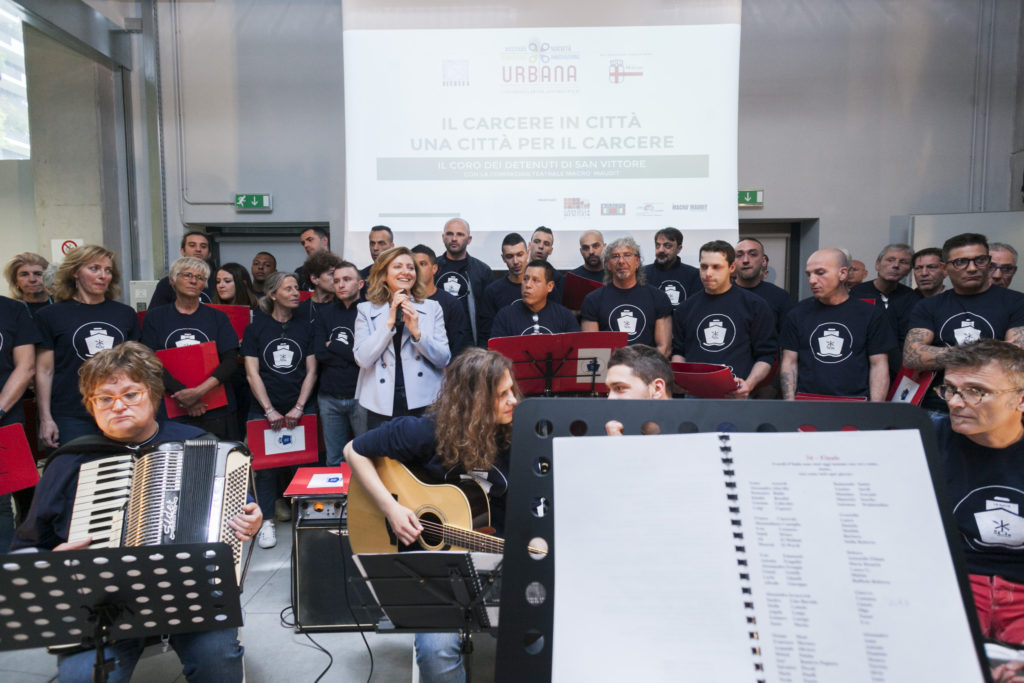
Photo Credit: Simone Barbagallo
Society:
- three meetings to deep the issue of domestic violence with Caritas Ambrosiana, Rete Antiviolenza Milano and SVS Donna Aiuta Donna Onlus. For the occasion the Galleria Vittorio Emanuele II was transformed for a day in a labyrinth as violence metaphor: enter is easy, exit no;
- a rendezvous to discuss the opportunities for women in the city of Milan with many local success women in different field;
- a seminar to talk about active ageing with the main local stakeholders and to promote forms of elderly participation;
- a day voted to young people and their artistic abilities in terms of resilience with the participation of youth involved in the project MiGeneration Lab of the Municipality of Milan.
- at the presence of the Public Prosecutor of the Republic, Armando Spataro, a moment of reflection on the history of the local criminality and on the perception of citizens with speeches from criminologists, sociologists and journalists, at the ‘Casa della Memoria’ (Memory House of Milan);
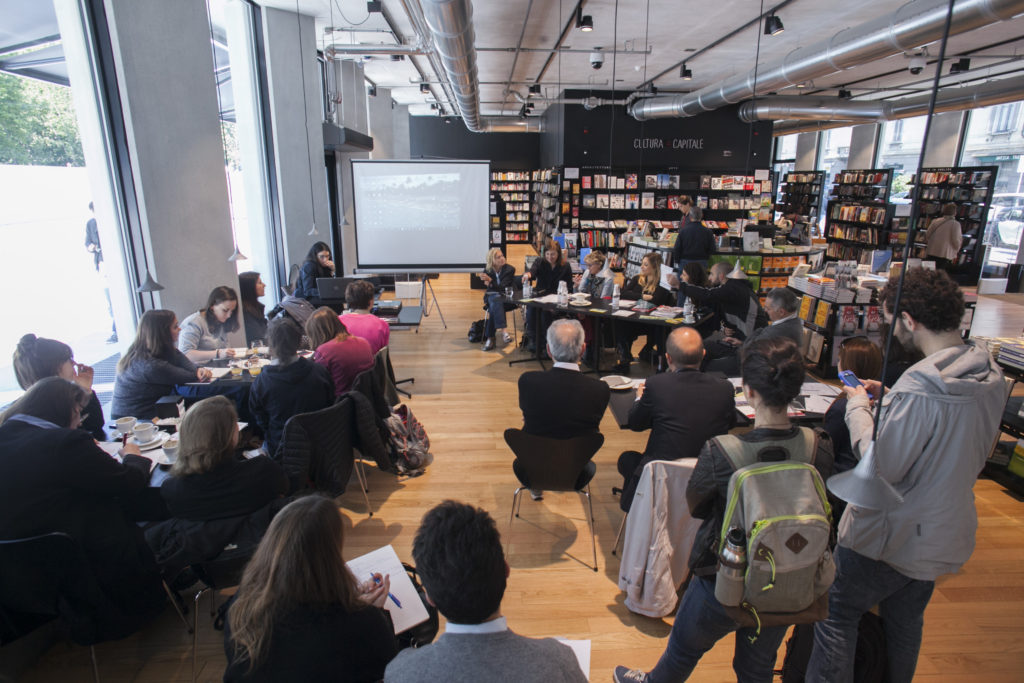
Photo Credit: Simone Barbagallo
Territory:
- a debate on the topic of mobility to reason of new urban populations, new uses of the cities and new forms of mobility hosted at Spazio Avanzi – Barra A @ Upcycle Milano Bike Café;
- continuing with the subject of mobility, the Rossignoli Atelier, one of the last place in Milan for the artisanal production of bicycles, hosted a workshop on the history and the evolution of the bike in the contemporary society, its use as geographical tool of exploration and its agonistic dimension, with a closing demonstration of how to assemble a bike.
- a conference to discuss the creation of the Metropolitan City, its potentialities and risks, with some contributors at the drafting of the Delrio Law and experts on the topic in partnership with the Centro Studi Grande Milano, the Metropolitan City of Milan and the Navigli Institute;
- The last event of the initiative was an incredible interactive performance with a local theater company (‘Teatro degli Incontri’) that guided 80 participants in the area of Via Padova involving people in finesse acts to re-discover the beauty of the city.
In addition, URBANA proposed also a metropolitan walk “So far, so close: walks in the Bicocca neighborhood” to explore the historical places that marked the life of this industrial area, and to understand its processes of regeneration. The walk was guided by Ph.D Student and researchers in Urban Studies.
As underlined by the Department Director, URBANA powered the subject of the quality of life identifying the needs of the population as well as innovative solutions and it has been the opportunity for many citizens to approach new topics or to deepen old issues. The Vice-Mayor, Anna Scavuzzo (also council member for education, university and research), took part to some of the events and stressed the important role of the universities also outside their doors, as engineer of innovation, research and scientific method underling their ability to text, experiment and activate, together with the local institutions and associations, new ways to make Milan more beautiful, open and livable.
All the information about the event are available at the link: www.urbana.sociologia.unimib.it
***
Dal 4 al 7 maggio 2017 Milano è stato un palcoscenico diffuso per la sociologia e le scienze sociali. Il Dipartimento di Sociologia e Ricerca Sociale dell’Università Milano-Bicocca ha infatti promosso ed organizzato, con il patrocinio del Comune di Milano e dello stesso Ateneo, una rassegna per portare la sociologia in città e affrontare i temi del cambiamento urbano, le problematiche sociali e le soluzioni possibili. 24 eventi in 4 giorni con oltre 100 esperti, tra sociologi, scienziati sociali, antropologi, criminologi, giornalisti, performers ecc hanno animato la città coinvolgendo oltre 1000 partecipanti. La rassegna ha rappresentato una grande occasione di conoscenza, confronto e connessione tra l’università e la città.
by Maria Elena Santagati | Apr 27, 2017 | The Urban Media Lab
‘Culture and Sharing Communities’. This is the topic of the next Conference of Trans Europe Halles TEH, a Europe-based network of cultural centres initiated by citizens and artists, that will be held in Pula, Croatia from 25th to 28th May 2017.
4 days to discuss and exchange on the role and practices of independent cultural centres in sharing culture and contributing to community development. Socio-cultural centres are in fact increasingly becoming social innovators, enabling inclusion and co-creation, democratization, re-evaluation of social values and changing social paradigms.
In order to “examine the relationship between culture and sharing communities with the aim to create responsible communities that stand in solidarity with one another while supporting a better quality of life for the community“, the conference will cover four main topics: Culture of Involvement; Sharing in Art & Education; Open Spaces for Sharing and Imagination; Communities of Practice. Additional specific workshops will deal with interesting challenges such as sharing in cultural productions towards sustainable art platforms, developing digital inclusion in a creative and innovative way, promoting time banking as a tool to engage and build with a creative community, enhancing civic design and collective intelligence, crowdfunding and community empowerment, developing long term forms of collective ownership in sharing the city.
Besides the meeting, in the past few months Trans Europe Halles has been conducting a mapping project of non-governmental cultural centres around Europe, that counted 770 centres so far. It is still possible to expand the map by submitting other centres.
The network also supports independent cultural organisations, as well as local and regional bodies, through consultancy activities and dedicated project. For instance, TEH is also partner of Creative lenses, a four-year (2015-2019) project funded by the Creative Europe Programme and developed by a partnership of 13 organisations from 9 European countries, including cultural centres and agencies, international networks, universities and creative business incubators. The project aims to improve the business capacity and financial sustainability of cultural organisations, a vital issue in such a critical time, by testing and providing innovative business models.
TEH is also key partner of Europe Grand Central, “a unique digital and conceptual platform to connect audience-created narratives about the human act of crossing borders” launched in 2015. It gathers and connects many grass-roots projects developed by independent cultural centres in Europe and beyond, it promotes mutual learning as well as audience inclusion, through different tools from artistic residencies to interactive theatre, design etc.
Last January, Trans Europe Halles also signed, together with other 32 institutions, the political statement of the European Alliance for Culture and the Arts calling European institutions and Member States to include culture and the arts in the strategic goals of the Union. On the occasion of the 60th anniversary of the Rome Treaties, the signatories stated that “Culture and the arts are the basis of the European project and moreover the essence of every civilizational development. They are substantially important to our identity, give meaning to human existence and reflect our shared history. European culture and the arts refer to 3000 years of shared cultural heritage while bringing contemporary relevance to people’s lives today. Flourishing in dialogue with other cultures, they reflect our “living together”, interconnect people in society, and transmit knowledge and values. (…) Culture and the arts constitute a vital lever for developing the Union’s future project”.
“Culture & sharing communities”, questo il tema della prossima conferenza di Trans Europe Halles, la rete europea dei centri culturali indipendenti, che si terrà in Croazia dal 25 al 28 maggio. Varie le attività e i progetti europei che il network porta avanti a sostegno di questi centri, attori sempre più importanti dell’innovazione sociale.

by Chiara De Angelis | Mar 31, 2017 | The Urban Media Lab
The City of Turin is currently hosting the fifth edition of the Biennale Democrazia, a cultural event promoted by the City of Turin and by the Fondazione per la Cultura Torino, with the aim of spreading a culture of democracy that is able to result in democratic practices. The 2017 edition is fully dedicated to the concept of emergency, to the uses and abuses of this term, and to all the things that this word hides and shows.

The theme of this fifth edition is articulated in five thematic routes:
- State of necessity
- Society of uncertainty
- New beginnings
- Focus_Questions to Europe
- Focus_The city that changes
LabGov, with its co-founder prof. Christian Iaione, will attend the Biennale Democrazia on Saturday, April 1st, during the panel “Storie di beni comuni” (“Stories of Commons”), coordinated by Alessandra Quarta and attended by Gianluca Cantisani and Roberto Covolo as well. The panel is organized in collaboration with the “Servizio Arredo Urbano, Rigenerazione urbana e Integrazione della Città di Torino” within the framework of the CO-CITY project.
The three speakers are going to investigate the new models of urban welfare and of community co-production. Some of the most significative experiences in Italy are going to be analyzed, in order to show how with the co-management of commons, innovative government tools and paths can be activated.
The program of the Biennale Democrazia is available here: http://biennaledemocrazia.it/programma-bd-2017/
Dal 29 marzo al 2 aprile la città di Torino ospita la Biennale Democrazia, giunta alla sua quinta edizione e quest’anno dedicata al tema dell’emergenza, agli usi e agli abusi di questo termine così usato negli ultimi anni, e a tutto ciò che la parola nasconde e manifesta.
Il prof. Iaione, co-fondatore di LabGov, parteciperà insieme a Gianluca Cantisani e Roberto Covolo, il primo aprile alle ore 11.00 al panel “Storie di beni comuni”, moderato da Alessandra Quarta e organizzato in collaborazione con il Servizio Arredo Urbano, Rigenerazione urbana e Integrazione della Città di Torino, nell’ambito del progetto CO-CITY. Durante il panel verranno investigati nuovi modelli di welfare urnano e di co-produzione di comunità. Saranno analizzate alcune delle esperienze più significative in Italia, per dimostrare come con la co-gestione dei beni comuni possano essere attivati strumenti e percorsi di governo innovativi.
Il programma completo della Biennale Democrazia è disponibile qui: http://biennaledemocrazia.it/programma-bd-2017/

by Cristiano Gatti | Mar 22, 2017 | The Urban Media Lab
 The 20th century income distribution system has changed entirely. The traditional framework of value creation based on the interaction of private, public and third sector is irremediably compromised. More and more companies don’t generate profit, as well as public administration doesn’t produce public value, and, thus, the society struggles to generate shared social value.
Given this scenario, where globalization and technological have had a disruptive impact on labor markets and systems of tax and there is growing concern about precariousness and insecurity, new innovative solutions are welcomed and necessary.
One of the most discussed ideas it’s the introduction of universal basic income (UBI). Unusually, basic income has a strength: both the right and the left appreciate that: leftist parties (i.e. Scottish National Party or Green Party in UK) place the emphasis on lower poverty, the rightist ones focus their attention on slimming down welfare system (in Finland it is a warhorse of Prime Minister Juha Sipilä, leader of the liberal and right-leaning Centre Party of Finland. Also, the far-right party Finns Party is interested in this policy).
According to the Basic Income Earth Network (BIEN), “A basic income is a periodic cash payment unconditionally delivered to all on an individual basis, without means-test or work requirement”. Summarizing, basic income is:
- Periodic;
- Cash payment;
- Individual;
- Universal:
- Unconditional.
Although this clear description, a wide variety of different Basic Income proposals are circulating today and there are different opinions: Finland launched a pilot project, Canada and the Netherlands have announced experiments whereas in Switzerland, 75% of voters rejected a basic income in 2016 because it would have meant increasing welfare spending. Let’s try to show the most important projects.
First of all, Finland that is the first country in Europe to applicate basic income to its inhabitants. Here, as elsewhere, the proposal hasn’t fulfilled the five criteria suggested by BIEN. In this case, 2,000 unemployed Finns aged 25 to 58 will receive a guaranteed sum of 560€ for two years. This nationwide pilot basic income project will replace part of their existing social benefits and will be paid even if they find work. According to Kela, the Finland’s social security body, the aim of the trial is to cut red tape, poverty and unemployment that nowadays stands at 8.1% in Finland.
Then, we have India, where about 6,000 men people in eight villages received a small basic income for 18 month. The results were compared with what happened in twelve villages where basic income wasn’t provided. In this case, the project born to reduce poverty has produced several positive effects on welfare (such as improved nutrition, better health and improved schooling) and on equality (the basic income helps the disabled more than others). Plus, basic income has reduced inequality and has driven a growth in productivity, output and in self-employed work.
Finally, we have tech giants in Silicon Valley where the “obsession” with basic income is very high. In a The New York Times article, journalist Annie Lowrey affirms that, “many technologists believe we are living at the precipice of an artificial-intelligence revolution that could vault humanity into a postwork future”. This vision of the future has lead Silicon Valley to invest in basic income projects “as a palliative for the societal turbulence its invention might unleash”.
For example, it is important the case of GiveDirectly, a nongovernmental organization that is not affiliated with any political party and is supported by tech industries. GiveDirectly is based in the United States but started a basic income project in Kenya to show that a basic income is a cheap, scalable way to aid poorest people on the planet. Roughly 6,000 people in Kenya will receive regular monthly payment for 12 years unconditionally. Furthermore an additional 80 villages, with 11,500 residents, will receive a two-year basic income.
Other well-known cases include those of Chris Hughes and Sam Altman. Mr Hughes is a Facebook founder that has started a $10 million, two-year initiative on basic income while, Mr Altman is the president of Y Combinator, a start-up incubator that is planning to hand out money to 1,000 families in Oakland, California. Read here to go into that.
In conclusion, we can assume that the situation is in fieri and is far from being over, especially in Europe. Last month the European Parliament have discussed this topic but rejected universal basic income as a compensatory measure for unemployment in tech sector caused by the use of robots and automation in labor market. For further discussion, it should be recalled what has been said in the Indian Ministry of Finance’s annual survey of the economy: a basic income “gives concrete expression to the idea that we have a right to a minimum income, merely by virtue of being citizens. It is the acknowledgement of the economy as a common project.”
——————————————————————————————————————————————————————
Nonostante l’introduzione del reddito di cittadinanza universale sia un tema divisivo su cui non c’è ancora un accordo su come debba essere portato avanti, qualcosa si sta muovendo in tutto il mondo, con iniziative nate sia da attori privati che da attori pubblici.


