by Cristiano Gatti | May 9, 2016 | The Urban Media Lab
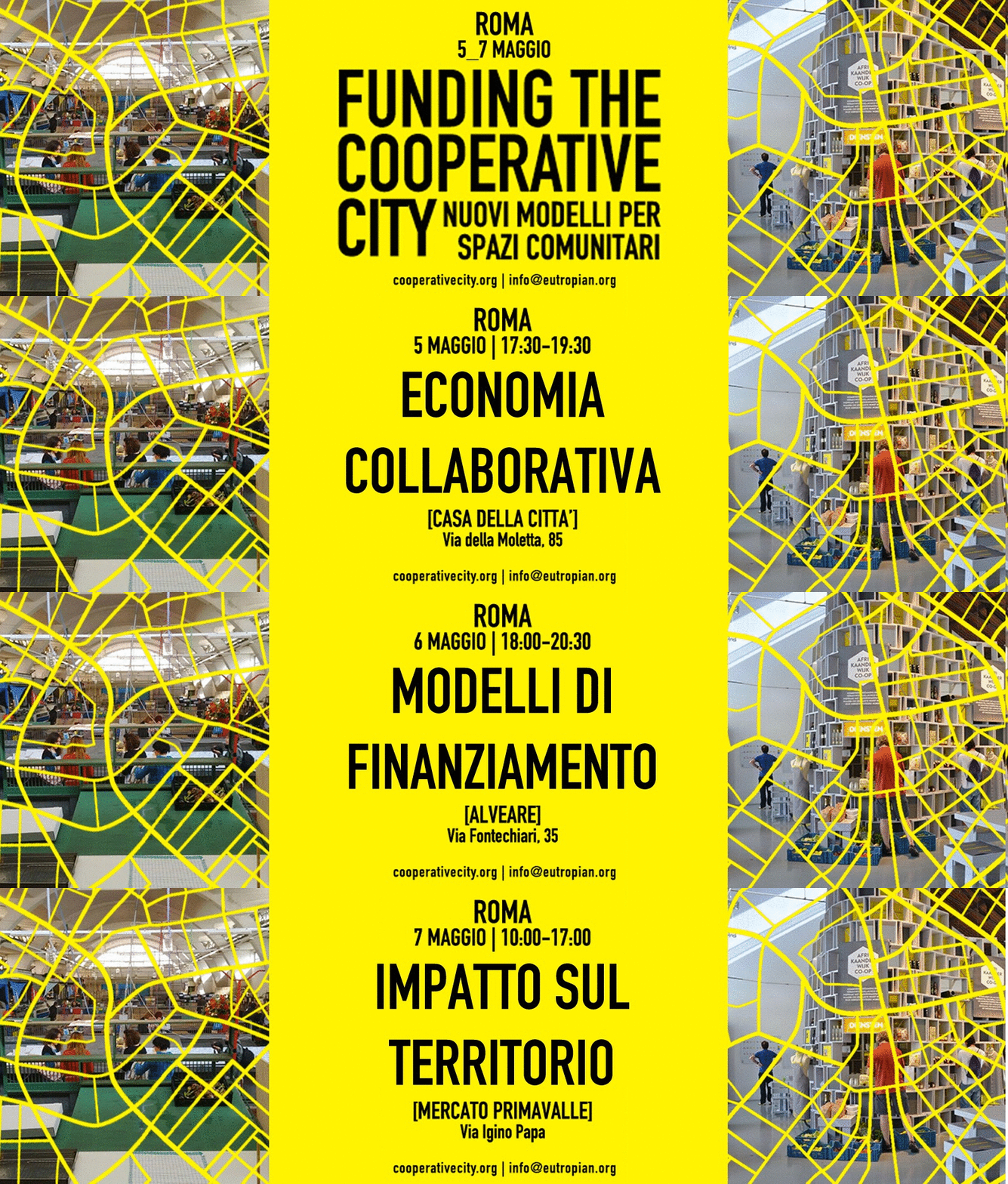
 Community financing in collaboration with the Administration. This was the theme of the first event in the three-day long workshop “Funding the Cooperative City – Rome” Nuovi modelli per spazi comunitari, which took place in Rome (@Casa della Città) on 5th May.
In front of the audience, Daniela Patti, Managing Director of Eutropian GmbH in Vienna and Founder of Eutropian association in Rome, introduced local and international speakers:
- Annet van Otterloo, Afrikaanderwijk Cooperative, Rotterdam
- Stefania De Masi, Cascina Roccafranca, Turin
- Jeroen Laven, ZoHo – Stipo, Rotterdam
- Christian Iaione, LabGov Luiss, Rome
- Massimo Allulli, Area Studi ANCI
- Angelo Melpignano, WithYouWeDo Crowdfunding di TIM
Afrikaanderwijk Cooperative and Freehouse bring existing workspaces, entrepreneurs, producers, social organizations and the market together. They promote sustainable local production, knowledge, cultural development and entrepreneurship based on shared responsibility and participation. The primary purpose is for people in the Afrikaander district to reclaim the right to develop their own neighbourhood.
Afrikaanderwijk Cooperative and Freehouse are working in Rotterdam-Zuid’s Afrikaander district to create a stronger and wealthier area for residents and businesses. In order for the Afrikaander district not become the victim of the expansion of the creative city, Freehouse set up small-scale projects to regenerate the districts and its market from within. In collaboration with residents, artists, and fashion designer Freehouse created a workshop for making and designing clothes, a communal kitchen area and a shop selling local products and offering small-scale delivery services. Another crucial element is the Afrikaander Market, which has been in decline for several years because it is not possible to combine products and services on the same stall. With over 300 acts of civil disobedience, they found a solution: red carpet fashion shows presented the work of young local designers and alongside items available on the market. In addition, the one-sided market assortment was expanded with local quality products. At the present, they offer over 48 jobs and various internship to the community.
Fondazione Cascina Roccafranca, founded by Turin municipality and participated by associations and informal groups is an innovative, social and cultural civic centre designed to citizen participation. It is a “container” that provides service: such as an accommodation centre, advice shops, a restaurant and a cafeteria that contribute to economic sustainability. There is also an Eco-museum and activities about ethical consumption, courses (theatre, dance, painting, diction …) reading groups, cinema clubs, foreign language courses, after-school programs, etc. Both the Foundation and other actors organize the activities and the services.
There are 100 courses involving over 3500 people, not only from the neighbourhood but also from the entire city. Actually, 40 volunteers and 20 specialists work in the Foundation. Through the improvement of relationship among different ages, cultures and actors, the Foundation wants to encourage citizens to be a part of their community and to work not only for their private needs but also for the commons. To do this, it is necessary to focus on citizen rights, social cohesion and new models of cooperation (especially PPP).
Zo-Ho is Rotterdam’s makers’ quarter. In 2013, owner Havensteder, Stipo and Municipality cooperated and decided to develop the area in a gradual process called slow urbanism. The area has been the opportunity to redevelop itself for 10 years. Havensteder offered tenants the chance to use and develop their property in an appropriate manner. The municipality provided spaces for experimentation and invested in social strategy and public spaces. Tenants found suitable neighbours and provided frameworks for the development of buildings and public spaces. Thus, users of the area, companies, organizations, inhabitants, and visitors can get involved with the development plans.
Two examples of improving Zo-Ho at eye level are Restaurant Gare du Nord (a successful organic vegan restaurant in a former train wagon on a derelict building site. The staff came from the neighbourhood) and residents from the Noord district starting an area cooperation to improve their district in an economic sustainable way. Zo-Ho become an experimenting and prototyping area and the success of the project persuaded other people to join the district.
LabGov Luiss is a place of experimentation, created to train the “experts in the governance of urban commons”. The goal is to create a new institutional and economic system based on the model of “civic collaboration”, “collaborative governance of the commons” and “circular subsidiarity”, according to which public institutions shall favor all citizens (individuals or in associative forms). In order to achieve social and institutional regeneration, it is necessary to create collaborative relationships between citizens, administrations and businesses to share the scarce resources and to take care of the commons, whether tangible or intangible, in urban and local community.
Prof. Iaione talked about the experiences of Pilastro, Co-Bologna and Co-Roma underlining some key points. First, the scheme of experimentation concerns reproducing institutions in the street (it is a matter of co-design; the results are new forms of social institutions). Then, it is a tension between social norms and formal rules because bureaucracy doesn’t work in the same direction (public procurement is different from co-design) but it is necessary a collaborative approach between internal and external actors to agglomerate knowledge. LabGov’s work is an experimental research on the field; it is natural that there are problems and imperfections in the process because we are in a transition from dualistic to cooperative paradigm. The city could be seen as a laboratory. There is not one solution, it’s a process.
Area Studi ANCI is a part of Cittalia – Fondazione Anci Ricerche and it is a network dedicated to research and study activities on issues of major interest for Italian Municipalities. The Foundation initially got involved in environmental, institutional and innovation programs and then focus on welfare, social inclusion, local governance, public and urban policies. The mission of Cittalia is to support Italian cities and Municipalities in facing the challenges of a changing society, so that they can develop effective public policies and improve their capacity to plan, manage and assess their actions.
Regarding the state of art of the co-city, Dr. Allulli agrees with the previous speaker. He talked about three assumptions: city rulers intend Co-city as a mere replacement of the role of PA (it is not correct because Co-city is more). The second assumption concerns the lack of understanding between politicians and social innovators because the former talks about money, the latter about legitimization, spaces and resources. Then he affirms that, although the contradictory situation, Italy is a land of pioneers: a lot of PA are changing their mind, they think in term of resources not only money. According to this, good news are the crowdfunding growing experience, participatory budgeting and exchanging best practices.
WithYouWeDO is a TIM’s Social Responsibility Enterprise programme. It is a crowdfunding platform, c’est-à-dire a method of web funding by large numbers of people, or crowds, with the goal of raising funds, even of small amounts, to finance projects placed on a platform/website. This platform is available for the non-profit sector and the public. WithYouWeDo promotes and supports the funding of initiatives, ideas and projects in the following areas:
- Social Innovation: from innovative projects for solidarity to building new models for integration.
- Spreading Digital Culture: schools, art and literature, from protecting heritage to innovation in the expression of creativity.
- Environmental Protection: everything that relates to environmental sustainability.
The platform includes two types of support:
- Reward Based Crowdfunding is form of fundraising to support a project in exchange for non-monetary recognition or reward on achieving the objective set out at the start of the campaign.
- Donation Based Crowdfunding on the other hand is a way of donating to support a given idea or campaign, without receiving anything in return: a sort of ‘intellectual investment’.
An example of this, it is Mappina.
In conclusion, we can affirm that this event has been an opportunity to discover citizen spaces and new economic models for community-led urban development with initiatives from Italy and Europe.
–
Funding the Cooperative City – Rome è stata un’occasione per conoscere nuovi modelli economici per uno sviluppo urbano promossi dalla cittadinanza con iniziative italiane e straniere. In particolare, l’evento del 5 maggio intitolato “Finanziamento di comunità in collaborazione con l’Amministrazione” si è caratterizzato come una chiacchierata tra esperienze italiane (LabGov e Cascina Roccafranca), internazionali (Afrikaanderwijk Cooperative e Zo-Ho) e contributi tecnici (Area Studi ANCI e WithTouWeDo).

by Chiara Fratalia | Apr 27, 2016 | The Urban Media Lab

LabGov with professor Christian Iaione will take part in the next IASC conference!
The 4th European Regional Meeting of IASC will have place in Bern from the 10th to the 13th May with the following subject: “Commons in a ‘glocal’ world: global connections and local responses”. IASC (International Association for the Study of the Commons) was founded in 1989 to bring together multi-disciplinary researchers and policymakers, with the purpose of advancing the understanding and improving governance of common-pool resources.
This conference main goal is to provide a space to debate on the ongoing “glocal” processes, which are often not yet addressed in a systematic way. The conference aims at debating the impacts of external changes on the perception and evaluation of resources by actors related to the commons, and thus affecting the access to common-pool resources.
Since the importance of the conference subject, LabGov has decided to participate by submitting a paper in the B20 panel, which would like to examine the concept of Smart Cities in India, and contrast it with the advances that other countries made in redefining their concepts of urban commons.
The paper submitted by prof. Iaione, with the title “The Sharing, Collaborative, Cooperative City”, will be discussed within its panel on Wednesday 11th May. This paper aims at examining the concept of design elements of a smart city from people’s perspective, while generating a significant body of comparative empirical knowledge about sharing economies and their governance within global cities.
The conference will entirely take place in the Social Anthropology Institute of the University of Bern.
_________________________________
LabGov a Berna per discutere di beni comuni. Il coordinatore del gruppo, il prof. Christian Iaione, è autore di un paper che sarà discusso all’interno della Conferenza Regionale Europea di IASC, che si terrà a Berna tra il 10 e il 13 maggio. La conferenza ha lo scopo di analizzare come i processi “glocal” del nostro tempo influenzino la percezione e dunque la gestione dei beni comuni.

by Diletta Di Marco | Dec 2, 2015 | The Urban Media Lab
“Collaborare è Bologna” is a project of the City of Bologna, managed with the Bologna Urban Center and various partners to promote a “culture of collaboration” with continuous and consistent community involvement,and to make technologies, resources, spaces, knowledge, skills and information more accessible. In this framework, on 19 May 2014, the Municipality of Bologna approved the “Regulations on the collaboration between citizens and the Administration”, for the treatment and regeneration of the commons. This is an instruction manual for a collaborative dialogue between the public, private and community spheres, a tool that seeks to simplify and promote forms of collaboration in the management of the commons, implementing the principle of subsidiarity provided for by the Constitution in its 118 article.
The project is divided into three sub-projects, designed by listening the citizens and letting them cooperate with associations, institutions, firms and interest groups:
> Fare_insieme: projects for the treatment of public spaces (i.e islands for underground waste collection, new lighting and upgrading of the main public spaces of the center, projects for cleaning the urban spaces, contrasting graphic vandalism, teaching citizens the shared care of open spaces).
> Vivere_insieme: projects with an innovative approach on many issues. Starting from mobility, for a city in which citizens are moving on foot, by bike and on public transport until the creation of projects in areas with specific problems (Pilastro and Bolognina are the interested zones).
> Crescere_insieme: projects in which public places become collaborative spaces and engines of economic development. The project provides a digital network infrastructure in step with Europe, to promote Bologna as a City of Food and renew the relationship between the university and the city.
From October 22 to December 3, 2015 a series of meetings will take place in different neighborhoods and with an online consultation for the citizens to define the priorities of the city.
The path was created in order to strengthen the collaborative ties and develop priorities, to implement the energy of the city and the ability of citizens to collaborate.
The Municipality is organizing six meetings, one for each district to activate a digital platform where citizens, schools, businesses and associations of Bologna will contribute to the emergence of the urban commons and draw a map of the urban regeneration projects and future actions. The aim is to design together a view of the commons to implement the available European funds, with the support of the regional and municipal authorities.
The round tables are organized with the direct participation of the citizens; the focus is on discovering the priorities of citizens and neighborhoods. Which are the places that need special attention?
Each meeting tries to answer to practical questions, and the participation of Neighborhood Presidents and the Mayor is an unique opportunity to present the measures already implemented and funded (relative to the district headquarters of the meeting) with a strong focus on the regeneration projects in progress and current demographic changes.
Each meeting is built on working groups, and for two hours all present citizens can intervene and bring out, area by area, problems and potential solutions.
The project “collaborare è Bologna” is organized by the city of Bologna with the collaboration of the Neighborhoods, Urban Center Bologna, ASP – Company Public Services for the person, IES – School Education Institution and the Institution for Social Inclusion and Community. The official hashtag is #collaborarebologna— search it on Social Media. For more information, write an email to gestionecomunita@comune.bologna.it. The next meeting’s programme of December 3rd is already online on the website: www.urbancenterbologna.it. Change begins with participation, and participation begins with you!

by Pratusha Erraballi | Nov 23, 2015 | The Urban Media Lab
The Bay Area, fondly known to many as the Silicon Valley, has birthed companies that are known to be crucial cogs in spreading the concept of the so-called “sharing economy.” Uber and AirBnB , for example, were launched and are headquartered in San Francisco. The startup platform AngelList shows 495 “sharing economy” startups with 1,087 investors, with a $ 3.9 million average valuation. [1] Many of these startups are located in the Bay Area.
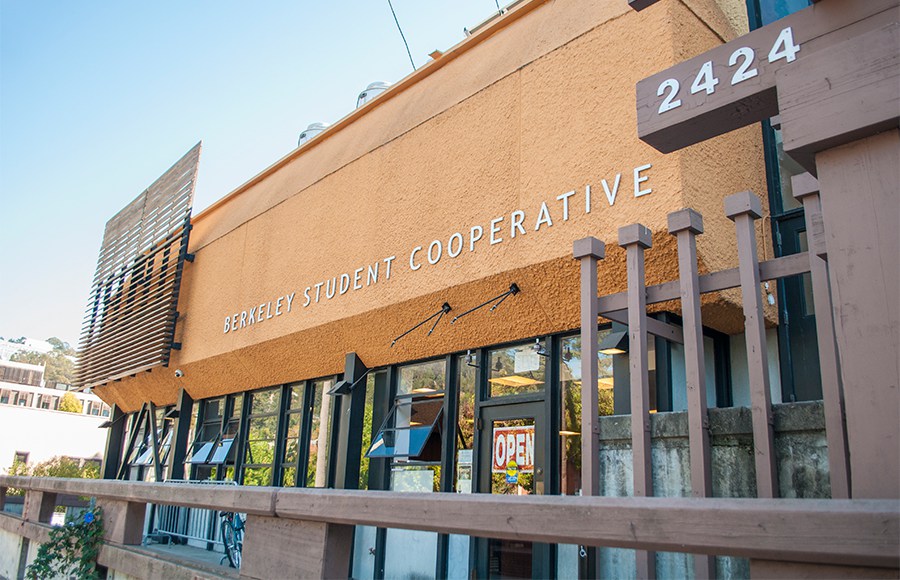
The East Bay Area, home to cities like Berkeley and Oakland, has a unique sharing culture whose history extends beyond the advent of these companies. For example, the University of California, Berkeley, is home to various housing cooperatives for students (including themed cooperatives like a vegetarian house and an African American house) under the umbrella of The Berkeley Student Cooperative.  The Berkeley Student Cooperative was founded in 1933 and is run as a nonprofit. The idea is to “democratically run” the houses, with each resident [contributing their] labor to help keep […] housing costs affordable. ” [2] Similarly, The Cheeseboard Collective is one of the most popular pizzerias in Berkeley. Cheeseboard has been a worker-owned collective since 1971 in that it is entirely owned by its workers and aims to embody the idea of a “democratic workplace.” [3]
Janelle Orsi, a self-proclaimed “sharing lawyer” in Oakland co-founded the Sustainable Economies Law Center (SELC) built to aid the development of the commons. [4] Orsi argues that companies like Uber AirBnB and do not draw direct links to the concept of the commons because, for example with Uber, “the property of a car and the labor of a driver are rented temporarily for a fee.” Orsi seeks to work with companies that create more “equitable arrangements.” Orsi has “supported projects in co-housing, community agriculture, car-sharing, and other shared resource management” and SELC often works with cooperatives just like the Berkeley Student Cooperative and Cheeseboard.
Cooperatives are unique in supporting the concept that “wealth should be gained by the people who created that wealth.” Other cooperatives in the East Bay Area includes, among many others: Missing Link Bicycle Cooperative, a forty-year-old worker-owned cooperatives bicycle store; DIG Cooperative, Inc., a general contracting firm for water catchment and reuse systems; and Mandela Foods Cooperative, a worker owned grocery store.
[1] https://angel.co/sharing-economy-4
[2] https://www.bsc.coop/who-we-are/general-info-who-we-are
[3] http://cheeseboardcollective.coop/about
[4] http://www.eastbayexpress.com/oakland/the-true-sharing-economy/Content?oid=4563249&showFullText=true
Photo Source: http://i2.wp.com/www.dailycal.org/assets/uploads/2014/10/BerkeleyStudentCooperative_MDrummond1.jpg
by Monica Bernardi | Nov 4, 2015 | The Urban Media Lab

The Collaborative Week in Milan is coming and all eyes are on the city. An eight-day event from November 7 to 14 the week is divided into five specific sub-events[1] that embody the willingness of Milan, its citizens and other actors to support and spread the voice of the sharing and collaborative economy. The week promises to offer a great debate with national and international experts and is hosted at BASE MILANO. The place itself is an incredible example of public space reuse and provides a new real stage to express the city’s voice and reflects the vibrant and dynamic atmosphere that is marking Milan in the last years: social innovation, creativity, sustainability, collaboration, cooperation, co-housing, co-working…
One of the main and highly anticipated events, among others, is Sharitaly, held on November 9-10, in its third edition. Sharitaly is the first Italian convention entirely dedicated to the sharing economy, born in 2013 thanks to the intuition of Collaboriamo and Cattolica University of Milan, together with Eni Enrico Mattei Foundation. The first edition was held in Milan with the aim of mapping and connecting all the actors of the emerging Italian sharing panorama, involving startups, social businesses, companies, public administration and ordinary citizens. The second edition, Sharitaly Reloaded, was in Rome, at Montecitorio, and represented a first evolution of the event, in reflection of the progression of the phenomenon itself. The aim, indeed, was to bring the Italian policymakers’ attention to the potential of the sharing economy in order to open a discussion about finding a normative frame suitable for the Italian context, without slowing down the phenomenon.
The 2015 edition is part of a broader scope of reflection and, as with every year, it wants to take stoke of the Italian situation and contribute to the larger debate on the collaborative economy and to its implementation. A novelty is the determination to bring the collaborative economy to an enforcement plan, comparing experiences and tools coming from public, private and third sectors, merging their considerations and trying to answer to the main concerns and doubts that such disruptive innovation is generating. The final aim is to understand the pioneering scenarios that the new sharing paradigm is opening. For this reason, the 2015 slogan, “Not only Apps”, is even more significant, since it refers to the importance of re-thinking the sharing economy in the broader context of public institutions, businesses and third sector. The two-day event will be enriched by the presence of experts; creatives; innovators; social entrepreneurs; public administrators; advisors; and researchers from each fields who that will present case studies and best practices, new experimentations and researches, and launch practical seminars and round tables. The following events are also noteworthy: the First Business Forum, the Social Enterprise Mega Workshop and the Collaborative Governance Camp. The first is an active and participative training day to analyze the position of big businesses and new startups in the current collaborative and digital transformation. The second is devoted to social business and will show how to use co-design tools to innovate collaboration. The third, the Collaborative Governance Camp, takes inspiration from the governance of the commons, which LUISS LabGov – LABoratory for the GOVernance of the Commons, is experimenting in many Italian cities and seeks to be a practical training day to build efficient collaborative governance models. Bologna is going to host the First IASC Conference on this topic, from November 6-7, showing the Italian commitment to collaboration.
As with every edition, Sharitaly is an opportunity to launch new formulas and innovations, and after Sharexpo and the Sharing School, now it is time for the Start Up Award, a call to reward the best collaborative initiatives in the Italian scene and give them visibility and support. The wealth of news and many inspiring events made Sharitaly a significant event to attend, particularly given the depth of discussion with regards to the sharing and collaborative economy and education on how to take the best from this new paradigm in the economic, social and institutional field. Check out the program and see you at Sharitaly.
[1] The events inside the Collaborative Week are: Experiment Days, Sharitaly, The European Coworking Conference, Espresso Coworking and Milano Sharing City: la Città in Condivisione, directly organized and proposed by the Municipality of Milan.
——————————–
Al via la terza edizione di Sharitaly, Non solo App. L’economia collaborativa nelle imprese, nelle amministrazioni e nel terzo settore. Il 9 e 10 Novembre all’interno della più ampia manifestazione “Collaborative Week”, Base Milano (ex Ansaldo rigenerato), ospiterà una rivoluzionaria versione di Sharitaly. Se nel 2013 l’obiettivo era mappare e connettere le realtà di sharing economy in Italia, coinvolgendo imprese, cittadini, innovatori, ecc… e nel 2014 è stata la volta di Sharitaly Reloaded, un’occasione per portare il tema all’attenzione dei decisori pubblici invitandoli a ragionare sulle implicazioni normative, il 2015 è all’insegna delle sperimentazioni e delle forme pratiche in cui la sharing economy si sta sviluppando, e vuole essere un momento di incontro, scambio e confronto non solo per le imprese, ma anche per terzo settore e pubblica amministrazione.

 Community financing in collaboration with the Administration. This was the theme of the first event in the three-day long workshop “Funding the Cooperative City – Rome” Nuovi modelli per spazi comunitari, which took place in Rome (@Casa della Città) on 5th May.

