
by Benedetta Gillio | Sep 30, 2015 | EducationLabs, Luiss LabGov 2015-2016
The fourth edition of LUISS LabGov Educational Lab (workshops, co-design sessions and fieldwork) will re-start on October 2nd, 2015! The meeting will be held in Viale Romania, 32 – 00198 Rome at 4.00 PM.
After focusing on Bologna, Mantua and Battipaglia, the new Edu Lab will a ddress Rome, its potentials and weaknesses at a very difficult time for the city, its institutions, and its society. The Laboratory will aim to design a Commons-based collaborative governance tool tailored to the needs and characteristics of the Italian Capital City. As we have done until now, we will apply the CO-Cities approach, based on a strong partnership between institutions, the private sector and the community. The five souls of the collaborative governance (social innovation, public authorities, schools/universities, businesses, organized civil society) will work together to re-design their own city, making it more economically sustainable.
The CO-Cities approach requires opening experimentation grounds. LabGov 2015/2016, together with many partners representing CO-Rome, will open and manage several urban cooperation grounds in different areas of the City: The Lab will focus on Garbatella neighborhood, the Appia Antica Park, a high school in Ostia and the V Municipality (Prenestino-Centocelle). They represent four different types of urban commons to regenerate and invest in. The Lab will take this long, but very stimulating journey in the City with many allies, partners and friends who will provide insightful advice to prototype a Commons-based collaborative governance for Rome. The Laboratory stays open to contributions, help and advice. Collaboration will run Rome as a Commons, because Commons need appropriate governance tools.
_____________________
La quarta edizione di LUISS LabGov (workshops, sessioni di co-design e fieldwork) ripartirà il 2 ottobre 2015 alle ore 16.00 in Viale Romania, 32 – Roma!
Dopo i grandi risultati ottenuti a Bologna, mantova e Battipaglia, il nuovo LABoratorio per la GOVernance dei beni comuni riprenderà le sue attività concentrandosi sulla Città Eterna: Roma. Anche in questo caso, le 5 anime della governance collaborativa (social innovation, istituzioni, Università , imprese e società civile) collaboreranno per RIcostruire Roma, rendendola più vivibile e sostenibile.
Vi aspettiamo!
by Marina Bassi | Jun 12, 2015 | The Urban Media Lab
 During last Saturday the 6th and Sunday the 7th of June, Spero2020 has taken place in Siracusa. LabGov – LABoratory for the GOVernance of Commons joined the event. Professor Christian Iaione, coordinator of LabGov, participated at the event as a contributor of the two-days’ work tables.
Spero2020 was an event – organised by Tempi Nuovi Siracusa and AJS Connection – that takes its cue from Matteo Renzi’s Leopolda, convinced that dialogue and constructive part is the way to put the focus on political needs and desires of citizens, helping to reduce the gap between public administration and territory.
Focused on the province of Siracusa, Spero2020 was aimed to undertake the comparison and the production of ideas and solutions, involving stakeholders and provincial stakeholders to 12 thematic groups. The working groups have addressed two specific focus developed on the basis of needs expressed during the path towards Spero2020.
The twelves focusing areas have been the following:
- Energy
- Environment
- Accountability
- Culture and Tourism
- Universities
- Welfare
- Mediterranean issues
- Development
- Social Innovation e Smart City
- Agriculture
- Governance of territory
- Youth and future
At the conclusion of the event a policy document has been worked out, and it was a work of synthesis of the proposals submitted to the tables in the two days of work. A complex and challenging action of grassroots participation with the help and cooperation of all those who believe that our country deserve better.
It is to make a mark decisive for the generations to come, all together.
More info on: http://www.spero2020.it/
______________________________
Spero2020 – nuovi metodi di costruzione delle politiche pubbliche
Lo scorso weekend, nelle giornate di Sabato 6 e Domenica 7 giugno, si è tenuto nella provincia di Siracusa l’evento Spero2020. LabGov ha partecipato all’incontro durante le due sessioni di lavoro. Queste hanno prodotto un documento programmatico di sintesi, incrocio fra le esigenze del territorio e i bisogni dei cittadini.
by Chiara Falduto | Apr 21, 2015 | The Urban Media Lab
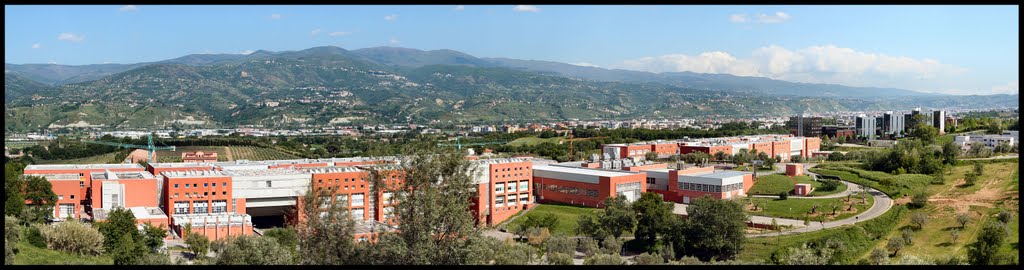
Starting from the 17th of April, the department of Engineering of the Environment and the Territory of the University of Calabria is presenting a series of seminars covering the topics of the safeguard and the monitoring of the territory.
The seminars will take place in the buildings of the University of Calabria in Arcavacata, a small town near Cosenza.
The series of seminars will be distributed in four days:
April 17th at 9:00 – The focus of the first meeting will be on how it is possible to transform the territory. The seminar will begin with the greetings of Girolamo Giordano, the dean of the university. Following the debate will start, with the participation of professor Mendicino (University of Calabria), professor Celani (University of Calabria) and the architect Caruso (Cematelier).
May 8th at 9:00 – The second seminar will cover the topic of the governance of the territory. In this second meeting LabGov will be involved, thanks to the participation of professor Christian Iaione. To the debate will also participate architect Vitellio (COS) and professor Mazzitelli (University of Calabria).
May 15th at 9:00 – The focus of the third seminar will be on recycling the territory. To the debate will participate professor Ricci (University of Genova), architect Nava (University of Reggio Calabria) and professor Ferrucci (University of Calabria).
May 28th at 15:00 – The series of seminars will conclude with a debate about how the territory can be administered. Professor Maiolo (University of Calabria) and professor Rossi (University of Calabria) will participate. Finally the conclusion will be held by engineer Mazzuca (Cematelier) and professor Cannavò (University of Calabria).
The seminars will surely be a great moment to share ideas and thoughts on a theme that today is very important and which needs the active participation of the citizens.
A complete program of the seminars is available here
A partire dal 17 Aprile, l’Università della Calabria presenterà un ciclo di seminari sul Progettare il territorio e monitorare l’ambiente.
Il ciclo di seminari sarà distribuito in quattro giornate. LabGov sarà particolarmente coinvolto durante la seconda giornata (8 Maggio), con la partecipazione del professor Iaione che parlerà del governare il territorio.
I seminari avranno luogo nelle strutture dell’Università della Calabria, ad Arcacavata.

by Marina Bassi | Feb 10, 2015 | The Urban Media Lab
Ecology, environment, recycling are elements aimed at sustainability in public spaces, to improve the lives of the communities within their own territory. That’s what happened on February the 3rd at the Council Chamber of the Municipality III of Rome with the presentation of the project ECOalTERZO. During the presentation, the most important associations in the Municipality have dealt about environmental sustainability. ECOalTERZO won the event “Ecology and Culture”, under the call “Cultura in Festa”. This call is part of a major project, led by the Municipality III, called ECOmune. It deals with ecology, with the aim of rethinking the city as a place to live in the pursuit of the enhancement of green spaces, fully functioning public transport, recycling, reuse, and with full awareness and cooperation of citizens. ReBike ALTERmobility and Interazioni Urbane – the two associations that have organised the event – illustrated the activities of ECOalTERZO, which will take place in Municipality during the first four Sundays in March at the Parco Delle Valli. There will be workshops on the recovery of materials, for both children and adults. Then, there will be organised lunch at the park, the “Coffee Project” (round tables on territorial issues), and concerts. At the end of the meeting, a group photo was taken, to highlight a cooperation that could be the beginning of a great work that aims to give a strong contribution to the improvement of the territory.
Concerning associations involved in the organization of the event, ReBike ALTERmobility promotes social collaboration. It is registered at the Lazio Regional associations (ARTES). The main aim of ReBike is to support and promote the culture of sustainable mobility in the city, particularly in the city of Rome;
Interazioniurbane is an association of social promotion, composed of young architects and enriched by professionals from other social disciplines. It aims at the development, promotion and implementation of projects of social solidarity, including the implementation of educational and cultural initiatives. The Association also pursues the objective of international cooperation in the areas of rehabilitation and urban regeneration. An example of it could be the project SOTTOilVIADOTTO, which represents the transformation of an urban space degraded and abandoned in a place of exchange and participation of citizens. During that project, LabGov participated organising workshops on activities for supporting the participatory design of the space. LabGov also illustrated how is it possible to realize a collaborative governance of a public space.
More information on : http://www.labgov.it/luiss-students-under-the-viaduct-regeneration-experiment-in-rome/
___________________
ECOalTERZO: la nuova collaborazione tra le associazioni del Municipio III di Roma!
Ecologia, ambiente, riciclo non sono elementi finalizzati alla sostenibilità negli spazi pubblici, per rendere migliore la vita della comunità all’interno del proprio territorio. È quello che è accaduto il 3 febbraio scorso presso la Sala Consiliare del Municipio III, con la presentazione del progetto ECOalTERZO. Le due associazioni che hanno organizzato ECOalTERZO, Rebike ALTERmobility e Interazioni Urbane hanno illustrato i primi eventi di ECOalTERZO, che si svolgeranno nel nostro Municipio durante le prime quattro domeniche di marzo, presso il Parco Delle Valli. Ci saranno laboratori sul recupero dei materiali, rivolti sia a bambini sia ad adulti. Seguiranno pranzi al parco, i “caffè progetto” (tavole rotonde su tematiche territoriali) e infine concerti. Alla fine dell’incontro è stata scattata una foto di gruppo, per suggellare una cooperazione che potrebbe essere l’inizio di un grande lavoro che si propone di dare un forte contributo al miglioramento del territorio.
Per quanto concerne invece il lavoro delle associazioni coinvolte nell’organizzazione dell’incontro, ReBike ALTERmobility è un’associazione di promozione sociale iscritta al registro regionale del Lazio dell’associazionismo (ARTES);
Interazioni Urbane è un’Associazione di Promozione Sociale, composta da giovani architetti e arricchita dal quotidiano apporto di professionisti di altre discipline sociali. Ha per scopo l’elaborazione, promozione e realizzazione di progetti di solidarietà sociale, tra cui l’attuazione di iniziative educative e culturali. Principale obiettivo dei progetti e delle iniziative promosse è l’elaborazione di soluzioni creative per intervenire nei contesti disagiati delle realtà urbane contemporanee e sensibilizzare la cittadinanza ai diritti umani nella loro universalità. L’Associazione persegue altresì finalità di cooperazione internazionale negli ambiti del recupero e della riqualificazione urbana, come nel caso del progetto SOTTOilVIADOTTO.

by Giulia Spinaci | Dec 17, 2014 | The Urban Media Lab

Once again the European Union has been the driving force of social innovation, through the so-called Grundtvig Programme. Often underestimated in its innovative and cohesive potential, since 2000 the European Union has regularly funded projects devised at the national level which succeed in providing the adult population “with ways to improve their knowledge and skills, keeping them mentally fit and potentially more employable”. An honorable goal, but what does it have to do with the commons?
Simple. In 2011, the Grundtvig call for proposals ended with 56 winning multilateral projects, among which “The EU’rban Gardens Otesha project“, better known as EU’GO. It seems that the fashion and , more interestingly, the social value of the urban shared gardens has been finally recognized at a supranational level. The result is that out of the €337.330 budget required to carry out this project, exactly 75% was provided directly by the European Union. An astonishing result that reminds us the need to develop alternative ways to enhance and improve the human capital, while also tightening interpersonal relations in discrimination-free contexts.
But what did “Piste-solidaires” – the promoter of EU’GO – devise?
In few words, EU’GO represented a bridge; a bridge that connected at once not only five countries – Italy, Germany, France, Spain and UK – but also all those local associations of citizens fully convinced that urban gardens might become propagation centers of best practices and of social inclusion, of education and of urban well-being. Social cohesion, cultural integration, sustainable development: these, thus, are the pivot themes of the EU’GO project, paying special attention to the most vulnerable segments of the society – immigrants, women, youth, disabled and elderly. The cities are meeting place par excellence. At least in theory. In fact, it was from the very reflection upon urban marginalization, isolation and discrimination that EU’GO took shape.
Transnational by nature and educational in its aims, EU’GO set an online platform in order to share the know-how and the skills developed (literally) on field in the so-called Otesha gardens. The latter, in the words of the promoters are “green spaces, innovative and active learning spaces that promote […] the collective creation of social, generational and intercultural bonds“. And so it is, in fact. Successful gardens blossomed like flowers and by word of mouth, an ever-increasing number of people devoted their time to the earth. Even indirectly, benefits were brought to the cause, by simply focusing the attention of the general public on the sustainable development issues and on the importance of social cohesion.
Too good to be true? Yes and No. Yes, because the project lasted two years only. A too short lapse of time, even to assess some results, if we consider that the effects on a community’s way of thinking can be ascertained only in the long run.
No, because notwithstanding, EU’GO might represent a starting point, a benchmark for the States’ policy-making and for active citizens. In the light of EXPO 2015 and the latter’s focus on nutrition, poor and developing countries, together with the developed ones in the need to rethink their relationship with the planet and their strategies to foster social inclusion, might then see in EU’GO a successful experiment.
_____________________________
Sviluppo sostenibile a braccetto con l’inclusione sociale: EU’GO!
Quando lo sviluppo sostenibile incontra l’inclusione sociale: il progetto EU’rban Gardens Otesha, finanziato dall’Unione Europea, ha riportato risultati sorprendenti. Risultati limitati dalla breve durata del progetto, ma che potrebbero rivelarsi un utile esempio per chiunque voglia rivedere il proprio rapporto con la terra e al contempo sviluppare strategie innovative volte alla coesione sociale.

 ddress Rome, its potentials and weaknesses at a very difficult time for the city, its institutions, and its society. The Laboratory will aim to design a Commons-based collaborative governance tool tailored to the needs and characteristics of the Italian Capital City. As we have done until now, we will apply the CO-Cities approach, based on a strong partnership between institutions, the private sector and the community. The five souls of the collaborative governance (social innovation, public authorities, schools/universities, businesses, organized civil society) will work together to re-design their own city, making it more economically sustainable.