
by Maria Felicita Ferraro | Oct 24, 2014 | EducationLabs, Luiss LabGov 2014-2015
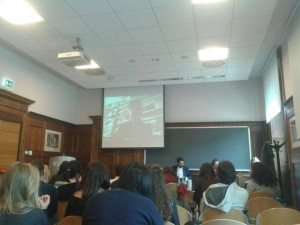
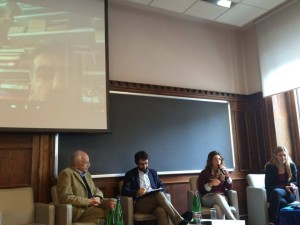
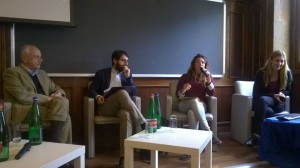
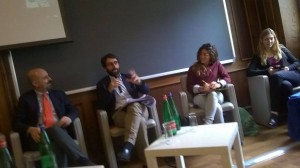
Thursday, October 23rd, LUISS Guido Carli in Rome held the opening conference of LabGov, with the presence of the general manager Giovanni Lo Storto, of the vice headmaster of research, professor Leonardo Morlino, of the President of Coldiretti Giovani Imprese Maria Letizia Gardoni, and the Director of the contents of the italian pavilion at Expo 2015, Paolo Verri.
The guests have debated around the topic of the governance applied to the topic of Environment, Agriculture and Food: Territory as a Common. Shared management, they stressed, is perceived as an opportunity of national change, responsibility and the engagement of young enterpreneurs for the protection of the beauty of our territory, fand or the importance of Made in Italy.
“Commons are fundamental as they are linked to a better quality of democracy” said professor Morlino. In mentioning electoral and interistitutional accountability, responsiveness, participation and competitiveness as the main dimensions of a properly assessed democracy, he said that commons are evaluation standards: “Our challenge is to continue a concreet analysis of indicators of quality in public policies, through the promotion of direct participation, equality and rule of law to overcome the last century’s crisis”.
President Gardoni has stressed that the number of young people that operate today in the agroalimentary sector is growing “thanks to the cultural revolution that aims at spreading the idea of rural activities as means to restart our country’s economy and society”.
And Verri confirmed this point, presenting events such as Expo 2015 as ways to promote change and to export our culture and skills abroad. “We need to start spreading the word about our capabilities and perspectives!”, he encouraged.
In wishing the project all the best, the general manager of LUISS, Lo Storto, talked about future and hope. “Listening is a means of personal and collective growth, and we have the responsibility of listening and growing together, in order to build our own future and achieve our dreams”.
Professor Iaione, LabGov’s Coordinator, has presented the Laboratory as a program of co-production of knowledge and research applied to institutional innovation through the cooperation of public and private subjects of governance. And he announced the newest addiction to our project: the shared garden inside the university campus, that is going to be inaugurated next month.
![The future of transportation?! Now it’s also a series..]()
by Nicolo Traina | Sep 26, 2014 | The Urban Media Lab
Is difficult to say what will be the future, and when it will comes, especially in a fast field such as transportation. Some Years ago we imagined flying cars, teleportation and advertising everywhere, a kind of “blade runner” reality. Today we already have prototypes of cars that drive themselves or streets that incorporate solar panels to light them self and, for example, alert you where the parking is free.
Definitely one of the major problems for us Italians in general, but also for anyone living in a metropolis, is the traffic is blocked and the roads impassable. Getting in the center of Rome or Milan often takes hours, and even on the highway is always difficult to calculate travel times with precision because the traffic is huge and always a great unknown.
Many cities are developing the car-sharing to reduce the number of cars in the parking and streets, or forms of economic-help for those who commute to work or university with a car full rather than single-car. Certainly this are good ideas but where will the future of transport?
In US was born in the last few months a new mini-series in episodes to talk about these problems and their possible solution that will drastically reduce one of the major problems of work: to get there. “The future of transportation” will examine the full extent of America’s transportation challenges and explore how US cities are reinventing the way we navigate them, focus on the Initiatives and technologies being developed right now That will change the way we move around cities in the next 5, 10, and 25 years.
The series will be split into three parts. We’ll begin with the elusive search for “The Perfect Commute,” exploring new and better ways to Enhance what can be the most infuriating part of the day, the journey to and from work. Next we’ll examine “The Smartest Trip,” focusing on the crucial connections between transportation and progress and achieving sustainability. Finally we’ll document the current state of “Design in Motion,” sneaking a peak at the Technological and planning innovations That will fundamentally alter America’s transportation landscape.
Now let’s see what will be and let’s play our role, starting to fill up our car !!
http://www.solarroadways.com/intro.shtml
http://www.citylab.com/special-report/future-of-transportation/


by Nicolo Traina | Sep 18, 2014 | The Urban Media Lab
If you think that Mexico it’s only sombreros, nachos and tequila you are wrong, maybe in a few in the cliché-list there will be also crowfunding.
Crowdfunding is the practice of funding a project by raising many small amounts of money from a large number of people. Supported in recent years by increasing internet access, crowdfunding has been gaining momentum, even if it has been out there for hundreds of years (e.g. church’s alms or tandas) new technologies now allow larger numbers of potential donors or investors creating event or spreading the word.
Why crowdfunding and Mexico?! Because in Mexico borrowing from bank requires high securities and involves high interest rates, and this literally blocked the capitalistic spirit and the culture of growth and investment. That’s why crowdfunding could fill the gap and solve a lot of problems for all the small and medium enterprises that would like to grow the businesses and who have not access to the traditional system.
A recent report, from the Multilateral Investment Fund, member of the Inter-American Development Bank, called Crowdfunding in Mexico: The Power of Digital Technologies to Transform Innovation, Entrepreneurship & Economic Inclusion it’s analyzing the opportunities and challenges that Mexico will faces to foster this practice but also the optimism for the success of crowdfounding in creating the country’s entrepreneurial culture.
But will be a long way, there are big challenges like regulating, businesses education, development and diffusion of internet technology, and other basic aspects to make people sure of what they are doing and understand what they to take informed decision. For example now crowfunding is naturally seen with some skepticism among the main part of the population,but working on the above-mentioned challenges would unveil the potential benefits of accessing to a new and affordable financial source, close and possible for everyone.
by Stefano Speranza | Jun 13, 2014 | The Urban Media Lab
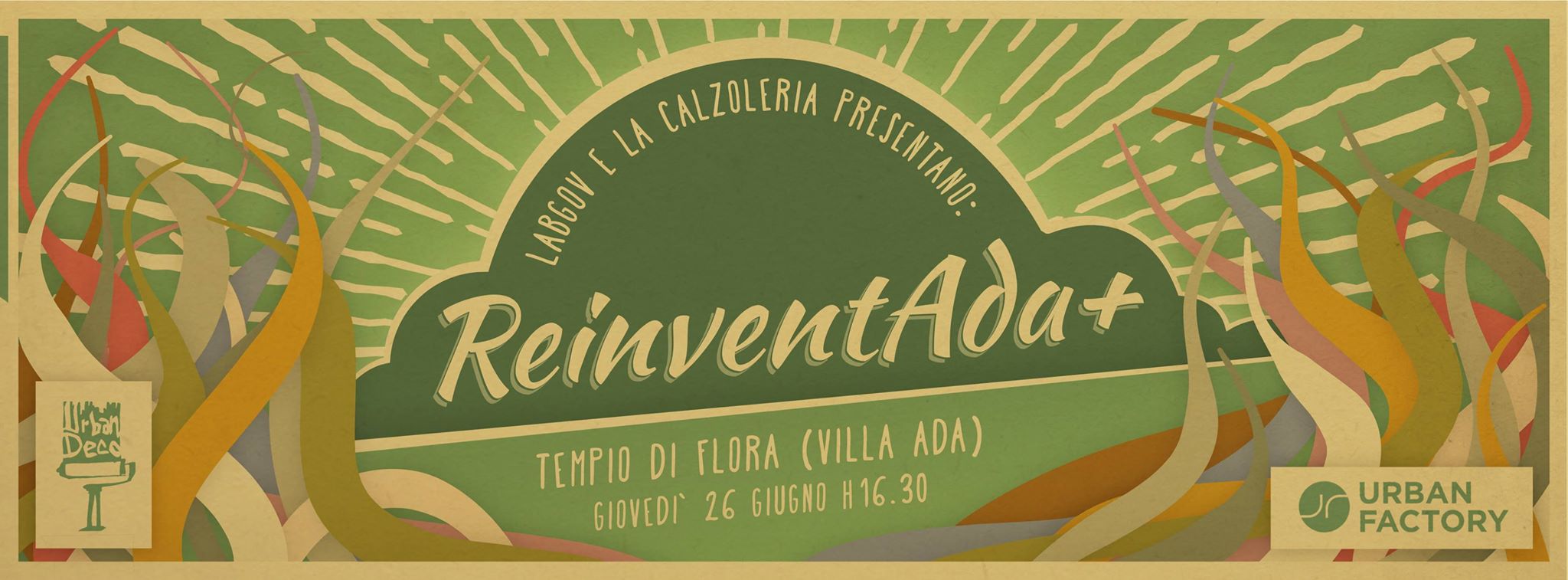
 The next June 26th, 2014 at the Temple of Flora in Rome will be held ReinventAda+, an opportunity of shared regeneration organized by LabGov in the wake of the highly successful ReinventAda, held in October 2013 together with La Calzoleria, club of social and cultural promotion.
LabGov considers as handbook and benchmark the Regulation adopted by the Municipality of Bologna on the “Cooperation among citizens and administration for the care and the regeneration of urban commons” and the urban commons at issue is the Temple of Flora which is in the wonderful park of Villa Ada, in Rome.
The Labgovers will symbolically repossess the Temple on June 26th, for a second edition of shared regeneration that, this time, will also see the presence of artists to animate the event.
In fact, during the first edition of ReinventAda, held on October the 25th, 2013, the Labgovers have cleaned up and restored the Temple and its surrounding area that, despite the restoration works made over the years, were in a state of degradation and abandonment.
During that memorable day it was shown that thanks to the cooperation of the local Administration (the Councillors of the City of Rome Flavia Barca and Estella Marino were actually attending the event) the people willing to roll up their sleeves can easily do it and take care of those urban commons which the Administration often loses sight of.
After eight months, however, the writers (the ones who only soil, not the artists), the waste and the dry leaves are back together with the abandonment, so the Temple of Flora is back to seem an old ruin left alone. But the Labgovers do not accept this situation and they have decided to persist and continue to work actively on the territory.
Thus, on June the 26th will be held ReinventAda+, the second edition of the first ReinventAda event that this time will not only consider the cleaning of the Temple but also moments of entertainment, called “Intimismi”, with music, reading and an exhibition of live painting made by Urban Decoarations. LabGov intends to contribute to the construction of a steering committee that aggregates the various associations, institutional entities, as well as civic and business subjects interested in achieving cultural and amusement activities to enhance the Temple of Flora and restore its former function of meeting place and cultural exchange. For this reason will be presented a Pact of Collaboration to ensure that the Temple of Flora will soon become a meeting and interest place for the local community.
Here the programme of ReinventAda+:
h 2:00 pm – Start of the activities
- Setting up and Regeneration of the Temple of Flora
h 4:30 pm – Arrivals of guests
h 5:00 pm – “A proposal for the shared Governance of Villa Ada”
- Opening greeting from LabGov
- Presentation of the Pact of Collaboration
- Presentation of the Handbook for the Placemaking
- Reading by Professor Sebastiano Maffettone
h 5.00 pm Live painting by Lorenzo Properzi of Urban Decorations
h 5:30 pm – Cultural entertainment “Intimismi”
- Music provided by La Calzoleria with:
- Marcello e il mio amico Tommaso
- Luca Bertelli
h 7: 30pm – End of the activities
For LabGov Group
Stefano Speranza
by Giulia Spinaci | May 22, 2014 | The Urban Media Lab
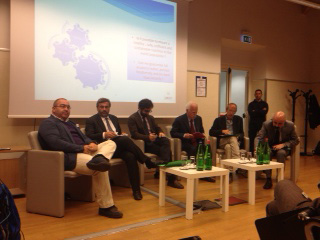
 On May 19th 2014, LabGov – Laboratory for the Governance of the commons organized the event “Coltiviamoci” at LUISS Guido Carli University in Rome. In organizing such a meeting, LabGov had the aim to present both the results achieved in the 2013/2014 academic year and the focus of the laboratory for the 2014/2015 session, namely the governance of the environmental commons. However, the event was also an occasion for a panel discussion, as LabGov had the pleasure to host prestigious speakers: Giovanni Lo Storto, LUISS Guido Carli CEO; Carmelo Troccoli, the National Secretary of Coldiretti Giovani Impresa; Luca D’Eusebio from the association Zappata Romana; Albino Ruberti, Managing Director and President of Zètema Progetto Cultura s.r.l. and coordinator of the working group Lazio Expo 2015. Professor Christian Iaione and Professor Gregorio Arena (Labsus) participated at the conference as LabGov founders and promoters.
Four neo-LabGovers, Marina Bassi, Edoardo De Stefani, Federica Maranesi and Leonardo Rossi made an introductive speech and presented the video that has been realized by the LabGovers in collaboration with Doctor Morello and Doctor Sbordoni from Officine GM. The video perfectly expressed the spirit of LabGov: youth, participation, training, and social innovation. Then, they spoke about the goals achieved during this academic year, which are impressive: ReinventAda, ReinventAda + and Human Ecosystem.
ReinventAda consisted in the regeneration of the Flora’s temple in Villa Ada’s park, which took place in October 2013. In that occasion, the LabGovers wanted to create a new form of governance of the commons and for this reason, they decided to practically take care of this site, by giving it new life through a restoration activity, under the supervision of the “Sovrintendenza Capitolina”. It is still an ongoing project and in fact, on June 26th 2014, LabGov will launch the second edition of the event: ReinventAda +. This year, LabGov will be the promoter of a memorandum of understanding open to all those associations willing to take care of Villa Ada, thanks to the model provided by the Bologna’ regulation about the collaboration between citizens and public administration for the cure and regeneration of the urban commons. The translation in English of the latter has been another goal achieved by LabGov 2014 and it will be an important documentation source for all foreigners who have already demonstrated a genuine interest in the LabGov project.
Nevertheless, the most important project that LabGov had the honour to carry out during the last semester has been “Human Ecosystems”. The latter is a new technology that qualitatively and quantitatively measures all information that human beings produce in the main social media and gives us back the real time geography of our relations, ideas and conversations in the form of an ever-changing map. In strict collaboration with the creators of this device, Salvatore Iaconesi and Oriana Persico, and with Roma Capitale, the LabGovers wrote a European project in response to a Horizon 2020 call for proposal.
All participants to the conference positively welcomed these results and after this brief introduction, the conversation with the host speakers began. The conversation revolved around the themes of Expo 2015, which perfectly coincide with those on which LabGov is based. In particular, since LabGov focus of the 2014/2015 academic year will be the environmental commons, the LabGovers asked the host speakers to meditate on possible solutions to the problem of a healthy, secure and sustainable global sustenance and on LabGov proposal of the vegetable garden sharing.
Giovanni Lo Storto, LUISS Guido Carli CEO, expressed his enthusiasm for the goals LabGov achieved during the last academic year. He was fundamental in LabGov creation and without his support, such a great success would not have been even possible. He underlined that the natural resources are finite and that we should welcome this situation as an opportunity for the best energies of the society to create new forms of governance for the commons. Even if he could no longer participate to the conference for institutional reasons, he finally praised the choice of the word “Coltiviamoci” which implies a collective commitment towards a common goal.
Carmelo Troccoli, the National Secretary of Coldiretti Giovani Impresa, picked up the baton and continued the discussion. He praised LUISS Guido Carli University for its commitment towards such important and living matters. He gave a picture of the Italian agriculture, showing how it is one of the most competitive in the world. In fact, even though the country has never invested in new technologies or in the GMOs, it has experimented different innovations, which mainly derive from the capacity to be creative. In Italy, a new development method was born, centred on the concept of diversity and for this reason, the successful idea of “smart territories” was launched.
Luca D’Eusebio, instead, told the experience of an informal association: Zappata Romana. Unconsciously, more than 40 voluntary associations of citizens over time have decided to take care of abandoned gardens and have promoted their regeneration. In this context, Zappata Romana created an on-line map of all these experiences and for the first time, the involved associations could communicate with each other. In addition, Zappata Romana gathered all the success stories in a single Handbook, which has been published on the internet. Nevertheless, Luca D’Eusebio admitted that none of these experiences collaborated with the public administration and consequently, some of them followed a regulation process, which in the case of the XI Municipality of Rome has brought the approval of a Municipal regulation for the governance of the vegetable garden sharing.
Finally, Albino Ruberti, Managing Director and President of Zètema Progetto Cultura s.r.l. and coordinator of the working group Lazio Expo 2015, intervened in the debate. He argued that the experience of the Lazio Region in Expo 2015 has superseded the classic hierarchical method in favour of a universal representation of all trade associations of the territory, with the aim of highlighting the excellence it has reached. Since the Lazio Region will enjoy a prominent position for the whole duration of Expo 2015, the latter represents the perfect opportunity to create long-term paths and to promote sustainability, cultural and tourism valorisation, the international dimension of local enterprises and new start-ups. Moreover, the institutions chose 8 macro-themes that constitute the fundamental prerequisites in order to select the experiences that will presented: the relationship between food and tourism; water; the city-country cleavage; sustainable nutrition; the relationship between genius and innovation; food products; the productive chain of the gastronomic itineraries; centrality of the city of Rome.
In the end, Professor Gregorio Arena (Labsus) and Professor Christian Iaione made the final remarks. In particular, the former informed the audience that the same day, the Bologna’s regulation has been finally approved by a large majority and suggested a reflection on the concept of “sharing”, on which a society should lay its foundations, together with the values of autonomy, trust, responsibility, reputation and transparency. Both professors hope for a radical change of the governance and while thanking all speakers for their participation, they distributed the certificate of attendance to all neo-LabGovers.
“Coltiviamoci” has been an interesting and amazing opportunity to share values and success stories and to lay the foundations of the 2014/2015 LabGov edition. Join LabGov II edition and you will do the most formative experience ever!


