
by Maria Felicita Ferraro | Oct 24, 2014 | EducationLabs, Luiss LabGov 2014-2015
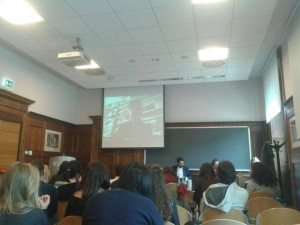
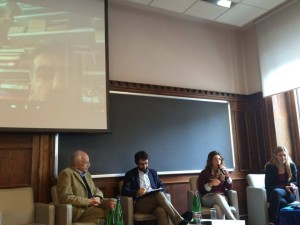
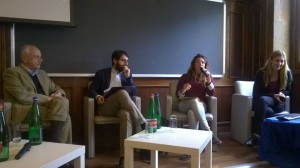
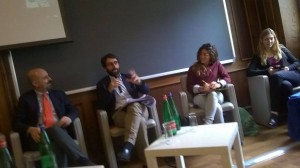
Thursday, October 23rd, LUISS Guido Carli in Rome held the opening conference of LabGov, with the presence of the general manager Giovanni Lo Storto, of the vice headmaster of research, professor Leonardo Morlino, of the President of Coldiretti Giovani Imprese Maria Letizia Gardoni, and the Director of the contents of the italian pavilion at Expo 2015, Paolo Verri.
The guests have debated around the topic of the governance applied to the topic of Environment, Agriculture and Food: Territory as a Common. Shared management, they stressed, is perceived as an opportunity of national change, responsibility and the engagement of young enterpreneurs for the protection of the beauty of our territory, fand or the importance of Made in Italy.
“Commons are fundamental as they are linked to a better quality of democracy” said professor Morlino. In mentioning electoral and interistitutional accountability, responsiveness, participation and competitiveness as the main dimensions of a properly assessed democracy, he said that commons are evaluation standards: “Our challenge is to continue a concreet analysis of indicators of quality in public policies, through the promotion of direct participation, equality and rule of law to overcome the last century’s crisis”.
President Gardoni has stressed that the number of young people that operate today in the agroalimentary sector is growing “thanks to the cultural revolution that aims at spreading the idea of rural activities as means to restart our country’s economy and society”.
And Verri confirmed this point, presenting events such as Expo 2015 as ways to promote change and to export our culture and skills abroad. “We need to start spreading the word about our capabilities and perspectives!”, he encouraged.
In wishing the project all the best, the general manager of LUISS, Lo Storto, talked about future and hope. “Listening is a means of personal and collective growth, and we have the responsibility of listening and growing together, in order to build our own future and achieve our dreams”.
Professor Iaione, LabGov’s Coordinator, has presented the Laboratory as a program of co-production of knowledge and research applied to institutional innovation through the cooperation of public and private subjects of governance. And he announced the newest addiction to our project: the shared garden inside the university campus, that is going to be inaugurated next month.

by Maria Felicita Ferraro | Oct 1, 2014 | EducationLabs
Article by: Maria Felicita Ferraro
When the neo-liberal approach of “marketisation” began to spread, it was rooted on a particular critique of state-run services. They were indeed perceived as top-down, inefficient and out of touch with people’s needs, knowledge and preferences. The public service agenda of the following governments has more often than not been based on market competition and consumer choice, with the aims of reaching lower costs, increasing quality and respond better to consumers’ preferences.
As rightful as all of these aims sound, though, it doesn’t seem like they have been reached. Public services often leave very little power to citizens, in favor of experts and politicians. What did we expect, though? Competition tends to lead to fragmentation and opposition between stakeholders, it discourages partnerships and it induces private companies to prioritise shareholder-return, which contrasts with public policy priorities such as meeting social needs. And while competition has been negative on the public sector, an alternative model of commissioning would allow for a collaborative partnership between different publicly oriented institutions.
The New Economic Foundation (NEF) has hence recently argued that public services should be delivered democratically and with the help of other not-for-profit community and civil society groups. It proposed a top-down approach that could bring more power to citizens thanks to a series of steps:
The first is co-production among experts and citizens who are recipients of a service, in order to combine their knowledge.
Then there is participatory democracy, that allows service users more control over decisions, over public spending (through participaroty budgeting) and even over political decisions (an example is Iceland, who recently tried to “crowdsource” its new constitution).
One more measure to shift power is the reformation of public agencies so that they resemble the model of cooperative governance structures, by granting less hierarchical working cultures that ensure more autonomy and trust to their staff, as Newcastle has succesfully demonstrated.
Indeed, there already are positive outcomes coming from the implementation of this approach: some public agencies, across the UK and beyond, are already enjoying the benefits of co-production, seeing services designed and delivered through an equal partnership between professionals and service users.
The NEF stressed the importance of power decentralization, starting from schools, which should come back under local authority control, and councils which should get back the power to raise taxes progressively in order to boost revenue. If everyone is able to participate and benefit from more decentralized and redistributed measures, a government’s actions to tackle inequalities would be more efficient and governments would be able to invest more in public services, rather than promoting austerity measures.
For further info: http://www.neweconomics.org/
http://leftfootforward.org/
by Maria Felicita Ferraro | Jun 30, 2014 | EducationLabs, The Urban Media Lab
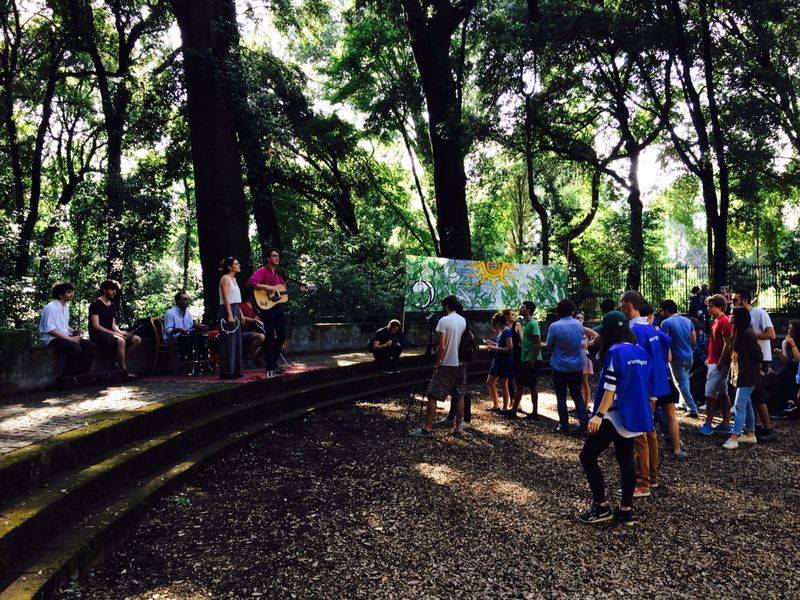
 On June 26th, 2014, LabGov has organized an event together with the social and cultural club La Calzoleria to regenerate the Temple of Flora in the roman park Villa Ada. The event has been organized with the cooperation of the Roman Superintendence for the Cultural Goods and the representatives of the public Administration have been willing to work together with the students, their professors and the General Manager of LUISS Guido Carli, Giovanni Lo Storto. Among the authorities who joined us, there were Alberta Campitelli, Manager of the Roman Historical parks, Agnese Micozzi, Cultural Assessor of the II Municipality and Giuseppe Gerace, President of the II Municipality of Rome. Following the words of the Head of the Political Science Department of LUISS professor Sebastiano Maffettone, who during his readings about Gandhi and Kant stressed “the importance of changing ourselves before pretending that others change”, the Labgovers decided to continue the work that had been started last October. The first ReinventAda event had been meant to restore the original beauty of the Temple. This time, the regeneration has been followed by “Intimismi”, an event of cultural entertainment provided by La Calzoleria with live music by the band Marcello e il mio amico Tommaso, and Luca Bertelli, who played a Swiss uncommon instrument called Hang. Moreover, thanks to the collaboration with Urban Decorations the guests have been able to assist to a live painting exhibition by the artist Lorenzo Properzi. The aim of the Laboratory was to set an example for the future, of active citizenship and a collaboration with the various associations, institutional entities, as well as civic and business subjects interested in achieving cultural and entertainment activities to re-appraise the Temple of Flora and restore its former function of meeting place and cultural exchange. We hence presented a Pact of Collaboration for the care and shared governance of urban commons, starting with the Temple. “Regeneration -as professor Christian Iaione declared- means a permanent and continuous care and shared responsibility.”


