by Adriana Marasco | Apr 2, 2016 | The Urban Media Lab

Wednesday, April 6, 2016 from 9:00 AM to 5:30 PM at the “Casa del Giardinaggio”(the gardening house) in Rome will be the final event of the european project of SIDIGMED ,which LabGov with professor Christian Iaione will partecipate . It will be open with an international conference about the management of urban and peri-urban agricultural areas . During the last years Rome have been held many european projects on urban agricolture such as : European Urban, Garden Otesha, EU’GO E-learning platform, Gardeniser and SIGMED with that are promoting the innovation , that are developing many exchange of experiences. They have been given another face of urban agriculture that became a way to socialize , to be an active citizen , a way of social integration and a place where share knowledge and innovative capacity.
In particular SIDIGMED is a project born two years ago to promote the social inclusion and to give a contribution to the fight against poverty in the urban areas.
The associates are : Rome, the Metropolitan Area of Barcelona, the Tunisian town of Mahdia, the Royal Botanic Garden and the Forestry Department of Al-Balga Jordan and ESMO Company SrlNel territory of Rome three municipalities were selected where to realize urban gardens and social Hall RM2, RM4 City Hall and City Hall RM9.
In Rome the project want first of all to teach how to share through the management of urban gardens. SIDIGMED gave birth, also, to real support paths, directed to citizens, for creating urban gardens on public lands, aggregating common needs, interfacing them with laws and regulations and supporting the process of co-decision in institutional co-responsibility route.
——————————————————————————————————————-
IL 6 APRILE ALLA CASA DEL GIARDINAGGIO DI ROMA, L’EVENTO FINALE DEL PROGETTO EUROPEO SIDIGMED SI APRIRA’ CON LA CONFERENZA INTERNAZIONALE SULLA GESTIONE DELLE AREE AGRICOLE URBANE E PERIURBANE, AL QUALE LABGOV PARTECIPERA’.

by Adriana Marasco | Mar 21, 2016 | The Urban Media Lab
This is an excerpt extracted from the article “Sharing Power: the Crucial Challenge for Sharing Cities” by Duncan McLaren and Julian Agyeman originally published on Shareable.net.
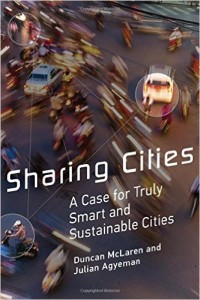 In the new book ” Sharing Cities” , Duncan McLaren and Julian Agyeman argue that cities face both challenges and great opportunities to guide and direct this shift toward the public good. The nature of sharing in the modern world is changingas describe the sharable article . Traditional, evolved, interpersonal sharing within communities and families is declining as social capital erodes and community bonds fragment. Yet web-based sharing between relative strangers is booming, typically intermediated by commercial platforms. In this new book, Sharing Cities, they explore how a genuine Sharing City might, amongst other things: •enable communal sharing through civic-, charitable-, and community-based intermediaries like tool banks, repair cafés, and community centres; •regulate commercial sharing companies like Uber and Airbnb to enhance environmental efficiency and ensure social inclusion; •provide shared public services like libraries and public transport, and make its own resources (buildings, vehicles, etc) shareable by communities; and •help build the underlying commons and infrastructures for sharing in real and virtual spaces — including an open and accessible web, and safe but not sanitized public spaces. But to do all these things is crucial the public participation and that means sharing one more city resource: power. Citizens need to have the capacity not only to decide whether and how much to participate in sharing ventures, but a role in determining their rules and shaping their design. Genuine Sharing Cities must share power and authority with their citizens. There are plenty of cities experimenting with increased citizen participation in diverse ways. Participatory budgeting gives citizens an increased voice in how their taxes are spent, and is increasingly widespread, from Paris to Boston to Seoul, as well as in Latin America where cities like Porto Allegre have led the way. But even in its most developed forms, it’s still a limited step, rarely steering more than the tiny proportion of overall budgets and having little impact on broader questions of policy. The cities are experiencing the sharing between citizens and the participation of citizens in different ways. But very often the authorities do not deal with efficiently manage on these initiatives and leave the self-management of these initiatives to the citizens. The first point on which we must reflect in order to have a real share is the importance of treating citizens as citizens rather than consumers. Empowered civic engagement not only encourages greater involvement in sharing, it helps sharing rebuild social capital and,even more importantly , reinforces the ways that sharing can shift public norms, identity, and values away from consumerism. When it comes to the crunch, this potential for changing values is one of the fundamental reasons sharing is so exciting. As Michael Sandel highlights, many of our shared public institutions are not just a safety net for the poor, but also “sites for the cultivation of a common citizenship, so that people from different walks of life encounter one another and so acquire enough of a shared … sense of a shared life that we can meaningfully think of one another as citizens in a common venture.” The commercial interests are the biggest risks to the sense of community and sharing. The real way to begin to think of us as citizens is be active on city’s power .We should reverse the dominance of commerce and money in politics. Cities should start to involving citizens in co-producing governance through, for example, genuinely open consultations, open government initiatives, commons governance regulations, map-jams, and other ways of opening and utilizing the digital realm for citizen participation. Sharing must take place first and foremost in cities, where it must become the main source of collaboration and sharing ground intercultural comparison, hub for public policy and civil society. This is why the authors suggest that squatting is more important to Sharing Cities than couchsurfing, for example: The rules and norms that the city establishes for squatting offer far greater scope to enable or constrain cultural change, than those around couchsurfing. Physical and virtual space should be managed both by the public and by the authorities to have a valid form of democracy-oriented to the commons. Many are the examples of cities that share. Cities must be the platform where they could compete on values and cultivating freedom, they must find their origins and adapt them to new cultures, must enhance common platforms and conquer the virtual spaces remaining in the democratic framework. Sharing Cities need to seize the moment; they must grasp the potential of participatory politics and make real the Right to the City — not just as an entitlement to share in the life, facilities, and resources of the city; but also as a right to collectively change and reinvent the city, its citizens’ identities, and their politics. ——————————————————————————————— Nel loro nuovo libro ”Sharing City” Duncan McLaren e Julian Agyeman sottolineano l’importanza di condividere una risorsa usata , spesso, unicamente dalle autorità : il potere . I cittadini non devono essere considerati come consumatori ma prima di tutto come cittadini , come cittadini attivi e il primo modo per farlo è usare il loro potere in chiave collaborativa con le autorità, in una cornice democratica. Le città devono diventare terreno di condivisione dei beni comuni anche attraverso strumenti virtuali. Gli autori ci spiegano quante iniziative potrebbero esserci in delle genuine città che condividono. Per realizzarle è fondamentale l’attiva partecipazione pubblica e la condivisione di un’ altra risorsa della città: il potere.

by Adriana Marasco | Mar 9, 2016 | The Urban Media Lab

The topic of the second edition of the Sharing School will be CO-Cities and CO-territories, cities and territories collaborative. The focus of the work will be on the design and redesign of urban and indoor areas, at the time of collaborative economy.
Sharing school is organized by : Labgov , Casanetural, RENA, Collaboriamo.
As areas of action to be explored with the participants and the teachers have been chosen: the collaborative agriculture, collaborative living, the suburbs as places of social integration, culture as knowledge and promotion of tourism.
The training experience is aimed at:
– Policy makers: politicians, managers and public officials, administrators who want to understand what it is and how to promote the collaborative economy;
– Entrepreneurs, and innovators startupper they have in mind an idea, a project, a business and want to understand how to achieve the best;
– Designers, experts and professionals working for public and private institutions and want to understand how to use the tools of collaboration.
Priority will be given to 35 participants, including 5 ” holders ” of collaborative projects, one of them is Labgov, consistent with the program, to study and implement together during the days of Sharig School in workshop sessions.
Priority will be given to projects that have:
– Elements of digital innovation;
– Organizational and community development techniques;
– Scalability and replicability of the project;
– In the medium to long term sustainability model;
– Objectives such as job creation, the reduction of urban poverty, sustainable land use.
————————————————————————————————
Il tema della seconda edizione della scuola condivisa è CO-Città e CO-territori, città e territori collaborativi. Il focus dei lavori, sulla progettazione e riprogettazione delle aree urbane e interne al tempo dell’economia collaborativa.
La Sharing School è organizzata da : Labgov, Collaboriamo, RENA, Casanetural.

by Adriana Marasco | Mar 3, 2016 | EducationLabs

On the 4th of March Tessy Britton will be the guest of Labgov for the next workshop. She is going to explain us her brilliant project: Participatory City. That project was born for the necessity of people to live more sustainably, participating all together. It is a new participatory system in London: together with residents they designed and tested new projects to re-organise the neighbourhood for every day benefits. The place will offer opportunities and conditions where people can cultivate themselves.
In the second part of the workshop and on the 5th of March we will continue to work on our project CO-Roma with some experts.
They will be exciting days!!
——————————————————————————————–
Nella giornata del 4 Marzo sarà ospite di LabGov Tessy Britton, direttrice e co-fondatrice del progetto Participatory City a Londra. Nella prima parte del workshop illustrerà il suo lavoro e nella seconda, che si concluderà il giorno seguente 5 Marzo, seguiranno le attività di co-progettazione del processo CO-Roma.

by Adriana Marasco | Mar 1, 2016 | The Urban Media Lab
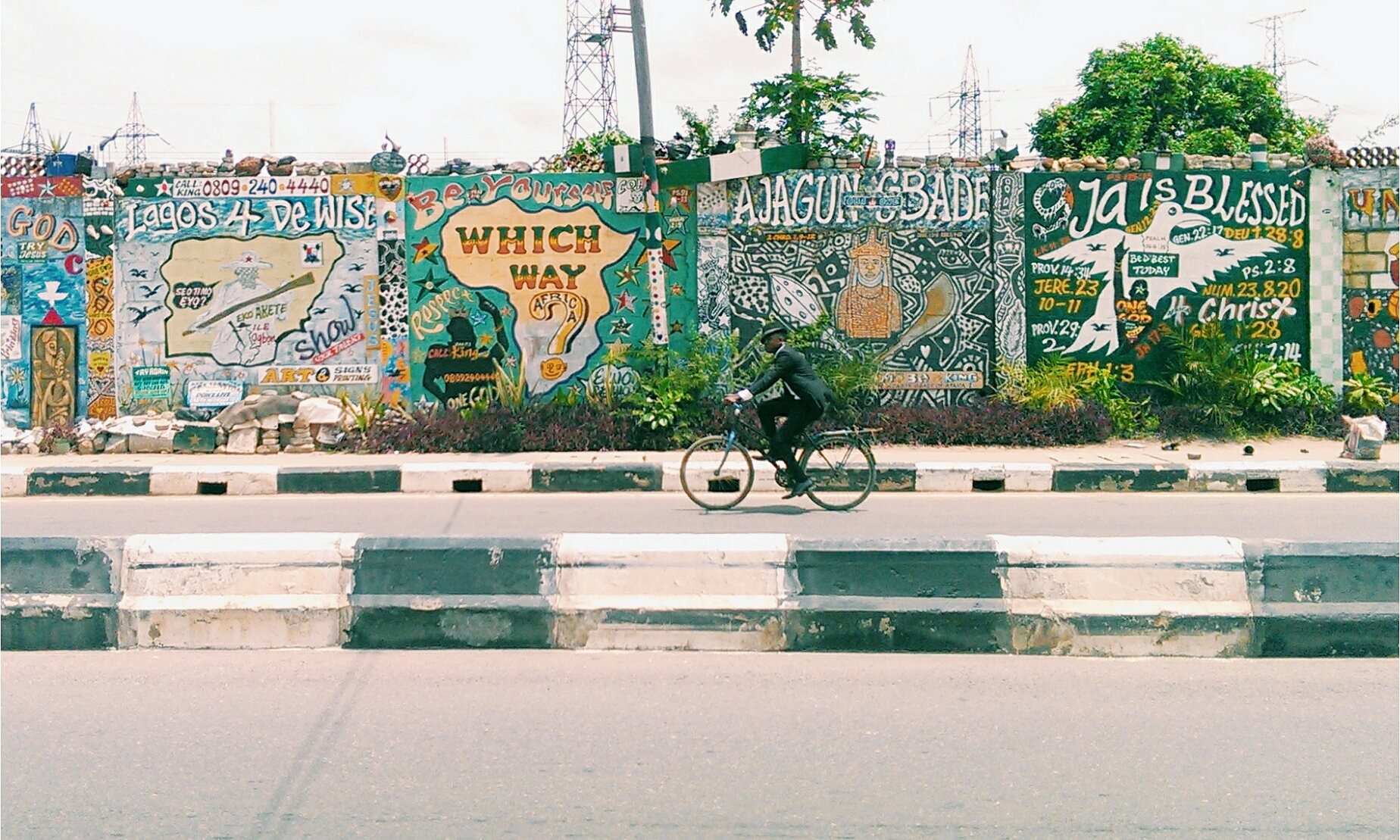
Lagos is a city in the Nigerian state of Lagos with 16.348.100 inhabitants . Is the largest city in Nigeria and in the African continent, is second only to Cairo.
If Lagos’s urban spaces seem like an odd place to have a late-night picnic, the organizers of Picnickers Anonymous are changing the way to how look to their city and how share in a better way the resources . they have completely new goals for Lagos.
How Picnickers Anonymous works?
The website declares that the venue is secret but provides an email sign up form, and instructs you to “bring a bottle and a blanket”.
All city are going to modernize, to be smarter, to be more sharable, to became “little kingdoms of technologies” but the big risk in some case is to lack the human elements .
Probabily Lagos is a new example of smart city that doesn’t start from technology but from human elements ; because the playability dimension starts on the road .
The guardian journal in the article “ What can an abstract idea like ‘playability’ do for a city like Lagos? “ tries to answers to : how can an admittedly abstract idea like playability help a hectic, sprawling city like Lagos, where almost two-thirds of the population live in slums, only 40% of the city’s waste is collected, and where power outages are a regular occurrence?
Certainly, one single idea cannot change cities this large and chaotic overnight, but change is more realistic when it is open and inclusive. A key goal of the project is to develop local networks, so workshops are key, and in Lagos we heard attendees lament that numerous organizations would come to the city to “fix things”, but then leave soon after. it simply needs to start with citizens coming together – to engage with each other, with state figures and with their local surroundings.
Perhaps the key to playability in Lagos will be the fact that the city is already playable.
The mayhem of this metropolis creates unique opportunities for inclusivity, openness and the reappropriation of space. There may not be stable electricity, but people are forced to think outside the box. Even when stuck in a traffic jam, innovation is rife. Car rooftops operate as impromptu off-licences, and food, drink and even international currency is exchanged through vehicle windows. This city is full of various networks of creative urban thinkers who just might not think of themselves that way yet. Whether it’s around a workshop table or a picnic blanket, playability murmurs in Lagos – it just needs a push.
Not far from Lagos events is the conference “ New Democracy: Co-creating the City ” , where Labgov will take place by prof. Christian Iaione , next February 25, 2016 on the topic: Affordable housing, urban poverty, sustainable use of land and diverse communities; European cities face the same social challenges.
Europe and Africa faces different problems but the world should open the eyes to the same face : the importance to see and life the city in a different way more collaborative that will lead to share disadvantages to improve advantages for all , the start can be also Picnickers Anonymous.
Lagos is a city full of various networks of creative urban thinkers who just might not think of themselves that way yet. Laos need just a push.
————————————————————————————-
Lagos è una città della Nigeria nello stato del Lagos e conta 16.348.100 abitanti.
In questa megalopoli tentacolare, che è regolarmente luogo di dispute violente circa insediamenti informali e dove gli spazi pubblici spesso richiedono un biglietto d’ingresso, una iniziativa pacifica e inclusiva sta diventando un primo passo di riappropriazione culturale , un piccolo ma radicale atto. : Picnickers Anonymous .