Co-working session “Entrepreneurial lab” with Alessandro Piperno
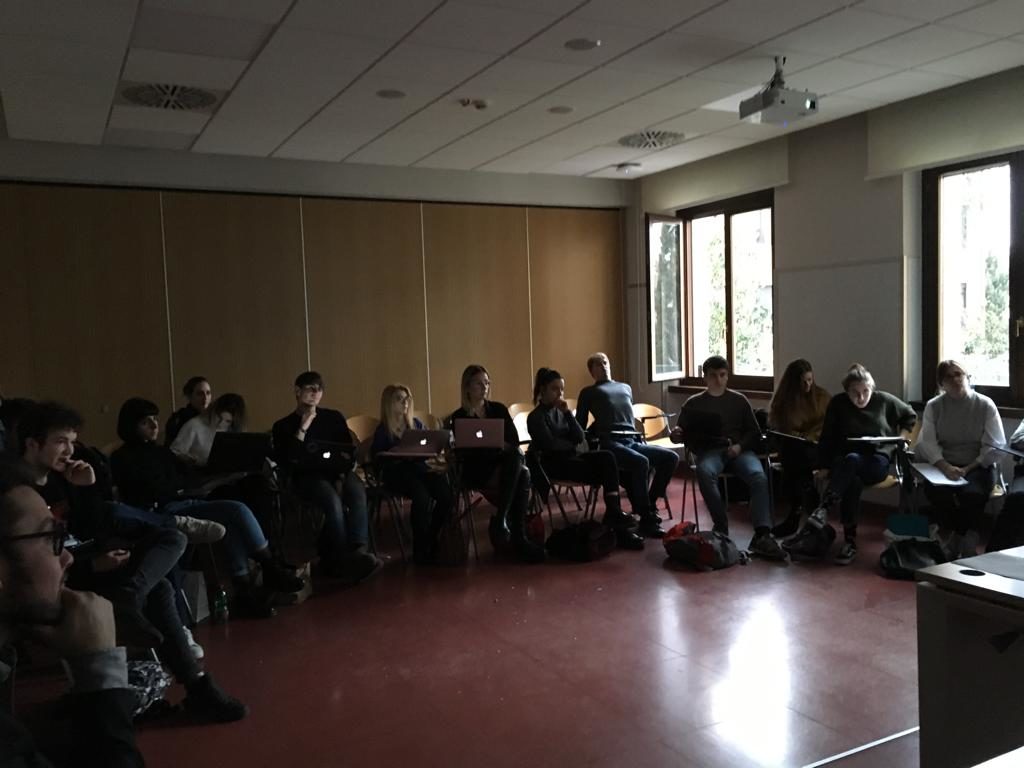
The Module II of the Urban Clinic of LabGov EDU 2019 continues with a Co-working session on March 2nd, “Entrepreneurial lab” facilitated by Alessandro Piperno (Phd student at the Department of Economics and Management of LUISS University).
The co-working session takes place in the LUISS Campus of Viale Romania and starts at 10 am with a recap on the project idea that the LabGovers (the students enrolled in the Urban Clinic) are incubating: a network of digital community gardens spread among city neighborhoods that among the other things provide contents on food, wellness and healthy lifestyle. The co-working session of the “Entrepreneurial lab” of March 2nd is focused on the design of the social business model of the entrepreneurial idea.
After an introduction on the main features of a social enterprise, an hybrid enterprise aimed at solving social challenges with a sustainable business model, the group worked on the identification and definition of the main services that the enterprise wants to offer. This phase of the co-working session leveraged on the work carried by the four LabGovers’ working groups in the period between the modules.
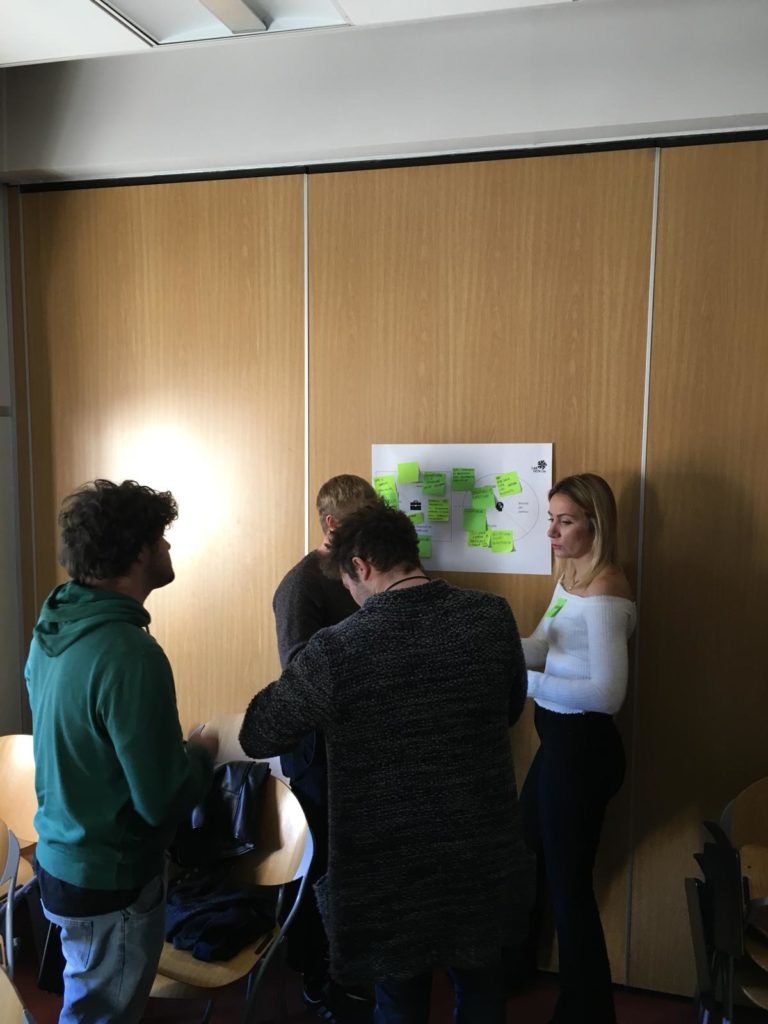
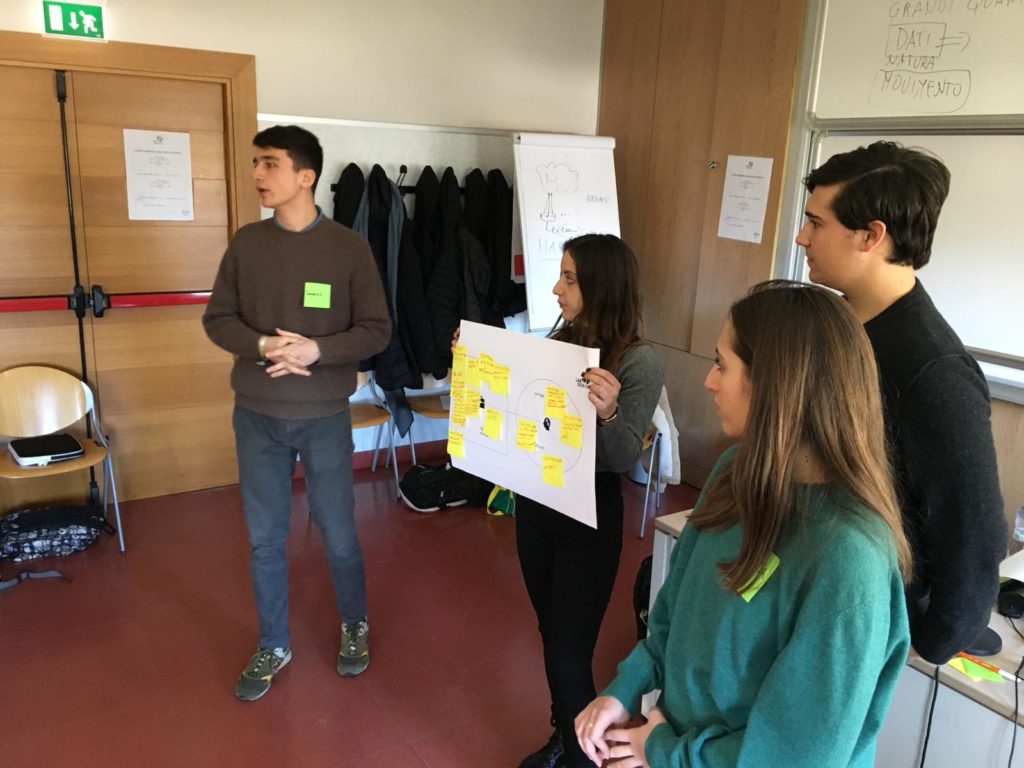
After the definition of the service, the LabGovers are divided into groups and worked on the social business model canvas, identifying its core elements: stakeholders; actions; resources; types of intervention; channels to distribute the service; beneficiaries of the action and targets; clients and users; revenues; costs.
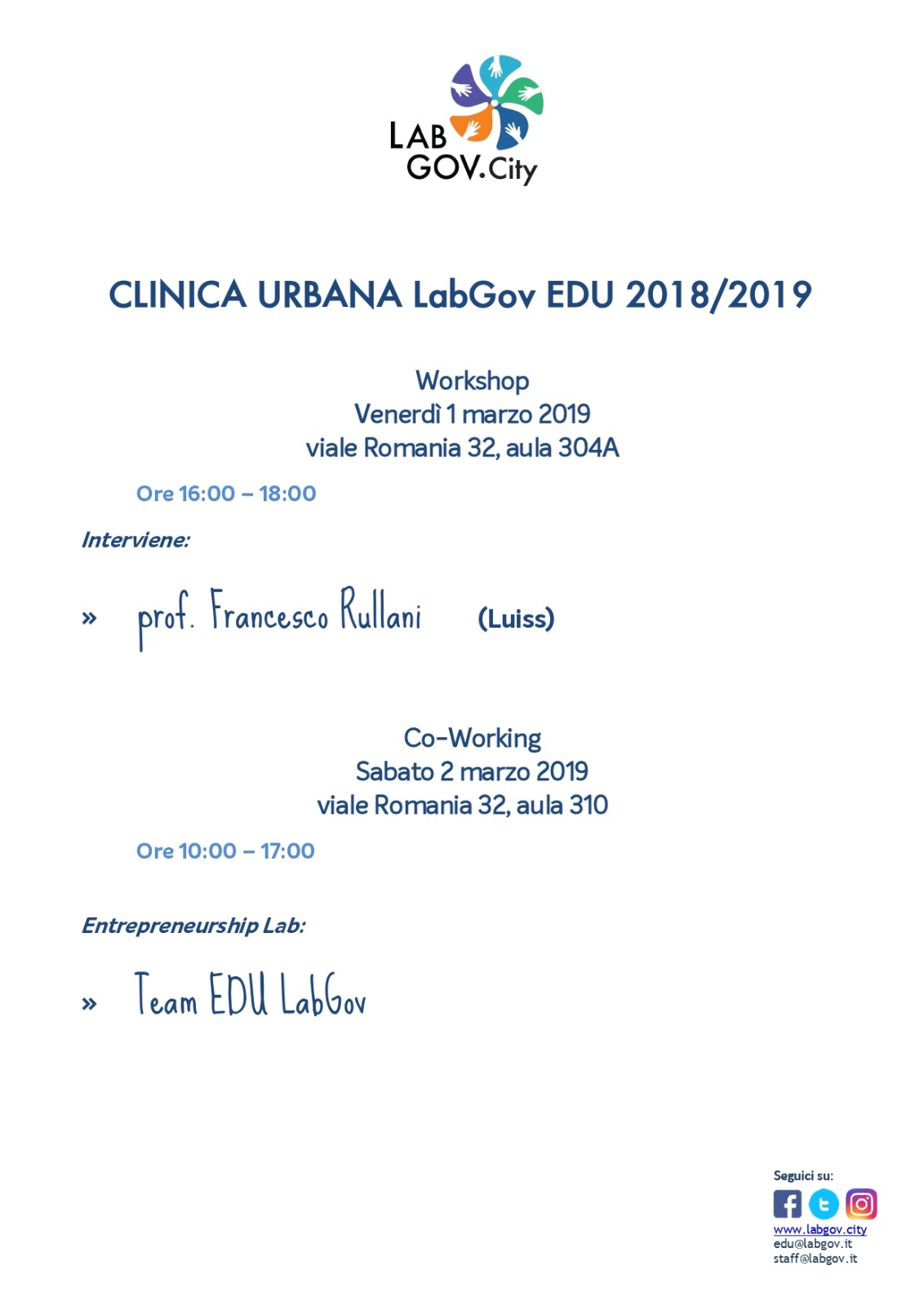
Workshop “Social Business Modeling” with Professor Francesco Rullani, March first 2019
The second module of the Urban Clinic of LabGov EDU 2019 focuses his activities on social entrepreneurship. The module is composed by a workshop, carried out by Professor Francesco Rullani on the organization of social enterprises and social business modeling and a co-working session facilitated by Alessandro Piperno, an “Entrepreneurship Lab”.
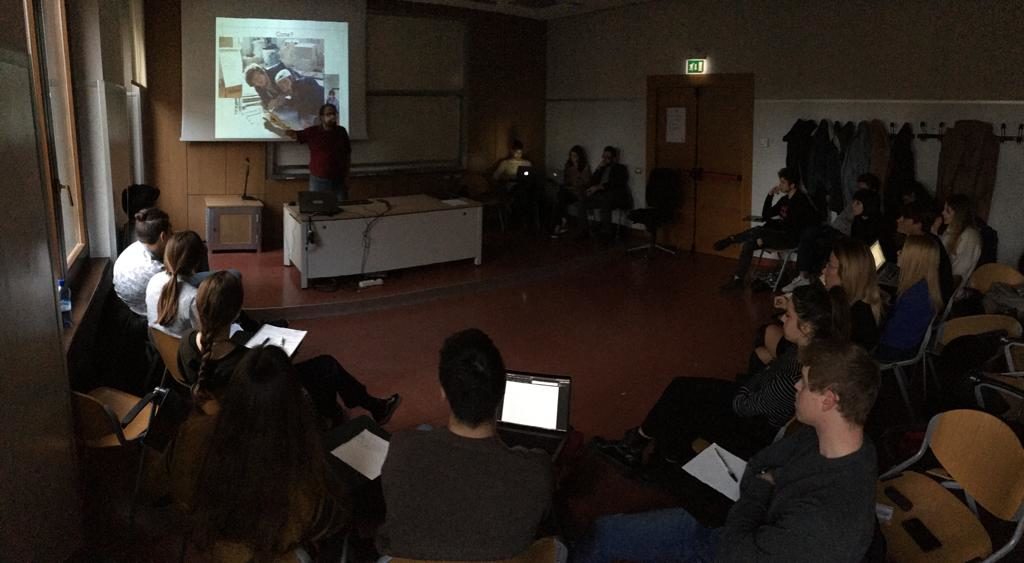
The workshop on social business modeling was hosted on March 1st 2019, at the LUISS campus of Viale Romania and consisted in a lecture by Francesco Rullani. Francesco Rullani is Assistant Professor in Entrepreneurship and Management of Innovation at LUISS Guido Carli in Rome (IT) and Coordinator of the ERSHub (the Hub for Ethics, Responsibility and Sustainability).
Professor Rullani
starts its presentation on “The Commons and Business models” with a discussion
on the major philosophic and journalistic work of the political philosopher Hannah
Arendt. Professor Rullani argues that the main message that we can take out of the
book Is that within a hierarchical regime there is a detachment between the task
that one must carry out (the order to be executed) and what one does to concretely
carry out the task. The banality of evil is represented by the fact that, within
the totalitarian regime, the approach of the people towards their actions was de-humanized.
The human dimension was banalized until it disappeared, and so was the
perception of the true meaning of the action.
The lecture
then moves towards Milgram experiment on human behavior that was carried out in
the aftermath of the Eichmann process in Jerusalem (1961) A social psychology
experiment conducted by Yale University psychologist Stanley Milgram, it
measured the willingness of study participants to obey an authority figure that
was instructing them to perform acts conflicting with their personal conscience,
for instance violent acts. They had to administer electric shocks to a subject
to which they were posing questions. For every wrong answer, the voltage of the
electric shock increased gradually, until they reached levels that would have
been fatal. The electric shocks were unreal (the learners were in fact Milgram’s
collaborators). The experiment highlighted the role played by obedience to
authority in a closed and hierarchical system.
The learning point is that life in social systems is filled with coercive systems that impose and nudge behaviors. And such systems are stronger than the community ties, because they have the capacity and the strength to absorb individuals’ responsibilities. The two main systems are the State and the Market.
Those systems solve their problems through bureaucracy (the State) and transactions (the Market). The systems are designed to reproduce mechanisms on which they are based and to expand their sphere of action. f you ask the bureaucracy to solve a problem, it will do it by producing procedures, while if you ask a community to solve a problem it will produce responsibilities. The social sector (in Italy, the third sectors) is mainly composed by communities regulated by systems based on responsibilities. Those systems solve their problems through bureaucracy (the State) and transactions (the Market). The systems are designed to reproduce mechanisms on which they are based and to expand their sphere of action. f you ask the bureaucracy to solve a problem, it will do it by producing procedures, while if you ask a community to solve a problem it will produce responsibilities. The social sector (in Italy, the third sectors) is mainly composed by communities regulated by systems based on responsibilities.
A key issue with the social sector is though economic sustainability. There is in fact often a tension between the creation of economic value and the normative foundations of such communities and this tension is one of the factor hampering the production of value in social enterprises. Other factors hampering the access to value production in social enterprises could be, for instance, the lack of access to credit warranty (which could be solved through the creation of collaborative and solidarity networks between social entrepreneurs) or the lack of skills. The social enterprises therefore often comes out with hybrid solutions, hybrid practices that allow them to use their productive capacity by integrating marginalized subjects and pursuing the social good. Example in Italy is the case of “Made in Carcere” (made in prison). The project consists in laboratories of construction with waste materials. In the labs, learning and facilitation to enable access to capital, skills and distribution for the access to the final market are provided. This is a case of a social enterprise that produce a positive impact both socially and environmentally by working against the sense of not being the creator of one’s life that affects an individual when she/he is in prison. By giving them access to such opportunity, they cease to be prisoners and begin to be workers responsible for what they produce and for what they do.
Co-working session “Idea Generation lab”, February 23 2019.
The first module of the Urban Clinic of LabGov EDU continued with the first co-working session, the “Idea Generation Lab”, that took place on Saturday February 23rd, 2019.
In the idea generation lab, the LabGov team facilitated the emersion of a shared project idea leveraging on the body of knowledge generated during the Opening day of the Urban Clinic, on the intersection between agricolture and technology as a tool to improve welfare in cities. The idea generation lab began with an inspirational speech by Raffaele Ciriani, President of the Italian Association of Apicultures and Barbara Invernizzi, landscape architect and expert in the facilitation of community gardens in complex urban environments. Barbara Invernizzi will accompany the LabGovers throughout a laboratory of self-construction of prototype a mobile beds garden (beginning on March 9).
The inspirational session was conducted by Raffaele Cirone, President of the Italian Federation of the Beekeepers. He has created two urban apiaries, in the center of Rome. One on the Rooftop of Confagricoltura building and the other in the a police station. The bees monitor the quality of the air and the urban environment. Such an interesting idea!
After the inspirational session, the facilitation session began and the team asked the LabGovers to identify keywords main issues that emerged from the opening day of the Urban Clinic. The keywords and main issues were then clusterized in macro-themes, on which the project will be build upon.
In the second part of the co-working session, the LabGov team introduced to the students the social value proposition canvas. The LabGovers were then split in four groups that worked on the social value proposition canvas separately. Then, in the plenary session, each group shared their work and the team synthesized the groups’ work and filled in a unified canvas. The project idea was therefore defined starting from the shared elements included in the groups’ work.
The LabGovers were ultimately divided in four groups, that will work on gathering the data and carrying out key tasks necessary to refine the project idea generated during the session and move towards the next co-working session: group 1) desk research 2) logistics and material for mobile garden tutorial 3) interviews on community garden (conducting interviews with representatives of community gardens in the city 4) guerrilla research (survey to LUISS students to validate the initial project idea with a first sample of respondents).
The first
workshop of the Urban Clinic LabGov EDU in Luiss University was dedicated to
urban planning. It took place in Luiss Campus on Friday 22nd February
2019.
Arch. Massimo
Alvisi from AlvisiKirimoto gave a lecture on this theme. He has started his
lecture by saying to the Labgovers that a very crucial and actual issue and at the
same time challenge for the cities is the shift that has to be done from
conceiving the differences from the city center to the peripheries. He has
affirmed that we have to try to imagine the periphery as a horizon, as a limit
to which to aim. We have, in his words, to reverse the common storytelling of
the peripheries, by making it a place where contamination and meetings happen.
He told the
Labgovers that sustainability means beauty and beauty is fragile. Italy is a
fragile beauty. It is for this reason that urban planning plays a key role in
fostering the sustainability of our cities. It does so by protecting the beauty
from its fragility.
Arch.
Alvisi has then focused his attention to his personal professional experience,
and has narrated to the Labgovers his work with the working group G124, created
by the Italian ‘archi-star’ Renzo Piano[1].
Renzo Piano gives his whole salary deriving from its role as an Italian congressman
to this project (in facts, the name derives from the name of the building where
G124 works, that is palazzo Giustiniani). The working group creates projects
aimed toimprove the peripheries’ architecture. With G124, Luiss and LabGov he
has realized the Co-Battipaglia project[2],
in southern Italy. In this project they have implemented a participated urban
planning and a process of co-created regeneration of the city.
‘A community garden is a place where
we rediscover the importance of the slowness. Time is important’. It is with
these words that the General Director of Luiss Guido Carli University, Giovanni
Lo Storto, has inaugurated the Academic Year 2018/2019 of the Urban Clinic LabGov
EDU[1].
The General Director, by recalling the steps that he had to face in order to
create a community garden in a University, has narrated how, from the moment of
the creation of this place, many initiatives were started. ‘The ground is
generous and the Luiss community garden has been extremely generous through the
years’. It has given many tangible fruits. The General Director (GD) has
narrated the case of an old inhabitant of the neighborhood surrounding the
University that has thanked the GD for having created the community garden,
that helped him in overcoming his wife death. The Luiss community garden is
also the place where many young people affected by Autism spectrum disorder
work together and become gardeners[2].
The GD has underlined the importance
of training the students to respect the other. This objective can be achieved
by teaching the students to work as a team (team building). This is something
that the Urban Clinic LabGov EDU teach to their students (the Labgovers).
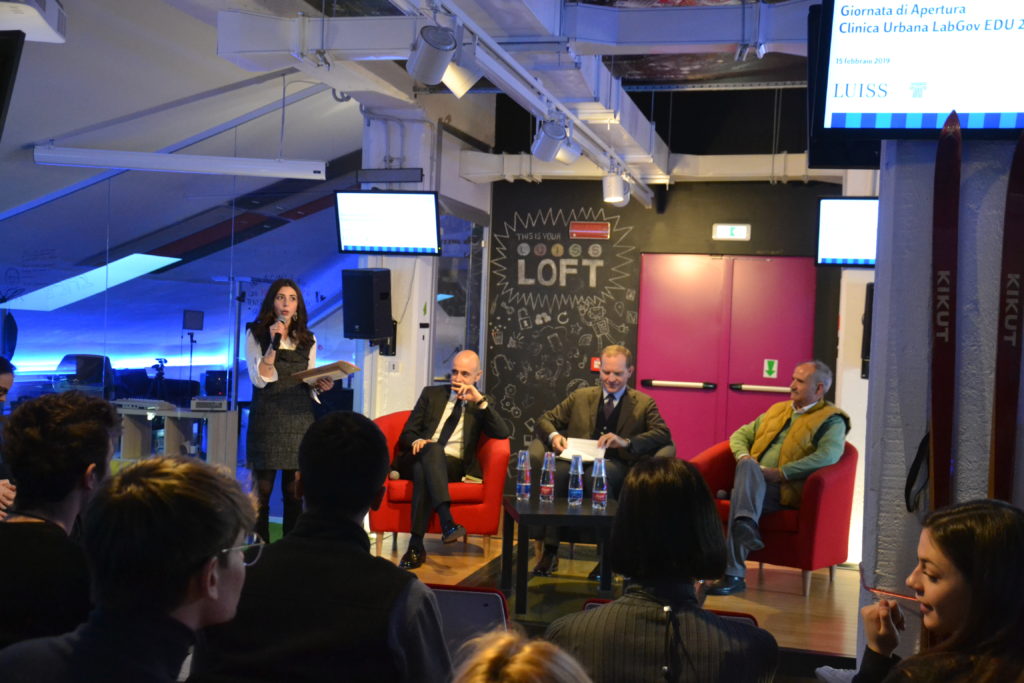
From the left: Giovanni Lo Storto (GD Luiss), Massimiliano Giansanti (Confagricoltura President), Peppe Zullo (chef)
This year the Urban Clinic will
teach to the Labgovers to rediscover the generosity of the ground, the strong
connection between agriculture and food, the role of a correct diet for a
healthy lifestyle. Massimiliano Giansanti, President of Confagricoltura (the
Italian General Confederation of Agriculture)[3],
and Peppe Zullo[4], a famous italian ‘farmer
chef’ (as he loves to call itself) have spoken about those issues.
The President of Confagricoltura has
underlined the strong connection between ‘the ground and the food’. Recognizing
that behind food there is wealth means understanding the importance of the
wealth deriving from the ground and the agriculture production. The Made in Italy food brand is copied all
around the world and the whole world envies it especially for the incredible variety
of the Italian agriculture, that is able to provide common and universal products
(e.g. the wheat) and at the same time very special products (e.g. saffron or
tomatoes). In Italy we produce something that can not be produced anywhere else
(or at least is produced with lower quality). It is for this reason that the
President of Confagricoltura has affirmed that food and agriculture are the
gates of the territory. Confagricoltura is more and more focused on the new
role of the agriculture, that is always more related on the one hand to
individual well-being and on the other to data management. A correct diet is
crucial in order to prevent many illnesses (and this also means a huge saving
on spendings on medicines and treatments).
The ‘farmer-chef’ Peppe Zullo has
underlined the extraordinariness of a farmer becoming a chef too. For many
years there has been a lack in the process from the ground to the kitchen. Today
the binomial ‘farmer – chef’ is synonymous of quality. If we think to a restaurant in the garden, it
is nearer than ‘Farm- to -table’. He has narrated his experience abroad, when
he once told to colleagues from the USA that ‘We are what we eat, if we eat
well we feell well, if we eat bad we fill bad and if we eat junk we are junk!’.
The he said that our ground is fertile and very generous and is visited from
all over the world. He has narrated the experience of the ‘Appointment with the
Daunia’, an event that he organizes each year in Puglia (Southern Italy) and
where he invites chefs form all over the world.
The first panel was then concluded
with the greetings. The GD has suggested to work to ‘embroider the human
peripheries’.
During the second panel we listened
to Dr. Claudia Giommarini, head of Luiss ERS, Soft Skills and students’
development, to arch. Claudio Bordi, coordinator of the project RU:RBAN (funded
by the EU program Urbact and to dr. Elena De Nictolis, Luiss Post-Doc Research
Fellow and LabGov EDU Scientific Director.
Dr. Giommarini, from the beginning
one of the most supportive of the Urban Clinic LabGov EDU initiatives (the
Urban Clinic is part of the Soft Skills activities promoted by the University),
has narrated the numerous projects and initiatives that his office and the
University have promoted during the years in the sustainability field.
Dr. Bordi has narrated the
importance of the roman experiences of urban gardens. They represent a
peculiarity because they are grassroots initiatives. Rome inhabitants come
together around a green space and create NGOs that are then recognized by the
Municipality (that has created a specific Regulation). Finally he has reported
the status of the Transfer Network RU:RBAN, in which the Rome Municipality is
lead partner.
Finally, dr. De Nictolis has
underlined the importance of the role of the research centers and the
Universities in studying these phenomena.
Giornata di Apertura Clinica Urbana LabGov EDU 2018/2019
“L’orto è lo strumento
attraverso cui recuperiamo il valore della lentezza. Il tempo è importante.”
Così il Direttore Generale dell’Università Luiss Guido Carli, Giovanni Lo
Storto, nella giornata di apertura della Clinica Urbana EDU LabGov del 15
Febbraio 2018, ha inaugurato questo nuovo anno accademico. Il Direttore
Generale, nel ripercorrere le tappe che hanno portato l’università a destinare
uno spazio all’orto, racconta con fierezza come, dal “taglio del nastro”, le
opportunità che sono sorte intorno all’orto sono state numerosissime. “La terra
è generosa e l’orto Luiss è stato molto generoso con noi”. Frutti percepibili, come
una lettera ricevuta da un anziano abitante del quartiere che ringraziava
perché frequentare l’orto Luiss è stato fondamentale per superare la morte
della moglie. O ancora, da questo spazio sono partite numerose iniziative come
ad esempio il progetto che ha fatto lavorare dei ragazzi autistici nell’orto e
li ha resi dei giardinieri.
L’obiettivo che il DG ritiene
prioritario è quello di formare ragazzi in maniera circolare, allenarli alla
consapevolezza e al rispetto dell’altro. Obiettivi che possono essere
perseguiti se si insegna ai ragazzi a fare team building cosi come viene
proposto nelle attività di LabGov Edu.
Centrale sarà quest’anno per
la Clinica Urbana riscoprire la generosità della terra, lo stretto legame che
c’è tra agricoltura e cibo, il ruolo dell’alimentazione per una vita sana. Su questi
temi intervengono il Presidente di Confagricoltura, Massimiliano Giansanti, e
il “cuoco-contadino” Peppe Zullo.
In particolare, il Presidente
di Confagricoltura sottolinea il legame fortissimo tra terra e cibo.
Considerare che dietro il cibo c’è ricchezza significa prendere consapevolezza
della conseguente ricchezza della terra e della produzione agricola. Il made in Italy alimentare viene copiato
nel mondo e il mondo ce lo invidia perché la varietà dell’agricoltura italiana
è in grado di fornire prodotti universali come il grano e prodotti unici come
lo zafferano (in Puglia se ne produce uno dei migliori) o i pomodori (dove
Puglia e Campania sono ottimi fornitori). In sostanza, in Italia produciamo
prodotti che in altre parti del mondo non si possono produrre o almeno non con
la stessa qualità che garantiamo noi. Per questo “continuo a dire che
agricoltura è il gate del territorio,
il cibo è il gate del territorio”.
L’impegno di Confagricoltura è proprio quello di cogliere il nuovo volto
dell’agricoltura che si intreccia sempre di più con il tema del benessere, da
un lato, e quello della “gestione del dato”, dall’altro. Un’alimentazione sana
aiuta a prevenire malattie e quindi anche a risparmiare sulle cure e sui
medicinali.
Dall’altra parte,
l’intervento del “cuoco-contadino” Peppe Zullo, che ribadisce come si tratti di
un fatto straordinario quello del contadino che diventa cuoco. Per diversi anni
c’è stato un vuoto tra il contadino e la cucina. Oggi, invece, il binomio viene
percepito come marchio di qualità. In questo senso spesso si parla di km0, ma
se pensiamo all’idea di un ristorante immerso nell’orto siamo ben sotto il km0!
Nella
sua esperienza all’estero Peppe Zullo racconta come la base di tutto è ciò che
diceva scherzosamente ai colleghi americani: “We are what we eat, if we eat well we feell well, if we
eat bad we fill bad and if we eat junk we are junk!”. La terra è generosa, la nostra in
particolare. Vengono da tutto il mondo per conoscere il nostro patrimonio.
L’appuntamento in Daunia, tra la Puglia e l’Irpinia, costituisce un esempio
tangibile di questa mobilitazione dove quest’anno, ricorda il cuoco, si è
affrontato il tema dell’universalità del cibo con cuochi provenienti da tutto
il mondo.
Il primo panel si
conclude con gli auguri del DG il quale rivisita il concetto di “rammendo delle
periferie urbane” (utilizzato da Renzo Piano nei suoi progetti) con quello di
“ricamo delle periferie umane”. La Clinica Urbana ha il compito di innovare
nella città e nella società. Ricamare una periferia umana vuol dire che è
attraverso l’ago e filo dell’esempio dei ragazzi della Clinica che si può
ricamare la capacità, di un collega universitario, di imparare a
comportarsi.
Nel secondo panel
della giornata di apertura della Clinica Urbana abbiamo avuto l’occasione di
ascoltare la dottoressa Giommarini, responsabile dell’ufficio Luiss ERS (Etica
Responsabilità e Sostenibilità) Soft Skills and students’ development, l’architetto
Bordi, coordinatore del progetto RU:RBAN finanziato dal programma europeo
Urbact e la dottoressa De Nictolis, Post-Doc Research Fellow Luiss e Direttore
Scientifico della Clinica Urbana LabGov EDU.
La dottoressa
Giommarini, che da sempre supporta le iniziative della Clinica Urbana (che
rientra nelle attività Soft Skills dell’Ateneo), ha raccontato i numerosi
progetti che il suo ufficio e la Luiss portano avanti in materia di
sostenibilità che, nelle parole della dottoressa, acquista il senso di un
qualcosa che deve essere durevole e circolare.
Il dottor Bordi
ha raccontato l’importanza delle esperienze romane di orti urbani. La
peculiarità del caso romano è costituita dalla direzione di questi processi,
che partono dal basso con associazioni che si costituiscono attorno a spazi
verdi, e arrivano alle amministrazioni. Il comune di Roma si è tra l’altro
dotato di uno strumento molto importante nella prospettiva di riconoscere
ufficialmente queste realtà, il Regolamento sugli orti Urbani. L’architetto
Bordi ha infine aggiornato i presenti sullo stato dell’arte del Transfer Network
RU:RBAN. Roma, lead partner del Network, trasferirà alle altre città partner la
propria buona pratica.
Il panel si è
chiuso con la dottoressa De Nictolis, che ha ricordato l’importanza dei centri
di ricerca e delle università nello studio e nella ricerca applicata anche nel
settore dell’agricoltura urbana.
La giornata si è conclusa con un giro di presentazione
dei Labgovers e con i dettagli tecnici spiegati dai tutors del team
On Friday, March 1st, the Urban Clinic LabGov EDU 2018/2019 will host in its second workshop Francesco Rullani, professor of Entrepreneurship and Management of Innovation at LUISS Guido Carli in Rome.
After listening
to arch. Massimo Alvisi (from AlvisiKirimoto) talking about urban planning and
sustainability in the cities (especially by referring to its personal
professional experience with the working group created by arch. Renzo Piano,
G124, and to their project in collaboration with LabGov in southern Italy,
Co-Battipaglia) last week, the Labgovers will listen to Professor Rullani, that
will focus on Social Innovation and Social Entrepreneurship and in particular
he will speak about the role of the communities and new economies based on
their actions.
After
this panel, Labgovers and LabGov’s experts will have time to discuss with
professor Rullani about the thematics related to commons, sustainability,
innovation.
Secondo modulo della Clinica Urbana LabGov EDU
Venerdì 1° marzo si terrà il workshop
che aprirà il secondo modulo della Clinica Urbana LabGov EDU 2018/19. Dopo aver
ascoltato l’arch. Massimo Alvisi, dello studio AlvisiKirimoto, parlare di architettura
e urbanistica, di sostenibilità nelle città e di progettazione urbana
partecipata nel corso del primo workshop di LabGov EDU (con un riferimento
particolare all’esperienza del gruppo di lavoro creato dall’arch. Renzo Piano, G124,
di cui Alvisi è parte e che insieme a LabGov e Luiss ha curato il progetto
Co-Battipaglia), i Labgovers approfondiranno i temi dell’innovazione sociale,
dell’imprenditorialità civica, e delle nuove economie basate sull’azione delle
comunità. Interverrà Francesco Rullani, professore in Imprenditorialità e
Gestione dell’Innovazione presso la Luiss Guido Carli.
Il suo intervento si collocherà
nella cornice del percorso di apprendimento che i Labgovers stanno portando
avanti.
Questo incontro getterà le basi
per il coworking che si terrà sabato 2 marzo e che vedrà i LabGovers impegnati
nello sviluppo della loro progettualità comune.
Quest’anno ne vedremo delle
belle, restate connessi!