
by Alessandra Feola | Oct 10, 2014 | The Urban Media Lab
 On the next 11th and 12th of October LabGov will participate in the event organized by the Renzo Piano’s G124 working group.
Saturday 11th and Sunday 12th will be presented in Rome the initiatives for the regeneration and temporary use of the area placed under the Viaduct of the Presidents, in the Nuovo Salario quarter of Rome. This viaduct, which extends from the periphery of the Capital, was built some decades ago for a urban railway that has never been terminated and is nowadays in decay. The project is part of the activities of G124, a working group supported by Renzo Piano, the famous Italian architect and Italian senator since 2013, is coordinated by Arch. Massimo Alvisi and aims at redesigning the urban peripheries and the city of the future. The project managers of the initiatives are two young and talented architects Eloisa Susanna and Francesco Lorenzi. The two day initiatives will be dedicated to the presentation of the project to the neighborhood, slightly before the comprehensive presentation that is currently scheduled for the end of November at the Italian Parliament.
Saturday the Serpentara Station will be reactivated and the community will finally be able to enjoy an ecological space with grass and childrens’ playground. the social lunch -called “Public spaces as a commons” – will be an important moment for all the citizens, who can freely access the facility. The project is realized in collaboration with Greenapsi Associazione Viadotto dei Presidenti, Associazione Interazioni Urbane and the local community. Nonetheless without the collaboration of the special partner “Roma Capitale” administration, it wouldn’t be possible to organize the event. Thus it is crucial to recognize the importance of the collaboration that was set among the different actors and partners.
LabGov will be present during the activities for supporting the participatory design of the space. The organized workshop will be starting at 3:30 pm till 5:30 pm and it will consist in a speech of Christian Iaione, coordinator of LabGov and professor of Public Law, that will illustrate how is it possible to realize a collaborative governance of a public space; Finally there will be time for a co-design session , namely “Under the Viaduct” , for involving the community in the design thinking activity aimed at redefining the future of this space.
Locandina Evento 11-12 ottobre 2014

by Alessandra Feola | Oct 6, 2014 | Luiss LabGov 2014-2015
 Sono aperte le iscrizioni per la nuova edizione di LabGov, che quest’anno sarà dedicato a “Ambiente, Agricoltura, Alimentazione: il territorio come bene comune”.
Il corso, nato nel 2013 dalla collaborazione tra Labsus – Laboratorio per la sussidiarietà e LUISS Guido Carli, vuole formare una nuova figura professionale, quella dei professionisti della governance: giovani donne e uomini capaci di pensare, progettare e realizzare nuove forme di collaborazione tra cittadini, imprese e istituzioni per promuovere le comunità intelligenti sia in ambito urbano che rurale.
Il Laboratorio è aperto agli studenti iscritti, per l’a.a. 2014/2015, al II o III anno di uno dei Corsi di Laurea Triennale del Dipartimento di Impresa e Management, Scienze Politiche, Economia e Finanza o al IV o V anno del Corso di Laurea in Giurisprudenza, della LUISS Guido Carli di Roma. Per la partecipazione al Laboratorio vengono riconosciuti 4 CFU per Altre Attività.
LabGov è un percorso di educazione non formale (del tipo in house clinic) pensato per innovatori sociali, imprenditori di futuro, agenti di cambiamento e giuristi creativi. Il campo di sperimentazione è quello dei beni comuni. LabGov trova la propria ragion d’essere nell’affermazione e nello sviluppo di una nuova, potente classe sociale, la “classe creativa” (i.e. cittadini attivi, startuppers, creativi, makers, sharers, prosumers, rural innovators, digital stars, ecc.). Gli studenti che parteciperanno al laboratorio avranno la possibilità di entrare in contatto con la classe creativa e avranno come responsabilità primaria quella di costruire o sviluppare progetti che dovranno prender vita, contribuendo concretamente all’implementazione dell’innovazione sociale, economica, istituzionale e giuridica che la classe creativa richiede in aree o settori dove l’innovazione non è ancora arrivata o accelerare il potenziale innovativo di esperimenti di innovazione preesistenti.
Nell’a.a. 2014-2015 oggetto di analisi e sperimentazione sarà la green governance intesa come tecnologia sociale, economica, istituzionale e giuridica applicata ai beni ambientali e paesistici, al territorio, agli stili di vita. Questi beni e la loro tutela o cura verranno riletti alla luce dei principi e delle tecniche tipiche della governance dei beni comuni, al fine di giungere alla costruzione di formule collaborative per la cura e rigenerazione di risorse fondamentali per il benessere individuale e collettivo, come l’ambiente, il paesaggio, il cibo che possono essere fonte di nutrimento, sostentamento, sviluppo, cultura, progresso. Lo scopo ultimo del LabGov sarà quello di riflettere, elaborare e applicare una strategia di governance idonea a configurare il “territorio come bene comune”.
Per partecipare è possibile consultare il bando e il programma qui.
Per aderire all’iniziativa sarà sufficiente inviare una e-mail a softskills@luiss.it nel periodo compreso tra il 30 settembre ed il 17 ottobre 2014 indicando:
- nome e cognome
- matricola
- Corso di Laurea a cui si è iscritti
- Volontà di acquisire i CFU per Altre Attività attraverso il LabGov
Inscriptions are now open for the new edition of LabGov, dedicated to “Environment, Agriculture and Food: the territory as a commons”.
The course was born in 2013 as a successful output of the partnership between Labsus and LUISS Guido Carli. It aims at creating new professional figures and experts of the governance who are able to promote social innovation and to manage the complex of rural and urban communities.
The Lab is open to all the students currently enrolled at the 2nd or 3rd year of one of the bachelor courses of the following departments: Impresa e Management, Scienze politiche, Economia e Finanza. Moreover, students coming from the 4th or 5th year of the Law Department may apply. Four CFU will be awarded to the participants as “Altre Attività”
For calendar, inscriptions and events please refer to the following links:
http://www.luiss.it/studenti/soft-skills-and-training-opportunities/con-cfu/corsi-di-laurea-triennale-e-magistrale-cic-1
Program
Per maggiori informazioni/ Further info at
Prof. Christian Iaione: ciaione@luiss.it
LabGov: coordinamento@labgov.it
by Federica Maranesi | Sep 29, 2014 | EducationLabs, Luiss LabGov 2014-2015
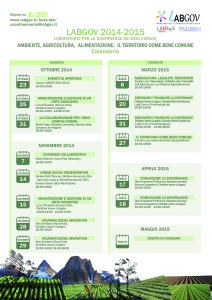
Giovedì 2 ottobre, alle ore 17.30 il gruppo LabGov (Laboratorio per la Governance dei beni comuni) ha il piacere di invitare gli studenti LUISS presso la sede di Viale Romania 32, aula 304 A, per presentare il Laboratorio e i suoi contenuti, insieme al programma e alle attività previste per l’a.a. 2014/2015. Questo sarà un appuntamento che precederà l’inizio dei lavori del laboratorio, un momento di incontro nel quale i Labgovers avranno modo di parlare direttamente agli studenti, spiegando nel dettaglio che cos’è LabGov, di cosa si occupa e altre informazioni utili per l’iscrizione. LabGov però non è soltanto un laboratorio universitario. E’ un mondo in cui le capacità personali e le competenze professionali vengono inserite in un contesto di collaborazione, rielaborate, sviluppate e potenziate, per affrontare non solo le sfide e i progetti proposti all’interno del laboratorio, ma anche per arricchire un bagaglio di conoscenze utile per il futuro. Il Laboratorio per la Governance dei beni comuni, nasce proprio con lo scopo di sperimentare l’approccio del learning by doing attraverso una in house clinic applicata al tema dell’innovazione sociale, economica, istituzionale e giuridica. Idee potenti come cambiamento, cittadinanza attiva, beni comuni, innovazione sociale, sharing economy, condivisione, collaborazione, making e creatività, co-design e co-production stanno spingendo verso la società, l’economia, le imprese e le istituzioni verso nuove frontiere. Gli studenti costruiscono o portano negli appuntamenti della clinic e nel Laboratorio progetti che devono prendere o avere vita nel mondo reale, contribuendo a dare loro attuazione pratica o sostegno nel loro processo di innovazione. Nell’a.a. 2014-2015 oggetto di analisi e sperimentazione sarà la green governance intesa come tecnologia sociale, economica, istituzionale e giuridica applicata ai beni ambientali e paesistici, al territorio, agli stili di vita. Lo scopo ultimo è quello di elaborare una strategia di governance idonea a configurare il “territorio come bene comune” e per questo motivo LabGov indagherà i seguenti ambiti di studio e ricerca: “Ambiente, Agricoltura, Alimentazione”. Vi aspettiamo numerosi, non mancate.
Il Gruppo Labgov
![The future of transportation?! Now it’s also a series..]()
by Nicolo Traina | Sep 26, 2014 | The Urban Media Lab
Is difficult to say what will be the future, and when it will comes, especially in a fast field such as transportation. Some Years ago we imagined flying cars, teleportation and advertising everywhere, a kind of “blade runner” reality. Today we already have prototypes of cars that drive themselves or streets that incorporate solar panels to light them self and, for example, alert you where the parking is free.
Definitely one of the major problems for us Italians in general, but also for anyone living in a metropolis, is the traffic is blocked and the roads impassable. Getting in the center of Rome or Milan often takes hours, and even on the highway is always difficult to calculate travel times with precision because the traffic is huge and always a great unknown.
Many cities are developing the car-sharing to reduce the number of cars in the parking and streets, or forms of economic-help for those who commute to work or university with a car full rather than single-car. Certainly this are good ideas but where will the future of transport?
In US was born in the last few months a new mini-series in episodes to talk about these problems and their possible solution that will drastically reduce one of the major problems of work: to get there. “The future of transportation” will examine the full extent of America’s transportation challenges and explore how US cities are reinventing the way we navigate them, focus on the Initiatives and technologies being developed right now That will change the way we move around cities in the next 5, 10, and 25 years.
The series will be split into three parts. We’ll begin with the elusive search for “The Perfect Commute,” exploring new and better ways to Enhance what can be the most infuriating part of the day, the journey to and from work. Next we’ll examine “The Smartest Trip,” focusing on the crucial connections between transportation and progress and achieving sustainability. Finally we’ll document the current state of “Design in Motion,” sneaking a peak at the Technological and planning innovations That will fundamentally alter America’s transportation landscape.
Now let’s see what will be and let’s play our role, starting to fill up our car !!
http://www.solarroadways.com/intro.shtml
http://www.citylab.com/special-report/future-of-transportation/

by Maria Felicita Ferraro | Jun 30, 2014 | EducationLabs, The Urban Media Lab
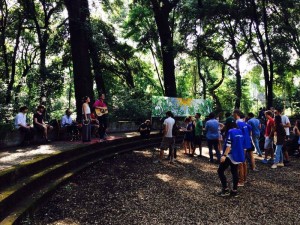 On June 26th, 2014, LabGov has organized an event together with the social and cultural club La Calzoleria to regenerate the Temple of Flora in the roman park Villa Ada. The event has been organized with the cooperation of the Roman Superintendence for the Cultural Goods and the representatives of the public Administration have been willing to work together with the students, their professors and the General Manager of LUISS Guido Carli, Giovanni Lo Storto. Among the authorities who joined us, there were Alberta Campitelli, Manager of the Roman Historical parks, Agnese Micozzi, Cultural Assessor of the II Municipality and Giuseppe Gerace, President of the II Municipality of Rome. Following the words of the Head of the Political Science Department of LUISS professor Sebastiano Maffettone, who during his readings about Gandhi and Kant stressed “the importance of changing ourselves before pretending that others change”, the Labgovers decided to continue the work that had been started last October. The first ReinventAda event had been meant to restore the original beauty of the Temple. This time, the regeneration has been followed by “Intimismi”, an event of cultural entertainment provided by La Calzoleria with live music by the band Marcello e il mio amico Tommaso, and Luca Bertelli, who played a Swiss uncommon instrument called Hang. Moreover, thanks to the collaboration with Urban Decorations the guests have been able to assist to a live painting exhibition by the artist Lorenzo Properzi. The aim of the Laboratory was to set an example for the future, of active citizenship and a collaboration with the various associations, institutional entities, as well as civic and business subjects interested in achieving cultural and entertainment activities to re-appraise the Temple of Flora and restore its former function of meeting place and cultural exchange. We hence presented a Pact of Collaboration for the care and shared governance of urban commons, starting with the Temple. “Regeneration -as professor Christian Iaione declared- means a permanent and continuous care and shared responsibility.”


